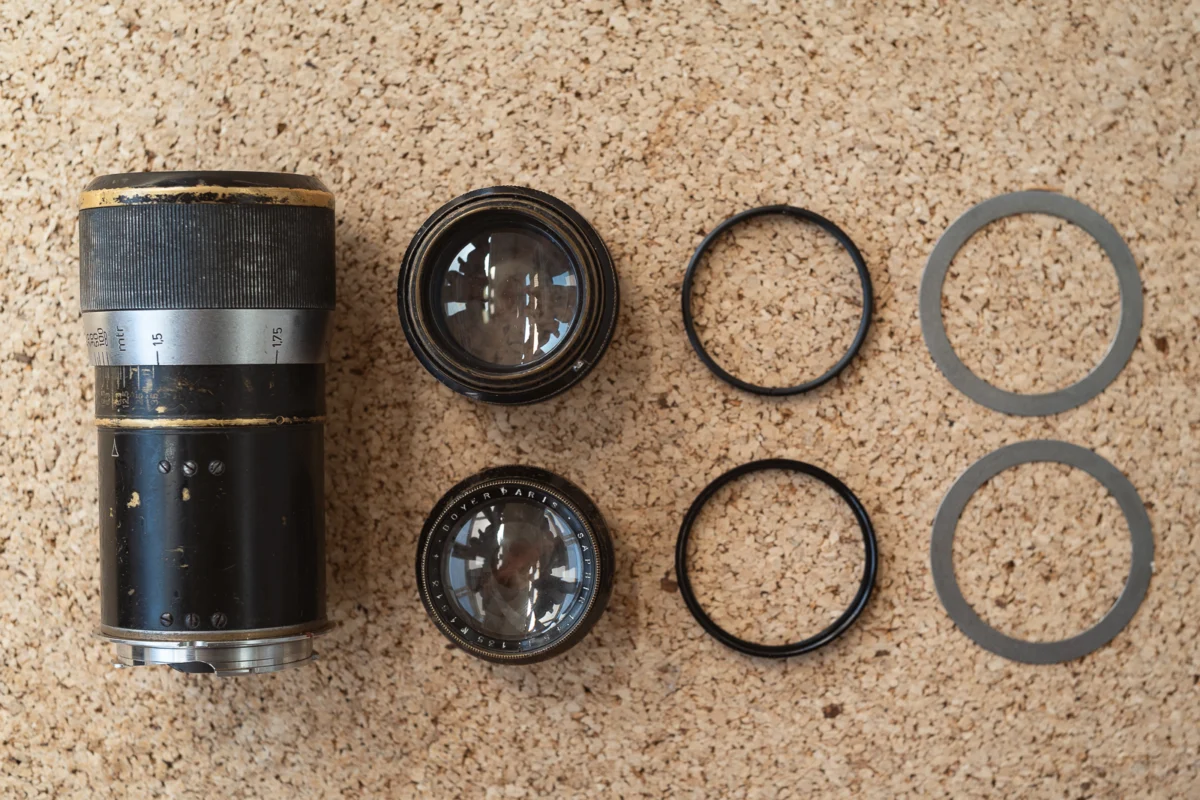
The landscape of vintage photography has seen a significant resurgence in the utilization of legacy glass, particularly lenses utilizing the Leica Thread Mount (LTM), also known as M39. While many enthusiasts begin their journey with well-documented optics such as the Canon 135mm f/3.5—a lens renowned for its longevity and performance on digital sensors—a growing segment of the community is seeking more obscure, historically significant glass. This pursuit often leads to the acquisition of custom-converted lenses, which frequently present technical challenges regarding rangefinder coupling and infinity focus calibration. A recent technical exploration into the non-destructive conversion of a pre-war Boyer Saphir 135mm f/4.5 optical block into a Leitz Hektor helicoid provides a blueprint for successful adaptation, highlighting the intersection of historical French optical design and German mechanical engineering.
The Technical Challenges of Rangefinder Coupling
Photography with rangefinder cameras, such as the Leica M or various LTM bodies, relies on a mechanical linkage between the lens and the camera’s internal rangefinder mechanism. For a lens to be "coupled," it must feature a cam—a precisely machined surface—that moves as the lens focuses, pushing a roller inside the camera body.
Market data from secondary platforms like eBay indicates a high volume of "custom-converted" lenses advertised as rangefinder-coupled. However, technical audits of these conversions often reveal significant calibration flaws. Common issues include:
- Infinity Focus Failure: The lens is physically unable to retract far enough to project a sharp image of distant objects onto the sensor or film plane.
- Back-Focus Discrepancies: The lens focuses behind the intended subject due to a mismatch between the lens’s actual focal length and the cam’s rate of movement.
- Non-Linear Calibration: A lens may appear accurate at infinity but exhibit increasing focus errors as it moves toward its minimum focusing distance.
These mechanical inconsistencies often require professional intervention, leading to months of wait times and additional financial investment. Consequently, there is an increasing interest in DIY conversion methods that utilize existing, high-quality helicoids from "donor" lenses to ensure mechanical reliability.
Historical Context: The Boyer Legacy and Suzanne Lévy-Bloch
The choice of a Boyer lens for such a conversion is rooted in a desire to preserve a unique chapter of French optical history. Founded in Paris in 1895, Boyer was a prominent manufacturer of high-quality lenses for large format, cinema, and industrial applications. Unlike their contemporaries such as Angénieux or SOM Berthiot, Boyer lenses were rarely produced for 35mm rangefinder systems, making them prime candidates for adaptation.
Central to the Boyer story is Suzanne Lévy-Bloch, a pioneering mathematician and optician who served as the company’s chief lens designer from 1925 until the mid-1960s. In an era when lens design was almost exclusively a male-dominated field, Lévy-Bloch’s contributions were significant. She was responsible for the "precious stone" naming convention of Boyer’s lineup, including the Saphir (Sapphire), Topaze, and Beryl. The Saphir 135mm f/4.5, often found in a Tessar-type or similar four-element construction, is noted for its classic rendering and historical value as an example of early 20th-century French optical computation.
Chronology of the Conversion Process
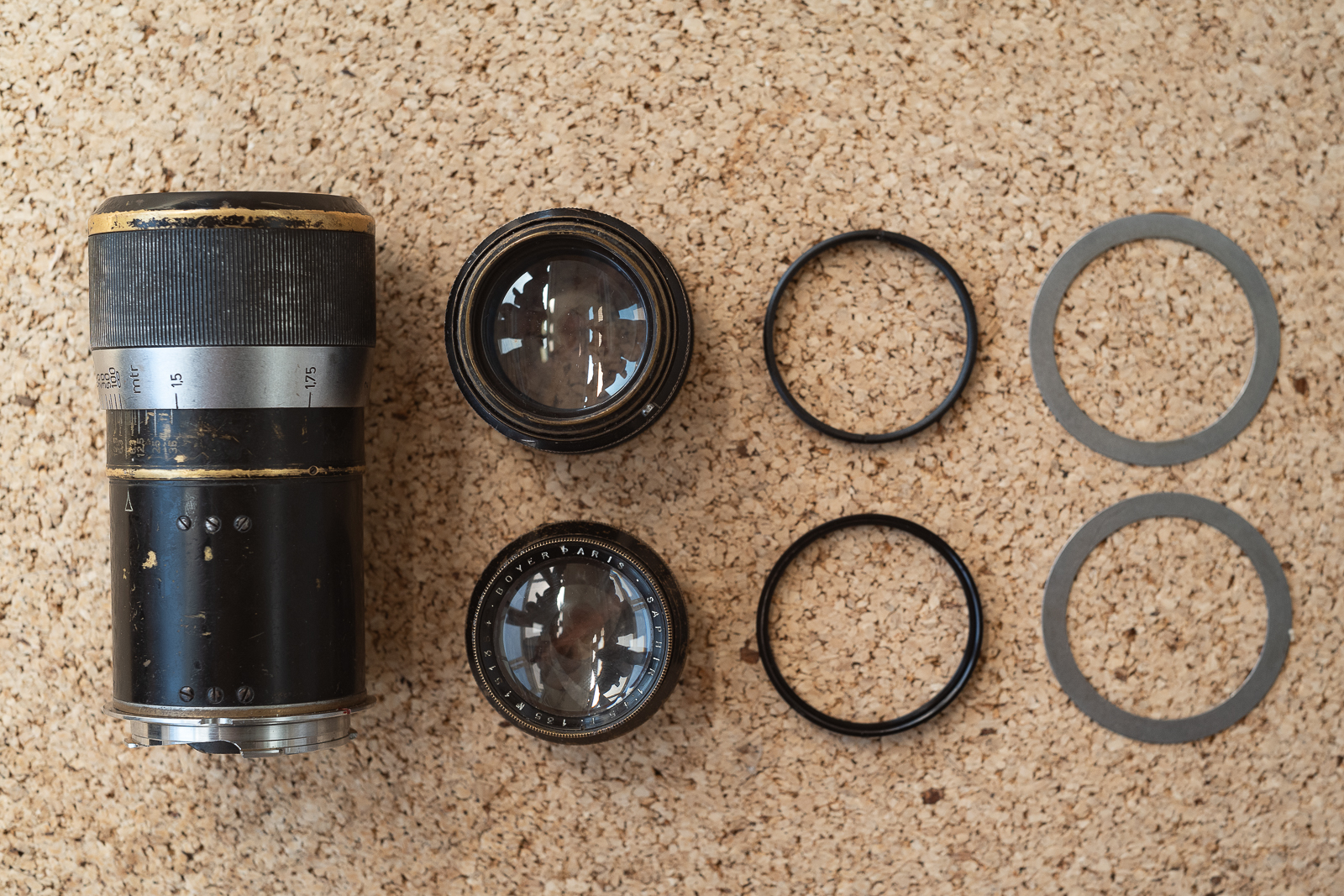
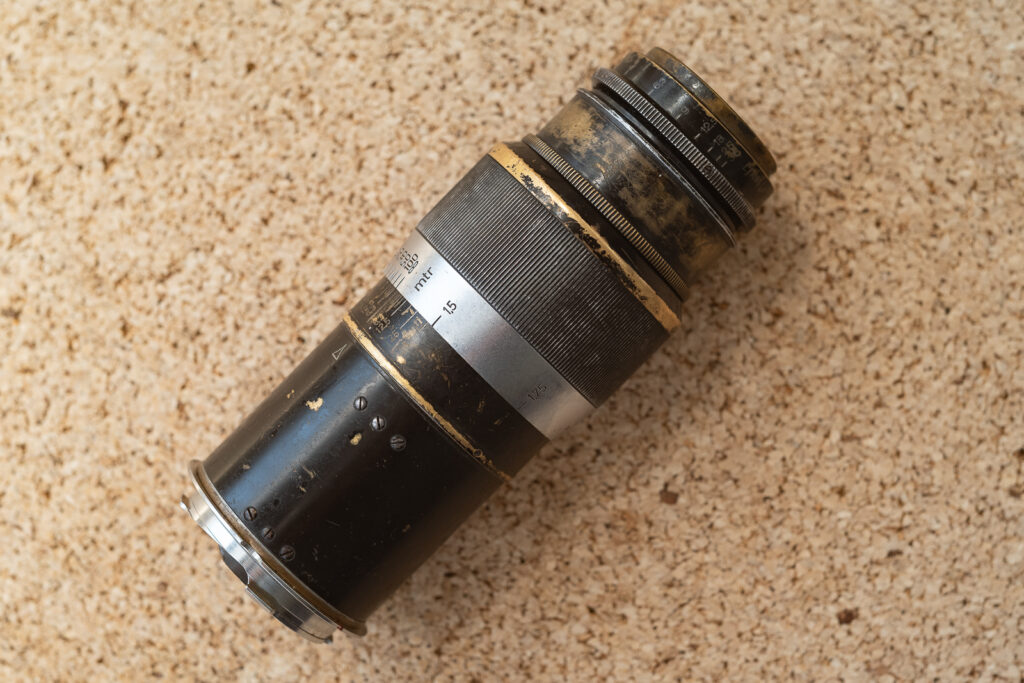
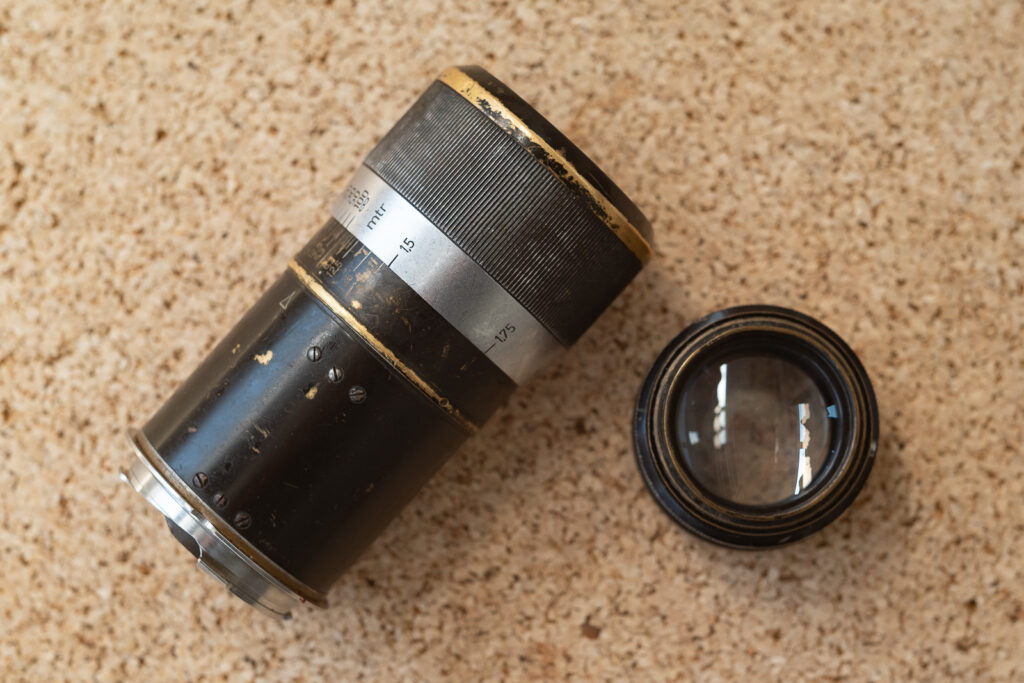
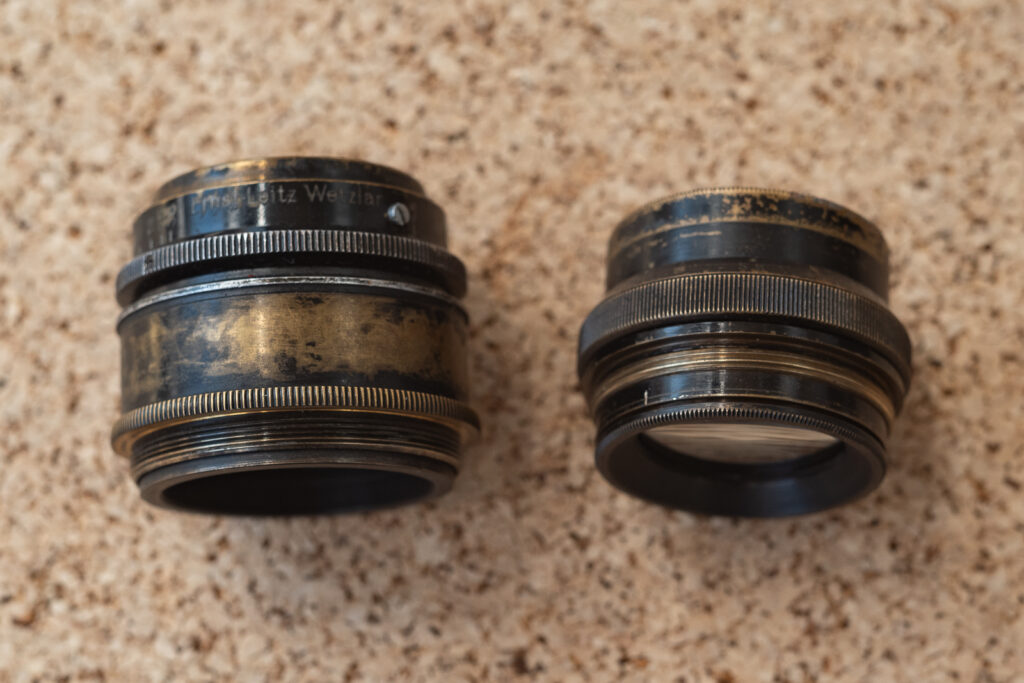
The conversion of a Boyer Saphir optical block into a Leica-compatible format involves a systematic approach to mechanical spacing and flange focal distance. The process utilizes the helicoid of a Leitz Hektor 13.5cm f/4.5, a lens produced by Ernst Leitz Wetzlar starting in 1933. The Hektor is an ideal donor because its optical block is designed to be easily unscrewed from the focusing mount, originally intended for use on the Visoflex reflex housing.
Phase 1: Component Identification and Measurement
The initial phase requires a comparison of the donor helicoid and the target optical block. The Leitz Hektor utilizes a 42mm screw mount for its optical head. In contrast, the pre-war Boyer Saphir 135mm f/4.5 typically features a 39mm screw mount. Because the Boyer block is physically shorter and smaller in diameter than the Hektor block, it allows for the use of adapters and shims to achieve correct spacing.
Phase 2: Adaptation and Spacing
To bridge the gap between the 39mm Boyer threads and the 42mm Hektor mount, a standard M39-to-M42 adapter is employed. These adapters are commonly used to mount Leica-thread lenses onto M42 SLR cameras, but here they serve as a mechanical step-up ring.
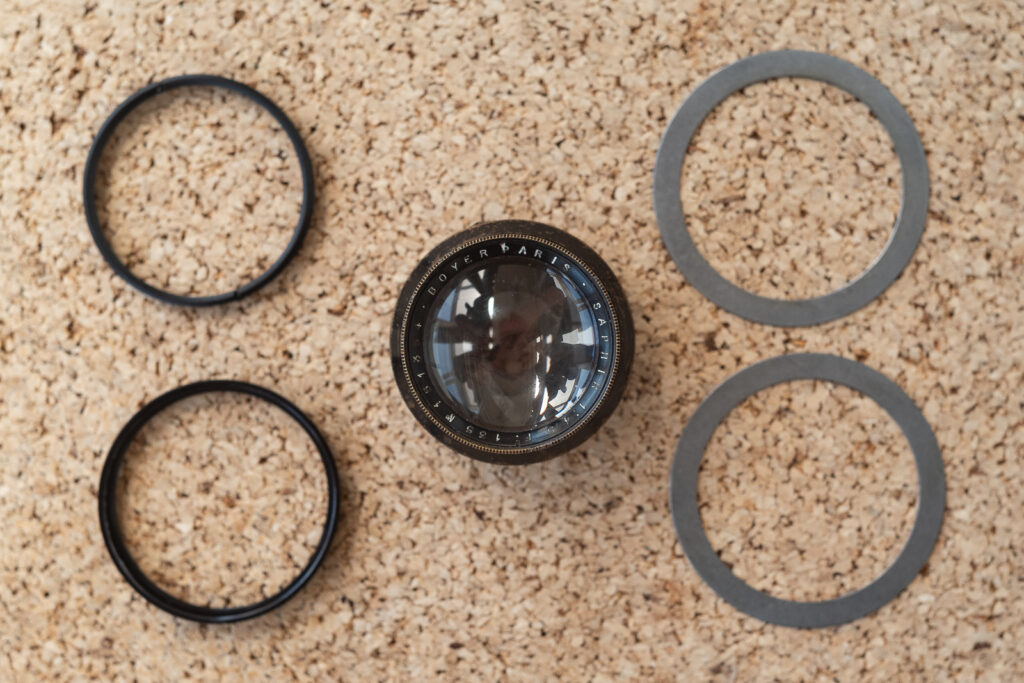
Technical testing reveals that simply mounting the Boyer block results in "past-infinity" focus—the lens sits too close to the sensor. To correct this, the following components are integrated:
- M42-to-M42 Spacer Ring: A 3mm thick extension ring provides the primary bulk of the required distance.
- Precision Shims: To fine-tune the focus, 0.5mm thick shims with a 40mm internal diameter are added.
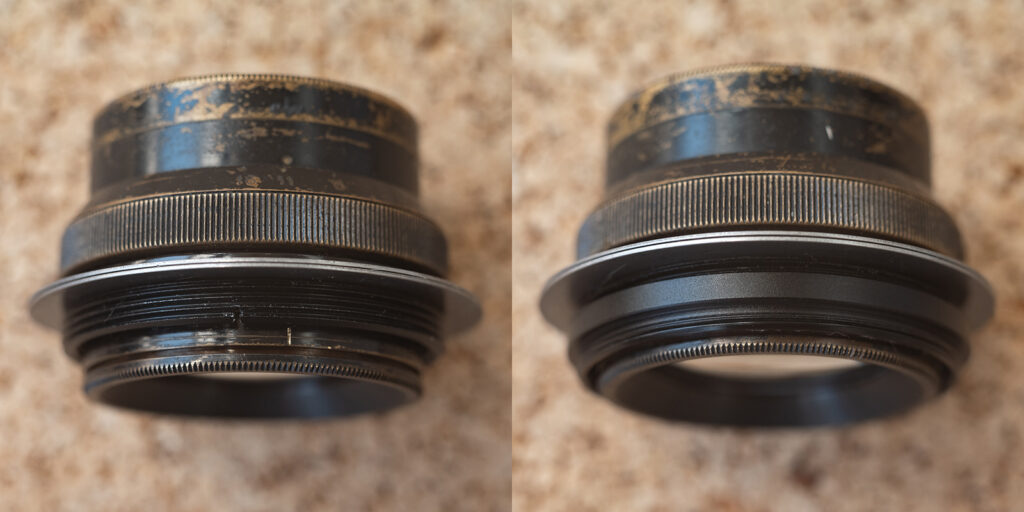
- Final Calibration: Through iterative testing, it was determined that a combination of the 3mm spacer and two 0.5mm shims (totaling 4mm of extension) brings the Boyer optics into alignment with the Hektor’s rangefinder cam.
Phase 3: Verification of Rangefinder Accuracy
The final assembly must be tested against the camera’s rangefinder patch. Because both the Hektor and the Boyer share a nominal focal length of 135mm, the rate of extension provided by the Hektor helicoid matches the optical requirements of the Boyer block. This ensures that when the rangefinder patch is aligned at 10 feet, the lens is physically focused at 10 feet.
Supporting Data: Comparative Optical Performance
While the Leitz Hektor 13.5cm f/4.5 is a respected lens of its era, it is often criticized for its lower contrast and susceptibility to flare due to its early coating technologies. The Boyer Saphir offers a different aesthetic profile.
| Feature | Leitz Hektor 13.5cm f/4.5 | Boyer Saphir 135mm f/4.5 |
|---|---|---|
| Design Origin | Germany (1930s) | France (Pre-War) |
| Mount Compatibility | Native LTM/M-Mount | Custom Conversion Required |
| Build Material | Solid Brass/Chrome | Brass (Uncoated) |
| Optical Signature | Soft wide open, classic glow | High center sharpness, vintage "Boyer" rendering |
| Vignetting | Minimal | Moderate at corners (typical of 135mm) |
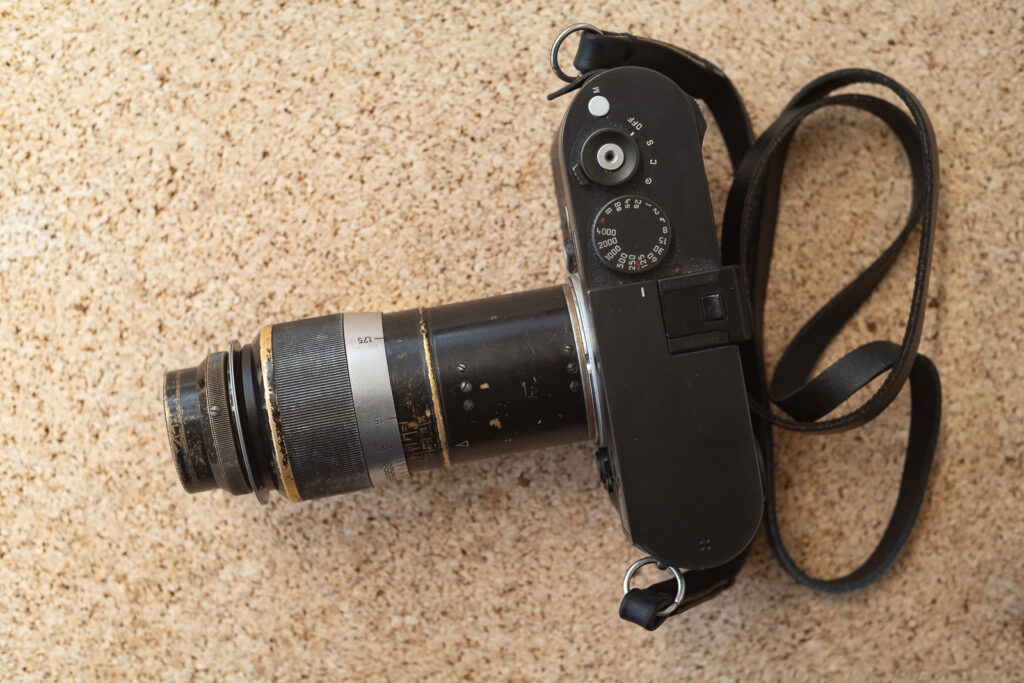
Data suggests that the Boyer Saphir, when properly shimmed, maintains a high degree of center sharpness even on modern high-resolution digital sensors like the Leica M Monochrom (Typ 246). The use of a red filter (such as a Zeiss Ikon R) can further enhance contrast when using these uncoated pre-war optics for black-and-white photography.
Broader Impact and Implications for Vintage Lens Adaptation
This conversion project highlights a sustainable and non-destructive trend within the photography community. By using off-the-shelf components—such as M42 spacers and M39 adapters—photographers can bypass the need for permanent machining or destructive modifications to rare historical artifacts.
The implications of this approach are threefold:

- Preservation of History: The original Leitz Hektor can be restored to its factory state at any time by simply unscrewing the Boyer assembly.
- Economic Viability: A functional Leitz Hektor helicoid can often be acquired for under £100, especially if the original glass is damaged or hazy. This provides an affordable platform for experimenting with high-end French or British optical blocks (such as those from Dallmeyer).
- Educational Value: Such projects encourage a deeper understanding of optical physics, specifically the relationship between focal length, flange distance, and mechanical coupling.
The successful adaptation of the Boyer Saphir 135mm f/4.5 serves as a testament to the versatility of early 20th-century lens designs. It proves that with precise measurement and a systematic approach to shimming, the "lost" lenses of the past can find a second life on the sophisticated digital cameras of the 21st century, offering a unique visual alternative to the clinical perfection of modern optics.