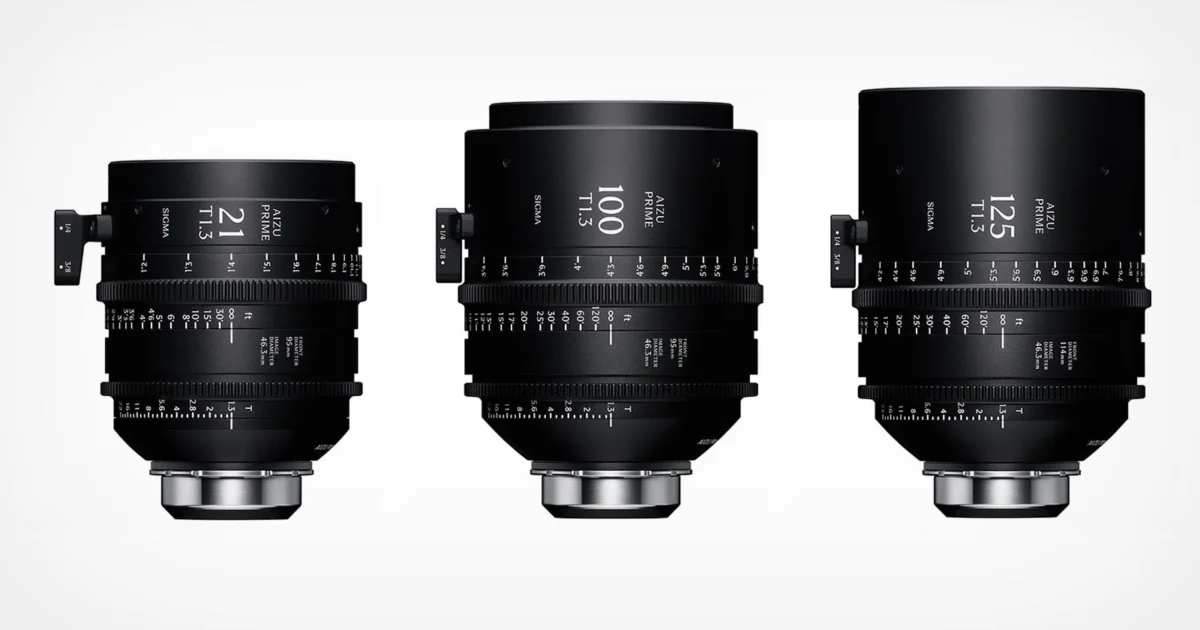
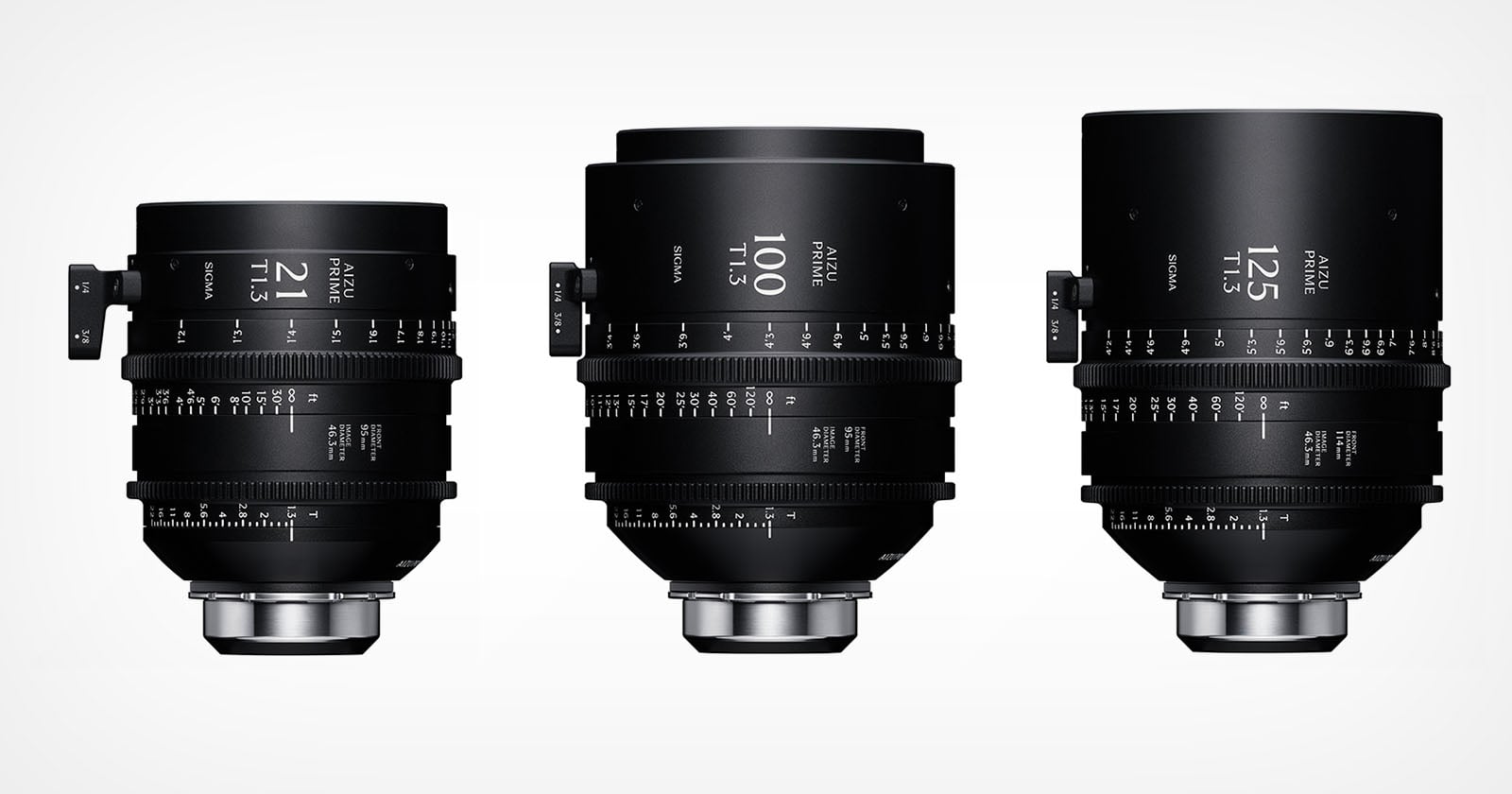
Sigma Corporation, a leading innovator in optical technology, has officially announced the expansion of its acclaimed Aizu Prime cinema lens series with the introduction of three new full-frame (LF) prime lenses: the 21mm T1.3 LF, 100mm T1.3 LF, and 125mm T1.3 LF. These additions significantly broaden the creative scope of the Aizu Prime lineup, which previously comprised eight lenses ranging from 25mm to 75mm, all sharing a consistent T1.3 maximum aperture. The new lenses are slated for release in November and will each carry a price tag of $9,799. This strategic expansion underscores Sigma’s commitment to the professional cinematography market, offering filmmakers a more comprehensive and versatile suite of high-performance optics designed to meet the rigorous demands of modern large-format production.
The introduction of these three new focal lengths addresses key gaps in the Aizu Prime series, providing cinematographers with essential wide-angle and telephoto options that maintain the established optical and mechanical integrity of the line. The 21mm T1.3 LF offers a wider field of view, ideal for expansive landscapes, architectural shots, or intimate close-ups within a broader context. Conversely, the 100mm T1.3 LF and 125mm T1.3 LF extend the telephoto capabilities, providing excellent compression, subject isolation, and detailed imagery crucial for narrative filmmaking, portraiture, and specialized applications where longer focal lengths are paramount. All three new lenses, like their predecessors, are engineered to deliver outstanding sharpness, exquisite falloff, and a characterful flare that has become a hallmark of the Aizu Prime series, making them a compelling choice for projects demanding both technical excellence and artistic expression.
A Chronology of Sigma’s Cinematic Vision: The Aizu Prime Journey
Sigma’s foray into the professional cinema lens market represents a significant evolution for a company long renowned for its high-quality photographic lenses. For decades, Sigma has leveraged its expertise in optical design and manufacturing, primarily through its acclaimed Art, Sports, and Contemporary lines for still photography. The decision to enter the highly competitive cinema lens sector was a strategic move, building upon this strong foundation and addressing the growing demand for sophisticated, purpose-built optics for motion picture production.
The journey of the Aizu Prime line officially began in June 2025, when Sigma first unveiled its ambitious plan to introduce a comprehensive series of cinema prime lenses. At that time, the company made a groundbreaking promise: to deliver a line of twelve lenses, all featuring a consistent T1.3 aperture across the board – a claim that positioned the Aizu Primes as the world’s first such series. This initial announcement highlighted the company’s commitment not only to optical performance but also to a consistent user experience, critical for professional workflows. The "Aizu" designation itself is deeply symbolic, referencing Sigma’s sole production facility located in Aizu, Japan. This signifies a dedication to meticulous Japanese craftsmanship, quality control, and a vertically integrated manufacturing process that allows Sigma to maintain tight control over every stage of lens production, from glass molding to final assembly.
The initial rollout in late 2025 saw the release of eight Aizu Prime lenses, covering a versatile range from 25mm to 75mm. These lenses quickly garnered attention for their impressive optical performance, robust build quality, and unique aesthetic characteristics. The initial promise of an 18mm, 21mm, 100mm, and 125mm T1.3 LF lens was eagerly anticipated by the filmmaking community. With this latest announcement in November 2026, Sigma has largely fulfilled that commitment, bringing the 21mm, 100mm, and 125mm lenses to market. The 18mm T1.3 LF remains in development, with no specific release date yet announced, keeping cinematographers on the lookout for the completion of the promised twelve-lens set. This systematic and phased release demonstrates Sigma’s methodical approach to product development and market penetration, building anticipation and ensuring that each new offering meets stringent quality standards.
Technical Excellence and Creative Consistency: The Aizu Prime Advantage
The core philosophy behind the Aizu Prime series, and a major selling point for professional cinematographers, is its unwavering commitment to consistency across the entire range. This consistency manifests in several critical areas, directly impacting production efficiency and artistic control. Each Aizu Prime lens, including the newly announced trio, promises the same color balance, contrast performance, and characterful flare characteristics. This means that filmmakers can seamlessly intercut footage shot with different focal lengths from the Aizu Prime set without encountering noticeable shifts in image rendition, greatly simplifying the post-production grading process and ensuring visual continuity throughout a film.
Furthermore, the lenses are designed to deliver beautiful and consistent bokeh (the aesthetic quality of the blur in out-of-focus areas) and falloff (the gradual transition from sharp to blurred areas). This consistent aesthetic is invaluable for creating a cohesive visual language within a project. Sigma’s engineers have meticulously crafted these lenses to strike a delicate balance between modern optical sharpness and a desirable cinematic "character." As Sigma itself articulates, "While maintaining modern sharpness, they avoid rigid or harsh depictions – delivering a natural, organic look." This approach provides a "quiet elegance and depth to the image," ensuring that while images are crisp and detailed, they retain a pleasing, film-like quality that avoids the overly sterile or clinical appearance sometimes associated with highly corrected modern optics. Critical aberrations such as distortion and focus breathing are also carefully minimized. Focus breathing, a phenomenon where the field of view changes slightly when adjusting focus, is particularly distracting in cinema, and its suppression ensures visual stability, even during dynamic focus pulls.
The Significance of T1.3 and Large Format Coverage
One of the most defining features of the Aizu Prime series is its consistent T1.3 maximum aperture across all lenses. In cinematography, T-stops (transmission stops) are preferred over f-stops (focal stops) because they represent the actual amount of light transmitted through the lens, taking into account light absorption by the glass elements. A consistent T1.3 aperture across an entire lens set is a significant achievement, offering unparalleled flexibility. It allows cinematographers to shoot in extremely low-light conditions, achieve incredibly shallow depths of field for dramatic subject isolation, and maintain consistent exposure values when switching between focal lengths – a crucial factor for efficient on-set lighting and exposure management.
Beyond the aperture, the "LF" designation in the lens names signifies their generous image circle coverage. All Aizu Prime lenses boast a substantial 46.3mm image circle. This is a critical specification for contemporary cinema, as the industry increasingly embraces larger sensor formats. The 46.3mm image circle ensures full coverage of full-frame image sensors found in cameras like the Sony Venice, RED V-Raptor, and Canon C500 Mark II. Moreover, it allows for compatibility with some large-format cameras, such as the Arri Alexa LF Open Gate mode and cameras utilizing VistaVision sensor sizes. The ability to cover these larger sensors is not merely a technical detail; it translates directly into creative freedom, enabling wider fields of view without distortion, shallower depth of field, and the capture of more nuanced image detail, all contributing to a more immersive and visually rich cinematic experience. The fact that PetaPixel has successfully utilized these lenses on the Fujifilm GFX Eterna 55, a medium format camera, further highlights their broad compatibility and future-proofing against evolving camera sensor technologies.
Ergonomics, Build Quality, and Workflow Integration
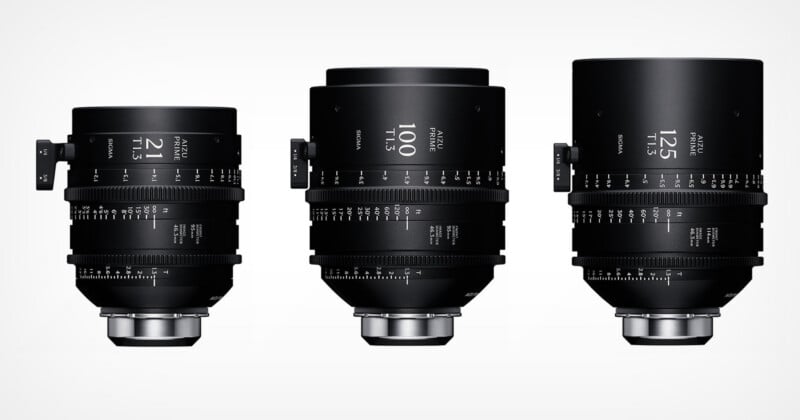
Professional cinema lenses are not only judged by their optical performance but also by their mechanical design, build quality, and seamless integration into demanding production workflows. The new 21mm, 100mm, and 125mm Aizu Primes uphold the same professional-grade build quality established by the initial eight lenses. They are designed to be robust and durable, capable of withstanding the rigors of on-set use in diverse environments. Despite their advanced optical designs and full-frame coverage, Sigma has managed to keep them relatively compact and lightweight. This is a crucial ergonomic consideration for modern filmmaking, where lenses are often mounted on gimbals, drones, Steadicams, or used for handheld shooting, where weight and balance are paramount.
Key features for efficient operation include a wide focus rotation angle, allowing for precise and smooth focus pulls, which is essential for accurate rack focusing. The aperture rings are designed with equal pitch, ensuring consistent and repeatable adjustments. Both the focus and aperture rings are equipped with industry-standard gears, ensuring compatibility with follow focus systems and motor drives.
Furthermore, the Aizu Prime series is compatible with advanced lens metadata systems, specifically Cooke /i Technology and Zeiss eXtended Data. This capability allows the lenses to communicate vital information directly to compatible cameras and post-production systems. Data such as focus distance, aperture setting, focal length, distortion mapping, and vignetting characteristics are recorded alongside the video footage. This metadata is invaluable for visual effects (VFX) work, virtual production environments, and streamlined post-production workflows, enabling precise lens corrections, realistic integration of CGI elements, and faster data management, ultimately saving time and resources.
Industry Reception and Market Impact
The Aizu Prime series has already made a significant impression in the industry. PetaPixel, a respected photography and videography publication, has extensively used Aizu Prime lenses for its video productions and has consistently praised their performance. Jordan Drake of PetaPixel remarked, "While they are clean, they also have character. That’s a rare combination, especially at this price." This statement perfectly encapsulates the unique value proposition of the Aizu Primes: they offer the technical precision and sharpness expected of modern optics while simultaneously delivering an aesthetically pleasing "character" that many cinematographers actively seek. The "at this price" comment is particularly insightful, suggesting that Sigma has managed to position these high-performance, full-frame cinema primes at a competitive point within a market often dominated by significantly more expensive options.
The availability of a comprehensive set of T1.3 full-frame primes, now spanning from 21mm to 125mm (with the 18mm still anticipated), strengthens Sigma’s position as a serious contender in the professional cinema lens market. This expansion directly benefits filmmakers by offering more choices for high-quality, consistent glass that can cover the demands of diverse productions, from independent films to high-end commercial work. It provides an accessible entry point into the world of large-format cinematography with optics that do not compromise on artistic quality or technical reliability.
For Sigma, this move solidifies their brand image not just as a manufacturer of excellent photographic lenses, but as a dedicated provider of professional cinema tools. It demonstrates their strategic vision and their ability to execute complex optical engineering projects. In a market where established players like ARRI, Cooke, and Zeiss have long held sway, Sigma is carving out a niche by offering compelling alternatives that blend innovation, performance, and value. The ongoing trend towards larger sensors in cinema ensures that lenses like the Aizu Primes, with their robust image circle coverage and consistent optical qualities, will remain highly relevant and sought after for years to come. The anticipation for the final 18mm lens in the series will continue to build, marking the eventual completion of a truly ambitious and impressive offering from Sigma.