The journey of Rowan Dear, a distinguished underwater photographer whose captivating images have garnered international acclaim, exemplifies a transition from a childhood affinity for nature on a Welsh farm to a thriving professional career beneath the waves. His evolution, marked by a conscious effort to overcome personal fears and a relentless pursuit of photographic excellence, is a testament to dedication in the highly competitive field of nature photography. This profile, part of the "From Amateur to Professional" interview series, delves into the transformative experiences that shaped Dear’s unique vision and technical prowess.
The Genesis of a Deep-Seated Passion
Rowan Dear’s profound connection with the natural world began during his formative years on a farm in rural Wales. Surrounded by diverse ecosystems, his days were often spent exploring fields and observing the rich wildlife of the United Kingdom, including badgers, foxes, hedgehogs, and a myriad of bird species. This early exposure cultivated an innate appreciation for biodiversity and the intricate balance of nature. Like many of his generation, Dear’s fascination was further fueled by the iconic BBC nature documentaries presented by Sir David Attenborough, which vividly portrayed exotic animals and, crucially, the mesmerizing underwater world. This ignited a dream within him: to one day witness and document these extraordinary creatures.

His initial forays into photography were humble, involving disposable cameras used to capture candid moments of family pets. Attempts to photograph wild animals, however, proved largely unsuccessful, often yielding blurry or distant images. At that time, the prospect of becoming a wildlife photographer seemed distant and unattainable, a profession he perceived as reserved for individuals with significant financial resources and privileged access. This early perception highlighted a common barrier for aspiring nature photographers, where the initial investment in equipment and travel can be daunting.
A pivotal moment in Dear’s trajectory occurred in 2017 when he confronted a long-held fear of water. Embarking on dive courses in Sydney, Australia, he opened the door to an entirely new realm of exploration. This act of personal courage laid the groundwork for his eventual specialization. By 2020, Dear fully embraced underwater photography, a decision that rapidly propelled him into a successful career. His talent quickly earned recognition, leading to several prestigious competition wins and establishing him as a prominent figure in the underwater photography community.
The Evolution of a Visual Storyteller: Early Attempts vs. Masterful Compositions
The progression of any artist is often best understood by comparing their initial endeavors with their refined masterpieces. For Rowan Dear, his first significant underwater image, captured with a professional-grade dive camera rather than a basic GoPro, provides a telling benchmark. This photograph depicted a giant cuttlefish at a dive site near Sydney – a creature he had long aspired to encounter and immortalize.

At the time, Dear was immensely proud of the image, sharing it on social media with the expectation of widespread admiration. He recalls the feeling of satisfaction, believing it to be a noteworthy capture. However, a retrospective analysis reveals a stark contrast. The image, while a personal triumph, was "quite flat, uninteresting, and not very colourful." This self-assessment underscores a critical phase in a photographer’s development: the ability to critically evaluate one’s own work against professional standards. While those unfamiliar with the nuances of underwater photography might have been impressed, Dear himself recognized its limitations when compared to the vibrant, dynamic compositions produced by professional and semi-professional peers. This realization served as a powerful motivator for continuous improvement, pushing him to refine his technical skills and artistic vision.
The journey from that early, somewhat muted cuttlefish image to his current portfolio illustrates a significant learning curve. Mastering underwater photography involves a complex interplay of specialized equipment, lighting techniques (often requiring strobes and video lights to restore lost color at depth), understanding marine behavior, and developing an acute sense of composition in a dynamic, three-dimensional environment. His evolution reflects a deeper understanding of how to manipulate light, achieve sharp focus, and capture the elusive moments that reveal the true character of marine life.
Showcasing Mastery: Signature Works and Their Significance
Rowan Dear’s current body of work is characterized by images that not only possess striking aesthetic appeal but also convey compelling narratives and emotional depth. Among his most cherished photographs are those featuring the giant cuttlefish, an animal that holds a special place in his heart. These cephalopods are renowned for their incredible intelligence, kaleidoscopic color changes, and complex social behaviors, making them a fascinating subject. Dear emphasizes the challenge and reward of capturing these behaviors and translating the underwater experience for a global audience, allowing non-divers to feel the same emotion and connection he experiences firsthand.

One particularly iconic image showcases two male giant cuttlefish engaged in a dramatic display of dominance, vying for the attention of a female. This photograph is celebrated for its vivid colors, the palpable intensity of the interaction, and the numerous layers of detail that reward closer inspection. Beyond its visual impact, the image provides valuable insight into the mating rituals of these creatures, which are known for their elaborate courtship displays and fierce competition. Giant cuttlefish (e.g., Sepia apama) are remarkable for their rapid physiological color changes, used for camouflage, communication, and display, which Dear expertly captures. This particular image not only highlights their beauty but also their complex ecological roles.
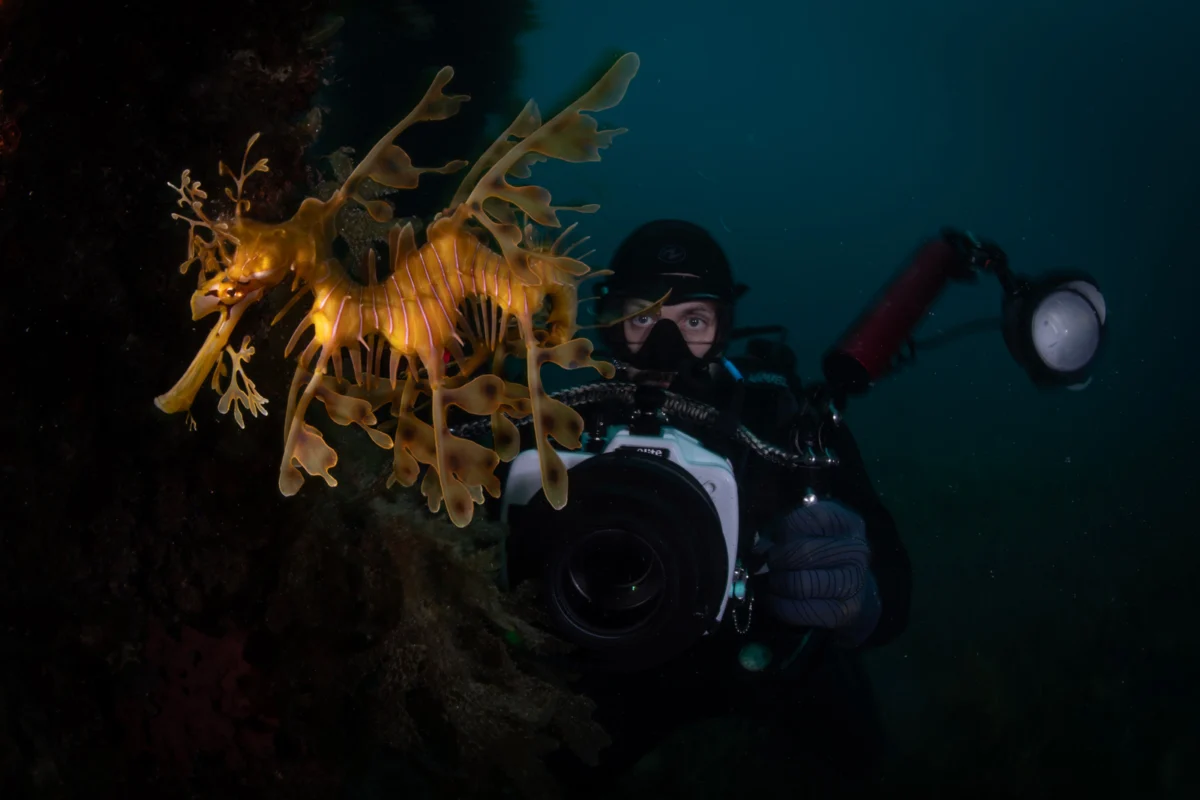
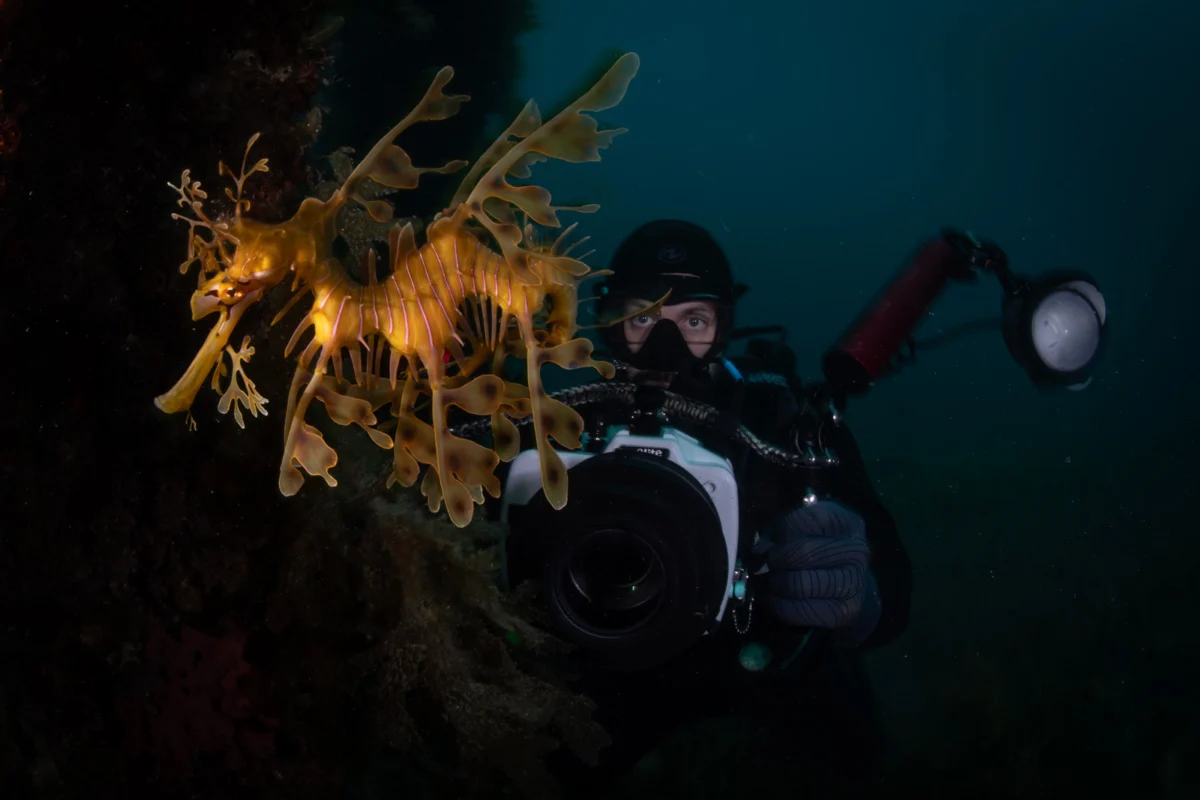
Another favorite is a striking portrait of a leafy seadragon. This image is lauded for its exquisite symmetry and the sheer difficulty involved in achieving such a shot. Leafy seadragons (Phycodurus eques) are masters of camouflage, their leaf-like appendages blending seamlessly with the surrounding seaweed, making them incredibly challenging to spot, let alone photograph. Dear’s dedication to capturing this elusive creature is evident in his meticulous approach: shooting at night with a red focus light to minimize disturbance, and patiently waiting for the seadragon to orient itself perfectly for a full, front-on headshot. The success of this image speaks volumes about his refined technique, patience, and profound respect for his subjects. The difficulty is compounded by their delicate nature and the specific conditions required for their survival, making encounters with them a rare privilege for divers and photographers alike.
Deep Dives: Re-visiting Locations and Refining Techniques
A hallmark of a truly dedicated nature photographer is the commitment to understanding their subjects and their habitats. Rowan Dear underscores this principle, explaining that effective wildlife photography necessitates an in-depth knowledge of a species’ behavior, environment, and ecological context. This understanding not only aids in capturing aesthetically pleasing images but also in conveying the full beauty and significance of the animal to the viewer.

Dear frequently returns to specific locations, each offering unique opportunities to refine his approach and expand his portfolio. Whyalla, in South Australia, is one such destination. Each year, over 10,000 giant cuttlefish converge here for their annual mating ritual, transforming the shallow waters into a dynamic spectacle. The site’s accessibility – with depths of only about 5 meters and shore entry – allows for multiple daily dives and extended underwater immersion. This prolonged engagement enables Dear to experiment with various lighting conditions, from sun-drenched wide-angle shots to intimate macro details, and to capture the distinct personalities and vibrant colors of the cuttlefish. He employs a diverse array of lenses, including wide-angle, fisheye, and macro, to achieve a comprehensive photographic spectrum of this remarkable aggregation. The Whyalla aggregation is one of the largest known breeding events for giant cuttlefish globally, drawing researchers and nature enthusiasts, and underscoring the ecological importance of this site.
Byron Bay, on Australia’s east coast, presents another compelling revisit location, particularly during the summer months when large aggregations of leopard sharks (Stegostoma tigrinum, also known as zebra sharks) gather. This site offers varied photographic potential, allowing for shallow, close-up shots bathed in sunrays, or top-down compositions that capture numerous sharks at varying depths. Understanding the sharks’ movements and preferred habitats is crucial for maximizing photographic opportunities here. Leopard sharks, typically docile and bottom-dwelling, are a popular subject for underwater photographers dueishing their distinctive spots and graceful movements.
Heron Island, situated on the iconic Great Barrier Reef, is another favored spot, especially for freediving enthusiasts. During the turtle hatching season, typically from February to April, the island becomes a bustling nursery. Photographers can witness the poignant spectacle of newly hatched turtles making their perilous journey to the sea, alongside year-round residents such as lemon sharks, countless ray species, and adult turtles. Timing dives with the tides allows for extended periods underwater, providing ample opportunities to photograph a rich diversity of marine life. Heron Island, a designated conservation zone, is critical for understanding reef ecology and the lifecycle of sea turtles, making it a particularly significant location for conservation-focused photography.
Over time, Dear’s approach to these revisited sites has evolved significantly. His deeper understanding of marine behavior means he can anticipate movements, position himself more effectively, and capture more intimate and revealing moments. Technically, he has refined his use of lighting, composition, and lens choices, moving beyond merely documenting presence to creating artistic interpretations that evoke emotion and highlight ecological narratives. This iterative process of returning, observing, and photographing allows for continuous learning and improvement, translating into more impactful and technically superior images.

The Professional Journey: An Organic Ascent
Rowan Dear’s transition to professional photography was less a calculated decision and more an organic progression fueled by an unyielding passion. He recalls no distinct "eureka moment" where he declared his intention to go professional. Instead, his career blossomed naturally from his relentless pursuit of "magical underwater experiences," his commitment to improving his photographic skills, and his desire to share the beauty of the ocean with an ever-widening audience of animal and ocean lovers.
This gradual ascent highlights a common path for many successful nature photographers: a deep personal connection to the subject matter often precedes and drives professional aspirations. The process involved continually refining his craft, initially for personal satisfaction, then for a close circle of acquaintances, and eventually for the broader community of marine enthusiasts.
A significant turning point, however, arrived with the recognition he received through major photography competitions. Winning these accolades provided crucial external validation, instilling confidence in his work and confirming that his images met the high standards of his peers and the wider underwater photography community. In an era dominated by social media, where "likes" and "follows" can often distort one’s perception of actual skill and value, competition wins offered an objective measure of artistic merit and technical proficiency. This validation allowed Dear to confidently pursue professional opportunities that he might have previously hesitated to embrace.

The professional landscape of wildlife photography, as Dear emphasizes, is not merely about talent but also about meticulous planning and proactive engagement. Success hinges on creating opportunities through extensive research into optimal seasons, locations, and weather conditions. This strategic foresight ensures the highest possible chance of capturing desired shots, mitigating the inherent unpredictability of working with nature. Such rigorous preparation is a hallmark of his professional approach, differentiating casual hobbyists from dedicated professionals who invest heavily in pre-production.
Evolving Craft: Workflow, Editing, and the Pursuit of Naturalism
Rowan Dear’s photographic process has undergone a significant transformation, particularly in his post-production workflow. He now dedicates considerably less time to editing, a change he attributes directly to an improvement in his in-camera skills and overall photographic knowledge. This philosophy underpins his approach: "if a photo takes too long to edit, you just need to go back out and take a better one." This statement reflects a dedication to getting it right at the source, rather than relying heavily on digital manipulation to salvage imperfect captures.
His current editing style prioritizes naturalism. Dear aims to create images that appear as authentic as possible, working with ample light to achieve a pristine, unaltered look. He deliberately avoids excessive alterations, explaining that most of his editing now takes only a few minutes per image. This minimalist approach is a stark contrast to common amateur tendencies, where attempts to correct significant in-camera errors like overexposure or excessive backscatter (small particles illuminated by flashes, visible in underwater photos) often result in an artificial or obviously manipulated final product. By focusing on strong in-camera captures, Dear ensures the integrity and natural beauty of his subjects are preserved. This dedication to naturalism also aligns with ethical considerations in wildlife photography, where authenticity is highly valued.

Navigating the Depths: Challenges in Wildlife Photography
The inherent unpredictability of nature remains the most significant and enduring challenge in wildlife photography, a sentiment echoed by Rowan Dear. "Being in the right place at the right time" is paramount, yet achieving this often requires extensive planning that does not always guarantee success. Dear recounts experiences where meticulously planned trips, such as those to photograph minke whales, were hampered by adverse weather conditions and zero sightings, demonstrating that even the best preparation cannot entirely override nature’s whims.
For wide-angle underwater photography, specifically, the dependence on excellent visibility and perfect lighting conditions adds another layer of complexity. These ideal circumstances are rare, forcing photographers to adapt to less-than-perfect scenarios. With increased experience, however, Dear has learned to maximize opportunities even when conditions are suboptimal. He highlights a recent trip to Argentina, where he photographed southern right whales under a government permit. Despite challenging visibility and strong winds, he managed to capture meaningful images, affirming that skillful execution can yield impressive results even when "the hand you are dealt" is far from ideal. This adaptability and resilience are critical attributes for any professional wildlife photographer. The need for government permits for photographing specific protected species like southern right whales also underscores the regulatory and ethical framework within which professional wildlife photographers operate, ensuring minimal disturbance to sensitive populations.
Retrospection and Wisdom: Advice for Aspiring Professionals

Reflecting on his journey, Rowan Dear offers valuable insights and advice for aspiring photographers. He admits that early in his career, a lack of confidence in his abilities, while serving as a catalyst for continuous learning and growth, also led him to pass on opportunities he was, in hindsight, fully capable of handling. This candid self-assessment reveals a common struggle among artists: balancing self-critique with self-belief. His perfectionist tendencies, which make it difficult for him to release work he isn’t "1000% happy with," illustrate the high standards he holds for his craft.
His overarching advice for those embarking on a similar path is comprehensive and insightful:
- Define Your Goals: Understand where you aspire to be in your photographic journey.
- Seek Inspiration: Follow and learn from photographers whose work resonates with you and pushes your creative boundaries.
- Cultivate Your Style: Develop a unique visual voice that distinguishes your work.
- Hone Your Craft: Continuously practice and refine your technical skills.
- Embrace Continuous Improvement: Never be complacent; always strive to get better.
- Be Self-Critical, But Appreciative: Critically evaluate your work for areas of improvement, but also acknowledge and value your achievements.
- Trust Your Process and Ability: Develop confidence in your workflow and capabilities.
Rowan Dear’s journey from a curious child on a Welsh farm to an internationally recognized underwater photographer is a powerful narrative of passion, perseverance, and profound connection to the natural world. His work not only showcases the breathtaking beauty of marine life but also implicitly advocates for its conservation, inspiring countless others to explore and protect the hidden wonders beneath the ocean’s surface. His story is a testament to the fact that with dedication, courage, and a relentless pursuit of excellence, the seemingly unattainable can indeed become a professional reality.