The "From Amateur to Professional" interview series recently highlighted Rowan Dear, an acclaimed underwater photographer whose journey from a Welsh farm to the vibrant marine ecosystems of the world exemplifies dedication, passion, and the courage to conquer personal fears. His trajectory, marked by a profound connection to nature and a pivotal decision to embrace the underwater realm, offers invaluable insights into the evolution of a successful nature photographer.
The Genesis of a Passion: From Welsh Farms to Global Oceans

Rowan Dear’s affinity for the natural world was cultivated from a young age, rooted in his childhood spent on a Welsh farm. The rolling fields and diverse wildlife of the United Kingdom—badgers, foxes, hedgehogs, and a myriad of birdlife—served as his initial classroom. Like many children of his generation, Dear’s imagination was further ignited by the captivating narratives of BBC nature documentaries, particularly those presented by Sir David Attenborough. These programs unveiled a world teeming with extraordinary creatures, instilling in him a deep-seated desire to witness, and eventually document, the planet’s most fascinating animals, especially those inhabiting the mysterious underwater world.
His early photographic endeavors were modest, involving disposable cameras used to capture his pets, and largely unsuccessful attempts to approach wild animals. At that time, the pursuit of wildlife photography seemed an unattainable dream, perceived as a luxury reserved for individuals of significant means and privilege. This early perspective underscores a common barrier for aspiring photographers, highlighting the perceived exclusivity of professional-grade equipment and travel opportunities.
A significant turning point, both personally and professionally, arrived in 2017 when Dear confronted a long-standing fear of water. This courageous step led him to embark on a series of dive courses in Sydney, Australia. This personal triumph over hydro-phobia opened up an entirely new dimension for his photographic aspirations. By 2020, Dear had fully embraced underwater photography, a decision that rapidly propelled him into a distinguished career, marked by numerous competition victories and widespread recognition within the field. His story thus becomes a compelling narrative of how overcoming a personal challenge can unlock unforeseen professional pathways.

The Evolution of a Lens: A Visual Journey
The transition from amateur enthusiasm to professional expertise is often best illustrated through the photographer’s evolving portfolio. Rowan Dear’s first "proper" underwater image, taken with a dedicated dive camera rather than a GoPro, depicts a giant cuttlefish at a Sydney dive site. At the time of capture, Dear was immensely proud, sharing it on social media with the expectation of widespread admiration. However, with the wisdom of hindsight and a developing professional eye, he now describes the image as "flat, uninteresting, and not very colourful." This candid self-assessment is a crucial element in a photographer’s growth, demonstrating the ability to critically evaluate one’s work against the exacting standards of the industry. The initial joy of capturing a long-desired subject gave way to a deeper understanding of composition, lighting, and color rendition required to elevate an image from a mere record to a captivating piece of art.
Today, Dear’s portfolio showcases a remarkable leap in technical skill and artistic vision. Among his most cherished works is an image capturing two male giant cuttlefish engaged in a dominance battle for mating rights. This photograph, brimming with vibrant colors and dynamic action, transcends a simple snapshot. Dear explains its significance: "The image has so much colour, shows off the cuttlefish’s character, behaviour, and has so many layers to it when you look closer." It encapsulates his objective to not merely photograph marine life but to convey the creatures’ intrinsic character and behavior, allowing viewers to experience the emotional depth of the underwater world. This reflects a key tenet of compelling nature photography: to create empathy and connection between the viewer and the subject.

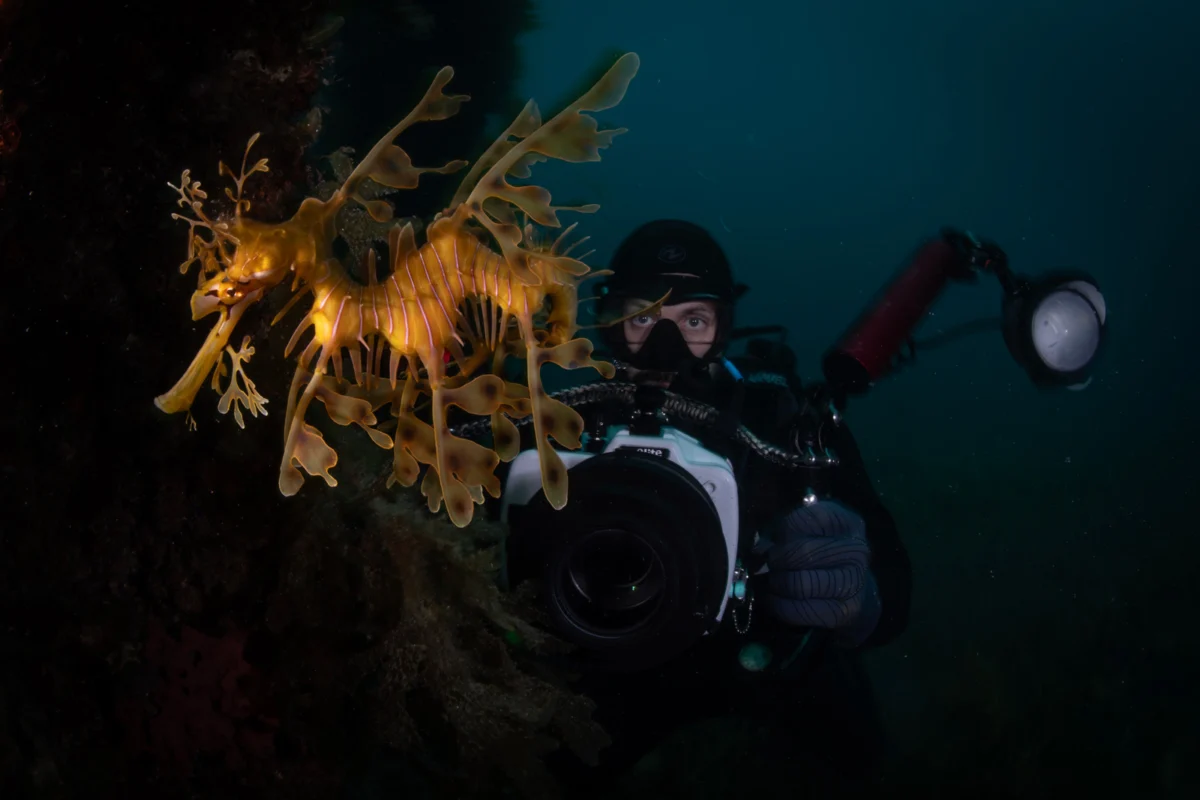
Another favorite is a portrait of a leafy seadragon. The image, characterized by its striking symmetry, represents a significant technical achievement. Shot at night using a red focus light to minimize disturbance, it required immense patience and precision to capture the elusive creature facing the camera with the perfect head tilt. Leafy seadragons, known for their intricate camouflage and delicate nature, are notoriously difficult subjects. This photograph not only highlights Dear’s mastery of specialized techniques but also his profound respect for the welfare of his subjects, a hallmark of ethical wildlife photography. The successful execution of such a challenging shot speaks volumes about his refined craft and dedication.
Deep Dives and Recurring Rendezvous: Revisiting Nature’s Wonders
A distinctive aspect of Rowan Dear’s photographic practice is his commitment to revisiting specific locations and species. This approach stems from a fundamental belief that true understanding of an animal—its habitat, behaviors, and ecological role—is paramount to capturing its essence authentically. "I think when photographing an animal, you need to get to understand the species, their habitat, behaviours, and so on to capture them properly," he asserts. This philosophy ensures that his images are not just aesthetically pleasing but also rich in narrative and scientific insight.

One such favored destination is Whyalla in South Australia, a site of immense biological significance where over 10,000 giant cuttlefish congregate annually for mating. The shallow depth of the site, approximately 5 meters, and its accessibility from the shore allow for extended, multiple daily dives. This prolonged immersion enables Dear to observe and photograph the cuttlefish across varying light conditions, capturing their diverse personalities and brilliant chromatic displays. His strategic use of a range of lenses—from wide-angle and fisheye for expansive habitat shots to macro for intricate details—underscores his versatility and commitment to comprehensive storytelling. This depth of engagement contrasts sharply with fleeting encounters, allowing for a more nuanced and impactful portrayal of the species.
Byron Bay presents another recurring opportunity, particularly during the summer months when large aggregations of leopard sharks gather. This location offers dynamic photographic conditions, allowing Dear to experiment with diverse compositions, from intimate shallow shots illuminated by sunrays to broad, top-down perspectives showcasing multiple sharks at varying depths. Such varied approaches not only diversify his portfolio but also provide a holistic view of the species within its environment.
Further enhancing his exploration of marine biodiversity, Heron Island on the Great Barrier Reef stands out as an exceptional location, especially for freediving during the turtle hatching season, typically from February to April. Here, Dear captures the poignant spectacle of newly hatched turtles embarking on their perilous journey into the ocean, alongside year-round residents such as lemon sharks, numerous ray species, and adult turtles. Timing dives with the tides is crucial, enabling several hours of underwater photography during peak activity. These return visits are not merely about capturing new images but about deepening his understanding of these ecosystems and the challenges they face, thereby imbuing his work with a powerful conservation message.

The Professional Plunge: An Organic Ascent
Rowan Dear’s transition to professional photography was less a calculated decision and more an organic evolution fueled by an unyielding passion for the ocean and the art of photography. He describes it as a natural progression: "It was more about being out there, trying to find these magical underwater experiences, getting better at capturing them and improving my photography — firstly for myself, then for people I knew, and then for the wider community of animal and ocean lovers!" This authentic drive, rather than a pursuit of commercial gain, is often a hallmark of enduring success in creative fields.
A significant turning point in validating his professional trajectory came with winning major photography competitions. These accolades provided crucial external affirmation, boosting his confidence and assuring him that his work met the high standards of his peers and the industry at large. In an era dominated by social media metrics, where "likes and follows can give you a warped perspective of where you are and how good you are," competition wins offered a tangible and credible measure of his skill. This recognition underscored the importance of peer review and established industry benchmarks in shaping a photographer’s professional identity.

Beyond talent, Dear emphasizes the meticulous planning and strategic foresight required for successful wildlife photography. "Wildlife photography is also about making those opportunities happen and planning ahead to make sure you are best prepared to take the images that you want," he states. This involves extensive research into optimal seasons, locations, weather patterns, and even tidal conditions, all meticulously aligned to maximize the chances of capturing desired shots. This proactive approach distinguishes professional practice from opportunistic amateur endeavors, highlighting the blend of artistic vision and logistical acumen necessary for high-level wildlife documentation.
Refined Vision and Workflow: The Art of Efficiency
Over time, Rowan Dear’s photography process has undergone significant refinement, particularly in his approach to post-processing. He now dedicates considerably less time to editing, a change he attributes to improved in-camera skills and deeper knowledge. This philosophy is encapsulated in his belief that "if a photo takes too long to edit, you just need to go back out and take a better one." This shift reflects a move towards technical mastery, where fundamental photographic principles—exposure, composition, and lighting—are prioritized during capture, minimizing the need for extensive digital manipulation.

His photographic style favors abundant natural light, aiming to create images that appear as authentic as possible. Dear prefers minimal alterations, allowing the inherent beauty of the scene to speak for itself. "Most of my editing takes me a couple of minutes per image these days," he reveals, contrasting with the hours many photographers spend in post-production. This emphasis on naturalism not only preserves the integrity of the scene but also promotes a more efficient workflow. For aspiring photographers, this evolution underscores the value of honing in-camera techniques to produce strong base images, reducing reliance on corrective editing for issues like overexposure or backscatter. The implications are clear: a deeper understanding of light and subject interaction leads to superior results directly from the camera.
Overcoming the Unpredictable: Challenges and Resilience
The inherent unpredictability of nature presents the biggest challenge in wildlife photography. Despite meticulous planning, success is never guaranteed. Dear recounts a trip to photograph minke whales that was plagued by adverse weather and yielded "zero sightings," serving as a stark reminder that "nature has other ideas." This unpredictable element requires immense patience, resilience, and adaptability from photographers.

For underwater photography, especially wide-angle shots, the ideal conditions of excellent visibility and perfect lighting are often a rarity. Photographers frequently contend with less-than-ideal circumstances. Dear’s experience in Argentina, photographing southern right whales under a government permit, illustrates this point. Despite poor visibility and strong winds, he emphasized making the most of the situation: "the experience was still magical, and I know the images I took were the best that were able to be taken under the circumstances." This ability to adapt and still produce compelling work, even when nature does not cooperate, is a testament to the skill and experience gained over years. It transforms potential setbacks into opportunities for creative problem-solving and highlights the profound dedication required to document elusive marine life, often in challenging environments. The constant negotiation with natural elements fosters a deeper respect for the environment and an appreciation for every successful capture.
Lessons from the Depths: Advice for the Next Generation
Reflecting on his journey, Rowan Dear offers insightful advice to his younger self, particularly regarding self-confidence. While acknowledging that a degree of self-doubt propelled his continuous learning and growth, he recognizes that it also "held me back from taking on work that, in hindsight, I was more than capable of doing." This introspection is valuable for emerging artists who often grapple with imposter syndrome. His perfectionist tendencies, while ensuring high standards, also made it challenging to release work that wasn’t "1000% happy."

His main counsel for aspiring photographers encapsulates the core tenets of his professional philosophy: "Work out where you want to get to, follow the people who inspire you and follow your instincts, create your own style, hone your craft, and always try to improve." He champions continuous learning, critical self-assessment, and the development of a unique artistic voice. Crucially, he advises: "Never be content with where you are at; be self-critical, but also appreciate the value of the work you have done and trust in your process and your ability."
Rowan Dear’s journey from a curious child on a Welsh farm to an internationally recognized underwater photographer underscores the power of passion, perseverance, and the willingness to embrace challenges. His narrative is not just about capturing stunning images, but about inspiring a deeper appreciation for the marine world and demonstrating that with dedication, even the most daunting personal fears can be transformed into the catalysts for extraordinary professional achievements. His work continues to educate and mesmerize, bringing the hidden wonders of the ocean to the surface for all to behold.