Raja Ampat, an archipelago nestled off the northwest tip of West Papua’s Bird’s Head Peninsula, has long been revered as the preeminent destination for underwater photography. This remote region offers an almost mythical spectacle of jungle-clad limestone islands, vibrant coral reefs, and a staggering density of marine biodiversity, positioning it as a global hotspot for marine enthusiasts and professional photographers alike. Its designation as "The Last Paradise" is not merely poetic license but a testament to its pristine condition and ecological significance, drawing comparisons to an Eden beneath the waves.
Geographical and Ecological Significance: Heart of the Coral Triangle
Comprising over 1,500 islands, islets, and cays surrounding four main islands—Waigeo, Batanta, Salawati, and Misool—Raja Ampat’s geographical location is critical to its ecological richness. It lies at the epicenter of the Coral Triangle, a marine region recognized as the global center of marine biodiversity. This triangular area, spanning Indonesia, Malaysia, the Philippines, Papua New Guinea, Timor Leste, and the Solomon Islands, boasts the highest diversity of coral and reef fish on Earth. Raja Ampat alone is reported to host over 75% of the world’s known coral species, making it an indispensable natural laboratory for marine science and a mecca for scuba diving and underwater photography.

The unparalleled biodiversity here is largely attributed to the Indonesian Throughflow, a vast current system that transports warm, nutrient-rich waters from the Pacific Ocean into the Indian Ocean. This constant influx of nutrients, coupled with a complex underwater topography, fosters an environment where coral reefs flourish in extraordinary abundance and variety. Scientific expeditions have consistently reaffirmed Raja Ampat’s status as the most biodiverse marine region on the planet. For instance, a 2006 Conservation International survey recorded an astounding 283 fish species on a single dive at Cape Kri, a world record that underscores the area’s incredible marine life density.
A Sanctuary of Life: Unrivaled Biodiversity

The statistics detailing Raja Ampat’s marine life are nothing short of breathtaking. Beyond the 540 different strains of coral, the region is home to over 1,000 species of reef fish, dwarfing many other globally renowned dive sites. Moreover, it shelters approximately 700 types of mollusks, alongside charismatic megafauna such as schooling manta rays, the elusive dugongs, and unique predators like the wobbegong shark. Encounters with various species of sea turtles and even saltwater crocodiles are also possible, creating a dynamic and unpredictable underwater canvas for photographers. This prolific tropical region presents an almost overwhelming array of subjects, challenging photographers to capture its multifaceted beauty.
Planning Your Expedition: Navigating to Paradise

Accessing Raja Ampat requires a dedicated journey, a factor that has inadvertently contributed to the preservation of its pristine environment. For international travelers, the typical route involves multiple flights, usually arriving at Sorong’s Domine Eduard Osok Airport (SOQ) in West Papua, Indonesia. From Sorong, the next leg involves a ferry ride to Waisai, the capital of Raja Ampat regency, on Waigeo Island. This two-hour journey is often followed by further speedboat transfers or car rides to reach specific resorts or liveaboard departure points.
Travelers have several options for experiencing Raja Ampat’s underwater wonders. Day trips from land-based resorts or homestays provide flexibility, allowing divers to explore nearby sites. However, for serious underwater photographers seeking to maximize their coverage of this expansive region, a liveaboard dive boat is often the preferred choice. These vessels offer comprehensive itineraries, reaching more remote dive sites and providing multiple dives daily. A key recommendation from experienced photographers is to choose a liveaboard that includes Misool in its itinerary, as this southern island group is particularly renowned for its vibrant, healthy reefs and a biodiversity that is, remarkably, showing signs of improvement due to robust conservation efforts. For those wishing to decompress after intensive diving or to experience local culture, choosing a homestay on one of the many islands allows for a more relaxed pace and opportunities to photograph pristine house reefs at leisure.

Underwater Photography: A Spectrum of Opportunities
Raja Ampat caters to every facet of underwater photography, from grand wide-angle vistas to intricate macro details. The majestic reef systems, characterized by their unimaginable size and kaleidoscope of colors, present an ideal backdrop for wide-angle shots. Photographers can capture sweeping reefscapes adorned with schooling batfish, barracuda, and snappers, or focus on charismatic megafauna like manta rays, wobbegong sharks, and sea turtles. Lenses in the 16-35mm range are typically recommended for these expansive scenes, with opportunities for close-focus wide-angle (CFWA) shots also abundant.

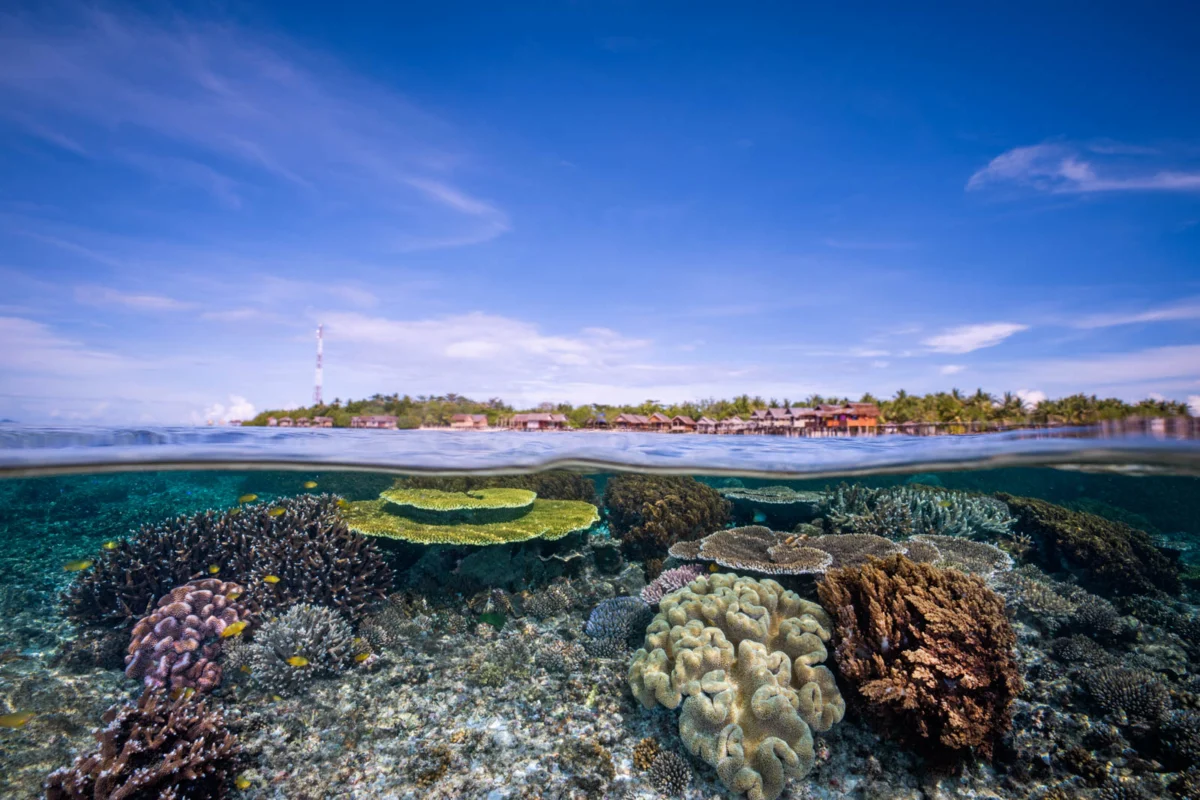
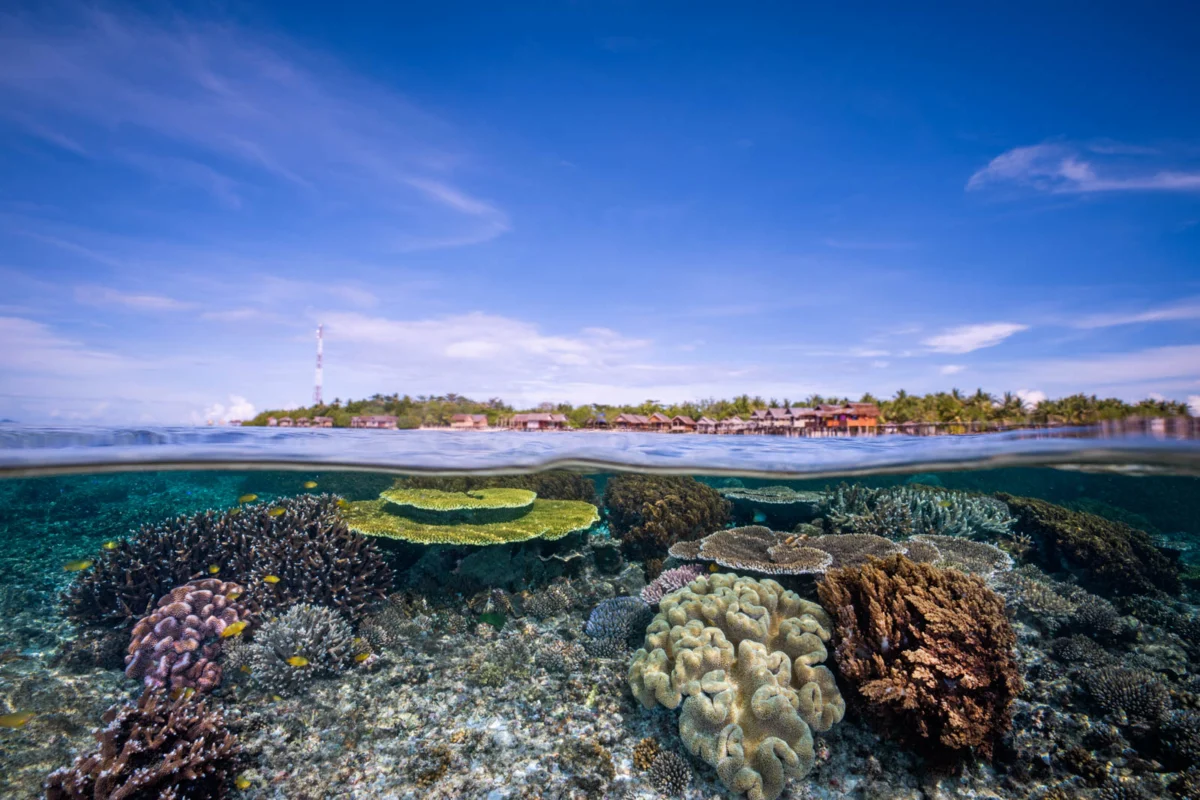
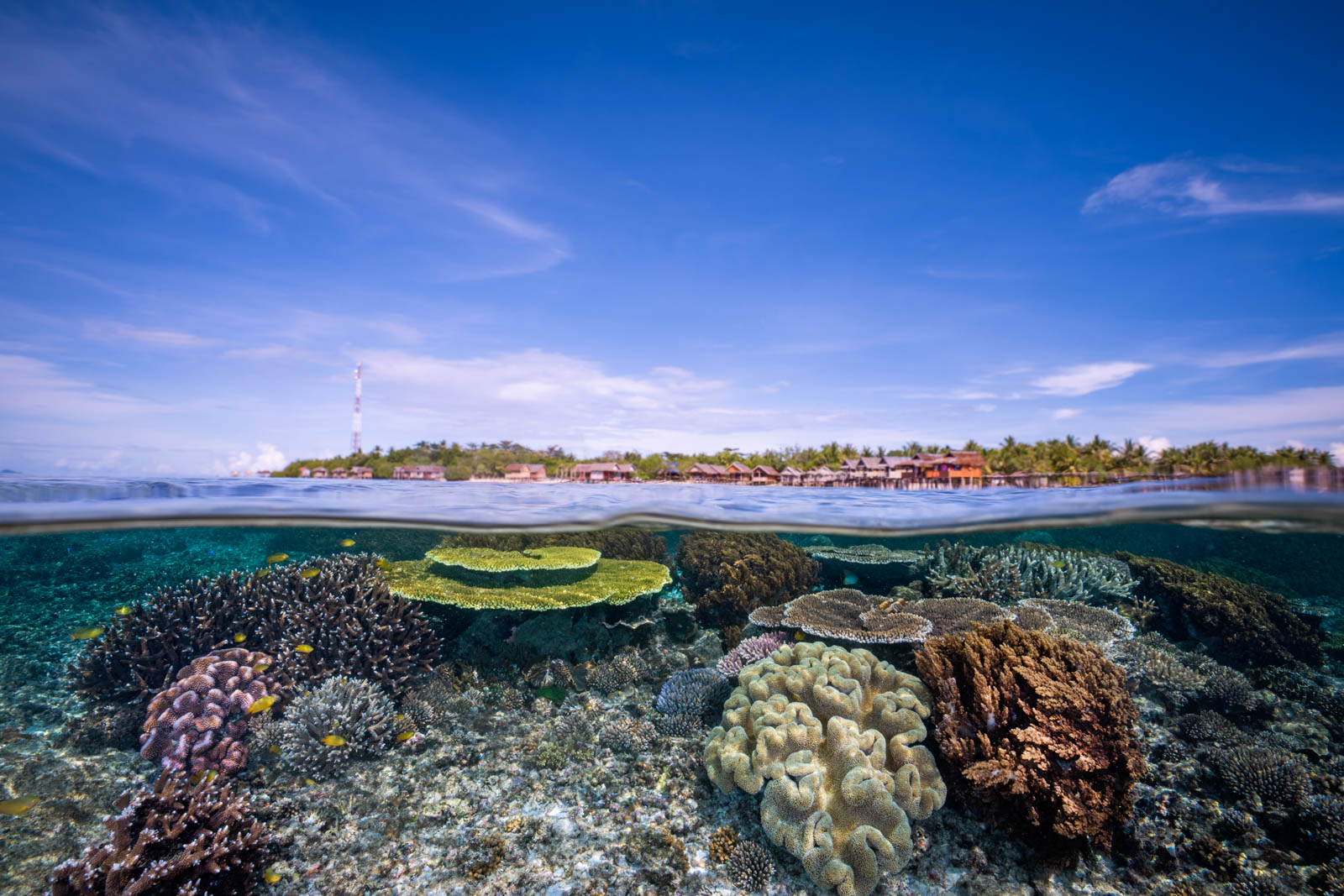
Beyond the grandeur of the reefs, Raja Ampat is a prime location for split shots, capturing both the vibrant underwater world and the stunning topside scenery—often featuring dramatic limestone karst formations and lush islands. The calm, clear waters around many island house reefs provide perfect conditions for these captivating half-in, half-out images, especially during the region’s breathtaking sunrises and sunsets.
However, a major draw for many photographers lies in the pursuit of the weird and wonderful macro critters inhabiting the cracks and crevices of these vibrant ecosystems. A mid-range macro lens, such as a 60mm, is a good starting point, but a more powerful lens like a 90mm or 120mm is essential for capturing the minute details of the region’s tiniest inhabitants. An external diopter is also highly recommended for extreme close-ups. Photographers can anticipate encounters with pygmy pipehorses, mantis shrimps, camouflaged leaf scorpionfish, elusive frogfish, various species of cephalopods, ghost pipefish, eels, blennies, and a myriad of soft coral denizens. Consulting with local dive guides before each dive is crucial for identifying target species and selecting the appropriate camera setup to maximize photographic opportunities.

Confronting the Elements: Challenges for Photographers
While Raja Ampat’s nutrient-rich waters are the bedrock of its immense biodiversity, they can occasionally present challenges for underwater photographers. Visibility, though generally excellent, can sometimes be less than ideal, particularly in areas influenced by strong currents. This can make capturing pristine wide-angle images more challenging, necessitating precise strobe positioning and lighting techniques to cut through particulate matter and enhance color and clarity.

The powerful currents, especially those flowing through the Dampier Straits, are another significant factor. These intricate current systems are a primary reason for the region’s abundant marine life, delivering a constant supply of food and creating dynamic environments. However, they also demand advanced diving skills and can make handling heavy underwater photography equipment difficult. There are instances where currents can be so strong that photographers might be advised to leave their cameras behind, focusing instead on maintaining safety and enjoying the exhilarating drift. Divers must be prepared to hold on to boulders or navigate swiftly, making steady photography a considerable task. Consequently, securing camera equipment with reliable tethers and ensuring comprehensive camera insurance are paramount considerations for any trip to Raja Ampat.
Premier Dive Sites: A Photographer’s Guide

Raja Ampat offers a constellation of dive sites, each with its unique character and photographic potential.
-
Melissa’s Garden: A true coral enthusiast’s dream, this wide-angle site plunges divers into a landscape of sprawling coral plates stretching as far as the eye can see. Its pristine topography creates an ideal setting for capturing expansive reefscapes teeming with schooling batfish, barracuda, snappers, lionfish, and angelfish. The sheer scale and health of the coral here make for unforgettable wide-angle compositions.

-
Batu Rufus: Located near the Fam Islands, Batu Rufus is an extraordinary crystal-clear emerald lagoon surrounded by towering limestone formations. While the outer reefs offer opportunities to spot manta rays and sharks at depths of around 25 meters, the true photographic magic unfolds in the shallow lagoon. A dramatic swim-through, adorned with colossal coral fans and majestic rock structures, leads into a natural pool of startling clarity. Here, in just 5 meters of water, photographers can spend hours capturing flourishing reef systems with natural light, making it an ideal location for stunning split shots that incorporate the dramatic limestone karsts.
-
Cape Kri: Perhaps the most renowned dive site in the region, Cape Kri famously held the world record for the highest number of fish species spotted on a single dive (374 species). This site offers unparalleled opportunities for both wide-angle and macro photography. Its sloping reefs descend to 40 meters, and strong intersecting currents attract schooling barracuda, turtles, manta rays, and various pelagic species, providing excellent wide-angle subjects. Simultaneously, Cape Kri is a macro photographer’s paradise, saturated with exotic tiny critters. The abundance of Muricella gorgonian corals makes it a prime location to search for the exquisitely camouflaged pygmy seahorse, along with octopus, flatworms, nudibranchs, and various shrimp species.

-
Manta Ridge: Situated between Mansuar and Airborei Islands, Manta Ridge is a well-known cleaning station and feeding ground for schooling manta rays. While encounters can be unpredictable, when the ocean gods are favorable, divers may find themselves surrounded by numerous mantas, creating incredible wide-angle photo opportunities. However, divers must remain vigilant as this site is frequently characterized by incredibly strong and potentially dangerous down currents, requiring advanced diving skills and adherence to safety protocols.
-
Citrus Ridge: Near the Gam Islands, Citrus Ridge is celebrated as one of Raja Ampat’s most colorful reef systems, making it an excellent location for vibrant wide-angle compositions. Its T-shaped topography is a biodiversity hotspot for macro life. Photographers can indulge in "underwater detective work," peering into every rock and crevice to discover elusive bottom dwellers. The site offers a diverse range of subjects, from wobbegongs and sharks to schooling pelagics, alongside an incredible array of macro life, all set against a stunning, colorful coral backdrop.

Conservation and Sustainable Tourism: Preserving the Priceless
The extraordinary marine wealth of Raja Ampat is not merely a tourist attraction but a global ecological asset requiring robust protection. The region is largely managed as a Marine Protected Area (MPA) by the local government in collaboration with international conservation organizations such as Conservation International (CI), the World Wide Fund for Nature (WWF), and The Nature Conservancy (TNC). These efforts include strict regulations on fishing, a permit system for visitors (the Raja Ampat Marine Park Entry Permit), and initiatives to educate local communities on sustainable practices.

The growth of tourism, while economically beneficial for local communities through homestays, dive guides, and boat operators, also presents challenges. Managing visitor impact, ensuring responsible diving and snorkeling practices, and mitigating pollution are ongoing priorities. Climate change, with its threats of coral bleaching and ocean acidification, poses a broader, existential challenge. The success stories, such as the improving biodiversity in Misool, underscore the effectiveness of dedicated conservation efforts and the critical role of sustainable tourism in supporting these initiatives. Visitors are encouraged to practice reef-safe behaviors, avoid touching marine life, and choose operators committed to environmental stewardship.
Conclusion: An Enduring Photographic Legacy

Raja Ampat truly offers an unending array of photographic possibilities for the eager and devoted ocean lover. Its unparalleled diversity of marine life, combined with breathtaking topside scenery, creates a unique immersive experience. The primary challenge for any underwater photographer here often boils down to a delightful dilemma: whether to focus on the grand, sweeping wide-angle shots of vibrant reefs and pelagic encounters, or to delve into the intricate, hidden world of macro critters. Both avenues offer equally strong and compelling photographic opportunities.
Beyond the technical aspects of photography, a trip to Raja Ampat is an immersion into the true definition of island life, characterized by perfectly manicured reefs, an abundance of ocean creatures, and infinite archipelago structures to enjoy during surface intervals. Remembering to respect the strong ocean currents, the fragile underwater ecosystems, and local customs ensures a safe and profoundly rewarding journey into this last remaining paradise, preserving its wonders for future generations of photographers and marine enthusiasts.