Raja Ampat has long been celebrated as the ultimate dive destination for underwater photography, a reputation meticulously built on its unparalleled biodiversity and breathtaking marine landscapes. This remote Indonesian archipelago, located off the northwest tip of Bird’s Head Peninsula in West Papua, offers an almost unbelievable spectacle of jungle-covered islands, rich coral reefs, and a density of marine wildlife that could take an entire lifetime to fully appreciate.
The Heart of Marine Biodiversity: Raja Ampat’s Ecological Treasure
Often referred to as ‘The Last Paradise’ or the ‘Amazon of the Seas,’ Raja Ampat is more than just a picturesque locale; it is a critical global hotspot for marine biodiversity. The archipelago comprises over 1,500 islands, cays, and shoals surrounding its four main islands: Waigeo, Batanta, Salawati, and Misool. Its prime geographical location, situated squarely in the heart of the Coral Triangle, the global epicenter of marine biodiversity, is the primary reason for its extraordinary ecological richness.

Scientific expeditions and ongoing research have consistently affirmed Raja Ampat’s status. It is estimated to harbor over 75% of the world’s known coral species, an astonishing 540 different types of coral. This intricate coral architecture provides habitat for an equally diverse array of marine life, including more than 1,000 species of reef fish, 700 types of mollusks, and a myriad of other creatures ranging from majestic schooling mantas and rare dugongs to enigmatic crocodiles. This sheer concentration of life, unmatched in many other parts of the world, firmly brands Raja Ampat as the undisputed mecca for scuba diving and underwater photography. The vibrant ecosystems here are a living testament to the power of pristine marine environments, fueled by nutrient-rich waters and strong ocean currents that bring a constant supply of food, fostering an astonishingly productive food web.
A History of Discovery and Conservation

While local communities have long understood and revered the richness of their waters, Raja Ampat began gaining international recognition among the diving and scientific communities in the late 20th and early 21st centuries. Early exploratory dives by renowned marine biologists and conservationists, such as Dr. Gerry Allen and Dr. Mark Erdmann, revealed its exceptional status, leading to increased scientific interest and a growing awareness of its conservation needs. Their groundbreaking surveys in the early 2000s highlighted the unparalleled species count, solidifying Raja Ampat’s place as a global conservation priority.
A significant turning point came with the establishment of Marine Protected Areas (MPAs) across the region. These zones, created through collaborative efforts involving the Indonesian government, local communities, and international conservation organizations like Conservation International (CI), the World Wildlife Fund (WWF), and The Nature Conservancy (TNC), are crucial for safeguarding Raja Ampat’s fragile ecosystems. The Misool region, in particular, stands out as a conservation success story. Through the dedicated efforts of initiatives like the Misool Foundation, established in 2005, illegal fishing, shark finning, and destructive practices have been drastically reduced within a vast no-take zone. This has led to scientifically documented increases in fish biomass, shark populations, and coral health—a rare and inspiring achievement in marine conservation. These conservation measures, coupled with sustainable tourism practices, aim to ensure that Raja Ampat’s natural wonders are preserved for future generations, while also providing economic benefits and livelihood opportunities to the local populace through ecotourism.

Navigating to Paradise: Planning Your Expedition
Reaching this pristine salty wonderland, while rewarding, requires meticulous planning and a degree of adventurous spirit. For international travelers, the journey typically involves flying into major Indonesian hubs like Jakarta (CGK) or Denpasar (DPS), followed by a domestic flight to Sorong’s Domine Eduard Osok Airport (SOQ) in West Papua. From Sorong, the final leg often includes a slow and scenic two-hour public ferry ride or a private speedboat transfer to Waisai, the capital of Raja Ampat Regency on Waigeo Island. Further transfers by speedboat are usually necessary to reach specific resorts or liveaboards located throughout the sprawling archipelago.

For avid underwater photographers, choosing the right itinerary is paramount. The consensus among seasoned visitors is that a liveaboard cruise offers the most comprehensive experience, allowing divers to cover vast distances and access remote dive sites across this expansive region, including the highly prized Misool. Liveaboards provide unparalleled access to multiple dive sites daily, maximizing photographic opportunities from dawn till dusk, and offering the convenience of traveling with specialized camera gear. Alternatively, land-based resorts and homestays on islands like Waigeo or Kri offer excellent access to local dive sites and the chance to immerse oneself in local culture, often featuring thriving house reefs perfect for independent exploration and split shot photography. Travelers are also required to purchase a Raja Ampat Marine Park Entrance Tag, a conservation fee that directly contributes to the management and protection of the marine park. The best time to visit is generally during the dry season, from October to April, when seas are calmer and visibility is typically at its best, though the region is diveable year-round.
A Photographer’s Dream: Capturing Raja Ampat’s Depths

Raja Ampat truly holds something for every underwater photographer, from wide-angle enthusiasts to macro specialists. The sheer scale and health of its reef systems are a natural masterpiece, with vibrant, flourishing corals forming a breathtaking backdrop for any shot.
Wide-Angle Wonders: The majestic reefscapes, teeming with schooling fish such as barracuda, batfish, snappers, and lionfish, provide endless wide-angle opportunities. Encounters with larger marine life like graceful manta rays, elusive wobbegong sharks, and gentle sea turtles are common. For these subjects, a 16-35mm wide-angle lens is highly recommended, allowing photographers to capture the grandeur of the reef and the vast schools of fish. Close Focus Wide Angle (CFWA) shots are also highly achievable, bringing the vibrant coral textures into sharp relief while maintaining a broad perspective of the surrounding environment. Effective strobe positioning is critical here, especially in the nutrient-rich waters that can sometimes lead to less-than-optimal visibility, ensuring subjects are well-lit and backscatter is minimized. Techniques like angling strobes outwards can dramatically improve image clarity.

Macro Marvels: For those who prefer to explore the intricate details of the miniature world, Raja Ampat is an unparalleled macro paradise. Hidden within the cracks and crevices of these vibrant reef systems are countless tiny critters. A mid-range macro lens, such as a 60mm, is a good starting point, but packing a more powerful lens like a 90mm or 120mm, along with an external diopter (wet lens), is essential to capture the smallest and most elusive subjects with stunning detail. Photographers can expect multiple encounters with pygmy pipehorses, flamboyant mantis shrimps, camouflaged leaf scorpionfish, curious frogfish, a variety of cephalopods including flamboyant cuttlefish, delicate ghost pipefish, and a multitude of eels, blennies, and soft coral denizens. The abundance means a patient approach and a knowledgeable dive guide well-versed in spotting these creatures are invaluable assets for maximizing photographic success.
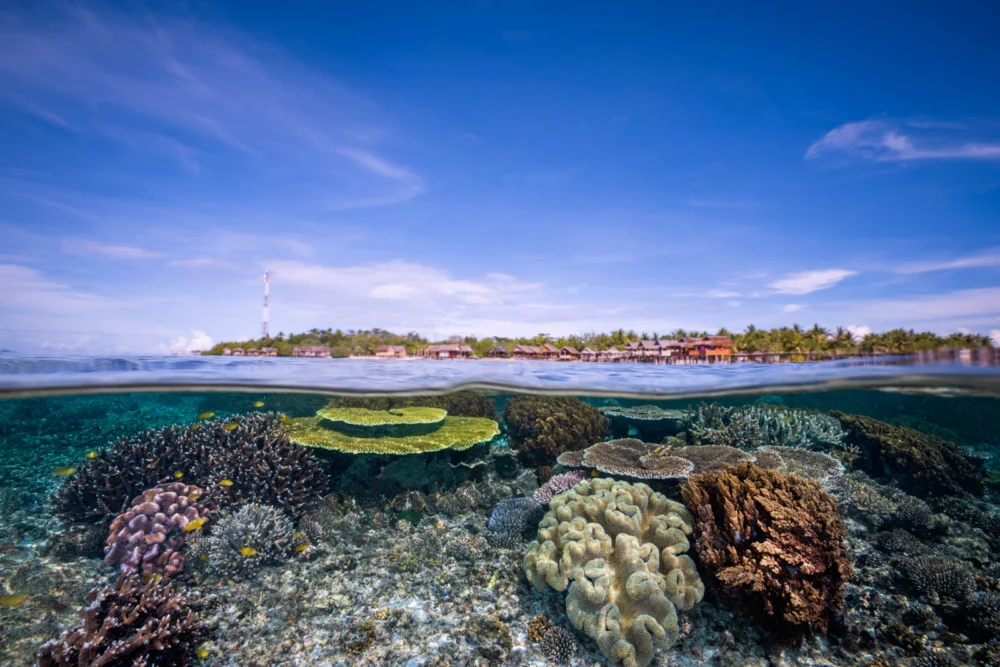
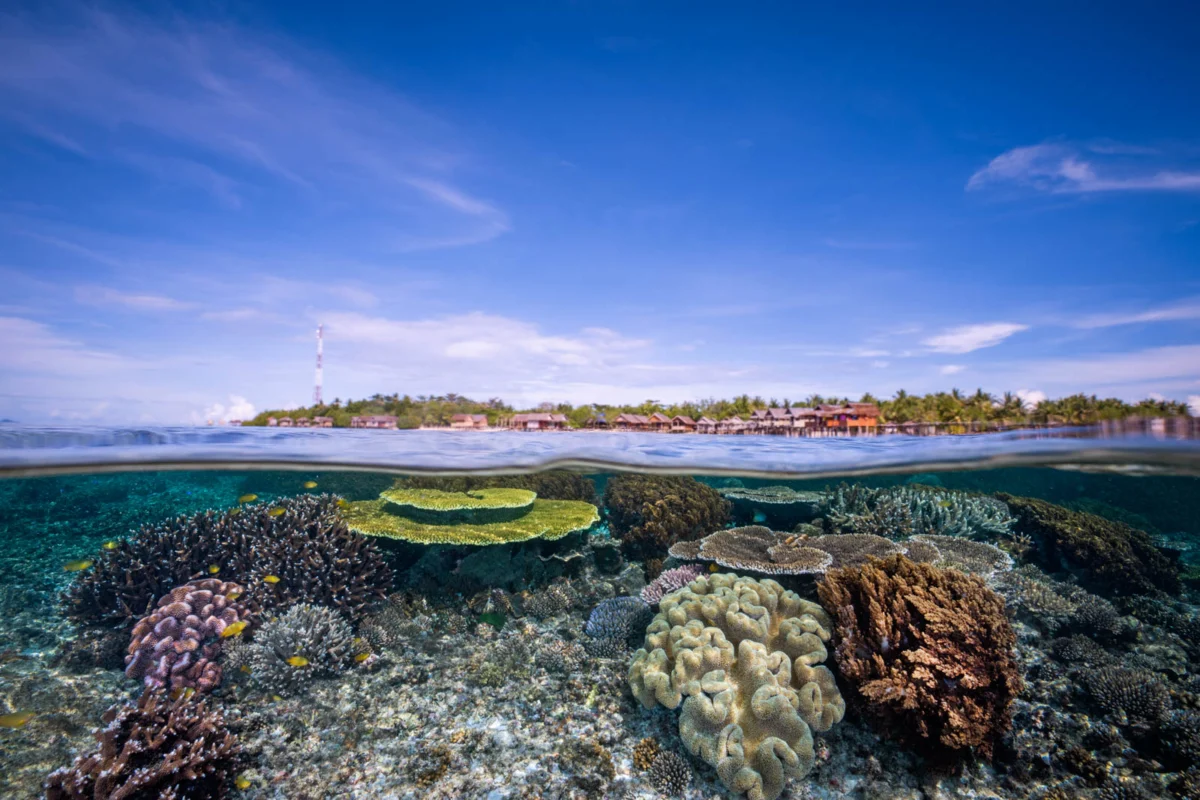
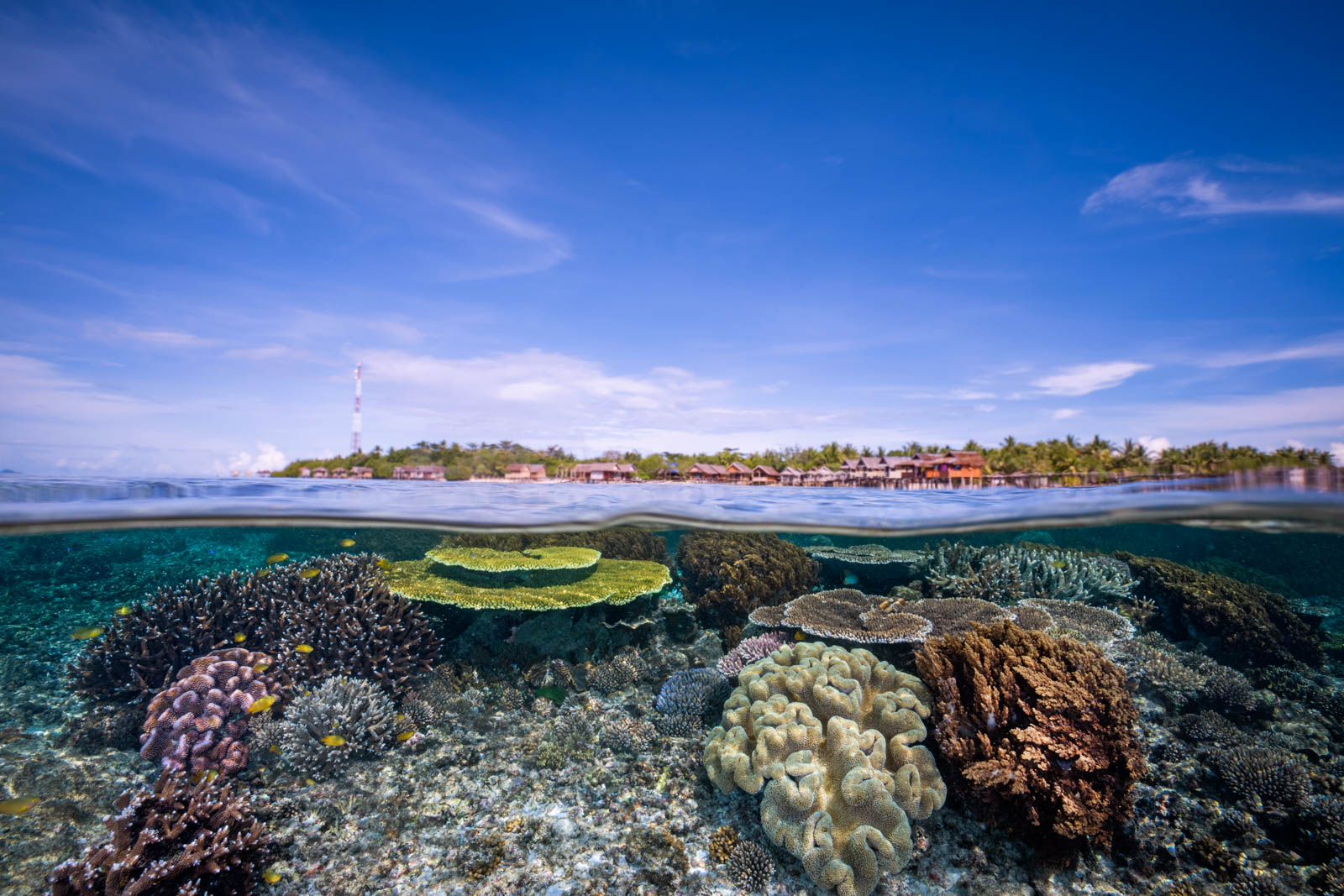
Above and Below: The Art of Split Shots: The dramatic karst landscapes and calm, clear shallows also make Raja Ampat an ideal setting for stunning over-under or split shots. Many island house reefs offer easily accessible locations where the vibrant underwater world meets the picturesque jungle-clad islands above. Timing these shots with the region’s breathtaking sunrises and sunsets can yield truly iconic images, blending the ethereal beauty of both realms. The shallow, protected lagoons provide the perfect conditions for mastering this challenging yet rewarding photographic technique.

Navigating the Challenges: Photography in Dynamic Waters
While Raja Ampat’s rich diversity is its greatest asset, it also presents unique challenges for underwater photographers. The nutrient-rich waters, the very source of its abundant marine life, can sometimes result in reduced visibility. This necessitates careful attention to strobe positioning and lighting techniques to cut through particulate matter and illuminate subjects effectively. Marine biologists explain that these conditions are a natural trade-off for such high biodiversity; the plankton and detritus that reduce clarity are precisely what sustain the thriving ecosystem.

Perhaps the most significant challenge lies in the region’s powerful currents. The Dampier Straits, a major channel, acts as a funnel for vast volumes of water, creating strong and sometimes unpredictable currents. While these currents are a vital force, bringing nutrients and attracting large pelagics, they can be a considerable burden when handling heavy underwater photography equipment. Divers must be prepared for some dives where the primary objective might be to simply hold on for dear life, taking shelter behind large boulders or using reef hooks responsibly to avoid damaging the coral. Experienced dive guides are adept at navigating these conditions, often planning dives around slack tides or utilizing drift techniques. However, if a dive guide indicates "strong" currents, it might be prudent to consider leaving the camera behind, as maintaining stability and composition while battling intense water movement can be nearly impossible, risking both equipment and personal safety. It is paramount that cameras are securely attached to the diver at all times, and comprehensive camera insurance is highly advisable given the challenging environment.
Premier Dive Sites for the Discerning Photographer

Raja Ampat boasts an array of world-class dive sites, each offering distinct photographic opportunities:
-
Melissa’s Garden: A true coral enthusiast’s dream, this wide-angle site immerses divers in vast mountains of pristine coral plates stretching as far as the eye can see. The intricate topography and vibrant colors provide a perfect stage for capturing schooling batfish, barracuda, snappers, lionfish, and angelfish against a backdrop of unparalleled reef health. The sheer scale makes it ideal for showcasing the macrocosm of Raja Ampat’s underwater world, a truly healthy and expansive reef system.

-
Batu Rufus: This hidden gem near the Fam Islands is a truly unique experience. It features a crystal-clear emerald lagoon enclosed by towering limestone karsts. The dive typically begins on the outer slopes, descending to about 25 meters, offering opportunities to encounter mantas and sharks. However, the true photographic magic unfolds in the shallow lagoon. Divers navigate a large swim-through, adorned with majestic coral fans and dramatic rock structures, before emerging into a natural pool of startling visibility. Here, in just 5 meters of water, photographers can spend hours capturing flourishing reef systems with natural light, making it an ideal location for breathtaking split shots that juxtapose the serene underwater world with the iconic limestone formations above. The stunning clarity in the lagoon provides exceptional conditions for natural light photography.
-
Cape Kri: Perhaps the most famous dive site in the region, Cape Kri holds a celebrated world record for the highest number of fish species identified on a single dive (374 species in one 90-minute survey by Dr. Allen). This prolific site offers a superb blend of wide-angle and macro opportunities. Its sloping reefs descend to 40 meters, featuring stunning coral gardens and strong intersecting currents that attract schooling barracuda, turtles, mantas, and various pelagic species. For macro photographers, Cape Kri is saturated with exotic tiny critters, including the renowned pygmy seahorse, often found camouflaged among the Muricella gorgonian fans. Other subjects include octopus, flatworms, nudibranchs, and various shrimps, ensuring every dive offers new discoveries.

-
Manta Ridge: Located between Mansuar and Airborei Islands, Manta Ridge is a renowned hotspot for schooling manta rays, particularly reef mantas (Mobula alfredi) utilizing cleaning stations. While encounters can be unpredictable, when the ocean gods are in favor, divers are treated to spectacular displays of mantas gracefully gliding through the water, sometimes requiring divers to duck as they pass by. This site demands patience but offers incredible wide-angle opportunities to photograph these magnificent ocean giants. Divers must remain acutely aware of the strong currents and respect any potential down currents, prioritizing safety and responsible interaction with marine life by maintaining distance and minimizing disturbance.
-
Citrus Ridge: Situated near the Gam Islands, Citrus Ridge is a T-shaped dive site celebrated for its incredibly colorful reef systems, particularly its vibrant soft corals. This vibrant environment is perfect for wide-angle photography, capturing the kaleidoscopic beauty of the corals and the myriad of reef fish. Beyond its stunning reefscapes, Citrus Ridge is a biodiversity hotspot for macro life. Photographers can engage in "underwater detective work," peering into every rock and crevice to find wobbegongs, sharks, turtles, schooling pelagics, and an astonishing variety of macro critters, all set against a richly colored coral backdrop. The name ‘Citrus Ridge’ aptly describes the profusion of orange, yellow, and green soft corals that make this site visually spectacular.

In Conclusion: A Commitment to Preservation
Raja Ampat represents an unparalleled frontier for underwater photography, offering an incredible diversity of marine life and geological formations that continually inspire and challenge photographers. The immersion into ‘island life,’ with its perfectly manicured reefs, abundant ocean creatures, and infinite archipelago structures visible during surface intervals, adds to the holistic experience.

The primary challenge for any photographer visiting Raja Ampat will be the difficult choice between focusing on macro or wide-angle photography, as both opportunities are equally compelling and rich. Commitment to one setup for a dive is often necessary, meaning accepting the potential to miss spectacular shots on the other end of the spectrum. Beyond the photographic pursuits, visitors are reminded of the critical importance of respecting the powerful ocean currents, the fragile underwater ecosystems, and the local communities dedicated to preserving this last remaining paradise. Raja Ampat stands not just as a destination, but as a global beacon for marine conservation, where every photograph captured serves as a testament to its enduring beauty and the urgent need for its protection. The future of this magnificent region depends on continued sustainable practices and a shared global commitment to its ecological integrity, ensuring that its designation as ‘The Last Paradise’ remains true for generations to come.