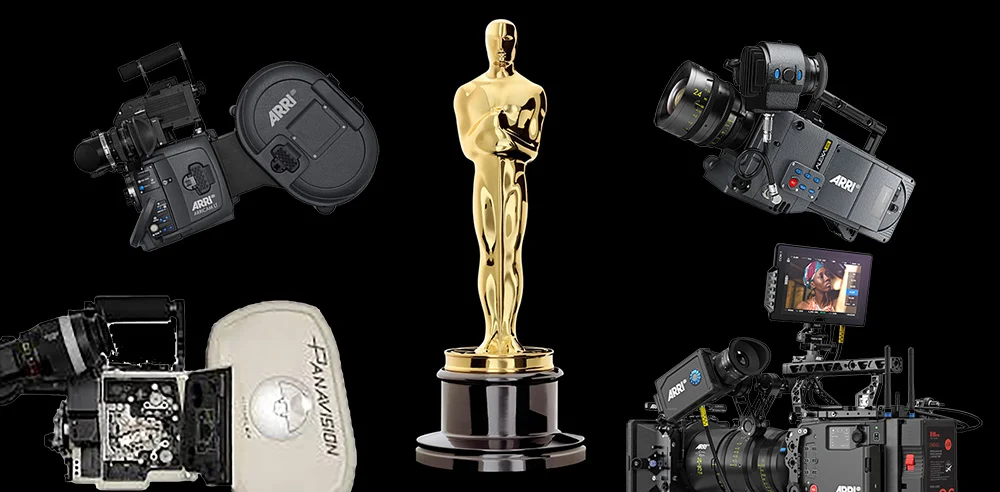
The evolution of cinematic production, spanning over a century, has witnessed an exponential growth in available equipment and techniques for capturing moving images. While this diversity fosters immense creative freedom, the absence of standardized technical parameters can lead to inconsistencies, particularly as content is consumed across a myriad of modern display technologies. In response to this challenge, streaming behemoth Netflix has established a comprehensive set of seven capture standards that cameras must satisfy to be deemed "Netflix Approved." These rigorous technical specifications are not merely arbitrary guidelines but represent a strategic initiative to ensure a baseline of exceptional image quality across its vast global content library, thereby safeguarding the viewer experience and influencing industry production practices.
The Rationale Behind Standardization: A Streaming Giant’s Imperative
Netflix’s journey from a DVD rental service to a dominant force in global streaming and original content production necessitated a paradigm shift in how it managed content acquisition. As the platform began commissioning and producing thousands of hours of original programming annually from diverse creative teams worldwide, the potential for vast discrepancies in technical quality became apparent. Viewers, accustomed to high-definition and increasingly 4K experiences on their home televisions, tablets, and smartphones, demand a consistent level of visual fidelity. Substandard footage, such as productions filmed at lower resolutions like 480p, could detract significantly from the perceived value of a subscription and dilute the brand’s reputation for premium content.
Historically, cinematic production relied on film stock, which inherently offered a certain level of resolution and dynamic range. The advent of digital cinema introduced unprecedented flexibility but also a wide spectrum of quality. Early digital cameras varied wildly in their capabilities, leading to fragmented technical standards across productions. Netflix’s decision to implement explicit camera guidelines, first introduced and continuously refined over the past decade (with significant updates often appearing around 2017-2018), serves multiple critical functions. Firstly, it acts as a quality control mechanism, ensuring all original content meets a high bar. Secondly, it streamlines post-production workflows by providing a predictable starting point for color grading, visual effects, and mastering. Thirdly, it subtly guides technological advancement within the camera manufacturing industry, as companies strive to meet these influential benchmarks. While some independent filmmakers and those pursuing niche aesthetic styles might express concerns about potential limitations on creative expression or budget constraints, the overarching intention is to foster an environment where technical excellence underpins artistic vision, ensuring content is future-proofed for evolving display technologies like High Dynamic Range (HDR) and wide color gamut.
Delving into the Seven Pillars of Netflix Approval
Netflix’s stringent requirements span crucial aspects of digital image capture, from the fundamental pixel count to the intricate details of color information and workflow efficiency. Each standard is designed to maximize the flexibility and quality of the raw footage, empowering post-production teams to craft visually stunning content.
1. Resolution: The Foundation of Visual Detail
The most immediately apparent requirement concerns resolution: a "minimum of 3840 photosite capture width (Spherical)." For standard 16:9 aspect ratio productions, this translates directly to 3840 x 2160 pixels, commonly known as Ultra High Definition (UHD) 4K. This resolution has become the de facto industry standard for premium content delivery over the last half-decade, driven by the widespread adoption of 4K televisions and monitors by consumers. While many productions opt for even higher resolutions like 6K or 8K to allow for reframing, digital stabilization, or future-proofing, 4K serves as the mandatory floor for Netflix.
The technical basis for this lies in pixel density and image detail. Higher resolutions capture more discrete points of information, leading to sharper images, finer details, and greater clarity, especially when viewed on large screens. This is particularly crucial for visual effects (VFX) work, where higher resolution provides more data for compositing and manipulation without degrading the final image. Fortunately, the majority of professional and even prosumer cinema cameras released in recent years readily meet or exceed this 4K baseline for spherical (standard) lenses.
However, the guidelines become more nuanced for anamorphic productions. Anamorphic lenses capture a wider field of view by optically "squeezing" the image horizontally onto the camera sensor. This squeezed image is then "de-squeezed" in post-production to achieve the desired widescreen aspect ratio (e.g., 2.39:1). Because the horizontal information is compressed, anamorphic projects necessitate a higher native horizontal sensor resolution to maintain equivalent image clarity after de-squeezing. Therefore, not all 4K cameras approved for spherical capture are suitable for anamorphic work. Netflix provides a specific, updated list of approved cameras for anamorphic capture on its partner help portal, highlighting the technical intricacies involved in maintaining consistent quality across diverse lensing choices. This distinction underscores Netflix’s commitment to ensuring technical excellence regardless of the cinematic tools employed.
2. Codec: Preserving Image Data Through Compression
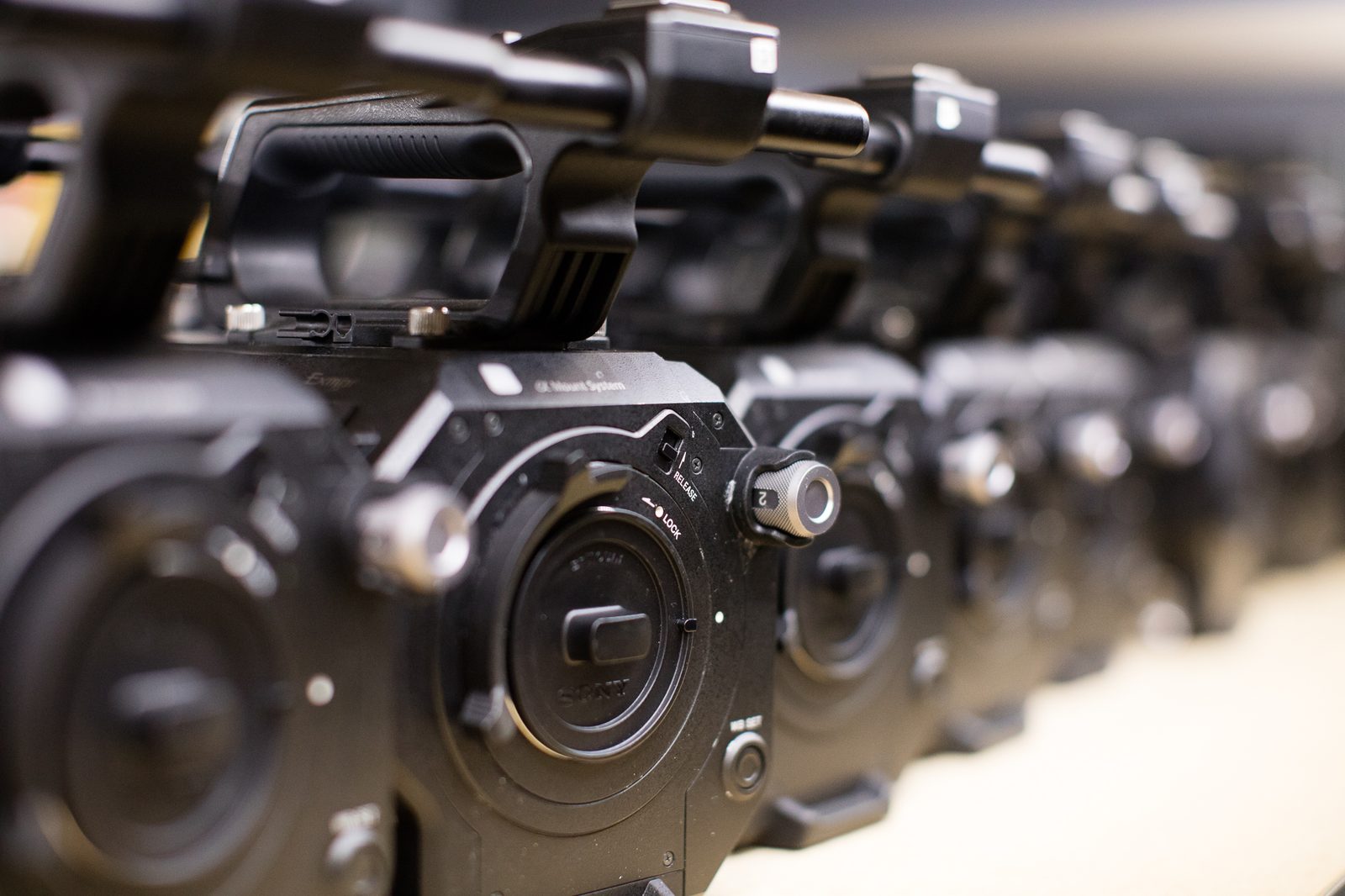
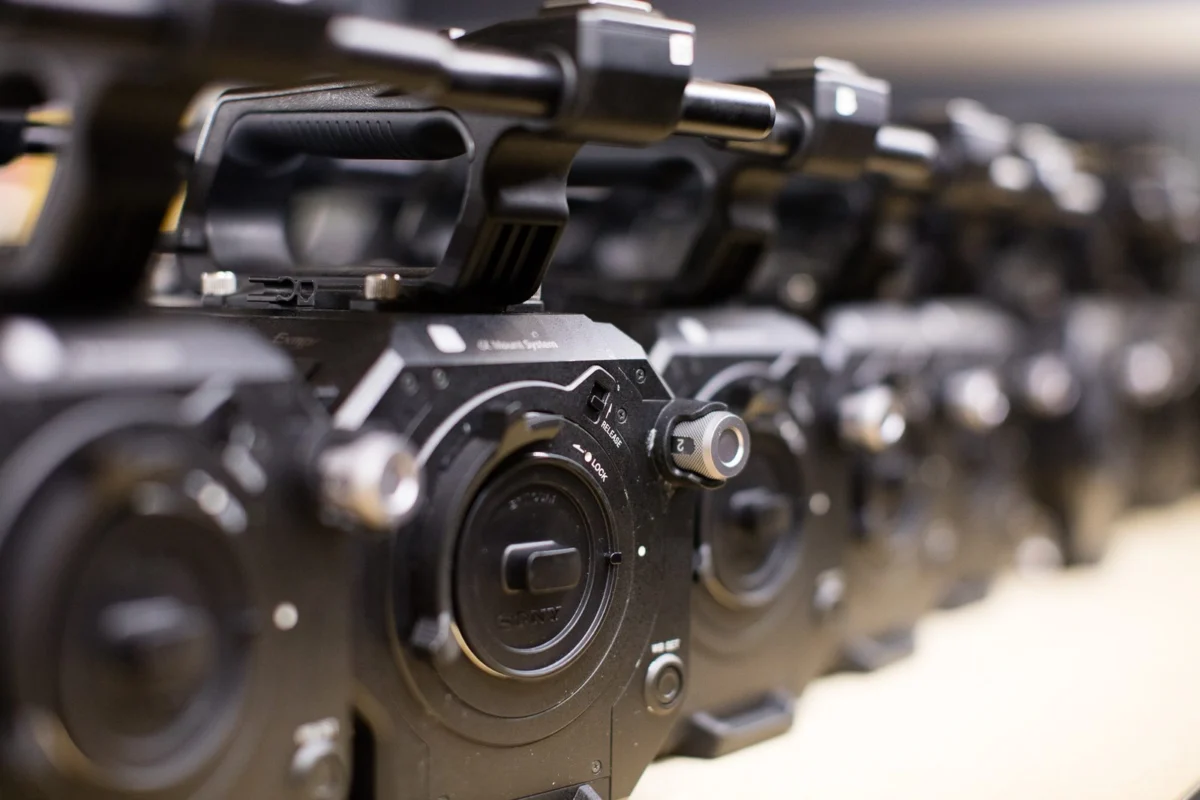
The choice of codec, or encoder/decoder, is paramount for how image data is stored and managed. Netflix’s requirements here are designed to ensure that footage retains sufficient color information, dynamic range, and overall fidelity for professional post-production. The guidelines offer two primary pathways: "Lightly compressed or uncompressed RAW" or "intra-frame based codec with 4:2:2 chroma sub-sampling or greater."
RAW formats represent the purest form of digital capture, essentially storing the unprocessed data directly from the camera sensor. This provides maximum flexibility for color correction, exposure adjustments, and white balance in post-production, as no information has been permanently baked into the image. While "true" uncompressed RAW files are massive, leading to impractical storage and data management challenges for most productions, many manufacturers offer proprietary "Compressed RAW" formats (e.g., REDCODE RAW, Canon Cinema RAW Light, Apple ProRes RAW). These formats employ sophisticated algorithms to reduce file sizes while retaining much of the flexibility and image quality of uncompressed RAW, making high-end RAW workflows more accessible.
The second option caters to productions utilizing traditional video codecs. Here, the emphasis is on "intra-frame based" compression, meaning each frame is compressed independently, as opposed to "inter-frame" codecs (like those used for final delivery, e.g., H.264), which compress frames based on differences between preceding and succeeding frames. Intra-frame compression offers superior quality for editing and grading because each frame is fully reconstructible. Crucially, this option also mandates "4:2:2 chroma sub-sampling or greater." Chroma subsampling refers to the method of encoding color information relative to luminance (brightness) information. In a 4:4:4 scheme, full color information is captured for every pixel. In 4:2:2, for every four pixels horizontally, two samples of chroma are recorded, retaining significantly more color data than 4:2:0 (commonly used in consumer formats), which only records one sample. This higher chroma sampling is vital for professional color grading, preventing artifacts and allowing for extensive manipulation of color without degradation. Popular intra-frame codecs meeting this standard include Apple ProRes 422 HQ, Avid DNxHR HQX, and some high-bitrate H.264/H.265 implementations.
3. Bit Depth: The Spectrum of Color
Complementing the codec requirements, Netflix mandates a "Bit depth: 10-bit or greater." Bit depth refers to the number of bits of data used to represent the color information for each primary color channel (red, green, blue) per pixel. An 8-bit image can represent 256 shades per channel, totaling approximately 16.7 million colors (256^3). A 10-bit image, by contrast, can represent 1,024 shades per channel, yielding over 1.07 billion colors (1024^3).
The jump from 8-bit to 10-bit is visually significant. Higher bit depth dramatically reduces the likelihood of "banding" – visible steps or stripes in smooth gradients of color or light, particularly noticeable in skies or subtle shadows. More importantly, 10-bit color depth is a fundamental requirement for working with High Dynamic Range (HDR) content. HDR delivers a significantly wider range of brightness and color than standard dynamic range (SDR), offering brighter highlights, deeper shadows, and a richer, more vibrant color palette. By demanding 10-bit capture, Netflix ensures that the original footage contains enough color information to be properly graded and delivered in HDR, future-proofing content for an increasingly HDR-centric viewing landscape.
4. Data Rate: The Flow of Information
The data rate, or bitrate, quantifies the amount of data captured per second. Netflix specifies a "Minimum 240Mbps at 24FPS" (megabits per second at 24 frames per second). This requirement is often a natural consequence of meeting the other standards. If a production is shooting 4K resolution with a high-quality, 10-bit, 4:2:2 intra-frame codec or RAW, the resulting data rate will almost invariably exceed 240Mbps.
A higher data rate directly correlates with the amount of information retained in the footage. Lower data rates necessitate higher compression, which can lead to a loss of fine detail, color accuracy, and introduce compression artifacts, especially in complex scenes with rapid motion. By setting a minimum data rate, Netflix ensures that the captured files are robust enough for intensive post-production work, allowing for greater flexibility in color grading, visual effects, and mastering without introducing digital noise or visual degradation. It’s a critical factor in maintaining the integrity of the image from capture through to final delivery.
5. Color Space & Transfer Function: Capturing Reality’s Full Spectrum
These two interconnected requirements are crucial for preserving the full dynamic range and color fidelity of the captured image, setting the stage for professional color grading. Netflix demands "Scene-referred Color Space (S.Gamut3, ALEXA Wide Gamut, REDWideGamut etc.)" and "Scene-referred Transfer Function (Slog3, Log C, Log3G10, VLog etc.)."
A color space defines the range of colors that can be represented. Unlike common display-referred color spaces like Rec.709 (standard HD) or DCI-P3 (cinema projection), scene-referred color spaces are designed to capture the broadest possible range of colors that a camera sensor can record in the real world. These "wide gamut" color spaces, such as ARRI’s ALEXA Wide Gamut, Sony’s S.Gamut3, or RED’s REDWideGamut, are significantly larger than what can be displayed on most consumer screens. Capturing in such a wide gamut ensures that all the subtle color variations present in the scene are recorded, providing maximum flexibility for the colorist to interpret and map those colors to the final delivery color space (e.g., Rec.2020 for HDR).
A transfer function (often referred to as a gamma curve or log curve) dictates how light levels (luminance) are recorded by the camera sensor. Standard video curves compress the dynamic range to fit within display limitations. Scene-referred transfer functions, often called "log" curves (e.g., Sony S-Log3, ARRI Log C, RED Log3G10, Panasonic V-Log), are specifically designed to capture a much wider dynamic range than standard video. They compress highlight and shadow information in a way that preserves maximum detail across the entire luminance range of the scene. This results in a "flat" looking image directly out of the camera, but it contains significantly more information in the highlights and shadows than a standard video image. This expanded dynamic range is then "stretched" back out during color grading, allowing for precise control over exposure and contrast, and is indispensable for creating compelling HDR content.
Together, a wide color space and a log transfer function provide a robust digital negative, preserving the maximum amount of visual information from the camera sensor, ready for the intricate process of color correction and grading that defines the final look of a production.
6. Timecode: The Backbone of Synchronization
The final technical requirement focuses on workflow efficiency and organization: the camera system must be "capable of jamming to an external source" and "Timecode should be written as metadata." Timecode is a sequence of numerical codes generated at regular intervals to identify individual frames of video or film. It’s crucial for synchronizing multiple cameras, audio recorders, and other production equipment.
In multi-camera shoots, or when recording audio separately from video (a common professional practice), accurate and synchronized timecode is essential. "Jamming to an external source" means the camera’s internal timecode generator can be synchronized to a master timecode generator, ensuring all devices on set share the exact same time reference. This prevents drift and eliminates the laborious and often imperfect process of manually syncing footage in post-production. The requirement for timecode to be written as metadata ensures that this critical organizational data is embedded within the video files, making it easily accessible for editing and archival.
While Netflix acknowledges some leniency for certain non-fiction documentary projects where capturing footage might be more spontaneous, proper timecoding remains a fundamental professional practice. Many mid-range camera systems may not have built-in timecode capabilities, but external devices like Tentacle Sync or Ambient Recording Lockit boxes provide robust solutions for generating and distributing accurate timecode. This standard underscores Netflix’s emphasis on efficient and organized post-production workflows, which are vital for large-scale, complex productions.
Broader Impact and Implications for the Industry
Netflix’s camera approval standards have sent ripples throughout the global filmmaking industry. For camera manufacturers, meeting these specifications has become a significant competitive advantage. Companies like ARRI, RED, Sony, Canon, Panasonic, and Blackmagic Design actively design and update their cinema cameras to align with Netflix’s guidelines, often highlighting their "Netflix Approved" status in marketing materials. This has, in turn, accelerated the development and adoption of higher quality digital cinema technologies across the board.
For filmmakers, particularly independent and emerging creators, the standards present both opportunities and challenges. On one hand, they provide a clear roadmap for achieving a professional baseline quality, potentially opening doors to larger productions and broader distribution. The widespread availability of increasingly affordable cameras that meet these standards (e.g., Blackmagic Pocket Cinema Camera series, some Panasonic Lumix models when paired with external recorders, certain Canon Cinema EOS lines) has also, paradoxically, democratized access to "Netflix-ready" production tools. On the other hand, some creatives worry that such prescriptive technical requirements could stifle experimental approaches or financially burden smaller productions with limited budgets, forcing them into specific camera ecosystems or workflows.
The "Netflix effect" extends beyond just cameras. It has driven an overall uplift in technical proficiency expectations within the industry, from cinematographers and DITs (Digital Imaging Technicians) to colorists and post-production houses. Furthermore, other major streaming platforms, while perhaps not always as explicitly prescriptive, often have similar, though sometimes less publicized, quality benchmarks. This collective push towards higher technical standards ensures that the global audience receives a consistently high-quality visual experience, reinforcing the perception of streaming as a premium content delivery medium.
In conclusion, Netflix’s seven camera capture standards represent a pragmatic and influential move by a leading entertainment platform to standardize technical excellence. By setting clear benchmarks for resolution, codec, bit depth, data rate, color space, transfer function, and timecode, Netflix not only guarantees a superior viewing experience for its subscribers but also plays a pivotal role in shaping the technological trajectory of digital cinema production worldwide. While the debate over creative freedom versus technical mandates continues, the undeniable outcome is an industry-wide elevation of visual quality, benefiting both creators and consumers alike.