The world of photography has lost one of its most distinctive and influential voices with the passing of Martin Parr. Known for his unflinching gaze upon the peculiarities of modern life, Parr, who was born in 1952, died in 2025, leaving behind a monumental body of work that redefined documentary photography and challenged conventional notions of beauty and social commentary. His unique visual language, often characterized by saturated colours, bold flash, and an incisive, sometimes satirical, eye for the absurdities of consumer culture and human behaviour, has left an indelible mark on the medium.
A Life in Focus: The Evolution of a Visionary Photographer
Born in Epsom, Surrey, in 1952, Martin Parr’s photographic journey was deeply influenced by his grandfather, George Parr, an amateur photographer and a member of the Royal Photographic Society. This early exposure ignited a passion that led Parr to study photography at Manchester Polytechnic (now Manchester Metropolitan University) from 1970 to 1973. It was here that he began to cultivate his characteristic documentary style, initially focusing on the lives of working-class communities in the North of England through black-and-white imagery.
The 1970s and early 1980s saw Parr honing his skills in monochrome, capturing the unvarnished realities of everyday life. However, a pivotal moment arrived in the early 1980s when Parr made the bold decision to embrace colour film. This was a significant departure from the prevailing black-and-white aesthetic prevalent in British documentary photography at the time. This shift proved transformative, laying the foundation for his signature style: vivid, often hyperreal colours, tightly framed compositions that emphasized detail, and a nuanced, frequently ironic, perspective on the emerging landscape of consumerism and leisure.
One of Parr’s earliest and most significant bodies of work emerged from his time documenting the Butlins holiday camps. His photographic explorations of Butlins by the Sea in Filey, often undertaken as holiday jobs, offered a vibrant, sometimes kitschy, glimpse into the world of British working-class holidays during the 1970s. Through black-and-white documentary shots, frequently enhanced by his burgeoning use of flash to accentuate colours and the manufactured joviality of these resorts, Parr began to dissect the era’s burgeoning consumerism, leisure activities, and subtle social dynamics. This period was instrumental in foreshadowing his later, more celebrated colour work, particularly the seminal series The Last Resort.
The Last Resort: A Turning Point in Documentary Photography
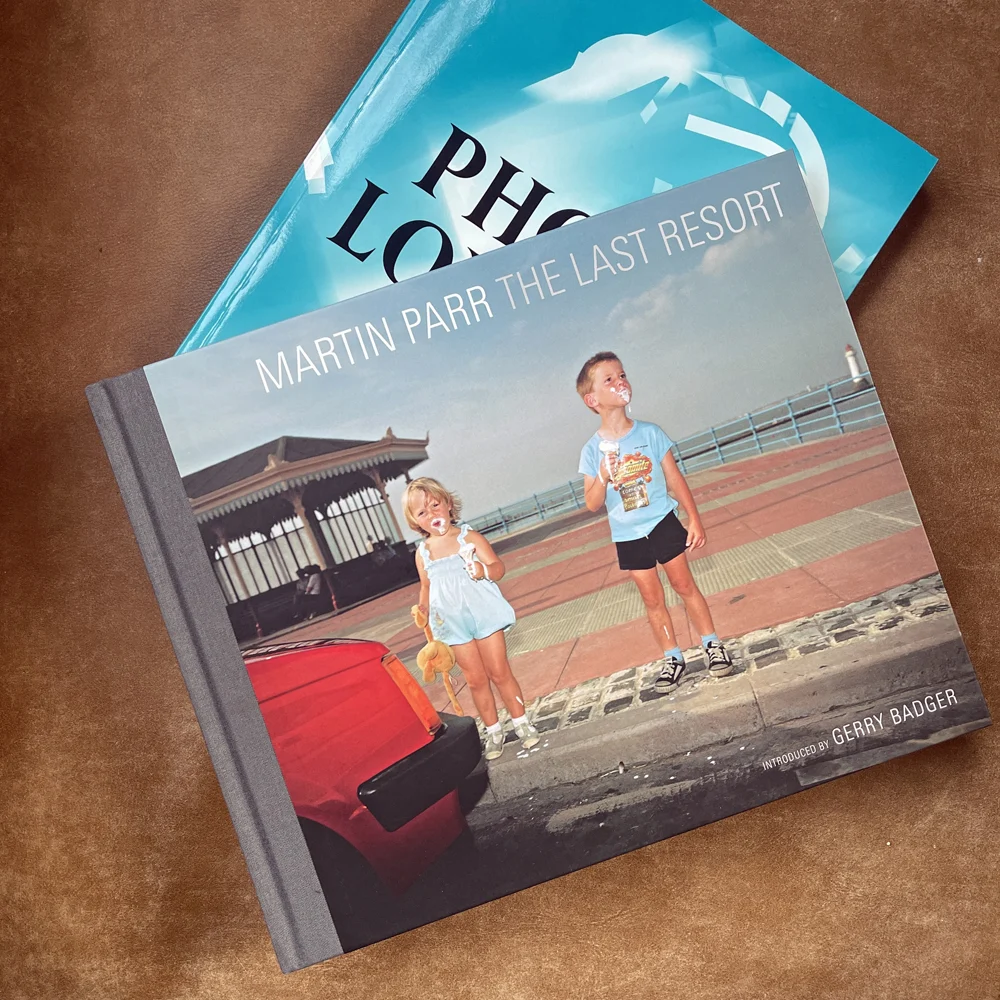
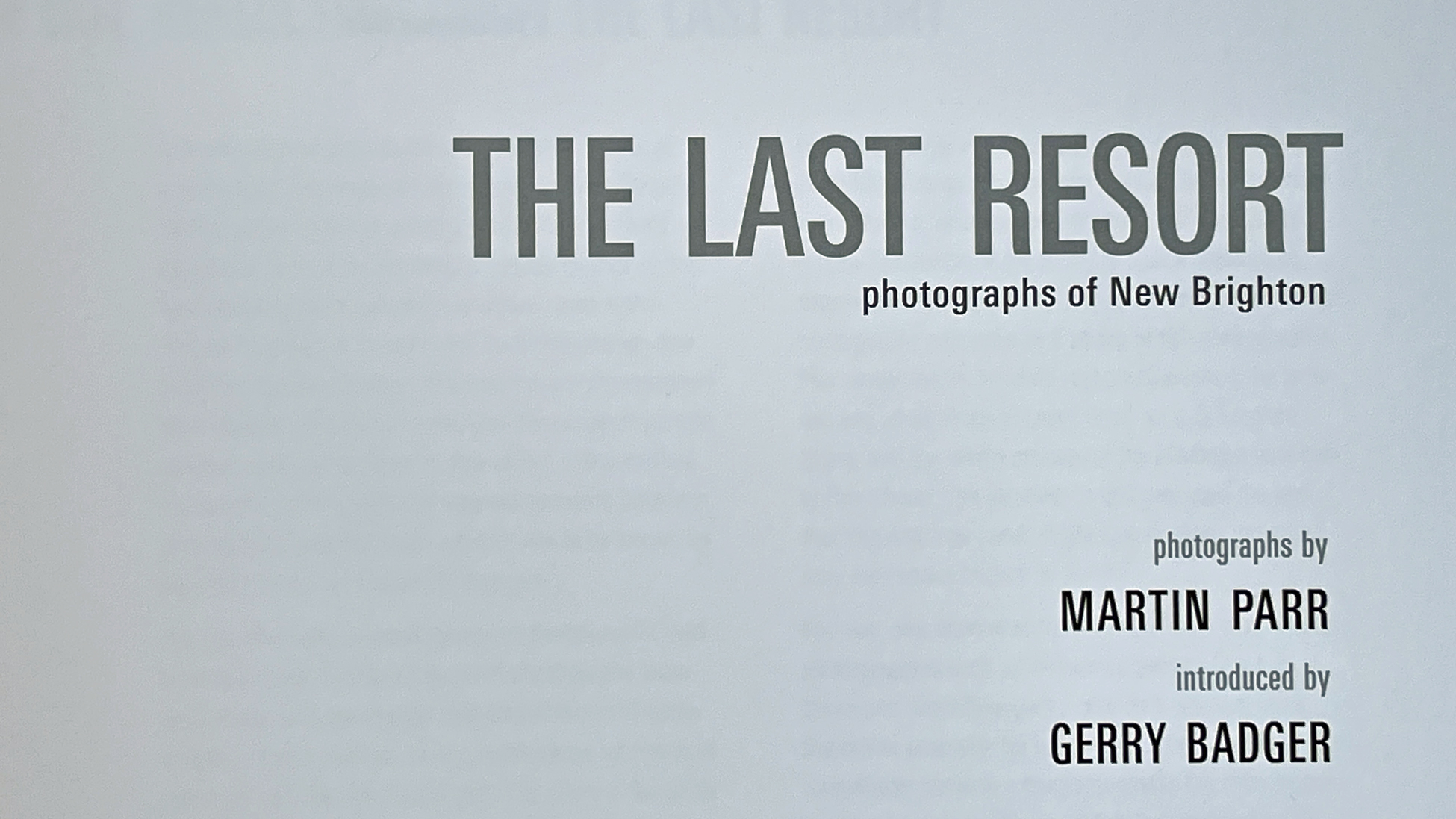
Parr’s 1986 book, The Last Resort, stands as a landmark achievement in his career and a significant contribution to photographic history. Documenting British holidaymakers in New Brighton, the series presented a raw and unapologetic portrayal of leisure and aspiration within working-class Britain. The work was met with a mixture of acclaim and controversy. While some lauded its unflinching honesty and sharp social observation, others perceived it as mocking or critical of its subjects. This dichotomy, however, became a hallmark of Parr’s approach, sparking crucial dialogues about class, representation, and the ethics of photographic practice. The Last Resort cemented his reputation as a keen observer of social habits, class distinctions, and the pervasive influence of consumer culture.
Magnum Membership and Global Recognition
In 1994, Martin Parr became a full member of Magnum Photos, the prestigious international photographic cooperative. His admission was not without internal debate, with some members reportedly finding his unconventional style challenging. Nevertheless, his inclusion signalled a broader acceptance of his unique vision within the established photographic community. This period marked an acceleration in his prolific output. Parr went on to publish over 100 books, a testament to his relentless exploration of his chosen themes. His work was exhibited extensively in major institutions worldwide, including renowned exhibitions at the Tate, the Barbican Centre, and the Museum of Modern Art (MoMA), solidifying his status as a globally recognized artist.
Beyond the Lens: Curator, Collector, and Advocate
Martin Parr’s influence extended far beyond his own photographic output. He was a passionate and influential curator, an avid collector of photography, and a tireless promoter of the photobook. His dedication to the medium was further exemplified by his founding of the Martin Parr Foundation in Bristol. This institution was established with the specific aim of supporting and archiving British documentary photography, though it notably focused on documentary rather than exclusively street photography, highlighting his nuanced understanding of photographic genres. The Foundation serves as a vital resource for researchers, historians, and future generations of photographers interested in the rich heritage of British visual storytelling.
The Parrian Lens: Satire, Empathy, and the Everyday Extraordinary
Parr’s work is frequently described as a delicate balance between satire and empathy. While his images often highlight the excesses and absurdities of modern life, they are rarely devoid of a deeper understanding and fascination with his subjects. He possessed an unparalleled ability to find the extraordinary within the ordinary, transforming mundane scenes of seaside resorts, supermarket aisles, and global tourist traps into compelling visual narratives. His distinctive visual language, characterized by saturated colours, bold use of flash, and often unconventional compositions, became instantly recognizable. This unique approach irrevocably shaped how many perceive modern life, from its consumerist trappings to its everyday rituals.
Critics sometimes accused Parr of being overly critical or even mocking, particularly in his portrayals of the working class. However, Parr consistently maintained that his intention was to photograph what he saw with genuine fascination, not with ridicule. This tension between observation and interpretation, between the perceived critique and the artist’s stated intent, has been a fertile ground for critical discourse. It has compelled viewers to engage with complex issues of ethics, class, and representation in photography, making his art not just visually striking but also intellectually stimulating.
Defining Talent: Vision Over Conventional Aesthetics
The question of whether Martin Parr was a "talented" photographer often arises, particularly given his departure from traditional photographic aesthetics. If talent is measured by technical perfection or adherence to classical beauty standards, Parr’s work might appear unconventional. However, if talent is defined by the development of a distinct and influential visual voice, the ability to profoundly impact a medium, and the capacity to capture the authentic truth of a culture, then Martin Parr’s talent is undeniable.
His genius lay in his visionary approach. By pushing the boundaries of social documentary, he injected colour, satire, and a deeply personal perspective into a genre that had historically favoured black-and-white objectivity. This innovative spirit inspired a new generation of photographers to look at everyday life with a fresh, often playful, eye, embracing what could be termed a "snap fashion" aesthetic – capturing the immediate and the unposed with a keen awareness of visual impact.
Ultimately, Parr’s talent was not about conventional beauty but about an extraordinary vision. His originality, unwavering consistency, and profound impact on visual culture are indisputable. He demonstrated that significant art could be found in the overlooked corners of contemporary society, and that a camera, coupled with a discerning eye, could serve as a powerful tool for social commentary and cultural exploration.
Was Martin Parr a Street Photographer?
The classification of Martin Parr within the broader landscape of photography is multifaceted. While he is primarily celebrated as a social and documentary photographer, his work undeniably shares significant common ground with street photography. His keen observation of public spaces, his knack for capturing candid moments, and his focus on spontaneous interactions align with the core tenets of street photography.
However, Parr’s methodology often diverged from the classic street photography tradition exemplified by figures like Garry Winogrand or Henri Cartier-Bresson. Unlike those who sought to be unobtrusive observers, Parr often employed the overt use of flash, frequently got very close to his subjects, and did not shy away from making his presence known. Furthermore, his work was generally more conceptual and satirical, aiming to provoke thought and comment on societal trends rather than solely documenting fleeting human experiences.
While Parr may not have strictly defined himself as a "street photographer," his artistic practice significantly blurred the lines and arguably expanded the very definition of the genre. His willingness to experiment with form and content invited new interpretations of what street photography could encompass, demonstrating that the genre could extend beyond candid observation to incorporate critical commentary and a distinct authorial voice.

Categorizing a Chameleon: Documentary, Social, and Beyond
Documentary Photographer: Parr’s primary identification as a documentary photographer is perhaps the most fitting, albeit acknowledging his distinctive stylizations. He meticulously documented real life, with a particular focus on British culture, consumerism, class dynamics, and social behaviour. While his use of colour and flash might appear stylized, the underlying content of his images remained firmly rooted in observation and commentary on the world around him.
Social Photographer: A significant portion of Parr’s oeuvre is dedicated to critiquing and exploring social habits. His explorations of shopping, eating, holiday-making, and tourism offered sharp insights into the quirks and rituals of everyday life, positioning him as a keen social observer.
Street Photographer? Partially? Maybe?: As discussed, Parr’s work often features candid moments captured in public spaces, a characteristic of street photography. However, his satirical edge and more constructed approach differentiate him from traditional street photographers. His contribution lies in bridging the gap between pure observation and pointed social critique within public settings.
Holiday & Travel Photographer: Through seminal series such as The Last Resort, Small World, and his extensive global projects for Magnum, Parr extensively documented mass tourism and travel culture. His lens, however, always carried a critical or ironic perspective, transforming seemingly innocuous travel photography into a commentary on globalization and its effects.
General Photographer: It is crucial to note that Martin Parr was far from a "general" photographer. His work possessed a highly specific focus and a remarkably consistent stylistic approach. He did not typically engage in fashion, studio portraiture, wildlife, or commercial photography in the conventional sense. His artistic identity was forged in the crucible of social observation and cultural commentary.
The Enduring Legacy of a Visionary
Martin Parr was a documentary and social photographer whose distinctive style masterfully blended elements of street and travel photography. He became renowned for his sharp, often ironic, commentary on modern life, capturing the zeitgeist of an era defined by mass consumerism and shifting social landscapes.
For aspiring and established photographers alike, studying Parr’s oeuvre offers invaluable lessons. His work serves as a powerful reminder that to create impactful photography, one needs more than just a camera and equipment; it requires a discerning eye, a unique perspective, and a deep engagement with the world. As Parr himself demonstrated, the ability to "see" the extraordinary in the ordinary is the true hallmark of a visionary artist.
The impact of Martin Parr’s work is immeasurable. His unflinching gaze, his embrace of colour and form, and his willingness to engage with challenging social themes have left an enduring legacy that continues to inspire and provoke. His passing marks the end of an era, but his photographs remain a vital and vibrant testament to his extraordinary vision and his profound understanding of the human condition in the modern age.