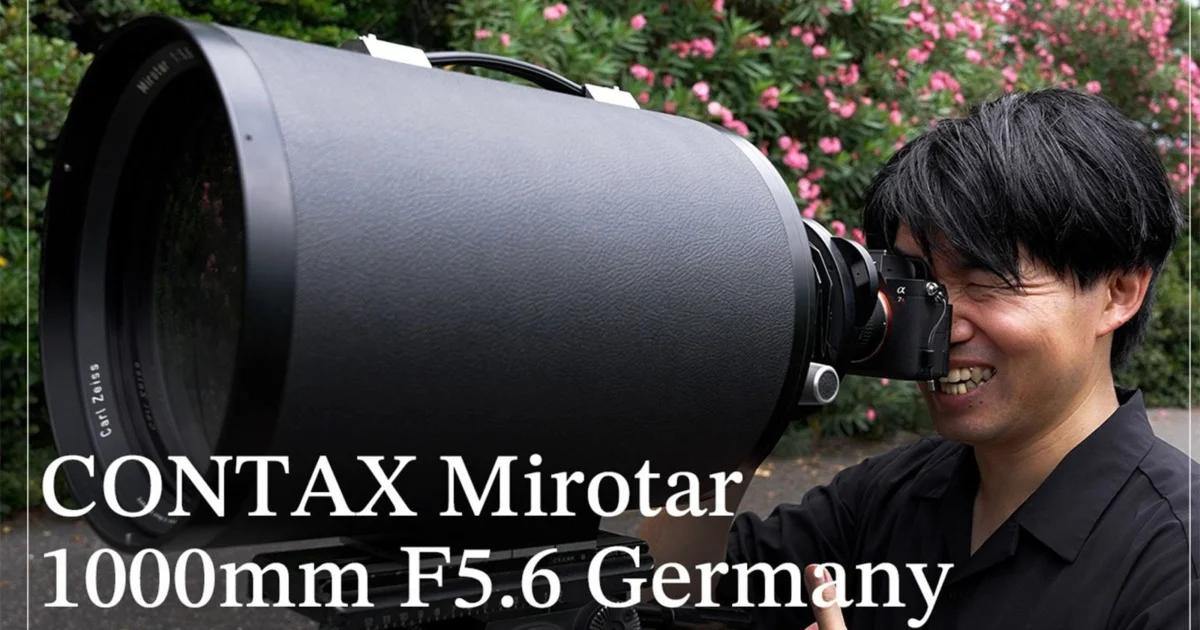
Japanese photography retailer Map Camera, a renowned entity in the global photographic community, particularly known for its insightful monthly and annual camera sales charts, recently captivated enthusiasts by acquiring and testing an exceptionally rare and optically audacious lens: the Contax Mirotar 1000mm f/5.6. This ultra-telephoto mirror lens represents a pinnacle of vintage optical engineering, a testament to a bygone era of specialized photographic equipment, and its recent public demonstration by Map Camera has cast a spotlight on its historical significance, formidable specifications, and enduring appeal among collectors and optical connoisseurs. The lens, an artifact of bespoke manufacturing, is not merely a photographic instrument but a substantial piece of optical history, now critically examined on a contemporary digital platform, the Sony a7R V.
The Genesis of a Legend: Contax Mirotar 1000mm f/5.6
Manufactured by Contax, a brand synonymous with high-quality optics and precision engineering, the Mirotar 1000mm f/5.6 stands out even within its illustrious lineage. Unlike mass-produced lenses, this particular model was exclusively crafted on a made-to-order basis, a production methodology that inherently limited its availability and cemented its status as an elusive collector’s item. According to insights gleaned from Sony Alpha Rumors and further corroborated by auction records, the total production run of this remarkable lens is believed to be fewer than 30 units. The Leitz Photographica Auction, a venerable institution in the trade of vintage photographic equipment, provides a more precise figure, stating that only 22 units were ever manufactured between 1976 and 1978. Each of these lenses was meticulously produced to special order, typically in the Contax/Yashica mount, a testament to the specialized demands and technological prowess of the era.
The decision to produce such a specialized lens reflects the photographic landscape of the late 1970s, a period when dedicated professionals and institutions often required bespoke solutions for extreme telephoto applications, ranging from wildlife photography and sports to surveillance and scientific documentation. The collaboration between Contax and Carl Zeiss, the optical giant, ensured that these lenses benefited from the highest standards of optical design and manufacturing, pushing the boundaries of what was technically feasible for a photographic lens of its kind.
A Deep Dive into its Engineering and Physicality
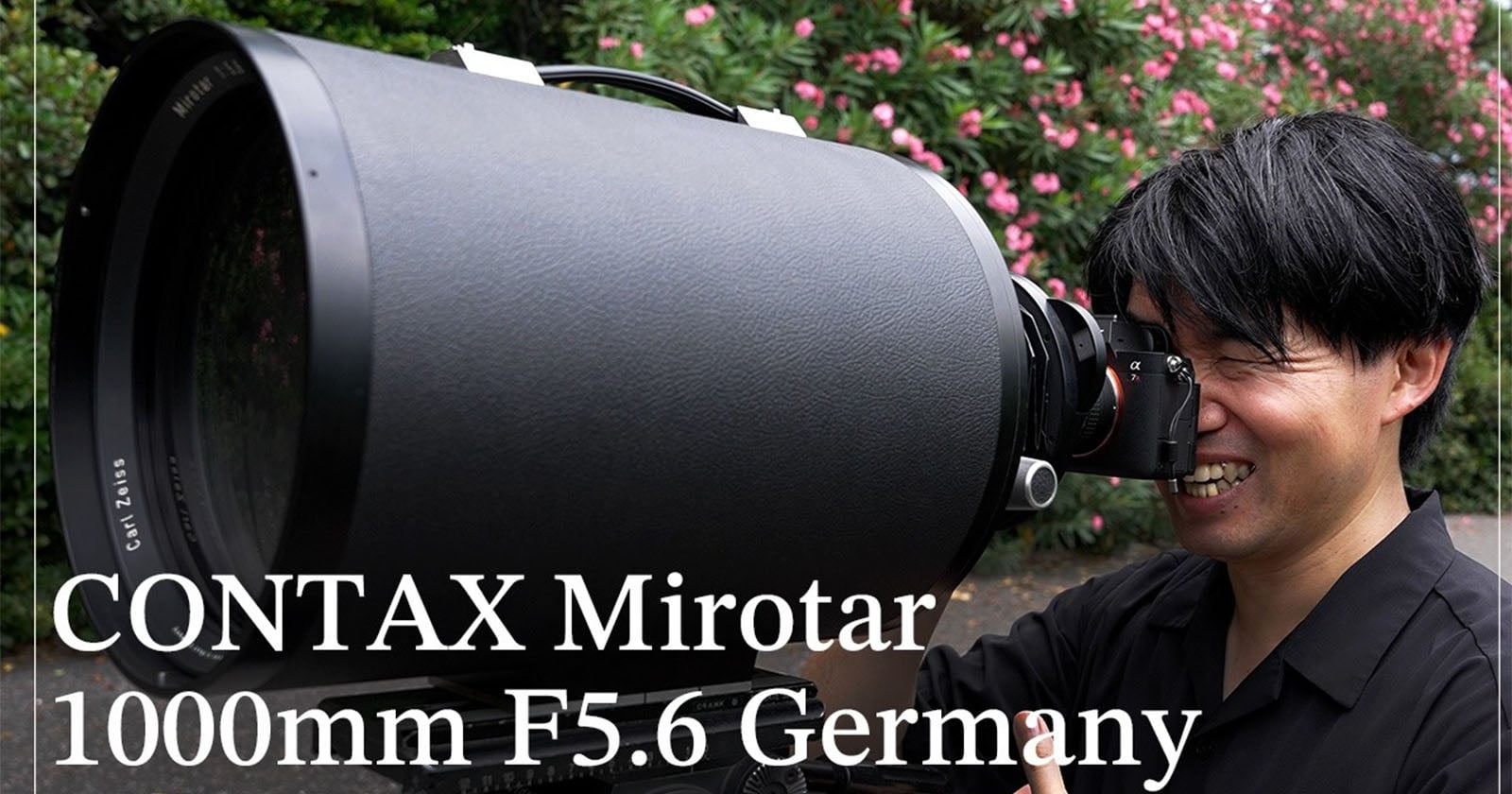
The Contax Mirotar 1000mm f/5.6 is classified as a catadioptric lens, a design that employs a combination of mirrors and refractive lens elements to fold the optical path, thereby achieving a very long focal length within a comparatively shorter physical barrel. While this design offers advantages in terms of reduced chromatic aberration and often a lighter weight than traditional refractive lenses of equivalent focal length, it typically comes with a fixed aperture and the distinctive "donut-shaped" bokeh, a characteristic aesthetic feature that has become a hallmark of mirror lenses. However, the Mirotar 1000mm f/5.6 distinguishes itself with an exceptionally fast maximum aperture of f/5.6 for its focal length, setting it apart from many other mirror lenses which often feature slower apertures like f/8 or f/11. This speed, while impressive, necessitated an uncompromising approach to size and weight.
The physical dimensions of the lens are indeed monumental. Measuring a formidable 16.5 inches (41.9 centimeters) in length, it is comparable in size to a small telescope. Its weight is equally staggering, tipping the scales at a back-breaking 36.4 pounds (16.5 kilograms). To put this into perspective, Map Camera humorously noted that it weighs "over eight Nocts," referencing the highly regarded and notoriously heavy Noctilux lenses, which themselves are considered substantial. This immense mass underscores the engineering challenges involved in creating such a powerful optical instrument and clearly indicates that its operation necessitates a robust tripod and specialized support systems.
Optically, the lens is constructed with five elements arranged in five groups, a configuration designed to optimize light transmission and image quality. To manage its fixed aperture and provide exposure control, the lens features integrated Neutral Density (ND) filters on a turret mechanism, allowing photographers to effectively "stop it down" to the equivalent of f/8 and f/11. This thoughtful inclusion highlights the practical considerations for a lens designed for demanding outdoor and bright-light scenarios. Furthermore, the original package included a set of rear color filters and was housed in a bespoke wooden storage box, underscoring its premium status and the meticulous attention to detail during its production. The manual focus lens also has a minimum focusing distance of 472 inches (approximately 12 meters), reaffirming its specialized role as an extreme telephoto optic, far removed from macro photography capabilities.
Market Value and Historical Pricing: A Collector’s Dream
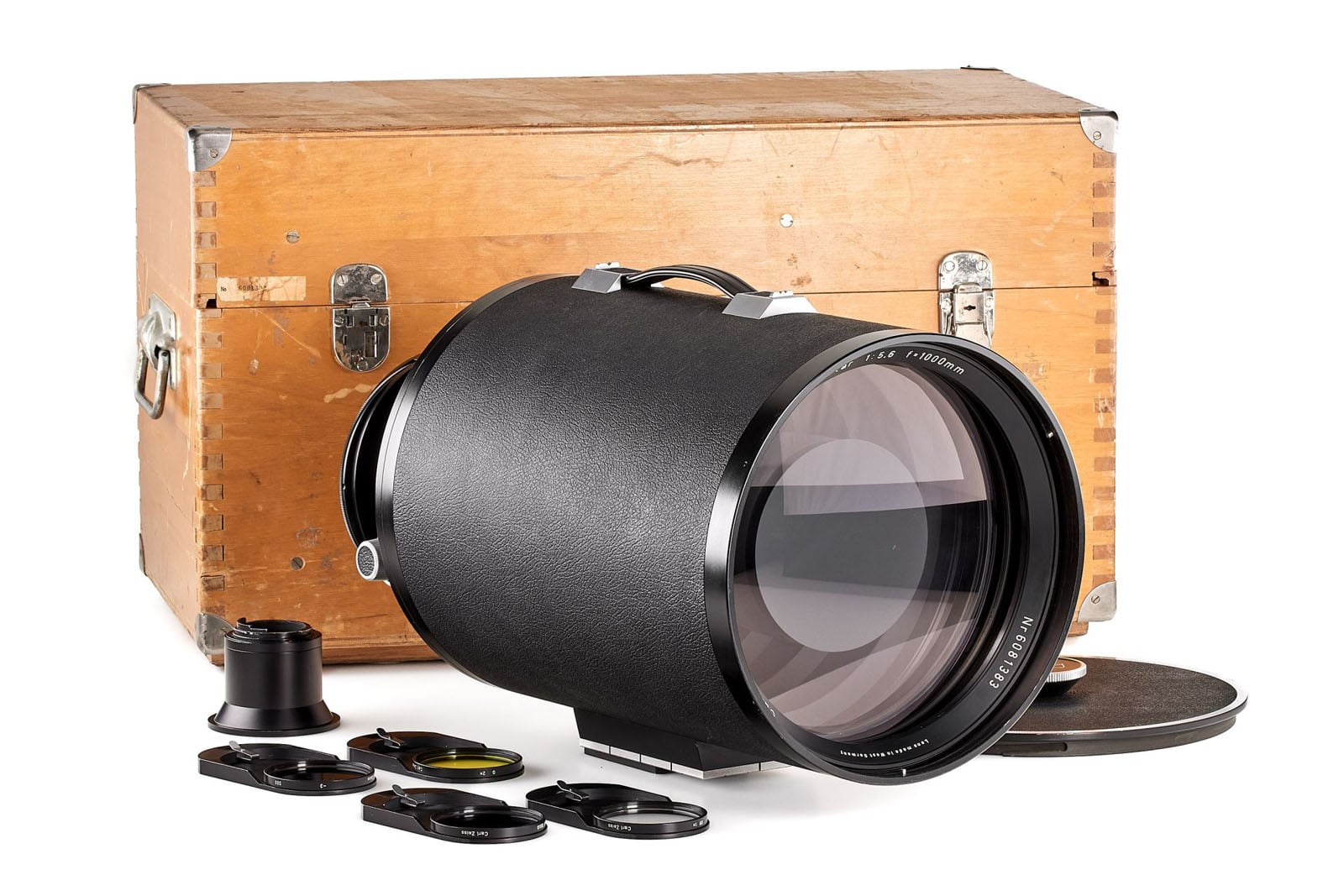
The rarity and historical significance of the Contax Mirotar 1000mm f/5.6 translate directly into its extraordinary market value. Evidence of this was prominently displayed at the 46th Leitz Photographica Auction, where one of these lenses fetched an impressive €19,200, which converted to nearly $22,400 at current exchange rates. This sale price not only surpassed Leitz Photographica’s pre-auction estimate but also solidified the lens’s position as a highly coveted item among collectors worldwide. The auction house itself described it as an "extremely rare and impressive mirror lens by Carl Zeiss," emphasizing its pristine condition and completeness with its original wooden box.
While the auction price is undeniably substantial, Map Camera’s research reveals an even more astonishing historical cost. In the late 1970s, when these lenses were originally built to order, they commanded a price of approximately 4.7 million Japanese Yen. Translating this figure to today’s exchange rates, without accounting for the significant impact of inflation over nearly five decades, would place its original cost at close to $30,000. When factoring in inflation, the real purchasing power of 4.7 million JPY in 1978 would be dramatically higher in 2024. For instance, according to historical inflation data, 4.7 million JPY from 1978 would require well over 10 million JPY today to match its original purchasing power, potentially pushing its inflation-adjusted value far north of $60,000 to $70,000 in contemporary terms. This astronomical original price further underscores its exclusivity and the level of investment required by its initial owners, often institutions or exceptionally wealthy private collectors. The current auction price, while high, represents a market valuation that, in real terms, is considerably less than its original inflation-adjusted cost, a common phenomenon for many vintage photographic items that, despite their rarity, do not always appreciate in line with inflation.
Map Camera’s Modern Test: Bridging Eras
Map Camera’s decision to test the Contax Mirotar 1000mm f/5.6 on a modern Sony a7R V mirrorless camera, utilizing an adapter, offers a unique opportunity to evaluate this vintage marvel through a contemporary lens. The Sony a7R V, with its high-resolution sensor and advanced imaging capabilities, provides an ideal platform to scrutinize the optical performance of such a historic piece of glass.
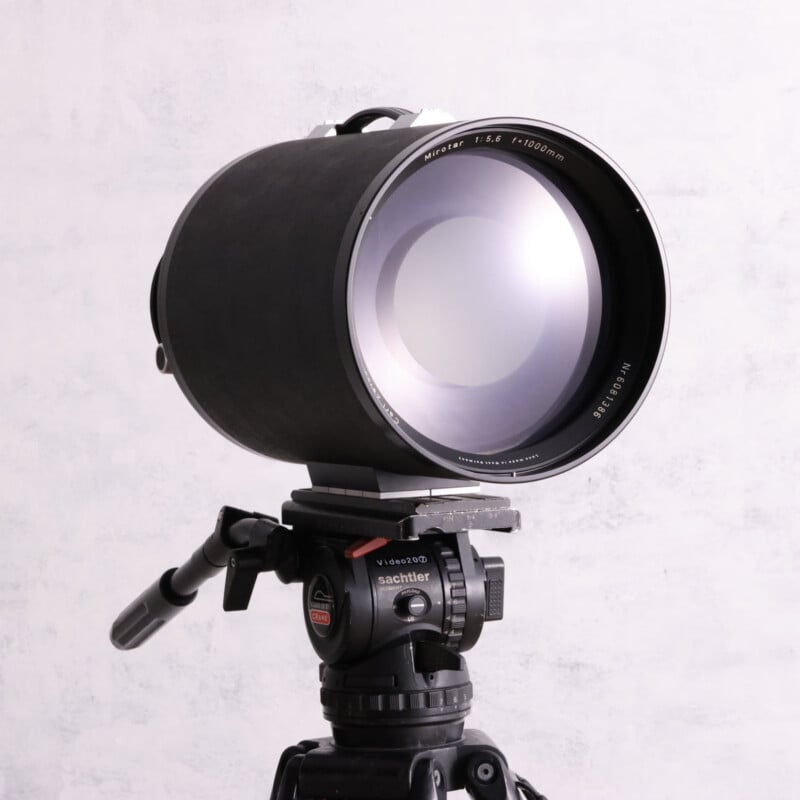
The team at Map Camera acknowledged the immense practical challenges associated with using the lens. Describing it as "super tedious to use," they highlighted the difficulties posed by its sheer size and weight. Mounting a 16.5-kilogram lens securely and precisely requires specialized equipment, such as the robust Sachtler Video 20 tripod head seen in accompanying imagery. Furthermore, the entirely manual focus operation, coupled with the extremely narrow depth of field inherent to a 1000mm f/5.6 lens, demands patience, precision, and a steady hand, even with the aid of modern focus peaking and magnification features on the a7R V.
Despite the ergonomic hurdles, Map Camera’s optical assessment was largely positive. The team lauded the lens for its impressive sharpness and contrast, especially considering its age and catadioptric design, which can sometimes introduce compromises. This finding speaks volumes about the original Carl Zeiss engineering and the meticulous craftsmanship of Contax. A particular point of appreciation was the "distinct donut-shaped bokeh," a signature characteristic of mirror lenses. While some photographers might find this out-of-focus rendering unusual, many others, including the Map Camera team, appreciate its unique aesthetic quality, which can add a distinctive artistic flair to images. The sample photos released by Map Camera, featuring subjects like portraits, birds in flight, and a ship at sea, effectively showcased the lens’s ability to isolate subjects with remarkable clarity and render backgrounds with its characteristic, almost painterly, bokeh.
The Broader Implications and Map Camera’s Legacy
The testing and presentation of the Contax Mirotar 1000mm f/5.6 by Map Camera serve several important functions beyond a mere product review. It underscores the enduring fascination with vintage optics and the collector’s market for photographic equipment, where rarity, historical significance, and engineering prowess converge to create highly desirable artifacts. For many photographers, the allure of using such a unique, hand-built lens lies not just in its optical performance but also in the tangible connection it provides to the history of photography and the pursuit of specialized imaging.
Map Camera, through its "Premium Collection," demonstrates a commitment to preserving and celebrating photographic history. This collection, which also features other iconic pieces like rare Leica cameras, positions the retailer as more than just a seller; it establishes them as custodians and educators within the photographic community. By sharing their hands-on experiences with such legendary lenses, they offer valuable insights into the evolution of camera technology and inspire a deeper appreciation for the artistry and engineering involved in creating these masterpieces.
As for the specific Mirotar 1000mm f/5.6 tested, its listing on Map Camera’s website as part of their 32nd-anniversary "Premium Collection" currently shows it as "sold out" without a publicly disclosed price. This suggests that the lens has either found a new owner through a private transaction or was acquired for their internal collection, further cementing its status as an elusive and highly sought-after piece of photographic heritage. The saga of the Contax Mirotar 1000mm f/5.6, from its bespoke creation in the 1970s to its recent evaluation on a modern digital sensor, continues to captivate, reminding us of the timeless pursuit of optical excellence and the enduring allure of photographic legends.