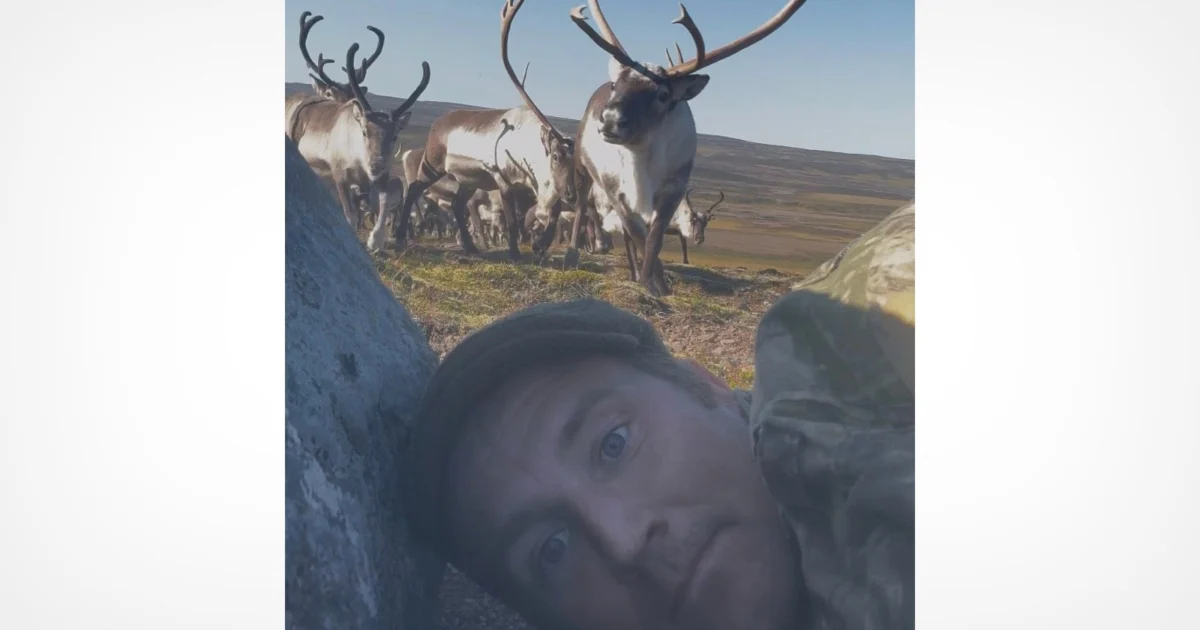
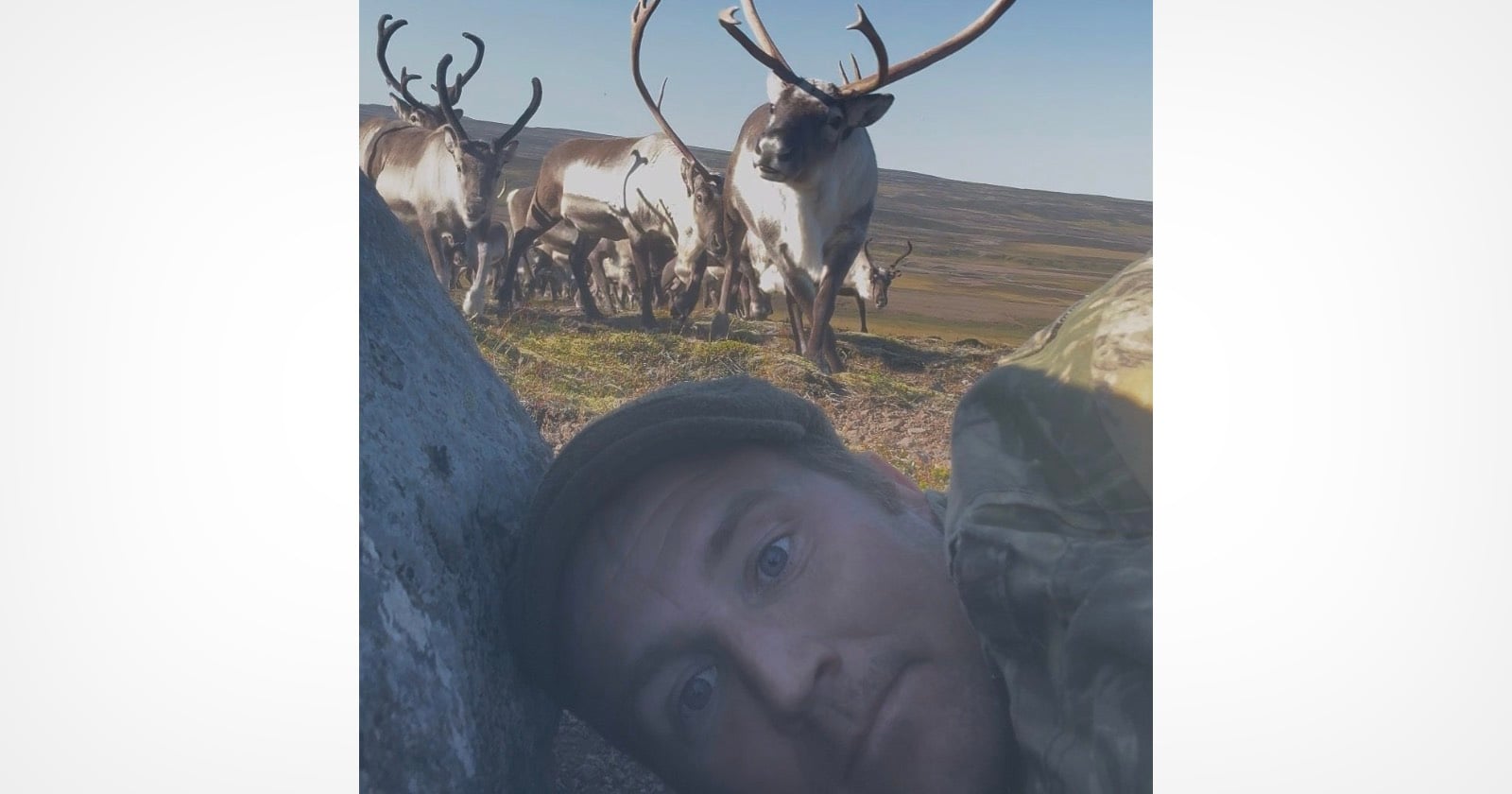
In a breathtaking testament to the unpredictable beauty of the Arctic wilderness, nature photographer and seasoned wilderness guide Anton Freyr Birgisson recently documented an extraordinary encounter in a remote expanse of northern Iceland. While observing a group of local hunters, Birgisson found himself directly in the path of a colossal herd of approximately 400 wild reindeer, an event that necessitated quick thinking and offered a rare, intimate glimpse into the lives of these majestic creatures. The incident, captured spontaneously on his iPhone, underscores the delicate balance between human presence and wild nature, and has since garnered significant attention for its raw authenticity and the photographer’s remarkable composure.
The event unfolded in a rugged, sparsely populated region of North Iceland, an area known for its stark landscapes and thriving, albeit regulated, wild reindeer population. Birgisson, who also guides for Geo Travel Iceland, an adventure tourism company specializing in explorations of the region, had joined a group of local hunters with the explicit intention of observing and photographing the herd from a respectful distance. His primary goal was to document the animals in their natural habitat without causing disturbance, a principle central to his photographic and guiding philosophy. However, the reindeer, known for their keen senses and often cautious demeanor, had a different plan.
A Detailed Chronology of the Unforeseen Encounter
The day began with the usual anticipation that accompanies a wildlife expedition in Iceland’s expansive backcountry. Birgisson, equipped with his professional photography gear but ultimately relying on his instinct and a handheld device for this particular capture, had positioned himself strategically to observe the herd. The reindeer, a magnificent assembly of hundreds of individuals, were initially sighted at a considerable distance, grazing and moving across the undulating terrain. The air was crisp, typical of the northern Icelandic autumn, and the vast silence of the wilderness was occasionally punctuated by the wind or the distant calls of birds.
Birgisson, a veteran of countless hours spent in Iceland’s wild, maintained a careful watch, adjusting his lenses and anticipating photographic opportunities. His initial plan was to track their movements from afar, capturing the grandeur of the herd against the dramatic backdrop of the Icelandic landscape. However, the situation dramatically shifted when, without warning, the entire herd altered its course. Instead of continuing their trajectory away from his position, the hundreds of reindeer suddenly turned and began moving directly towards him.
“My plan was not to get close to the herd, but the reindeer had another idea,” Birgisson later recounted, emphasizing the unexpected nature of their approach. The ground, initially silent underfoot, soon began to vibrate faintly as the sheer mass of 400 animals started to pick up pace. The distinct drumming of hundreds of hooves against the earth grew louder with each passing moment, transforming the tranquil observation into a heart-stopping spectacle. The photographer, realizing the rapidly diminishing distance between himself and the approaching animals, had mere seconds to react.
His extensive experience as a wilderness guide, which includes an innate understanding of animal behavior and safety protocols in challenging environments, kicked in immediately. Instead of attempting to flee or make sudden movements that could spook the massive herd, Birgisson made the crucial decision to drop to the ground and conceal himself behind a large rock. This strategic move was not merely for personal safety, but also to avoid startling the animals, which could have led to a stampede or caused undue stress to the herd. By minimizing his profile and remaining still, he hoped the reindeer would simply pass by, unaware of his presence or perceiving him as an innocuous part of the landscape.
As the thundering surge of reindeer drew closer, the individual details of the animals became starkly visible. Their powerful, antlered forms, their thick winter coats, and the determined focus in their eyes as they moved en masse presented a primal scene of immense power and natural grace. Birgisson, crouched low, continued to film the unfolding event with his iPhone, a testament to the spontaneity and immediate accessibility of modern photographic tools. The proximity was extreme, with the leading edge of the herd passing mere feet from his hiding spot.
The most poignant moment of the encounter arrived when, incredibly, a young reindeer calf, perhaps driven by curiosity or simply following the path of its elders, veered slightly from the main group and approached Birgisson’s position. The calf paused, its delicate nose twitching as it apparently scented the hidden photographer. “They were very calm. They were spooked and came downwind, which is not usual behavior,” Birgisson observed, noting the unusual directional shift that brought them so close. “And I hid myself behind the rock as I thought they would turn around. But they did not and just calmly walked by. One calf even came to smell me! It was a beautiful herd of around 400 animals.” This brief, intimate interaction with the calf, devoid of fear or aggression, underscored the herd’s overall calm demeanor despite their rapid movement. The experience was a profound reminder of the sentience and curiosity of wild animals when approached with respect and non-aggression.
Once the entirety of the vast herd had passed, disappearing into the distant landscape, Birgisson emerged from his concealment, undoubtedly filled with a mixture of awe, adrenaline, and gratitude. The silence that followed the departure of the herd was as striking as the thunderous approach, leaving an indelible memory of a truly exceptional wilderness moment.
Iceland’s Wild Reindeer: A Legacy of the Arctic Wilderness
The presence of wild reindeer in Iceland is a fascinating chapter in the country’s natural history, distinct from the native fauna found across much of the Nordic region. Unlike their counterparts in Greenland or Scandinavia, Iceland’s reindeer are not indigenous. They were first introduced to the island from Norway in the late 18th century, specifically between 1771 and 1787, as part of an ambitious, though ultimately unsuccessful, attempt to establish a new agricultural resource and diversify the Icelandic economy. Over several shipments, groups of reindeer were released in various parts of the country. While most of these early attempts failed due to harsh conditions and insufficient management, a single population managed to establish itself and thrive in the remote, rugged landscapes of East Iceland, gradually expanding its range into parts of the North.
Today, Iceland’s wild reindeer population is estimated to fluctuate between 6,000 and 8,000 individuals, primarily concentrated in the vast, uninhabited highlands and coastal areas of the Eastfjords, with smaller, more transient herds occasionally venturing into North Iceland, as witnessed by Birgisson. These animals have adapted remarkably well to the Arctic environment, enduring harsh winters characterized by deep snow and scarce forage, and flourishing during the brief, abundant summers.
A key aspect of their ecology in Iceland is the notable absence of natural predators. Unlike in other parts of the world where reindeer (or caribou, as they are known in North America) face threats from wolves, bears, and wolverines, Icelandic reindeer exist in an ecosystem devoid of such large carnivores. This unique situation necessitates human intervention to manage their population, preventing overgrazing and ensuring the health of the herd and the delicate Arctic ecosystem they inhabit.
The Icelandic government, through the Environment Agency of Iceland (Umhverfisstofnun), meticulously regulates reindeer hunting. Annual hunting quotas are established based on scientific assessments of the population size, health, and carrying capacity of their habitat. This management strategy aims to maintain a stable and healthy population, while also providing a sustainable resource and an economic activity for local communities. Hunters, including the group Birgisson was observing, must apply for specific licenses and adhere to strict regulations, ensuring ethical and responsible practices. This governmental oversight is crucial for the long-term viability of the species in Iceland and for maintaining ecological balance.
Reindeer behavior is intrinsically linked to seasonal changes. During the summer, they disperse across the highlands, foraging on a variety of plants, mosses, and lichens. As winter approaches, they typically migrate to lower elevations and coastal areas where snow cover is less deep, allowing easier access to food. The "downwind" approach observed by Birgisson, which he noted as unusual, could be attributed to a combination of factors: perhaps an initial disturbance (though not from Birgisson himself) that prompted a rapid movement, or an instinctive response to perceived threats by moving against the wind to better detect scents. Their collective movement, often in large herds, is a protective mechanism, making it harder for any potential predator (even a perceived one) to single out an individual.
Anton Freyr Birgisson: A Guide to the Untamed North
Anton Freyr Birgisson is more than just a nature photographer; he is a dedicated wilderness guide with Geo Travel Iceland, a company deeply committed to showcasing the natural wonders of North Iceland responsibly. His dual role provides him with an intimate understanding of the region’s geography, ecology, and wildlife, allowing him to anticipate and appreciate rare moments like his recent reindeer encounter.
Geo Travel Iceland specializes in small-group adventures, offering visitors unparalleled opportunities to explore the dramatic landscapes of North Iceland. Their expeditions utilize various modes of transport, including powerful snowmobiles, agile UTVs (Utility Terrain Vehicles), rugged Super Jeeps, and traditional on-foot excursions. These methods are carefully chosen to minimize environmental impact while maximizing the immersive experience for guests. The company’s philosophy centers on promoting sustainable tourism, emphasizing respect for nature, local culture, and wildlife.
Birgisson’s expertise is particularly valuable in tours focused on wildlife observation. He regularly guides guests in search of wild reindeer, sharing his knowledge of their habits, habitats, and the subtle cues that indicate their presence. Birdwatching is another popular activity, with North Iceland being home to a diverse array of avian species, many of which are unique to the Arctic region. His firsthand experience, as vividly demonstrated by the reindeer encounter, not only enriches the tours but also serves as a powerful reminder of the wild, untamed nature of the Icelandic environment.
“We are trying to bring awareness about traveling in North Iceland and all the incredible opportunities and adventure that North Iceland has to offer,” Birgisson states, highlighting the company’s mission. He further elaborates, “Reindeer are wild here and can be spotted usually from a long distance. We sometimes take people out in a search for reindeer. Birding is also very popular here.” This commitment to education and responsible viewing ensures that visitors gain a deeper appreciation for the delicate ecosystems they are privileged to witness, fostering a sense of stewardship.
The Ethics of Proximity: Human-Wildlife Interactions
Birgisson’s experience provides a compelling case study in the ethics of human-wildlife interaction, particularly within the context of photography and tourism. His immediate reaction to hide behind a rock, rather than confront or startle the herd, exemplifies best practices for minimizing disturbance. In an era where digital media often glorifies extreme proximity to wildlife, this incident serves as a crucial reminder that the animal’s welfare and natural behavior must always take precedence.
Wildlife photography, when done ethically, requires patience, respect, and a profound understanding of animal behavior. Maintaining a safe and respectful distance is paramount to avoid causing stress, altering natural patterns, or habituating animals to human presence, which can have detrimental long-term consequences. Birgisson’s unexpected proximity was a result of the reindeer’s autonomous decision to approach, not his deliberate intrusion. His calm, non-threatening posture during the encounter allowed the animals to pass without incident, reinforcing the idea that stillness and a lack of aggressive intent can often lead to more authentic and less stressful interactions.
The observation that the reindeer were "spooked and came downwind" offers an intriguing behavioral insight. Animals often move upwind to detect scents more effectively, which can be a defensive strategy to identify potential threats. Moving downwind, as Birgisson noted, is less common in such situations, suggesting a complex interplay of factors influencing the herd’s movement, possibly an initial distant trigger that caused them to move rapidly in that specific direction. This highlights the intricate and often unpredictable nature of wild animal responses, even to seemingly benign environmental changes or distant disturbances.
Broader Implications for Tourism and Conservation
The viral nature of Birgisson’s footage, shared widely across social media platforms, holds significant implications for both tourism and conservation efforts in Iceland. Such captivating visuals draw global attention to the country’s unique wilderness and its iconic wildlife, potentially inspiring more visitors to explore North Iceland.
However, this increased interest also brings challenges. As tourism grows, so does the responsibility to manage visitor impact effectively. Birgisson’s company, Geo Travel Iceland, serves as a model for responsible tourism, advocating for guided experiences that prioritize safety, environmental protection, and educational enrichment. By emphasizing small groups and knowledgeable guides, they ensure that encounters with wildlife, while potentially thrilling, are conducted in a manner that respects the animals and their habitat.
The incident also reinforces the broader commitment to nature conservation in Iceland. The government’s proactive management of the reindeer population, coupled with the efforts of conservation organizations and responsible tour operators, is vital for preserving these unique ecosystems. Educational initiatives, often spurred by events like Birgisson’s encounter, can play a crucial role in raising public awareness about the importance of respecting wildlife and adhering to wilderness ethics. The natural curiosity of the reindeer calf, a poignant moment of connection, serves as a powerful symbol of the intrinsic value of undisturbed nature and the magic that unfolds when humans observe, rather than interfere.
Ultimately, Anton Freyr Birgisson’s extraordinary encounter with the wild reindeer herd in North Iceland is more than just a viral video; it is a compelling narrative that encapsulates the raw beauty, unpredictable nature, and profound lessons offered by the wilderness. It underscores the critical importance of responsible engagement with nature, the value of experienced guides in facilitating respectful interactions, and Iceland’s ongoing dedication to preserving its unique natural heritage for generations to come. Such moments remind us of our place within the natural world, not as its masters, but as humble, respectful observers.