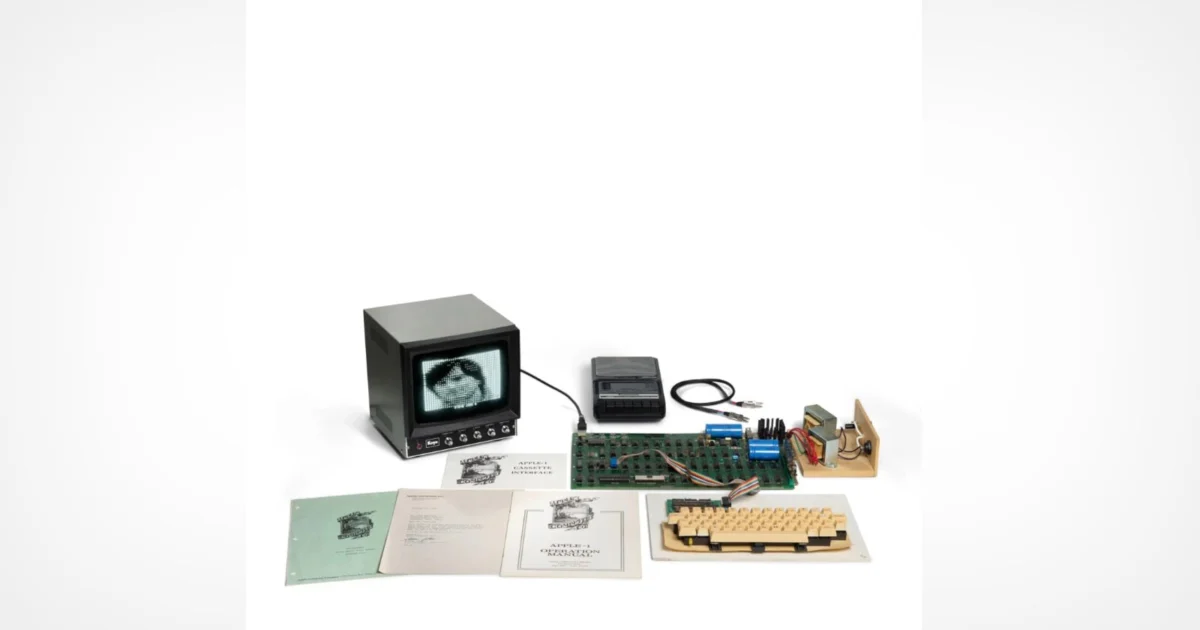
A meticulously preserved and fully operational Apple-1 computer, a foundational artifact in the history of personal computing and Apple Inc.’s inaugural product, is slated for auction next month by Bonhams in New York. This particular unit, known as the "Hatfield" Apple-1, is distinguished not only by its rare operational status but also by its direct connections to Apple’s visionary co-founders: it bears the signature of engineering genius Steve Wozniak and includes a historic letter signed by Steve Jobs. Experts at Bonhams estimate the bidding for this technological relic could reach between $500,000 and $800,000, underscoring its profound historical significance and rarity in the burgeoning market for vintage computing memorabilia.
The Apple-1 holds a unique place in technological history as the very first product developed by Apple Computer Company. Designed and hand-built by Steve Wozniak, with Steve Jobs orchestrating its commercialization, it was introduced to the market in July 1976. This revolutionary machine, initially offered as a bare circuit board kit for hobbyists, marked a pivotal moment, transitioning computing from the realm of industrial mainframes and academic laboratories into the hands of individuals. A total of approximately 200 Apple-1 units were manufactured, with about 175 being sold through 1977 before production ceased. Of these, a mere 74 units are presently accounted for in the definitive Apple-1 Registry, and an even smaller fraction are believed to remain in working condition, making each surviving example an exceptionally valuable piece of digital heritage.
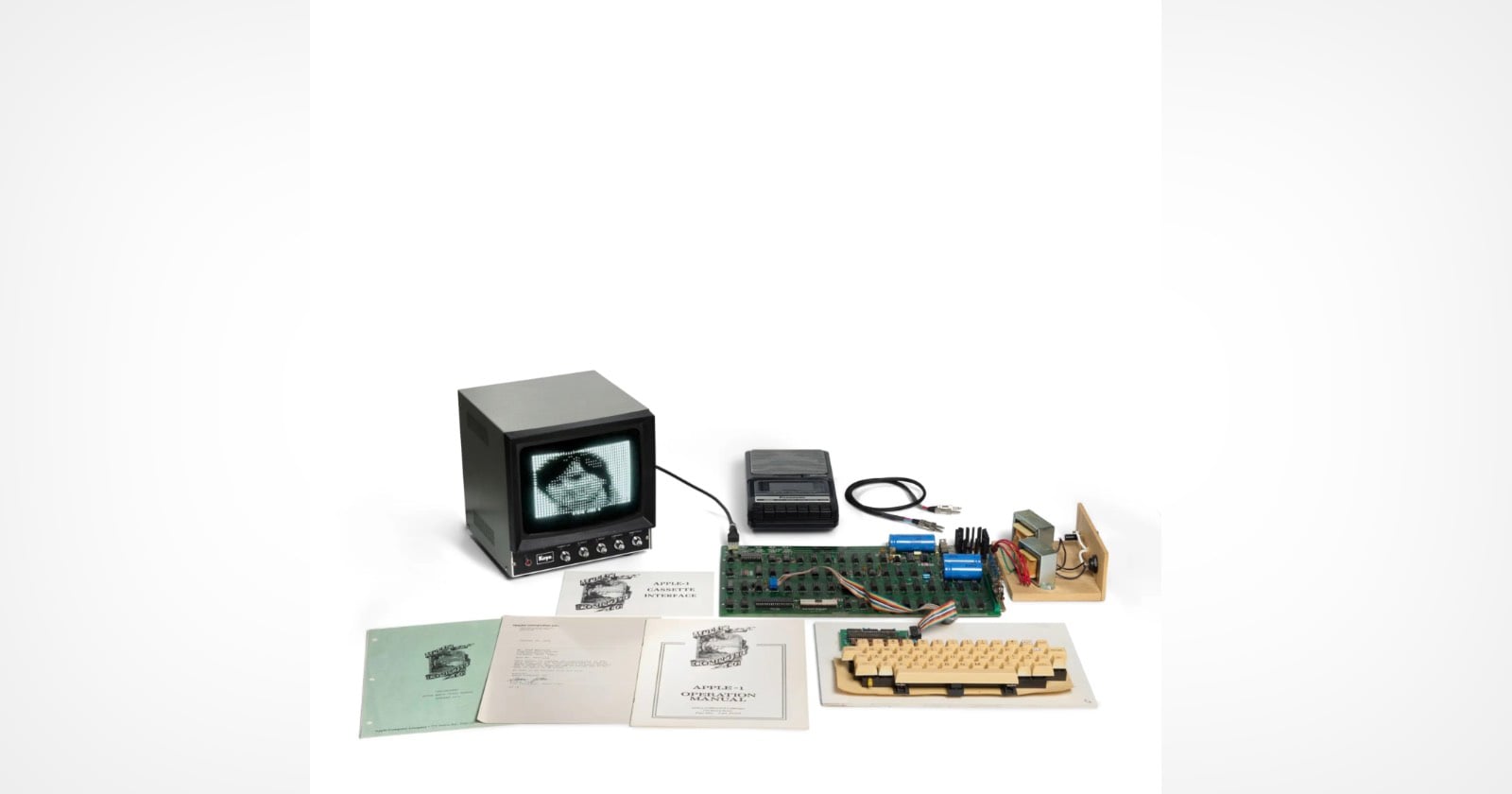
The "Hatfield" Apple-1 is particularly noteworthy for its exceptional provenance and documented history. Its designation stems from its original owner, Fred Hatfield, a computer enthusiast and an employee of Computer Data Systems. Hatfield’s ownership and interaction with Apple’s nascent operations provide a rare glimpse into the early days of the company. The computer itself is registered as number 48 in the Apple-1 Registry, a testament to its verified authenticity and lineage. Crucially, this unit retains nearly all of its original components, a factor that significantly enhances its desirability and value among collectors and institutions. The pristine condition and operational capability of the "Hatfield" Apple-1 allow it to function as a tangible link to the dawn of the personal computing era, capable of executing the simple programs it was designed for almost half a century ago.
One of the most compelling aspects of this auction lot is the inclusion of a typed letter from Steve Jobs, dated January 18, 1978. At this point, Jobs was serving as Vice President Operations for Apple Computer Inc. The letter was sent to Fred Hatfield, authorizing the exchange of his Apple-1 for an Apple II 4K board. This correspondence sheds light on Apple’s evolving business strategies and its commitment to customer loyalty, even in its earliest years. Following the release of the Apple II, a more refined and user-friendly machine, it became common practice for Apple to offer trade-ins to encourage upgrades. Hatfield had reportedly written to Apple to express his dissatisfaction with the limited software options available for his Apple-1. Jobs’s response, offering a $400 upgrade to the newly released Apple II, was a proactive step to retain an early adopter. Interestingly, Hatfield ultimately declined the offer, deeming the $400 cost for the upgrade too steep at the time. This decision, in hindsight, has inadvertently preserved an artifact of immense historical value, keeping the Apple-1 in its original state rather than being traded in and potentially disassembled or discarded. The letter, signed by Jobs, provides irrefutable evidence of the direct interaction between one of Apple’s founders and an early customer, cementing the machine’s place in the company’s lore.
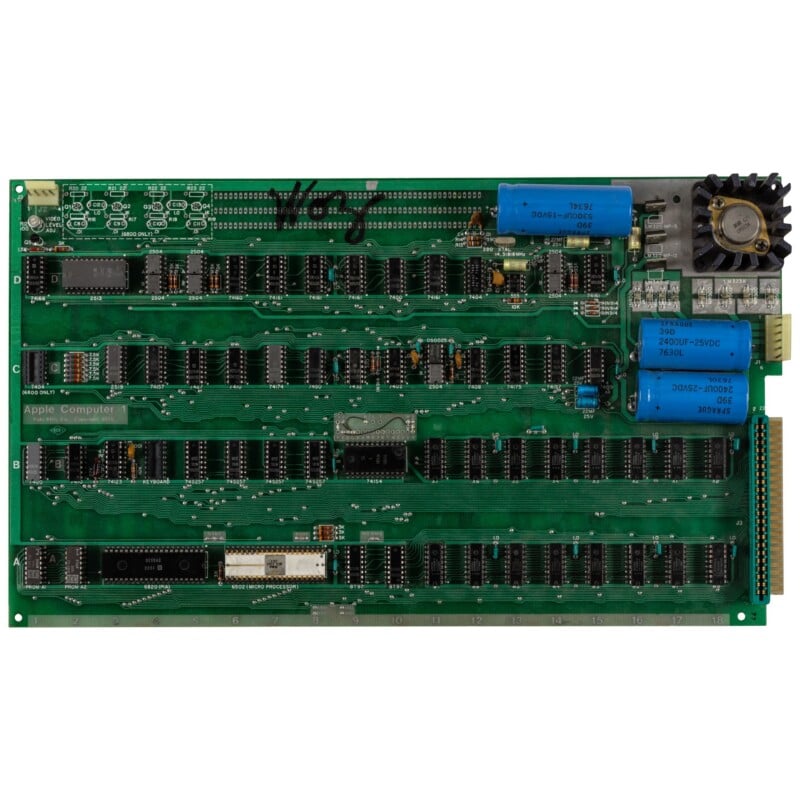
Further enhancing the computer’s allure is the distinctive signature of Steve Wozniak, affectionately known as "Woz," along the top edge of the motherboard. Wozniak, the engineering genius behind the Apple-1’s design, rarely signed these early boards, making this particular embellishment a highly coveted feature. His signature serves as a direct link to the brilliant mind that conceived and hand-assembled the circuitry that launched a technological revolution. This dual authentication from both co-founders – Wozniak’s physical mark on the hardware and Jobs’s signature on official correspondence – elevates the "Hatfield" Apple-1 to an almost unparalleled status among surviving units.
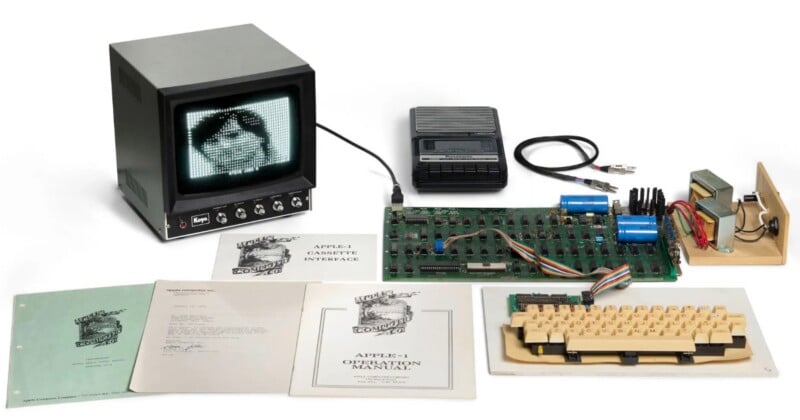
The technical specifications of the Apple-1, while rudimentary by today’s standards, were groundbreaking in 1976. It featured the MOS Technology 6502 microprocessor, a low-cost, 8-bit chip that became instrumental in the early personal computer movement. The "Hatfield" unit specifically includes a white ceramic MOS Technology 6502 microprocessor (MCS 6502-2977), a keyboard interface and connector, three original Sprague "Big Blue" capacitors (distinctive for their size and color), an 8KB RAM expansion connector, and an original Apple cassette interface board. The motherboard itself measures approximately 230 x 395 mm (9 x 15.5 inches) and is labeled "Apple Computer 1 Palo Alto, CA Copyright 1976," with an NTI stamp underneath, indicating it is a "second batch" board. These intricate details are crucial for collectors and historians, providing authenticity and insight into the manufacturing processes of the fledgling company.
Bonhams, a renowned international auction house with a strong track record in selling historical and scientific artifacts, will feature the "Hatfield" Apple-1 as the headline lot in its "History of Science, Technology & Computing" sale. The online auction is scheduled to run from October 4 through October 14. Bonhams’ expertise in handling such significant items adds a layer of credibility and global reach to the sale, ensuring it attracts a wide array of potential buyers, from private collectors and technology enthusiasts to museums and institutional investors seeking to acquire a tangible piece of computing’s formative years. The auction house’s marketing emphasizes the machine’s operational status and comprehensive documentation, factors that are paramount in establishing value in this specialized market.
The market for vintage technology, particularly items linked to Apple’s early history, has seen a significant surge in recent years. This trend is driven by a confluence of factors: the increasing recognition of computing’s profound impact on modern society, the finite supply of these early machines, the enduring mystique surrounding Apple’s founders, and the investment potential of such unique artifacts. Previous Apple-1 auctions have consistently shattered records, with some units fetching well over $500,000, and in rare instances, exceeding $900,000. For instance, in 2014, a working Apple-1 was sold for $905,000 at a Bonhams auction in New York. These high valuations reflect not just the rarity of the items but also their symbolic importance as precursors to the ubiquitous digital devices that define contemporary life.
The story of the Apple-1 is not merely about a circuit board; it’s about the genesis of a global phenomenon. In 1976, personal computers were a niche interest for electronics hobbyists. Wozniak’s design, initially conceived for personal use and shared with members of the Homebrew Computer Club, was revolutionary because it offered a complete system, albeit requiring users to provide a case, power supply, keyboard, and monitor. Jobs’s entrepreneurial vision transformed this hobbyist project into a commercial product, famously securing an order for 50 fully assembled units from Paul Terrell, the proprietor of The Byte Shop, one of the world’s first retail computer stores. These machines were sold for the iconic price of $666.66. This strategic move from selling kits to pre-assembled computers was a crucial step in making personal computing accessible to a broader audience, laying the groundwork for Apple’s future success and effectively democratizing technology.
The "Hatfield" Apple-1, therefore, represents more than just a piece of vintage hardware; it is a tangible connection to the pivotal moment when the personal computer industry began its ascent. Its auction serves as a powerful reminder of the humble beginnings of what would become one of the world’s most influential companies, a testament to the ingenuity and collaboration of two young visionaries who fundamentally reshaped human interaction with technology. The potential sale price reflects not only the machine’s intrinsic value as a rare artifact but also its profound cultural and historical significance as a symbol of innovation, entrepreneurship, and the relentless pursuit of technological progress. As the digital age continues to evolve, foundational pieces like the "Hatfield" Apple-1 will only grow in importance, serving as touchstones to understand where it all began.