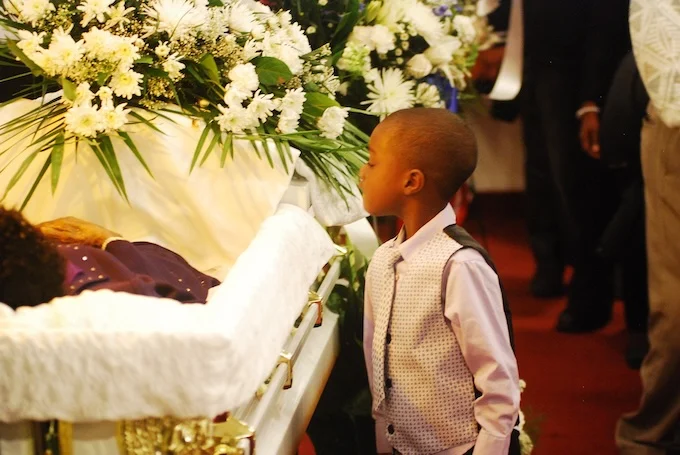
Funeral photography, once a common practice during the Victorian era, has largely faded into a modern-day taboo. However, photographer Duane Knight of Your Legacy Photography is championing its revival, asserting that this artistic genre is a vital tool for individuals navigating the complex landscape of grief. With a personal mission to increase the current, estimated global number of funeral photographers—which he places at a mere 50—Knight is dedicated to educating fellow photographers on incorporating this sensitive yet profound service into their offerings.

The Enduring Power of Photographic Memory in Mourning
The profound impact of photography, even outside the context of funerals, is often realized in retrospect. Many photographers have heard from former clients’ families, expressing immense gratitude for a portrait of a deceased loved one, sometimes lamenting it was the only suitable photograph available for display during a memorial service. This underscores a fundamental human need to visually commemorate those who have passed. Yet, the idea of actively capturing images during the funeral itself, a period steeped in raw emotion, has been largely unexplored by many in the profession.
Duane Knight’s decade-long experience as a funeral photographer has revealed a significant, often overlooked, aspect of the grieving process. He has personally curated approximately 150 Legacy Funeral Albums, tangible testaments to the lives of departed individuals. Knight observes that funerals serve as a powerful, albeit somber, convergence point for families and friends, often traveling from across the nation and even internationally. The emotional intensity of these gatherings, however, can lead to fragmented memories, making it challenging for those closest to the deceased to recall who was present or the specific details of the day.

In this regard, funerals share a striking similarity with other significant life events such as weddings, birthdays, and christenings. These occasions bring together extended family and friends for a finite period, creating a unique window of shared experience. A professionally crafted funeral album transcends a mere collection of photographs; it becomes a memento of both the departed individual and the community that gathered to honor them. For those unable to attend, receiving such an album can provide a crucial link, fostering a sense of inclusion and connection to the remembrance of their loved one. This archival function, Knight argues, is not about dwelling on sadness but about building a comprehensive and lasting tribute.
Navigating the Cultural Divide: Taboo vs. Treasured Memories
Knight acknowledges that the perception of funeral photography is deeply rooted in cultural norms. "Funerals being photographed is definitely a cultural thing," he states. "Some cultures don’t want any photos, and to them, it’s taboo." He estimates that within any given group, only a portion—perhaps two or three out of ten individuals—might be receptive to the idea. Despite this cultural hesitancy, Knight, through his venture Your Legacy Photography, is committed to ensuring that those who desire photographic documentation of a funeral have the opportunity to do so. His core philosophy centers on the preservation of memories, emphasizing, "all families who want funeral photography should have the opportunity to get it." This stance reflects a belief in the inherent value of visual records as a means of processing loss and celebrating life.

The historical context of funeral photography offers a compelling backdrop to Knight’s mission. In the Victorian era, post-mortem photography was a relatively common practice. This was due in part to the high mortality rates of the time, coupled with the relatively new and expensive nature of photography, which made it a significant investment. Families often commissioned these photographs as a way to preserve the likeness of loved ones, especially children, who were frequently lost to illness. These images served as a tangible connection to those who were no longer present, a form of memorialization in an era before widespread access to personal cameras. The shift from this acceptance to modern-day taboo is a fascinating cultural evolution, influenced by changing societal attitudes towards death, grief, and the role of imagery.
The Art of Funeral Photography: A Skill to be Shared
Knight’s dedication extends beyond his own practice; he is actively engaged in demystifying funeral photography for his peers. He recognizes the potential for this genre to offer a unique service and a therapeutic avenue for clients. To achieve this, he has embarked on a campaign to educate other photographers, sharing his expertise and advocating for the acceptance and practice of funeral photography. His efforts have included presentations at major photography conferences, such as WPPI (Wedding & Portrait Photographers International) in Las Vegas, a prominent event that draws thousands of industry professionals.

At these events, Knight makes his mission unmistakable. Attendees at WPPI are encouraged to look for him; he is often identifiable by his distinctive attire: a hat that reads "I Love Funeral Photography" and a vest emblazoned with "Ask Me about the Art of Funeral Photography." This bold approach serves as a conversation starter, designed to break down the inherent awkwardness and to initiate dialogue about the value and nuances of this specialized field. His willingness to engage directly and openly aims to normalize the concept and encourage photographers to consider its artistic and emotional dimensions.
The implications of this educational push are significant. By increasing the number of trained and sensitive funeral photographers, Knight aims to make this service more accessible to families who may not even be aware it exists or who might be hesitant to inquire. This proactive approach addresses a potential gap in bereavement support, offering a creative outlet for processing loss. The success of his mission could lead to a broader cultural shift, where funeral photography is viewed not as intrusive or disrespectful, but as a compassionate and valuable service that aids in the long-term process of remembrance and healing.

The Broader Impact: Grief, Art, and Legacy
The art of funeral photography, as practiced by individuals like Duane Knight, is fundamentally about providing a service that acknowledges and honors the grieving process. It is not about sensationalizing death, but about capturing the quiet dignity of a farewell, the tender moments of connection between mourners, and the final, loving tributes. The resulting images can serve multiple purposes: they can offer comfort to immediate family members, provide a visual record for future generations, and even serve as a form of catharsis for those who feel unable to fully express their emotions during the funeral itself.
The analysis of this niche photography genre reveals a deeper societal engagement with mortality. In an era where discussions about death and grief are often relegated to private spheres or clinical settings, the emergence of funeral photography as a recognized art form can be seen as a positive development. It encourages a more open and integrated approach to dealing with loss, integrating visual art into the natural human experience of mourning. This integration can lead to more profound and lasting healing, as evidenced by the enduring value families place on the Legacy Funeral Albums Knight creates.

The challenge, as Knight rightly identifies, lies in overcoming societal reticence. This involves not only educating photographers but also subtly shifting public perception. By presenting funeral photography as a sensitive, artistic, and deeply human endeavor, Knight and those who join his mission are working to transform a taboo into a treasured aspect of remembrance. Their work suggests that art has a crucial role to play in helping individuals and families navigate the most difficult of life’s transitions, offering solace, connection, and a lasting legacy of love.
For those interested in learning more about Duane Knight’s work or the emerging field of funeral photography, his website YourLegacyPhotography.com and his Instagram profile @funeral.photos serve as valuable resources. He actively encourages feedback and questions, demonstrating a commitment to open dialogue and continuous improvement within this sensitive yet vital photographic discipline. The future of funeral photography, under the guidance of advocates like Knight, appears poised for a renaissance, offering a new avenue for preserving memories and fostering healing in the face of loss.