The landscape of First Person View (FPV) aviation has undergone a radical transformation over the last decade, transitioning from niche hobbyist experimentation to a sophisticated industry that serves filmmakers, competitive racers, and search-and-rescue operations. At the forefront of this technological surge is the GEPRC MARK5 DC HD O3 FPV, a high-performance drone specifically engineered to bridge the gap between aggressive freestyle maneuvering and high-fidelity cinematic capture. Designed to integrate the DJI O3 Air Unit, this platform represents the pinnacle of "Bind-and-Fly" (BNF) technology, offering a level of out-of-the-box performance that was previously only achievable through custom professional builds.
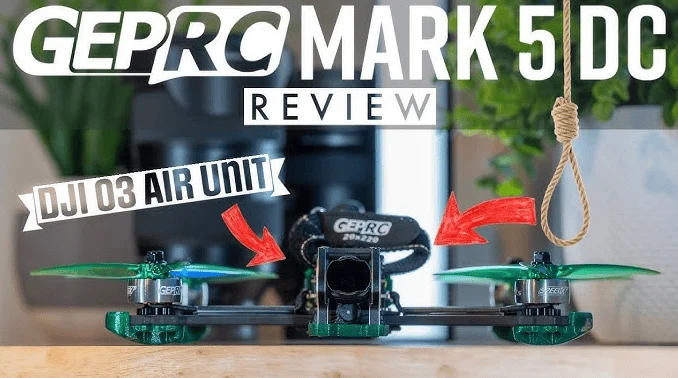
The MARK5 DC HD O3 FPV is built upon a foundation of durability and precision. Utilizing a 5-inch frame architecture, the drone employs a "DeadCat" (DC) configuration, a structural choice that has become the gold standard for cinematic FPV pilots. Unlike traditional "X" frames where the propellers often intrude into the camera’s field of view, the DeadCat design offsets the front arms outward and backward. This ensures that the high-definition footage recorded by the onboard DJI O3 system remains unobstructed by spinning blades, providing a pristine, immersive visual experience.
The Evolution of the GEPRC MARK5 Series
To understand the significance of the MARK5 DC HD O3, one must look at the chronology of GEPRC’s development cycle. The company, established as a premier manufacturer of FPV frames and electronics, spent years iterating on its "Mark" series. The Mark 2 and Mark 3 focused heavily on structural rigidity for racing, while the Mark 4 became a legendary versatile platform for freestyle pilots. However, the release of the Mark 5 marked a paradigm shift.
Launched in an era where digital video transmission began to eclipse traditional analog systems, the Mark 5 was developed specifically to accommodate the increasing size and thermal requirements of high-definition video transmitters. When DJI released the O3 Air Unit in late 2022—featuring a 1/1.17-inch sensor and the ability to record 4K/60fps video internally—GEPRC responded by refining the Mark 5 frame. The result was a chassis that not only protected the expensive O3 hardware but also optimized it through advanced vibration dampening and specialized cooling mounts made from 7075-T6 aircraft-grade aluminum.
Technical Specifications and Component Analysis
The performance of the GEPRC MARK5 DC HD O3 FPV is the result of a meticulously curated component stack. Each part is selected to ensure that the drone remains responsive under high-stress maneuvers while maintaining the stability required for smooth video.
1. The DJI O3 Air Unit Integration
The centerpiece of this drone is the DJI O3 Air Unit. This system provides a 1080p/100fps low-latency video feed to the pilot’s goggles while simultaneously recording 4K/60fps footage at a 130Mbps bitrate. The inclusion of a 155-degree ultra-wide-angle lens allows for a perspective that mimics the human eye’s peripheral vision, which is essential for navigating complex environments. Furthermore, the O3 system supports RockSteady 2.0 and HorizonSteady stabilization, which digitally removes camera shake, a feature that has significantly reduced the industry’s reliance on external action cameras like GoPros.
2. Propulsion and Power: SPEEDX2 2107.5 Motors
The drone is equipped with SPEEDX2 2107.5-1960KV motors, specifically tuned for 6S LiPo battery configurations. These motors are designed with high-temperature resistant coils and N52H curved magnets, which provide a balance of torque and top-end speed. In a journalistic analysis of flight data, these motors demonstrate a remarkable thrust-to-weight ratio, allowing the drone to recover from "power loops" and "dives" with minimal prop-wash—the turbulent air that can cause instability during rapid descents.
3. Flight Electronics: The GEP-F722-45A AIO
At the heart of the MARK5 is the GEP-F722-45A All-In-One (AIO) flight controller and Electronic Speed Controller (ESC). The F722 processor provides the computational power necessary to run the latest Betaflight firmware at high gyro update rates. The 45A ESCs use BLHeli_32 firmware, supporting bi-directional DShot, which allows the flight controller to communicate with the motors in real-time to filter out noise and vibration. This level of electronic sophistication results in a "locked-in" feel that pilots describe as intuitive and highly predictable.
Structural Integrity and Material Science
The GEPRC MARK5 DC HD O3 FPV utilizes a combination of 3K carbon fiber and CNC-machined aluminum. The side plates of the camera cage are constructed from 7075-T6 aluminum alloy, which serves two purposes: it provides a robust shield for the DJI O3 camera and acts as a heat sink to dissipate the thermal energy generated by the Air Unit during prolonged flights.
The frame’s arms are 5mm thick, designed to withstand the high-velocity impacts common in freestyle flying. GEPRC has also implemented a unique "independent arm" design, allowing users to replace a single broken arm by removing just a few screws, rather than dismantling the entire frame. This modularity is a critical factor for professional pilots who cannot afford long downtimes during a shoot.
Market Positioning and Industry Impact
The release of the GEPRC MARK5 DC HD O3 has had a ripple effect across the FPV industry. Traditionally, pilots had to choose between a "freestyle" drone (optimized for tricks) and a "cinewhoop" (optimized for slow, stable indoor filming). The MARK5 DC occupies a middle ground that the industry calls "cinematic freestyle."
Industry analysts note that the demand for such drones has surged in the real estate and automotive advertising sectors. High-speed chases and "fly-throughs" of luxury properties require a drone that can move at 100 km/h while delivering 4K footage. The MARK5 DC fulfills this requirement without the bulk of larger professional cinema drones.
Furthermore, the integration of the O3 system has simplified the workflow for content creators. By eliminating the need for an external camera, the drone’s overall weight is reduced, which improves flight time and agility. This "all-in-one" approach has forced competitors like iFlight and Happymodel to accelerate their own development of O3-compatible frames, fostering a highly competitive and innovative market environment.
Operational Safety and Regulatory Context
As the GEPRC MARK5 DC HD O3 FPV falls into the "open" category of drone operations in many jurisdictions (typically weighing between 400g and 700g with a battery), it is subject to evolving global regulations. In the United States, the Federal Aviation Administration (FAA) requires such drones to be equipped with Remote ID for legal flight in most airspaces. GEPRC has designed the MARK5 with enough internal space to accommodate aftermarket Remote ID modules, ensuring that professional pilots can remain compliant with local laws.
Safety is further enhanced by the drone’s software features. The Betaflight firmware includes "GPS Rescue" functionality. When paired with an optional GPS module, the MARK5 can automatically climb to a safe altitude and fly back toward the pilot if the radio signal is lost—a crucial fail-safe for long-range missions over difficult terrain.
Pilot Recommendations and Best Practices
For operators looking to maximize the potential of the GEPRC MARK5 DC HD O3 FPV, experts suggest a series of optimizations:
- Power Management: To achieve the best performance, 6S LiPo batteries ranging from 1300mAh to 1500mAh are recommended. This capacity provides a flight time of approximately 5 to 8 minutes, depending on the aggressiveness of the maneuvers.
- Color Grading with D-Log M: The DJI O3 system allows for recording in D-Log M. This flat color profile preserves more dynamic range in the highlights and shadows, giving editors more flexibility during post-production to match the FPV footage with ground-based cinema cameras.
- Optical Filtration: Given the fixed aperture of the O3 camera, the use of Neutral Density (ND) filters is highly recommended. ND filters (such as ND8, ND16, or ND32) allow the pilot to maintain a shutter speed that is double the frame rate (the 180-degree rule), which produces natural-looking motion blur.
Conclusion: The Future of FPV Technology
The GEPRC MARK5 DC HD O3 FPV is more than just a remote-controlled aircraft; it is a sophisticated tool that reflects the current peak of consumer drone engineering. By combining the structural resilience of a freestyle frame with the cutting-edge imaging capabilities of the DJI O3 system, GEPRC has created a platform that satisfies the rigorous demands of both hobbyists and professionals.
As the industry moves toward even higher resolutions and more autonomous flight features, the MARK5 stands as a testament to the power of integration. It proves that when hardware manufacturers and software developers align, the result is a product that expands the creative possibilities of aerial cinematography. For those seeking to transition from entry-level drones to high-performance FPV flight, the MARK5 DC HD O3 represents a definitive, future-proof investment in the next generation of flight.