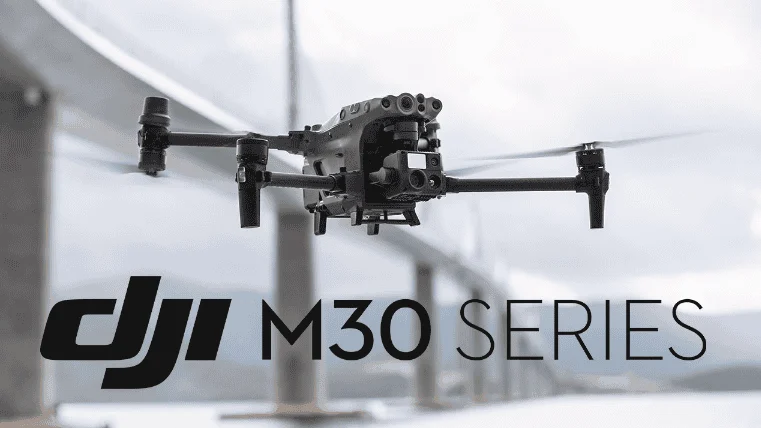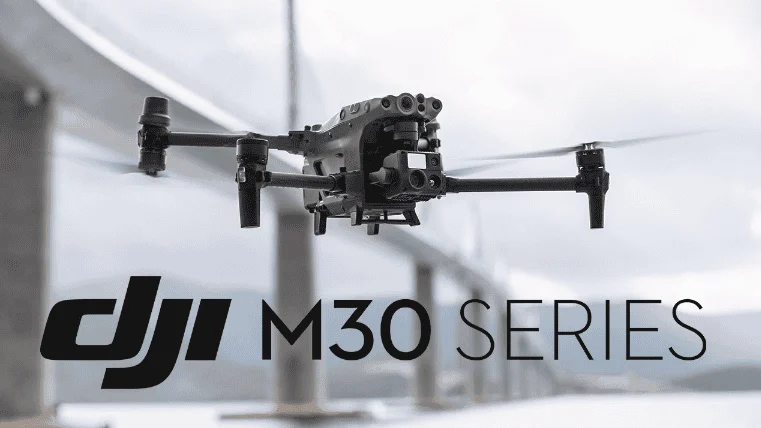
The DJI M30 series has officially cleared a significant regulatory and safety hurdle, enabling the industrial-grade aircraft to operate over crowds through the integration of the AVSS PRS-M30 parachute system. This development marks a pivotal shift in the deployment of Unmanned Aerial Systems (UAS) within urban environments and high-density public spaces. By combining DJI’s robust airframe with Aerial Vehicle Safety Solutions (AVSS) technology, the platform now meets the stringent safety requirements necessary for complex missions that were previously restricted due to the inherent risks of overhead flight. This integration is not merely a hardware upgrade but a comprehensive safety solution that addresses the legal and physical challenges of modern drone operations.
The move comes at a time when global aviation authorities, including the Federal Aviation Administration (FAA) in the United States and the European Union Aviation Safety Agency (EASA), are tightening standards for "Operations Over People" (OOP). For years, the commercial drone industry has sought reliable methods to mitigate the kinetic energy of a falling aircraft in the event of a critical failure. The adoption of the PRS-M30 system provides a verified means of energy reduction, ensuring that if a technical malfunction occurs, the drone descends at a velocity that significantly minimizes the risk of injury to persons on the ground or damage to property.
Technical Specifications of the PRS-M30 Parachute System
The AVSS PRS-M30 is a purpose-built safety peripheral designed specifically for the DJI Matrice 30 (M30) and Matrice 30T (M30T). The system operates on a "plug-and-play" architecture that integrates seamlessly with the drone’s onboard electronics and software. At its core, the PRS-M30 features an autonomous triggering mechanism that can detect a flight failure in milliseconds. Whether the failure is caused by a motor malfunction, battery loss, or an electronic glitch, the system acts independently of the drone’s primary flight controller to deploy the parachute.
One of the most critical components of the PRS-M30 is its automatic "Pod" deployment system. When the sensors detect an abnormal flight attitude or a free-fall state, the system immediately cuts power to the drone’s motors. This motor-kill function is essential to prevent the parachute lines from becoming entangled in spinning propellers, which is a common failure point in less sophisticated safety systems. Once the power is severed, a spring-loaded or pyrotechnic-assisted canister ejects the parachute canopy, allowing for a rapid and stable descent.
The parachute itself is manufactured from high-strength, lightweight materials designed to withstand the aerodynamic forces of deployment at high speeds. It is rated to reduce the impact energy of the DJI M30—which weighs nearly 4 kilograms—to levels that comply with international safety standards, such as the ASTM F3322-18. This standard is the benchmark for UAS parachutes, requiring rigorous testing, including dozens of successful deployments across various failure scenarios, such as hovering, full-throttle forward flight, and motor-out conditions.
The Regulatory Framework for Operations Over People
For professional drone operators, the ability to fly over crowds is often the difference between a successful mission and a logistical impossibility. Under previous regulations, flying over people was largely prohibited unless the operator secured a specific waiver from civil aviation authorities—a process that was often time-consuming and difficult to achieve. However, the introduction of new categories for UAS operations has changed the landscape.
In the United States, the FAA’s Part 107 regulations for Operations Over People categorize drones based on the risk they pose. The DJI M30, given its weight and speed, typically falls into Category 2 or Category 3. To operate in these categories over human beings, the drone must not cause an injury equivalent to or greater than a specific kinetic energy threshold. The AVSS parachute system allows the M30 to meet these thresholds by slowing the descent to a "non-lethal" speed. This technical compliance allows public safety agencies and commercial enterprises to conduct operations in urban centers, over stadiums, and during public festivals without the need for individual mission waivers, provided they follow the manufacturer’s safety guidelines and maintain the hardware.
Advanced Features of the DJI M30 Platform
While the parachute provides the safety net, the DJI M30 itself provides the high-performance capabilities required for industrial tasks. The M30 series was designed as a "middle-ground" solution, bridging the gap between the compact Mavic 3 Enterprise and the heavy-lift Matrice 300 RTK. Its foldable design allows it to be carried in a backpack, yet it retains the power and sensor sophistication of much larger platforms.
The M30 is equipped with a multi-sensor camera payload that includes a 48-megapixel 1/2" CMOS zoom camera, capable of 5x to 16x optical zoom and up to 200x digital zoom. Additionally, it features a 12-megapixel wide-angle camera and a laser rangefinder that can provide accurate coordinates for objects up to 1,200 meters away. The M30T variant adds a 640×512 resolution thermal imaging sensor, making it an indispensable tool for firefighters and search-and-rescue teams operating at night or in smoke-filled environments.
Safety is further enhanced by the M30’s dual-vision and ToF (Time-of-Flight) sensors on all six sides of the aircraft. This 360-degree obstacle avoidance system ensures that the drone can navigate complex environments, such as construction sites or narrow alleyways, without colliding with structures or power lines. The integration of the O3 Enterprise transmission system provides a stable, triple-channel 1080p video feed, ensuring that the pilot maintains full situational awareness even in areas with high electromagnetic interference.
Transforming Public Safety and Emergency Response
The implications of the DJI M30’s ability to fly over crowds are most profound in the sector of public safety. Law enforcement agencies can now utilize drones for real-time crowd monitoring during large-scale protests, parades, or sporting events. In the past, pilots had to maintain a "buffer zone," often keeping the drone at a distance that compromised the clarity of the visual data. With the PRS-M30 system, officers can position the drone directly over areas of interest to identify potential security threats or locate missing persons with much greater precision.
Fire departments also stand to benefit significantly. During a structure fire in a high-density residential area, the M30 can be deployed to provide an aerial thermal map of the building. The ability to fly over bystanders and neighboring properties legally and safely allows incident commanders to make faster decisions regarding resource allocation and evacuation routes. The IP55 weather resistance of the M30 further supports these missions, allowing the drone to operate in heavy rain or extreme temperatures, conditions where emergency services are often most needed.
Industrial Inspections and Urban Infrastructure
Beyond public safety, the commercial sector is finding new uses for the parachute-equipped M30. In the field of infrastructure inspection, drones are frequently used to examine bridges, cell towers, and power lines. Many of these assets are located in or near busy thoroughfares or pedestrian walkways. Previously, companies had to cordon off large areas to ensure public safety, leading to traffic delays and increased operational costs.
With a certified parachute system, these "exclusion zones" can be significantly reduced. An M30 can inspect a bridge in a metropolitan area while traffic continues to flow underneath, provided the safety protocols of the PRS-M30 are active. This efficiency not only saves time but also makes drone-based inspections more competitive compared to traditional methods involving cranes or scaffolding.
Chronology of Safety Integration and Testing
The journey toward the M30’s flight-over-crowds capability has been a multi-year process involving rigorous engineering and testing.
- March 2022: DJI officially launches the Matrice 30 series, highlighting its portability and IP55 rating.
- Mid-2022: AVSS begins the development of the PRS-M30, utilizing data from previous successes with the DJI M300 RTK and Mavic series.
- Late 2023: The PRS-M30 undergoes third-party testing to validate compliance with ASTM F3322-18 standards. This involves testing the system in various failure modes to ensure a 100% deployment success rate.
- Early 2025: Regulatory bodies accept the testing data, allowing operators who use the AVSS system to apply for expanded operational envelopes, including flight over people.
Analysis of Broader Industry Impact
The success of the M30 and AVSS integration signals a maturing drone industry. We are moving away from the "experimental" phase of UAS operations and into a period of standardized, safety-first commercial aviation. For manufacturers, this emphasizes that the airframe is only one part of the equation; the "safety ecosystem"—including parachutes, flight termination systems, and robust software—is what will ultimately unlock the full economic potential of the sky.
This development also places pressure on other manufacturers to seek similar third-party or in-house safety certifications. As the DJI M30 becomes the standard for urban operations, competitors must prove that their platforms can offer equivalent levels of risk mitigation. This competition is likely to drive down the cost of safety hardware, making it more accessible to smaller municipal agencies and private contractors.
Furthermore, the data collected from these parachute-equipped missions will be vital for the future of Urban Air Mobility (UAM). As the industry looks toward larger "air taxis" and delivery drones, the lessons learned from the M30’s safety deployments will inform the regulations and technical requirements for the next generation of autonomous aircraft.
Conclusion
The integration of the AVSS PRS-M30 parachute system with the DJI M30 represents a landmark achievement in drone safety and utility. By addressing the primary concern of aviation regulators—the risk of injury to the public—this technology allows the M30 to fulfill its potential as a versatile tool for public safety, emergency response, and industrial inspection. With 360-degree obstacle avoidance, multi-sensor capabilities, and now a certified recovery system, the DJI M30 stands as one of the most reliable and capable platforms in the modern UAS market. As more operators adopt these safety standards, the sight of drones performing essential tasks above our cities will become not just a common occurrence, but a trusted component of urban infrastructure.