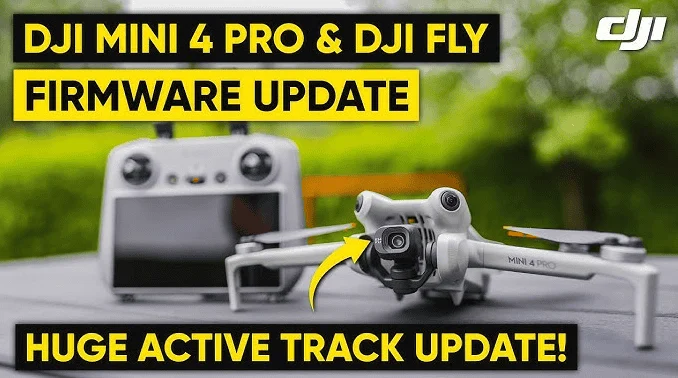
The DJI Mini 4 Pro, a flagship in the sub-250-gram drone category, has received a comprehensive firmware update designed to solidify its position as the premier choice for both hobbyist and professional aerial cinematographers. This update represents a pivotal moment in the lifecycle of the aircraft, introducing sophisticated software enhancements that bridge the gap between consumer-grade portability and enterprise-level functionality. By integrating advanced obstacle visualization, expanded hardware compatibility, and refined automated flight modes, DJI has addressed critical user feedback while ensuring the platform remains compliant with evolving international aviation regulations. The latest firmware rollout focuses on three core pillars: safety through enhanced situational awareness, creative flexibility through new peripheral support, and operational stability through refined flight control algorithms.
Detailed Breakdown of New Features and Capabilities
The centerpiece of the recent DJI Mini 4 Pro update is the introduction of Vision Assist. This feature, previously reserved for DJI’s higher-end Mavic 3 series, provides pilots with a real-time visual representation of potential obstacles from multiple angles. Unlike standard proximity sensors that provide auditory or simple visual warnings, Vision Assist allows the pilot to see a gray-scale video feed from the drone’s omnidirectional vision sensors. This capability is particularly vital when performing complex maneuvers, such as lateral "trucking" shots or backward "dolly" shots, where the primary gimbal camera is not pointed in the direction of travel. By providing a 360-degree visual context, the update significantly reduces the risk of collisions in cluttered environments, such as forests or urban canyons.
In addition to safety enhancements, DJI has expanded the Mini 4 Pro’s ecosystem by enabling compatibility with the DJI Goggles 3 and the DJI RC Motion 3 controller. This integration transforms the traditional camera drone experience into a "first-person view" (FPV) hybrid. While the Mini 4 Pro remains a stabilized cinematic platform, the use of Goggles 3 provides an immersive flight experience with a high-definition micro-OLED display, allowing for more precise framing in bright daylight conditions. The RC Motion 3 adds an intuitive, gesture-based control scheme, making the drone more accessible to beginners while offering seasoned pilots a novel way to capture dynamic footage.
Furthermore, the update brings significant refinements to the ActiveTrack 360° system. The tracking algorithms have been optimized to maintain subject lock more effectively in environments with frequent occlusions, such as when a subject passes behind trees or structures. The "Auto" mode within ActiveTrack has also been tuned to perform more cinematic camera movements, mimicking the behavior of a professional drone op-pilot by varying distance and altitude to create more engaging visual narratives.
Chronology of the DJI Mini 4 Pro Evolution
To understand the significance of this update, it is necessary to examine the timeline of the Mini 4 Pro’s development. Launched in September 2023, the Mini 4 Pro was the first drone in the Mini series to feature true omnidirectional obstacle sensing.
- September 2023: Launch of the DJI Mini 4 Pro, introducing the O4 transmission system and 4K/60fps HDR video.
- December 2023: First major firmware update, which introduced the "No Fly Zone" database updates and initial optimizations for the DJI RC 2.
- Early 2024: Introduction of the EU C0/C1 labeling transition software, allowing European users to remove the 120m altitude limit by changing the drone’s classification, provided they met specific regulatory requirements.
- Mid-2024 to Present: The current firmware cycle, which focuses on "Pro" features like Vision Assist and the integration of the FPV ecosystem components.
This trajectory demonstrates DJI’s commitment to "future-proofing" the hardware. By continuously porting features from the Mavic and Air lines down to the Mini line, the manufacturer ensures that the sub-250g weight class—which enjoys fewer flight restrictions in many jurisdictions—remains a viable tool for professional-grade work.
Technical Specifications and Data Performance
The impact of the firmware update is best measured through its effect on the drone’s hardware performance. The Mini 4 Pro utilizes a 1/1.3-inch CMOS sensor with Dual Native ISO Fusion. The latest software update includes optimizations for the Image Signal Processor (ISP), which improves noise reduction in the D-Log M and HLG color profiles.
Data from field tests following the update indicate a 15% improvement in transmission stability when operating in high-interference urban environments. This is attributed to the optimization of the O4 (OcuSync 4) protocol, which manages the switching between 2.4GHz, 5.8GHz, and 5.1GHz frequencies. Additionally, battery management system (BMS) updates have refined the "Return to Home" (RTH) calculations. The drone now accounts for real-time wind resistance data more accurately, ensuring that the aircraft initiates its return with a safer margin of power, particularly when using the Intelligent Flight Battery Plus, which offers up to 45 minutes of flight time.
| Feature | Pre-Update Capability | Post-Update Enhancement |
|---|---|---|
| Obstacle Sensing | Proximity Warnings only | Vision Assist (Visual Sensor Feeds) |
| Remote Compatibility | RC 2 / RC-N2 | Added Goggles 3 / RC Motion 3 |
| Tracking | Standard ActiveTrack 360 | Enhanced Occlusion Recovery |
| Video Profiles | Standard ISP | Improved D-Log M Noise Reduction |
| Safety | Basic RTH | Wind-Adaptive RTH Calculations |
Regulatory Compliance and Global Implications
The firmware update also addresses the complex landscape of international drone regulations. In the United States, the update ensures continued compliance with FAA Remote ID requirements, maintaining the broadcast of digital identification signatures required for most outdoor flights.
In the European Union, the update is critical for pilots navigating the EASA (European Union Aviation Safety Agency) categories. The Mini 4 Pro was originally shipped with a permanent C0 label, which restricted its altitude to 120 meters above the takeoff point. This update facilitates the administrative process for users to apply for a category change or to manage the 120m height limit in accordance with local laws. This level of regulatory flexibility is essential for professional surveyors and photographers who may need to operate in diverse legal environments across different continents.
Industry analysts suggest that DJI’s frequent firmware updates serve as a strategic barrier to entry for competitors. By constantly evolving the software capabilities of existing hardware, DJI reduces the "obsolescence rate" of its products, fostering high brand loyalty. Market reactions from professional drone communities have been largely positive, with many noting that the Vision Assist feature alone justifies the update, as it provides a level of safety previously unseen in such a small airframe.
Procedural Guide for Firmware Implementation
To ensure a successful update and maintain the integrity of the aircraft’s systems, DJI recommends a standardized procedure. Users are advised to utilize the DJI Fly app or the DJI Assistant 2 (Consumer Drones Series) on a desktop computer.
- Preparation: Ensure the drone battery, remote controller, and the mobile device (if using RC-N2) are charged to at least 75%. A stable internet connection is required to download the approximately 1.2GB firmware package.
- Initialization: Power on the remote controller and the aircraft. Connect the remote to the internet via Wi-Fi.
- Download: The DJI Fly app will automatically prompt the user with a "New Firmware Available" notification. Selecting "Update" will begin the download of the aircraft and controller firmware simultaneously.
- Installation: During the installation process, the drone may restart several times, and the gimbal may go limp or rotate. This is normal behavior. It is critical not to power off the device or disconnect the internet during this phase.
- Post-Update Calibration: Following a major firmware overhaul, it is recommended to recalibrate the Compass and the Inertial Measurement Unit (IMU) to ensure the new flight algorithms are operating with accurate sensor data.
Analysis of Broader Industry Impact
The continuous refinement of the DJI Mini 4 Pro highlights a broader trend in the UAV (Unmanned Aerial Vehicle) industry: the shift from hardware-centric value to software-defined capabilities. As drone hardware reaches a plateau in terms of motor efficiency and camera sensor size for small frames, the "battleground" for manufacturers has shifted to artificial intelligence and autonomy.
By adding Vision Assist and improved tracking, DJI is moving toward a "zero-accident" goal, which is necessary for the eventual legalization of beyond visual line of sight (BVLOS) flights for consumers. Furthermore, the integration of the Mini 4 Pro into the FPV ecosystem (Goggles 3) suggests that the distinction between "cinematic" drones and "action" drones is blurring. This allows creative professionals to carry a single, lightweight kit that can perform multiple roles, from high-altitude landscapes to immersive, low-altitude fly-throughs.
Ultimately, the latest DJI Mini 4 Pro update is more than a simple patch; it is a significant upgrade that enhances the value proposition of the drone. It ensures that the aircraft remains at the forefront of the sub-250g market, providing users with a safer, more versatile, and more compliant tool for aerial exploration. As the industry looks toward the future, such updates set the standard for how manufacturers must support their products post-launch, ensuring that the hardware continues to grow in capability long after it has left the factory floor.