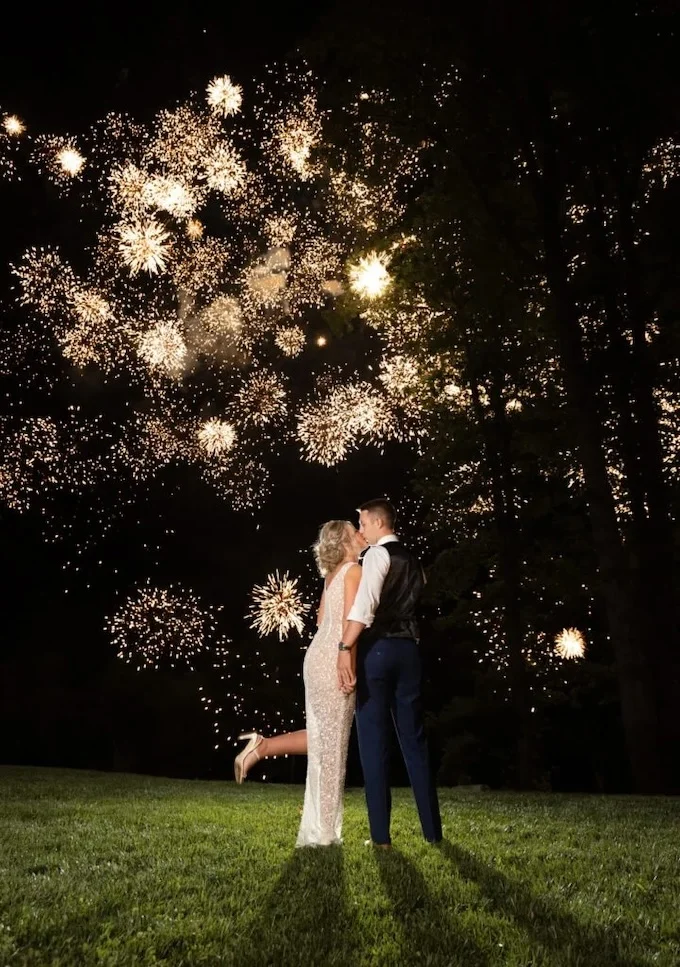
Fireworks are no longer confined to the celebratory spectacle of the Fourth of July. Their dazzling allure has expanded, gracing the skies at theme parks, electrifying sporting events, and, perhaps most surprisingly, illuminating the most romantic of occasions: weddings. For photographers, these ephemeral bursts of light present an unparalleled opportunity to craft truly epic and uniquely memorable couples portraits. However, achieving such breathtaking imagery requires more than just pointing a camera at the sky; it demands a meticulous blend of technical expertise and creative vision, building upon the foundational skills of capturing intimate moments between couples. This comprehensive guide delves into the essential tips and innovative ideas for photographing fireworks during a couples session, ensuring your final images capture the full flash and excitement of a grand finale.

The transient nature of fireworks, often lasting a mere five to eight minutes, underscores the critical need for efficiency and foresight in capturing these moments. Success hinges on pre-planning, precise location scouting, and a clear understanding of the technical adjustments required to work within the dynamic and challenging low-light conditions. This article, featuring exemplary work from photographers at Wedding Maps, provides a detailed roadmap for photographers aiming to create unforgettable couples portraits set against a backdrop of pyrotechnic artistry.
Strategic Planning and Location Scouting: The Foundation of Success
The initial step in photographing fireworks for couples portraits is to gather crucial information well in advance. If a wedding timeline includes a fireworks display, photographers should proactively consult with the couple, the wedding planner, and the venue to ascertain the precise location and timing of the pyrotechnics. This early intelligence is vital for scouting potential shooting locations.

The "best" angle is subjective and depends entirely on the desired aesthetic. Photographers might seek an expansive, unobstructed vantage point to capture the fireworks filling the entire sky, with the couple as smaller, silhouetted figures gazing upwards. Alternatively, a more intimate composition might be achieved by incorporating foreground elements such as trees, architectural structures, or natural landscapes to frame the shot, adding depth and context. Effective scouting is not merely about finding a view; it’s about understanding how to use the environment to enhance the narrative of the couple’s portrait. A well-executed scout minimizes last-minute scrambling and maximizes the precious minutes available for shooting.
Mastering Dynamic Range: RAW Files and Precise Exposure Settings
Photographing fireworks presents a significant technical challenge due to the extreme contrast between the dark ambient light and the intensely bright bursts of light. To effectively manage this dynamic range and preserve detail in both the shadows of the couple and the highlights of the fireworks, capturing images in RAW format is imperative. Unlike compressed JPEG files, RAW files retain a far greater amount of image data, offering significantly more flexibility during post-production for recovering lost details.

Understanding RAW vs. JPEG:
When shooting in RAW, the camera sensor’s data is captured with minimal processing. This means photographers have a wider latitude to adjust exposure, white balance, and color correction without introducing artifacts or significant loss of quality. JPEG files, conversely, are processed and compressed in-camera, leading to a reduction in the information available for editing. For the high-contrast scenarios presented by fireworks, RAW is not merely a preference but a necessity for achieving professional-quality results.
Recommended Exposure Settings for Fireworks Couples Portraits:
A starting point for exposure settings when photographing fireworks for couples portraits typically involves:

- Aperture: f/8 to f/11. This range provides a good balance of depth of field, ensuring both the couple and the fireworks are reasonably sharp, while also offering diffraction management for optimal image quality.
- Shutter Speed: 5 to 15 seconds. The exact duration will depend on the intensity and duration of the fireworks. Longer exposures capture more light trails and a greater number of bursts, while shorter exposures can freeze individual explosions. Experimentation is key to finding the sweet spot for the specific display.
- ISO: 100 to 400. Keeping the ISO as low as possible minimizes digital noise, which is particularly crucial in low-light conditions.
- Focus: Manual Focus. Autofocus systems often struggle in low light and with fast-moving subjects like fireworks. Setting the lens to manual focus and pre-focusing on the couple is essential.
It is critical to utilize the camera’s histogram to monitor exposure. A histogram skewed heavily to the right indicates blown-out highlights, meaning details in the brightest parts of the fireworks are lost. Conversely, a histogram heavily weighted to the left signifies underexposed shadows, where details in the couple or foreground may be lost. The goal is to achieve a balanced histogram that captures detail across the entire tonal range.
Fine-Tuning White Balance for Optimal Color Rendition
Managing white balance is crucial for achieving pleasing color tones in both the ambient environment and the fireworks themselves. A good starting point for white balance when photographing fireworks is the "Tungsten" preset, which often renders the scene with a cooler, bluer cast that can complement the vibrant colors of the fireworks.

If artificial light is used to illuminate the couple, such as a flash or continuous light source, the photographer may consider using a CTO (Color Temperature Orange) gel on the light. In conjunction with this, setting the camera’s white balance to approximately 3200 Kelvin can help to balance the warm gelled light with the cooler ambient light. However, the ultimate white balance setting should align with the photographer’s creative vision for the final image. Fine-tuning in post-production is always an option, but a well-set white balance in-camera provides a stronger foundation.
Selecting the Right Lens: Versatility and Compositional Control
The choice of lens plays a pivotal role in dictating the composition and overall feel of fireworks couples portraits. The desired field of view – whether wide or tight – will influence this decision.

For couples portraits, a very wide-angle lens can be beneficial for capturing the grandeur of the fireworks and the surrounding environment. However, extreme wide angles can sometimes make communication with the couple more challenging if they are positioned at a distance. A moderately wide lens, such as a 24mm or 35mm on a full-frame camera, often strikes a good balance between capturing the scene and maintaining a connection with the subjects.
Conversely, a zoom lens can be advantageous for tighter shots. By compressing the perspective, a zoom lens can make the fireworks appear larger and more impactful within the frame. If a wider shot is initially captured, it’s important to remember that cropping in post-production is a viable option to refine the composition without compromising image quality, especially when shooting in RAW. The key is to select a lens that facilitates the desired framing and allows for effective interaction with the couple.

The Art of Long Exposure Photography
To capture the full spectacle of fireworks, a slower shutter speed is essential. Long exposures allow the camera sensor to gather light over an extended period, resulting in brighter images and the mesmerizing light trails of the fireworks as they streak across the sky. Exposures typically ranging from 5 to 10 seconds are often ideal for capturing multiple bursts and conveying a sense of motion. Shorter exposures, in the 2 to 5-second range, will reveal less detail and fewer fireworks but can be useful for specific artistic effects.
Crucially, any photograph involving long exposures necessitates the use of a tripod to ensure absolute camera stability. Even the slightest vibration can result in a blurry, unusable image. To further minimize motion blur from pressing the shutter button, photographers should employ a cable release, a remote control, or the camera’s built-in two-second delay timer. These techniques are fundamental to achieving sharp, professional-quality long-exposure shots.

Illuminating Your Subjects: Strategic Lighting Techniques
While fireworks themselves provide a dramatic light source, they are often insufficient for properly exposing human subjects in a couples portrait. Unlike standard fireworks photography where subjects might be secondary or omitted, in couples portraits, the subjects must be intentionally and expertly lit.
The process begins by treating the couple as one would in any portrait session, establishing their lighting before the fireworks commence. This involves balancing the flash or continuous light source with the ambient light to achieve the desired exposure. A common and effective setup is to position the light source at approximately a 45-degree angle relative to the couple and the camera, often from a slightly elevated, top-down position.

To add dimension and define the subjects further, a backlight can be employed. Alternatively, modifiers such as snoots or grids can be used to precisely control light spill, ensuring the light is focused exclusively on the couple. The specific lighting strategy will ultimately depend on the photographer’s creative direction and the overall aesthetic they aim to achieve.
Embracing Manual Focus for Precision
Autofocus systems can be notoriously unreliable when attempting to photograph fireworks, often hunting for focus in the low light and failing to lock onto the intended subjects. Therefore, switching the lens to manual focus is a non-negotiable step. If the camera offers a live view function, it can be used to precisely focus on the couple, perhaps utilizing autofocus briefly before locking it in manual mode. Once manual focus is set, it should remain fixed for the duration of the fireworks display.

The Power of Composites: Combining Multiple Exposures
For photographers seeking ultimate control over the final image, creating a composite is a powerful technique. This involves capturing a well-lit and perfectly posed portrait of the couple separately from the fireworks display. A sturdy tripod is essential for this method, ensuring consistent framing across all shots.
Post-Production Workflow: Lightroom and Photoshop
The process begins in photo editing software such as Adobe Lightroom. It is vital to edit the batch of images intended for the composite in a uniform manner. A time-efficient approach involves editing the primary couple portrait first, then applying those same edits as a batch to the subsequent images.

The edited images are then transferred to Adobe Photoshop. To combine them, the images are stacked into a single tab. The blend mode of the upper layers is set to "Lighten." This blend mode reveals the brightest pixels of each layer, effectively isolating and layering the fireworks over the couple’s portrait. Layer masks are then used to meticulously edit out any unwanted elements from each layer, allowing the photographer to precisely control the placement and appearance of the fireworks in relation to the couple. This technique allows for the creation of dramatic and perfectly composed images that might be impossible to capture in a single exposure.
Photographing Sparklers: An Intimate Alternative
While not technically large-scale fireworks, sparklers are a popular and visually appealing element often incorporated into wedding photography, particularly for grand exits. Their smaller scale and closer proximity to the subjects offer a different set of photographic considerations.

The Advantage of Larger Sparklers
When advising couples on sparkler usage for photography, it is highly recommended to opt for larger, 36-inch sparklers over their smaller 10-inch counterparts. The extended burn time of larger sparklers provides photographers with more flexibility to arrange subjects, capture multiple poses, and achieve a greater variety of shots without the pressure of a rapidly diminishing light source.
Boosting ISO and Utilizing Wide Apertures for Sparkler Shots
Sparklers provide a limited amount of light, necessitating adjustments to camera settings to achieve proper exposure. Photographers may choose to supplement the sparkler’s light with an external flash or continuous light source, or they may rely solely on the sparkler’s illumination by adjusting camera settings accordingly.

The ideal settings will vary depending on whether the subjects are moving or standing still. Generally, for sparkler photography, it is advisable to increase the ISO and use a wide aperture (a low f-number) to gather as much light as possible and achieve a brighter exposure.
Recommended Settings for Sparkler Photography:

- Moving Subjects:
- Aperture: f/2.8 to f/4 (wide aperture for light gathering)
- Shutter Speed: 1/60 to 1/125 second (to freeze motion)
- ISO: 800 to 3200 (or higher, depending on ambient light and camera capabilities)
- Static Subjects:
- Aperture: f/5.6 to f/8 (for slightly more depth of field)
- Shutter Speed: 1 to 5 seconds (to allow sparkler trails to register and to capture ambient light)
- ISO: 400 to 1600 (adjust as needed)
For static subjects, lowering the shutter speed allows the sparkler’s light trails to become more visible and can help to capture more of the surrounding ambient light. The other exposure settings should be adjusted to complement the chosen shutter speed.
Safety First: The Importance of a Safety Bucket
When working with sparklers, the inherent risk of handling open flames cannot be overlooked. A fundamental safety precaution is to have a large bucket of water readily accessible. Once the sparklers have served their photographic purpose, they must be safely extinguished by submerging them in the water, preventing any potential fire hazards. This simple yet critical step ensures the safety of the couple, the wedding party, and the venue.

Conclusion: Crafting Enduring Memories
Photographing couples portraits under a sky alight with fireworks or the delicate glow of sparklers offers a unique opportunity to create truly spectacular and emotionally resonant images. By understanding the technical nuances of low-light photography, mastering exposure and focus, and employing creative lighting and editing techniques, photographers can transform fleeting moments into enduring visual narratives. The examples provided by Wedding Maps photographers serve as a testament to the breathtaking possibilities that arise when technical skill meets artistic vision, proving that the most unforgettable moments are often painted against the most dramatic backdrops.