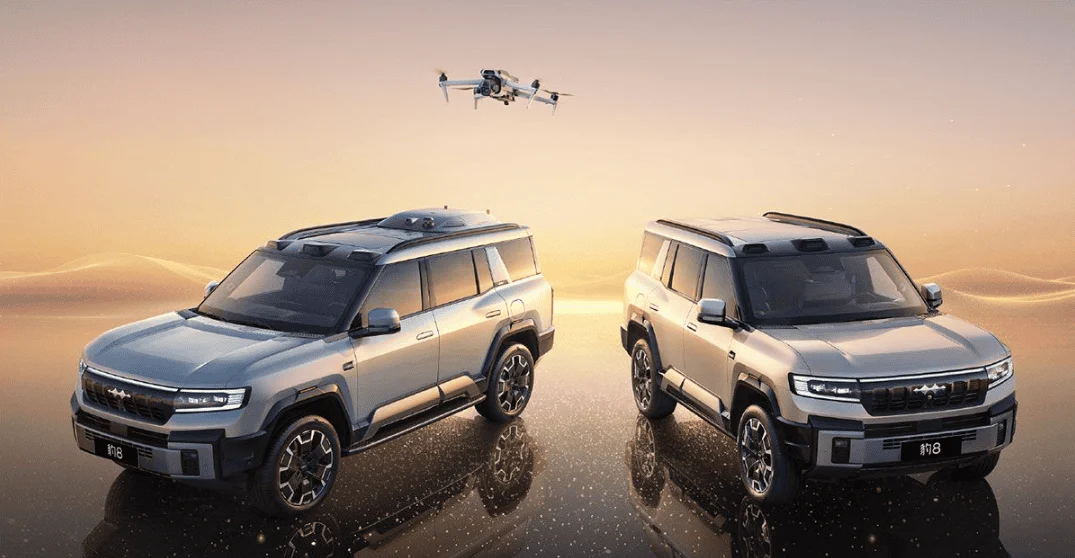
BYD, the world’s leading manufacturer of new energy vehicles (NEVs), has officially unveiled its highly anticipated smart drone system, developed in a strategic partnership with DJI, the global leader in civilian drones and aerial imaging technology. This integration represents a significant leap forward in the fusion of automotive engineering and unmanned aerial vehicle (UAV) technology, creating a seamless ecosystem where the car serves as both a launchpad and a command center for aerial operations. The move signifies a shift in the automotive industry from focusing solely on transportation to providing a holistic, technology-driven lifestyle experience. By embedding a high-performance drone into the vehicle’s architecture, BYD is positioning itself at the forefront of the "intelligentization" era, where hardware, software, and artificial intelligence converge to enhance the utility of modern electric vehicles.
The Genesis of the BYD and DJI Strategic Partnership
The collaboration between BYD and DJI was first hinted at during the 2024 BYD Dream Day event, where the automaker showcased its vision for a future defined by "Integrated Vehicle Intelligence." For years, DJI has dominated the consumer and enterprise drone markets, while BYD has rapidly overtaken global competitors to become a powerhouse in the EV space. The decision to collaborate was driven by a shared vision of expanding the boundaries of what a vehicle can do.
According to industry insiders, the development process focused on solving the primary pain points of using drones with vehicles: the difficulty of launching and landing while in motion, the complexity of charging drone batteries on the go, and the lack of synchronization between the car’s navigation system and the drone’s flight path. By integrating DJI’s specialized flight control systems directly into BYD’s intelligent cockpit, the two companies have created a "Vehicle-to-Drone" (V2D) infrastructure that is the first of its kind in mass-market automotive production.
Technical Specifications and Hardware Architecture
The core of this innovation is a custom-designed DJI drone housed within a specialized, automated "hangar" or docking station mounted on the roof of the vehicle. This system is currently featured on the YangWang U8, BYD’s ultra-luxury off-road SUV, though plans are in place to expand this technology to other high-end models within the BYD portfolio.
The drone itself is equipped with state-of-the-art hardware designed to withstand the rigors of high-speed travel and varying environmental conditions. It features a high-resolution camera capable of 4K video recording at 60 frames per second, supported by a three-axis mechanical gimbal for professional-grade stabilization. Furthermore, the drone utilizes DJI’s OcuSync transmission technology, which ensures a stable, high-definition video feed back to the vehicle’s internal display screens even at significant distances.
One of the most impressive technical feats is the automated battery management system. The vehicle-mounted dock is not merely a storage compartment; it is an intelligent charging station. When the drone returns to the vehicle, the dock automatically swaps or charges the batteries using the car’s massive onboard power supply, ensuring the UAV is always ready for its next mission. This eliminates the need for manual intervention, a common hurdle for traditional drone enthusiasts.
The Intelligent Docking Station and Automated Flight
The integration goes far beyond physical storage. The BYD smart drone system is deeply embedded into the vehicle’s software stack. Through the car’s central infotainment system, drivers can command the drone to take off with a single touch. The docking station features a motorized cover that opens to reveal the drone, which then lifts off autonomously.
Safety is a paramount concern in this design. The system utilizes advanced GPS and vision-based sensors to ensure the drone can track the vehicle accurately, even as it moves through complex terrain. The drone is programmed with "Return-to-Home" (RTH) logic specifically calibrated for a moving target. Unlike standard drones that return to their takeoff coordinates, the BYD-DJI drone calculates the vehicle’s current trajectory and speed to perform a precision landing on the roof-mounted dock while the car is in motion or stationary.
Furthermore, the drone is equipped with 360-degree obstacle avoidance sensors, leveraging DJI’s industry-leading AI algorithms. This allows the drone to navigate around trees, power lines, and other obstacles while following the vehicle, providing the driver with a "third-person perspective" that was previously only possible in video games.
Use Cases: From Leisure to Emergency Response
The practical applications of an integrated drone system are vast, spanning across leisure, safety, and industrial utility. BYD has identified several key scenarios where this technology provides a competitive edge:
1. Aerial Cinematography and Travel Documentation
For the modern traveler, the drone serves as an automated personal photographer. The "Follow Me" mode allows the drone to track the vehicle from the air, capturing cinematic footage of road trips through scenic landscapes. This content is then automatically synced to the vehicle’s onboard storage, where it can be edited and shared directly to social media platforms through the car’s 5G connectivity.

2. Advanced Traffic and Terrain Scouting
In off-road or heavy traffic situations, the drone acts as an advanced scout. Drivers can launch the UAV to fly several kilometers ahead to assess road conditions, identify traffic jams, or find the best path through difficult terrain. The real-time aerial feed is displayed on the dashboard, providing the driver with critical information that ground-based sensors and standard GPS maps cannot offer.
3. Search and Rescue Support
Given the YangWang U8’s positioning as a rugged, go-anywhere vehicle, the drone integration is a vital tool for emergency situations. In the event of a breakdown or a natural disaster in remote areas, the drone can be used to survey the surrounding area for help, drop small emergency supplies, or transmit a distress signal from a higher altitude to bypass geographical obstructions.
4. Security and Perimeter Monitoring
When the vehicle is parked, particularly in camping or remote locations, the drone can perform automated perimeter sweeps. This adds an extra layer of security, allowing owners to monitor their surroundings from the safety of the cabin.
Market Context and Competitive Landscape
BYD’s entry into the drone space comes at a time when Chinese automakers are aggressively seeking ways to differentiate themselves in a crowded market. Competitors like Xpeng have been exploring "flying cars" (eVTOLs), but BYD’s approach is more pragmatic and immediate. By focusing on a vehicle-mounted UAV, BYD provides a functional luxury feature that is ready for current regulatory environments, whereas flying cars face significant legal and infrastructure hurdles.
The partnership also strengthens DJI’s position. As the consumer drone market matures, DJI is looking toward enterprise and automotive integrations to maintain its growth trajectory. By becoming the "eye in the sky" for the world’s largest EV maker, DJI secures a foothold in the future of intelligent transportation.
Financial analysts suggest that this move will bolster BYD’s brand image as a high-tech innovator, helping it compete with premium European and American brands. The inclusion of such high-end tech justifies the premium pricing of models like the YangWang U8, which retails for over 1 million RMB (approximately $140,000 USD).
Safety, Regulations, and Technological Barriers
Despite the excitement, the integration of drones into vehicles faces several challenges. Aviation regulations vary significantly by country. In many regions, operating a drone from a moving vehicle is restricted or requires specific permits. Furthermore, "Beyond Visual Line of Sight" (BVLOS) flight is often prohibited for civilian use. BYD has stated that it is working closely with regulatory bodies in various markets to ensure that the drone’s software includes "geofencing" to prevent unauthorized flights in restricted zones like airports or government buildings.
There is also the challenge of electromagnetic interference. Vehicles, especially EVs with high-voltage systems, generate significant electromagnetic noise that can interfere with drone communication. BYD and DJI engineers reportedly spent over a year optimizing the shielding and signal processing of the docking station to ensure that the drone’s connection remains "bulletproof" even in urban environments with high interference.
The Future of Integrated Vehicle Intelligence
The launch of the BYD smart drone is likely only the beginning of a broader trend. Industry experts predict that we will soon see similar integrations for delivery services, where a drone could launch from a delivery van to drop a package on a doorstep while the van continues to its next stop.
For BYD, this project is a proof of concept for their broader "Xuanji" architecture—an AI-powered "brain" that coordinates every aspect of the vehicle, from its chassis and powertrain to its external sensors and now, its aerial companions. As AI continues to evolve, we can expect future iterations of this drone to be even more autonomous, perhaps even assisting in the vehicle’s self-driving functions by providing a "god-view" that helps the car’s AI make better decisions at intersections or in complex merging scenarios.
Conclusion
BYD’s launch of a smart drone in collaboration with DJI marks a pivotal moment in the evolution of the automobile. It transforms the car from a passive mode of transport into an active, multi-dimensional platform for exploration and safety. By successfully integrating complex UAV technology into the luxury EV segment, BYD has set a new benchmark for what consumers can expect from a high-end vehicle.
While the technology is currently reserved for the most expensive models in the lineup, the history of automotive innovation suggests that these features will eventually trickle down to more affordable vehicles. As the boundaries between the ground and the air continue to blur, BYD and DJI have firmly established themselves as the architects of this new, integrated frontier. Whether it is for capturing the perfect sunset on a coastal drive or navigating a treacherous mountain pass, the BYD smart drone offers a glimpse into a future where our vehicles are no longer limited by the road beneath them.