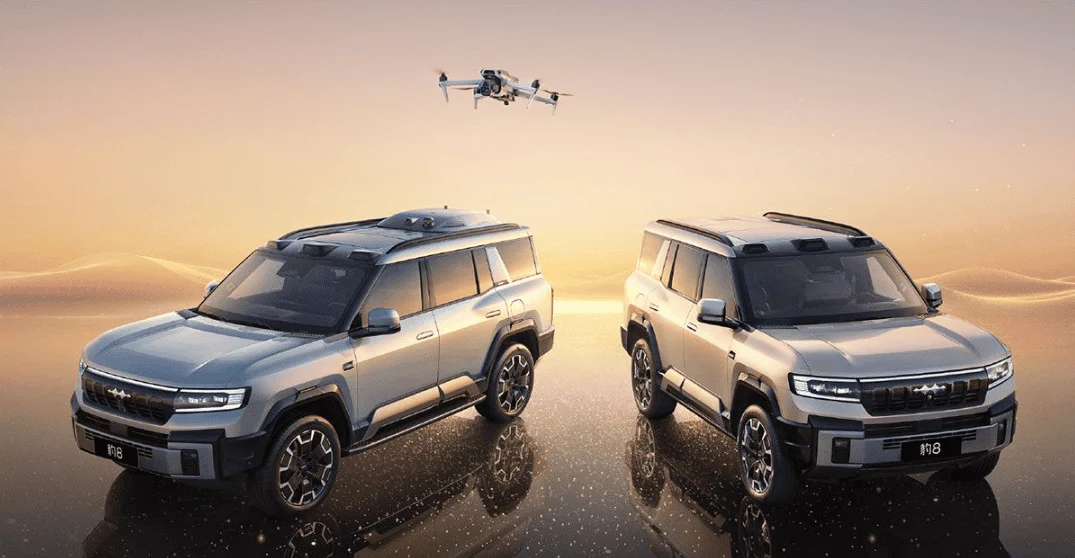
The global automotive landscape has witnessed a significant technological leap as BYD, the world’s leading manufacturer of new energy vehicles (NEVs), officially unveiled its highly anticipated smart drone system developed in strategic partnership with DJI, the global leader in civilian drones and aerial imaging technology. This collaboration marks the world’s first mass-produced vehicle-integrated Unmanned Aerial Vehicle (UAV) system, specifically designed to be housed within and operated from an electric vehicle. By merging automotive intelligence with advanced aerial robotics, the two Chinese tech giants aim to redefine the boundaries of modern transportation, offering a seamless fusion of land-based mobility and aerial perspective. The system, which was showcased as a flagship feature of BYD’s high-end sub-brand, Yangwang, represents a paradigm shift in how drivers interact with their environment, moving beyond traditional navigation toward a comprehensive, multi-dimensional situational awareness.
The Genesis of the Integration: Context and Strategic Vision
The partnership between BYD and DJI was born out of a shared vision to enhance the "smart cockpit" experience. In recent years, the automotive industry has transitioned from focusing purely on mechanical performance to prioritizing software-defined features. BYD’s "Xuanji" architecture, a holistic intelligent vehicle system introduced during the company’s 2024 Dream Day event, serves as the foundation for this drone integration. The Xuanji architecture serves as both the brain and the neural network of the vehicle, allowing it to perceive and process information from various sources, including external sensors and now, an integrated UAV.
This move comes at a time when BYD is aggressively positioning itself as a leader in automotive intelligence, countering the perception that it is solely a hardware and battery manufacturer. By collaborating with DJI, BYD leverages the latter’s decades of experience in flight control systems, image transmission, and obstacle avoidance. For DJI, the partnership provides a new frontier for its technology, moving from handheld or standalone operation to a fully automated, vehicle-dependent ecosystem.
Technical Specifications and the "Drone Bay" Mechanism
At the heart of this innovation is a specialized hardware housing unit integrated into the roof of the vehicle. Unlike aftermarket drone solutions that require manual setup, the BYD-DJI system features an automated "drone bay." This compartment is designed to withstand extreme weather conditions, provide aerodynamic efficiency when closed, and facilitate the automatic launch and recovery of the drone.
The drone itself is a customized version of DJI’s high-performance hardware, optimized for high-speed deployment and landing on a moving or stationary vehicle. Key technical specifications include:
- Automated Launch and Recovery: With a single touch on the vehicle’s internal infotainment screen, the roof hatch opens, and the drone takes off. Upon completion of its mission, the drone uses high-precision sensors to align with the vehicle and land autonomously back into its charging cradle.
- Intelligent Charging: The drone bay is connected to the vehicle’s high-voltage traction battery. This ensures that the drone is always charged and ready for flight, eliminating the need for separate battery management by the user.
- High-Definition Imaging: Equipped with a 4K resolution camera and a three-axis stabilized gimbal, the drone captures cinematic-quality footage. It utilizes DJI’s O3+ (or higher) transmission technology, providing a low-latency, high-definition live feed directly to the car’s 12.8-inch or larger central display.
- Autonomous Tracking: The system features advanced "Follow-Me" algorithms. The drone can autonomously track the vehicle at speeds suitable for scenic drives, maintaining a consistent distance and angle to capture the journey from a third-person perspective.
Chronology of Development and Public Unveiling
The development of the integrated drone system was a multi-year endeavor involving deep engineering collaboration between BYD’s intelligent driving division and DJI’s automotive solutions wing.
- Early 2023: Internal rumors surfaced regarding BYD’s interest in "flying car" technology and drone integration following patent filings related to roof-mounted storage systems.
- January 2024: During the BYD Dream Day event in Shenzhen, CEO Wang Chuanfu officially announced the partnership with DJI. A prototype of the Yangwang U8 fitted with the drone bay was demonstrated to the press, showcasing a flawless automated launch and return sequence.
- Mid-2024: Extensive field testing was conducted in diverse environments, including the Gobi Desert and urban centers, to refine the drone’s ability to land on a vehicle in windy conditions and navigate around obstacles like power lines and trees.
- March 2025: BYD confirmed the commercial availability of the smart drone system as an optional package for its premium lineup, starting with the Yangwang U8 and potentially expanding to the Fang Cheng Bao and Denza brands.
Functional Utility: Beyond Aerial Photography
While the ability to record scenic travel vlogs is a primary draw for consumers, the BYD-DJI smart drone system offers several practical utilities that enhance safety and operational efficiency:
1. Advanced Reconnaissance and Pathfinding: For off-road enthusiasts using vehicles like the Yangwang U8, the drone acts as a forward scout. It can fly ahead to assess terrain, check for obstacles like fallen trees or flooded paths, and provide the driver with a top-down view of the best route to take.
2. Traffic and Congestion Management: In urban environments, the drone can be deployed to fly several hundred meters ahead to investigate the cause of a traffic jam, allowing the driver to make informed decisions about rerouting before they are trapped in congestion.
3. Security and Surveillance: When parked in remote areas, the drone can be programmed to perform a perimeter sweep, providing an added layer of security by monitoring the vehicle’s surroundings from the air.
4. Emergency Assistance: In the event of a breakdown or accident in an area with poor cellular reception, the drone can be launched to a higher altitude to act as a signal relay or to locate nearby landmarks and emergency services.

Market Context and Industry Implications
The introduction of an integrated drone system is a strategic move in an increasingly crowded EV market. As hardware specifications like range and acceleration become standardized across brands, "intelligent features" have become the new battleground for premium automakers.
Data from industry analysts suggests that the "smart cockpit" market is expected to grow at a CAGR of 12% over the next five years. BYD’s move forces competitors like Tesla, Rivian, and XPeng to reconsider their accessory and integration ecosystems. While XPeng has focused on "flying cars" (eVTOLs), BYD’s approach is seen as more pragmatically immediate, utilizing existing drone technology to enhance the current driving experience rather than waiting for the complex regulatory approval of passenger-carrying flying vehicles.
Market experts also point out the synergy between BYD’s 35% market share in the Chinese NEV sector and DJI’s 70% global drone market share. This collaboration creates a technological moat that is difficult for smaller competitors to replicate, given the immense R&D costs associated with both automotive-grade hardware and flight control software.
Official Responses and Expert Analysis
Wang Chuanfu, Chairman and President of BYD, stated during the launch that "intelligence is the real second half of the NEV revolution." He emphasized that the drone system is not a gimmick but a fundamental component of the vehicle’s "perceptual system." By extending the vehicle’s "eyes" into the sky, BYD is providing a level of spatial awareness that was previously impossible.
Technical analysts have lauded the thermal management and vibration isolation of the drone bay. Integrating a sensitive electronic device like a drone onto the roof of a vehicle—where it is subject to high-speed vibrations, rain, and extreme temperature fluctuations—is an engineering feat. "The integration of DJI’s stabilization technology within a BYD-manufactured housing suggests a high level of cross-industry hardware optimization," noted Dr. Lin Wei, an automotive technology consultant.
Regulatory and Safety Challenges
Despite the technological brilliance, the rollout of vehicle-mounted drones faces significant regulatory hurdles. Airspace regulations vary wildly between countries. In China, "low-altitude economy" initiatives have paved the way for such innovations, but in the United States and Europe, strict FAA and EASA regulations regarding Line of Sight (LOS) and flight over moving vehicles may limit the system’s functionality.
Furthermore, privacy concerns remain a talking point. A vehicle-mounted drone capable of autonomous flight and high-definition recording raises questions about the surveillance of pedestrians and other motorists. BYD and DJI have addressed this by implementing "geofencing" software that prevents the drone from flying in restricted zones (such as airports or government buildings) and ensures compliance with local aviation laws.
Conclusion: The Future of the Multi-Modal Ecosystem
The launch of the BYD-DJI smart drone system is more than just a new feature; it is a signal of the future of multi-modal mobility. As vehicles transition from simple tools of transport to mobile living spaces and command centers, the integration of auxiliary robotics will become increasingly common.
BYD has proven that the car can serve as a "mother ship" for other forms of technology, providing power, connectivity, and a launch platform. As AI continues to evolve, we can expect future iterations of this system to feature even higher levels of autonomy, perhaps even assisting in automated deliveries or real-time environmental mapping. For now, the BYD and DJI partnership has set a high bar, offering a glimpse into a future where the road and the sky are no longer separate domains, but a single, integrated path for exploration.