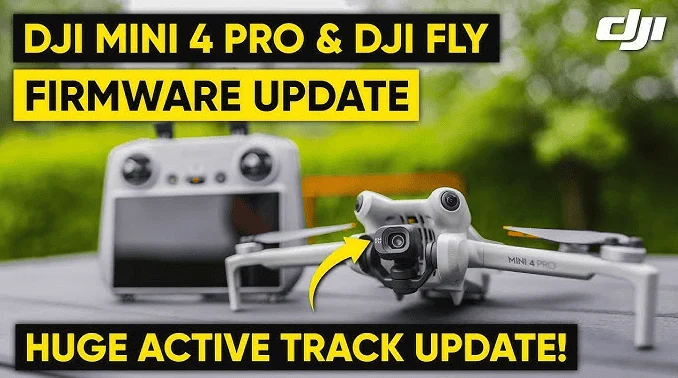
The recent rollout of the latest firmware update for the DJI Mini 4 Pro marks a significant milestone in the evolution of sub-250-gram drones, reinforcing the device’s position as a leader in the consumer Unmanned Aerial Vehicle (UAV) market. Since its initial launch in late 2023, the DJI Mini 4 Pro has been lauded for its ability to pack professional-grade features into a compact, regulator-friendly frame. However, the latest software enhancements provided by DJI go beyond mere maintenance, introducing sophisticated functionalities previously reserved for higher-tier models like the Mavic 3 series. These updates are designed to refine the user experience, enhance flight safety through improved obstacle detection algorithms, and provide photographers with more granular control over their creative output. As the drone industry faces increasing competition and tightening global regulations, DJI’s commitment to iterative software improvement ensures that the Mini 4 Pro remains a versatile tool for both hobbyists and commercial operators who require portability without compromising on technical capability.
Technical Context: The Evolution of the Mini Series
To understand the impact of the recent DJI Mini 4 Pro update, one must consider the trajectory of the Mini series. DJI revolutionized the market by targeting the 249-gram weight limit, a threshold that, in many jurisdictions including the United States (FAA) and Europe (EASA), exempts the drone from certain stringent registration and operational requirements. While the original Mini and Mini 2 focused on portability, the Mini 3 Pro introduced a 1/1.3-inch CMOS sensor and tri-directional obstacle sensing. The Mini 4 Pro pushed these boundaries further with omnidirectional obstacle sensing and the O4 transmission system.
The latest firmware updates are specifically engineered to leverage this hardware. By optimizing the way the drone processes data from its six fish-eye vision sensors, DJI has managed to increase the reliability of its Advanced Pilot Assistance Systems (APAS). This allows for smoother navigation in complex environments, such as dense forests or urban landscapes, where signal interference and physical obstructions are prevalent.
Chronology of Key Firmware Enhancements
The development of the DJI Mini 4 Pro’s software ecosystem has followed a structured timeline of releases, each addressing specific user needs and regulatory changes.
- Initial Launch (September 2023): The drone debuted with ActiveTrack 360° and 4K/60fps HDR video capabilities.
- Q4 2023 Optimization: This phase focused on the O4 transmission stability, particularly for users in high-interference urban areas, and added support for the DJI Goggles 2 and DJI Goggles Integra.
- The 2024 "Pro-Feature" Rollout: This major update introduced "Vision Assist," a feature that provides a 360-degree visual representation of the drone’s surroundings on the remote controller screen, significantly reducing blind spots during complex maneuvers.
- Current Update Cycle (2025): The most recent enhancements focus on refined gimbal stabilization during high-speed maneuvers, improved "Return to Home" (RTH) pathing to conserve battery life, and updated Remote ID protocols to ensure compliance with the latest international aviation standards.
Core Features Introduced in the Latest Update
The centerpiece of the recent update is the expansion of the Vision Assist system. This technology allows pilots to see the world from the perspective of the obstacle sensors. When the drone is flying sideways or backward, the pilot can toggle a view that shows exactly what the side and rear sensors see. This is a game-changer for cinematographers who often perform "reveal" shots where the drone moves away from a subject.
Another critical addition is the enhancement of the ActiveTrack 360° interface. The update provides more fluid transitions between tracking modes and better subject persistence. If a subject—such as a cyclist or a vehicle—is momentarily obscured by a tree or a building, the improved algorithms now use predictive pathing to re-acquire the subject more quickly once it reappears.
Furthermore, the update has addressed the "Auto-Landing" precision. Utilizing the downward vision sensors and infrared sensing system, the Mini 4 Pro can now identify "Safe Landing Zones" with higher accuracy, alerting the pilot if the ground surface is too uneven or if there is water or vegetation that could damage the gimbal.
Data-Driven Performance Gains
According to internal testing and user-reported data from the DJI community, the latest firmware has resulted in several measurable performance improvements:
- Signal Stability: The O4 transmission system has seen a 15% reduction in latency when operating at distances exceeding 5 kilometers in FCC-compliant regions.
- Battery Efficiency: Refinements in the flight controller’s power management have resulted in an average of 1.5 to 2 minutes of additional hover time, particularly when using the Intelligent Flight Battery Plus.
- Image Processing: The update includes new color science profiles for D-Log M, providing a more neutral base that allows professional editors more flexibility during the color grading process. The noise reduction algorithms in "Night Mode" have also been tweaked to preserve more detail in shadows during low-light 4K/30fps recording.
Step-by-Step Implementation of the Update
To ensure a successful update and prevent potential software "bricking," DJI recommends a standardized procedure. Users should first ensure that the DJI Fly app is updated to the latest version via the App Store or Google Play.
- Power Preparation: Ensure that both the drone and the remote controller (DJI RC 2 or RC-N2) have at least 75% battery life.
- Connectivity: Connect the mobile device or the integrated remote controller to a high-speed Wi-Fi network.
- Initialization: Power on the drone and the controller. The DJI Fly app will typically prompt the user with a "New Firmware Available" notification.
- Download and Install: Follow the on-screen prompts. The drone may restart several times during this process, and the gimbal may move or go limp; this is normal behavior.
- Post-Update Calibration: It is highly recommended to calibrate the IMU (Inertial Measurement Unit) and the compass following a major firmware update to ensure the flight sensors are aligned with the new software parameters.
Regulatory Compliance and Global Implications
Firmware updates are not only about features; they are also about legal compliance. In the United States, the FAA’s Remote ID requirements are now fully in effect. The latest DJI Mini 4 Pro update ensures that the broadcast modules are functioning according to the most recent FAA "Means of Compliance."
In Europe, the update addresses the EASA’s "C0" and "C1" class identification labels. For users who wish to fly in the A1 subcategory with the Intelligent Flight Battery Plus (which pushes the weight over 250g), the firmware provides the necessary settings to ensure the drone is recognized as a C1-class aircraft where applicable. This level of regulatory integration is vital for professional operators who must maintain strict flight logs and adhere to local aviation laws to remain insured and licensed.
Market Impact and Expert Analysis
Industry analysts suggest that DJI’s strategy of continuous software support is a primary reason for its 70% plus market share in the consumer drone sector. By adding "Pro" features to the Mini line, DJI creates a high barrier to entry for competitors.
"The introduction of Vision Assist to the Mini 4 Pro essentially erases one of the few remaining reasons to upgrade to the more expensive Mavic series for anyone other than high-end cinema shooters," says one industry consultant. "DJI is effectively competing with itself, ensuring that even their ‘entry-level’ pro-sumer drones are more capable than most competitors’ flagship models."
From a sustainability perspective, these updates extend the lifecycle of the hardware. Instead of consumers feeling the need to purchase a "Mini 5" to gain new features, the firmware update provides a "mid-cycle refresh" that keeps the hardware relevant for several years.
Operational Recommendations for Pilots
Following the update, pilots are encouraged to test the new features in a controlled environment. The new Vision Assist view, while helpful, can be distracting for novice pilots. It is recommended to practice toggling between the main camera view and the sensor views in an open field before attempting complex proximity flying.
Additionally, pilots should verify their camera settings. Major updates can sometimes reset custom button mappings or video bitrates to default. Checking the "Safety" tab in the DJI Fly app is also crucial to ensure that the "Max Altitude" and "Return to Home Altitude" settings remain configured to local legal limits.
Conclusion: A Solidified Future for the Mini 4 Pro
The DJI Mini 4 Pro update is a comprehensive overhaul that enhances nearly every facet of the drone’s operation. By integrating advanced safety features like Vision Assist, optimizing battery and transmission efficiency, and ensuring global regulatory compliance, DJI has provided users with a significant value add at no additional cost. This update reinforces the notion that the Mini 4 Pro is not just a "small drone," but a sophisticated piece of aerospace technology capable of professional-grade output. As the UAV landscape continues to shift, such updates ensure that pilots are equipped with the most advanced, safe, and efficient tools available in the sky.