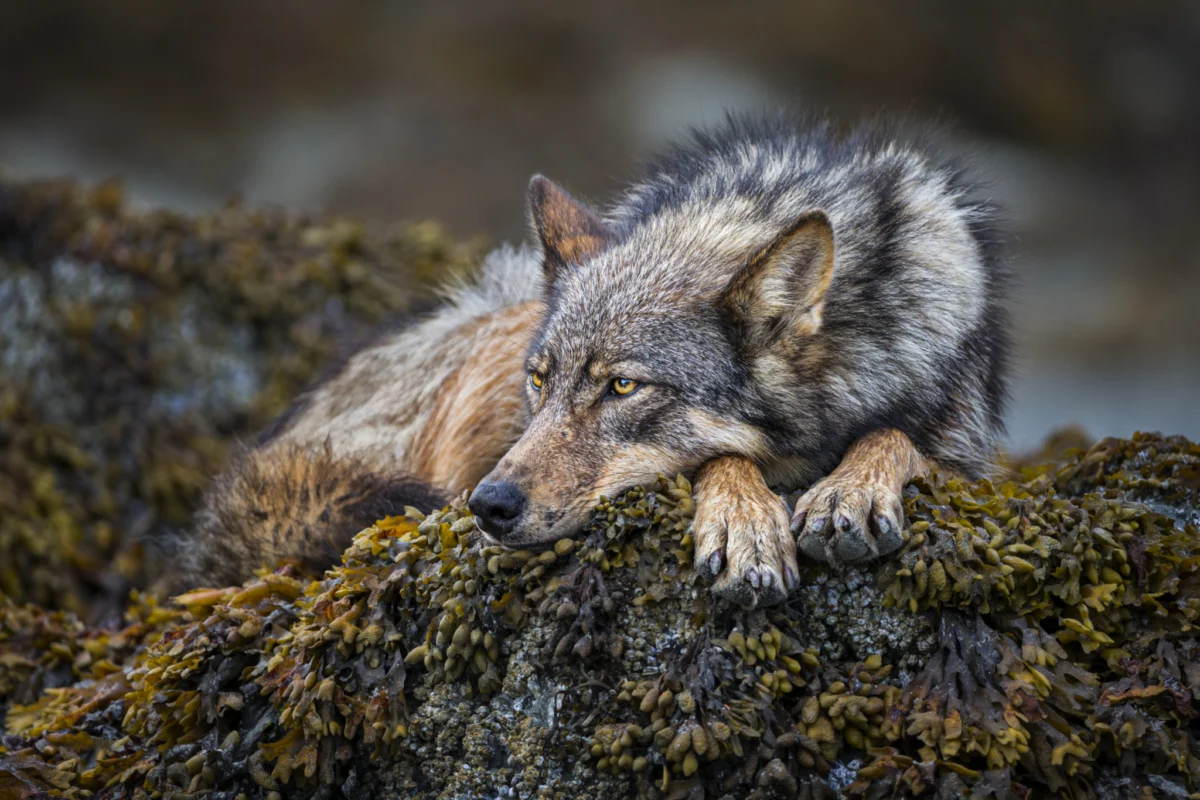
Thirty years ago, I chartered a pilot to drop me off alone in the aptly named Barren Grounds, just 300 miles north of the Arctic Circle. For three months, I hiked over 600 miles on foot and canoed over 2,000 miles through the Canadian wilderness. Mostly, I wanted to test my limits and prove to myself that I could survive on my own. My outward objective, however, was to photograph tundra wolves. After weeks of fruitless searching, I spotted what seemed to be a flat, greyish rock nestled among the lupines. Heart racing, I dropped to the ground and crawled on my belly for the better part of an hour, inching closer until I was just 20 yards away. Through the tangled willows, I finally glimpsed a pair of tawny eyes, perked ears, and the silver face of a lone wolf.
Since that initial solo venture, I have encountered many more wolves and even had the honor of lounging feet away from a perfectly relaxed pack. Each interaction has been an intensive course in patience as I slowly earned their trust. Wolves are shy by nature, highly cautious, and rarely approach humans. Attacks on people are so scarce that only a handful have ever been recorded across North America within the last century. Nevertheless, the archetype of the “big bad wolf” persists in fiction, film, and timeless lore. Humans, after all, love to be scared.
While most of us know that wolves do not impersonate grannies to trick children or huff and puff houses to the ground, we still carry an inherent fear fueled in part by childhood stories and legends. Fairy tales like Little Red Riding Hood seem harmless enough, but as biodiversity continues to plummet across the continent, the fictitious villain suddenly becomes a very real and convenient scapegoat.
When animals like deer and other prey begin to decline in number, wolves are generally the first on the list of suspects. Somewhere between sharpening our pitchforks and pointing fingers, however, we seem to have forgotten that wolves have existed in North America for about 30,000 to 50,000 years—long before the first known arrival of humans.
Overall, the devastation wrought by roads, deforestation, mining, and drilling has inflicted far greater harm on wildlife than wolves ever have. Yet somehow, we still believe the solution to restoring nature lies in trying to control and kill it. Government-sanctioned wolf culls are still regularly implemented as a method of wildlife “management,” while corporate entities continue to push for oil dredging and copper mining. The Canadian government is leading a taxpayer-funded extermination of 4,000 wolves in British Columbia alone. Until we learn to hold our own species accountable for the true damage done to our landscapes, the same mistakes will be made again and again.
My hope in sharing the beauty of animals like wolves is to inspire a deeper understanding and appreciation of their story. Villainizing the predators that have maintained balance within their ecosystems for millennia will only plunge us deeper into a cycle of destruction. Every animal, no matter how feared or misunderstood, contributes to the beauty of our world. Shifting our focus to addressing the broader systemic threats that truly endanger our planet is the first step to facing the truth and healing our broken relationship with nature.
The Enduring Shadow of the "Big Bad Wolf"
The image of the wolf as a malevolent force is deeply ingrained in Western culture, a narrative perpetuated through centuries of folklore, literature, and visual media. From ancient myths to modern children’s stories, the wolf has frequently been depicted as a cunning predator, a symbol of untamed wilderness and inherent danger. This archetypal representation, while entertaining, has had a tangible and often detrimental impact on real-world perceptions and policies concerning wolf populations.
The persistent fear surrounding wolves, often disproportionate to actual threats, can be traced to early human interactions with these apex predators. As human settlements expanded into wolf territories, conflicts inevitably arose over livestock and perceived dangers. This animosity was further amplified and codified in oral traditions and later in written works. The Brothers Grimm’s "Little Red Riding Hood" is perhaps the most iconic example, presenting the wolf as a deceptive and predatory figure that must be overcome. Similar narratives exist in Aesop’s fables and numerous other folk tales across Europe and, subsequently, North America.
In the context of North America, the European settlers brought with them these ingrained fears and prejudices. As they established ranches and farms, wolves were often viewed as direct competitors and threats to livelihoods. This led to widespread eradication efforts, including bounties and organized hunts, which decimated wolf populations across the continent by the early 20th century. This historical animosity, coupled with the enduring power of cultural narratives, has created a challenging environment for wolf recovery and conservation.
Wolves as Ecological Engineers: A Misunderstood Role
Contrary to the long-held perception of wolves as solely destructive entities, scientific understanding has increasingly highlighted their crucial role as ecological engineers. Their presence and predatory behavior are fundamental to maintaining healthy and balanced ecosystems. Wolves are apex predators, meaning they sit at the top of the food chain. Their primary prey often consists of large herbivores, such as deer, elk, and moose.
The impact of wolf predation on herbivore populations is not merely about population control; it influences the behavior and distribution of these animals. When wolves are present, large herbivores tend to be more vigilant and avoid congregating in open areas or lingering in one place for too long. This reduced grazing pressure in specific locations allows vegetation, including trees and shrubs, to flourish. This, in turn, creates habitat and food sources for a wider array of species, from birds and insects to smaller mammals.
Supporting Data on Ecological Impact:
- Yellowstone National Park: The reintroduction of wolves to Yellowstone in 1995 is a widely cited case study. Before their reintroduction, elk populations had grown unchecked, leading to overgrazing of willow and aspen stands along rivers. This degradation of riparian habitats had cascading negative effects on beaver populations, songbirds, and fish. Following the wolves’ return, elk numbers decreased, and their grazing patterns changed. This led to the recovery of vegetation, increased beaver colonies, and a resurgence of bird species. Studies published in journals like Nature and Science have documented these profound ecosystem-wide changes, demonstrating the "trophic cascade" effect of apex predators. For instance, research indicated a significant increase in willow growth in areas where wolf activity was high.
- Canada’s Boreal Forest: Wolves play a vital role in managing ungulate populations across vast stretches of Canada’s boreal forests. Their presence helps prevent overgrazing of young trees, which is critical for forest regeneration and carbon sequestration. The health of these forests has direct implications for climate regulation and biodiversity.
The Scapegoat Phenomenon: Blaming Wolves for Declining Prey Populations
A recurring issue in wildlife management is the tendency to blame wolves when prey species, such as deer, experience population declines. This often occurs when other, more significant environmental stressors are at play. Factors such as habitat loss due to human development, disease outbreaks within prey populations, climate change affecting food availability, and unsustainable hunting practices can all contribute to a reduction in the numbers of deer and other herbivores.
However, when these declines are observed, wolves are frequently targeted as the primary culprit, leading to calls for increased culling or hunting. This simplifies a complex ecological problem by focusing on a visible predator rather than addressing the multifaceted underlying causes.
Timeline of Wolf Management Challenges in North America:
- Pre-Colonial Era: Wolves were a natural and integral part of North American ecosystems, coexisting with indigenous peoples who often held complex spiritual and practical relationships with them.
- 17th-19th Centuries: European colonization led to widespread wolf eradication efforts driven by agricultural expansion and fear. Bounties were established, and organized hunts were common.
- Early to Mid-20th Century: By the 1930s and 1940s, wolf populations were severely depleted or extirpated in much of their historical range.
- Mid-to-Late 20th Century: Growing environmental awareness led to the protection of wolves in some areas, such as the Endangered Species Act in the United States (1973).
- Late 20th Century – Present: Wolf reintroduction programs (e.g., Yellowstone) and natural recolonization have seen populations rebound in some regions. However, these successes are often met with renewed opposition and calls for deregulation and increased hunting or culling, particularly in areas where they come into conflict with agricultural interests or recreational hunting.
The True Drivers of Biodiversity Loss: Human Impact vs. Predation
The narrative that wolves are the primary threat to biodiversity often overlooks the overwhelming impact of human activities. Habitat destruction, pollution, climate change, and unsustainable resource extraction are the leading drivers of species extinction and ecosystem degradation worldwide. Wolves, in contrast, are integral components of the ecosystems they inhabit and have co-evolved with their prey species over millennia.
Supporting Data on Biodiversity Loss:
- Intergovernmental Science-Policy Platform on Biodiversity and Ecosystem Services (IPBES): Reports from IPBES consistently highlight that direct exploitation of organisms, land and sea-use change (deforestation, urbanization), climate change, pollution, and invasive alien species are the primary drivers of biodiversity loss. Industrial activities like mining, oil and gas extraction, and large-scale agriculture fall under these categories and have demonstrably more significant and widespread negative impacts on ecosystems than wolf predation.
- Habitat Fragmentation: The expansion of roads, infrastructure, and agricultural lands breaks up contiguous habitats, isolating wildlife populations and reducing their access to food, water, and mates. This fragmentation is a direct consequence of human development and poses a severe threat to species survival.
- Pollution: Chemical pollutants from industrial and agricultural runoff contaminate water sources and soils, impacting the health and reproductive success of countless species.
The Case of British Columbia: Government-Sanctioned Extermination
The Canadian government’s involvement in the planned extermination of 4,000 wolves in British Columbia is a stark example of a management approach that prioritizes short-term perceived solutions over long-term ecological health. This initiative is often justified as a measure to protect endangered caribou populations, which have indeed seen significant declines. However, critics argue that this approach fails to address the root causes of caribou decline and may have unintended negative consequences for the broader ecosystem.
Inferred Statements and Reactions:
- Environmental Advocacy Groups: Organizations such as the Wilderness Committee and the David Suzuki Foundation have publicly criticized the wolf cull, arguing that it is an ineffective and inhumane approach. They advocate for addressing habitat loss and fragmentation, which are considered the primary drivers of caribou decline. They may point to a lack of scientific consensus supporting culling as the sole or most effective solution.
- Indigenous Communities: Some Indigenous communities in British Columbia have expressed concerns about the cull, emphasizing the cultural and spiritual significance of wolves and advocating for more holistic, ecosystem-based management strategies that align with traditional ecological knowledge.
- Government Justification (Inferred): Provincial wildlife officials likely articulate the cull as a necessary, albeit difficult, measure to prevent the extinction of specific caribou herds. They may cite studies suggesting that wolf predation is a significant factor in current caribou mortality rates in certain areas, particularly where caribou are already stressed by habitat changes.
Analysis of Implications:
- Ecological Imbalance: Removing a significant portion of the wolf population could disrupt the natural balance of the ecosystem. This might lead to an increase in prey species other than caribou, potentially causing overgrazing in other areas or imbalances in predator-prey dynamics for smaller mammals.
- Ethical and Public Perception Concerns: Such large-scale culling operations can generate significant public backlash and raise ethical questions about the treatment of wildlife, especially when alternative, non-lethal management strategies are available.
- Focus Diversion: The emphasis on wolf culling can divert resources and attention from more effective, long-term solutions for caribou recovery, such as habitat restoration and protection.
Towards a Paradigm Shift: Accountability and Coexistence
The enduring fear and misunderstanding surrounding wolves are symptomatic of a broader disconnect between humanity and the natural world. The quote by Robin Wall Kimmerer, "As we learn to listen to the land, we discover that we are not separate from it; we are part of it," serves as a powerful reminder of this fundamental truth. Our tendency to villainize and eradicate species perceived as threats, rather than understanding their ecological roles and addressing the systemic issues driving biodiversity loss, is a pattern that needs urgent reevaluation.
Holding our own species accountable for the extensive damage inflicted upon landscapes through industrial development, resource extraction, and unsustainable practices is paramount. The belief that controlling and killing wildlife is the solution to ecological restoration is a flawed and ultimately self-defeating approach.
Broader Impact and Implications:
- Restoring Ecological Integrity: By shifting away from lethal management of apex predators and focusing on habitat preservation and restoration, we can begin to mend fractured ecosystems. This approach acknowledges that healthy ecosystems are characterized by the presence and interaction of all their native species, including predators.
- Reconciling Human-Wildlife Conflict: Instead of eradication, fostering coexistence requires understanding the drivers of conflict and implementing non-lethal deterrents, land-use planning that minimizes overlap, and community engagement. This involves recognizing that human activities are often the source of increased conflict.
- Rethinking Conservation Strategies: The future of conservation hinges on moving beyond a species-by-species approach that often prioritizes charismatic megafauna and instead embracing ecosystem-based management. This holistic view recognizes the interconnectedness of all life and the critical roles played by often-maligned species like wolves.
- Cultural and Ethical Evolution: Acknowledging the intrinsic value of all living beings and moving away from anthropocentric viewpoints is essential for building a sustainable and ethical relationship with the natural world. This involves challenging deeply ingrained cultural narratives and embracing a more respectful and humble approach to our place within the web of life.
The journey to understanding and appreciating animals like wolves requires a willingness to confront our ingrained fears and biases. By championing a narrative of ecological interconnectedness and demanding accountability for human-induced environmental degradation, we can begin to heal our broken relationship with nature and forge a path toward genuine coexistence. The beauty and ecological significance of every species, no matter how feared or misunderstood, contribute to the richness and resilience of our planet. It is time to listen to the land, and in doing so, discover our true place within it.