The striking image, which encapsulates a poignant interaction between urban sprawl and native wildlife, garnered an overwhelming public mandate, distinguishing itself among a highly competitive field of 25 nominated photographs. This accolade, bestowed by global wildlife photography enthusiasts, not only celebrates a moment of exceptional photographic skill but also amplifies a crucial conservation message embedded within the frame.
The Award-Winning Image: A Glimpse into Urban Coexistence
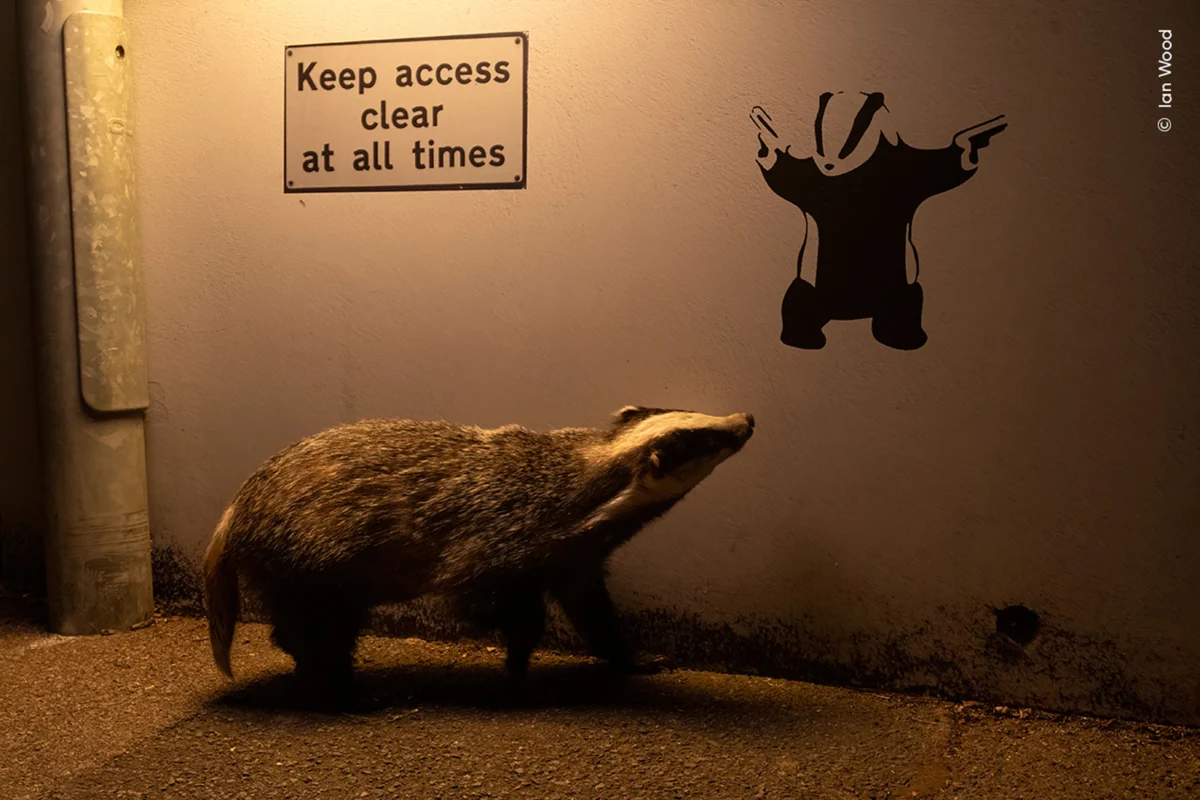
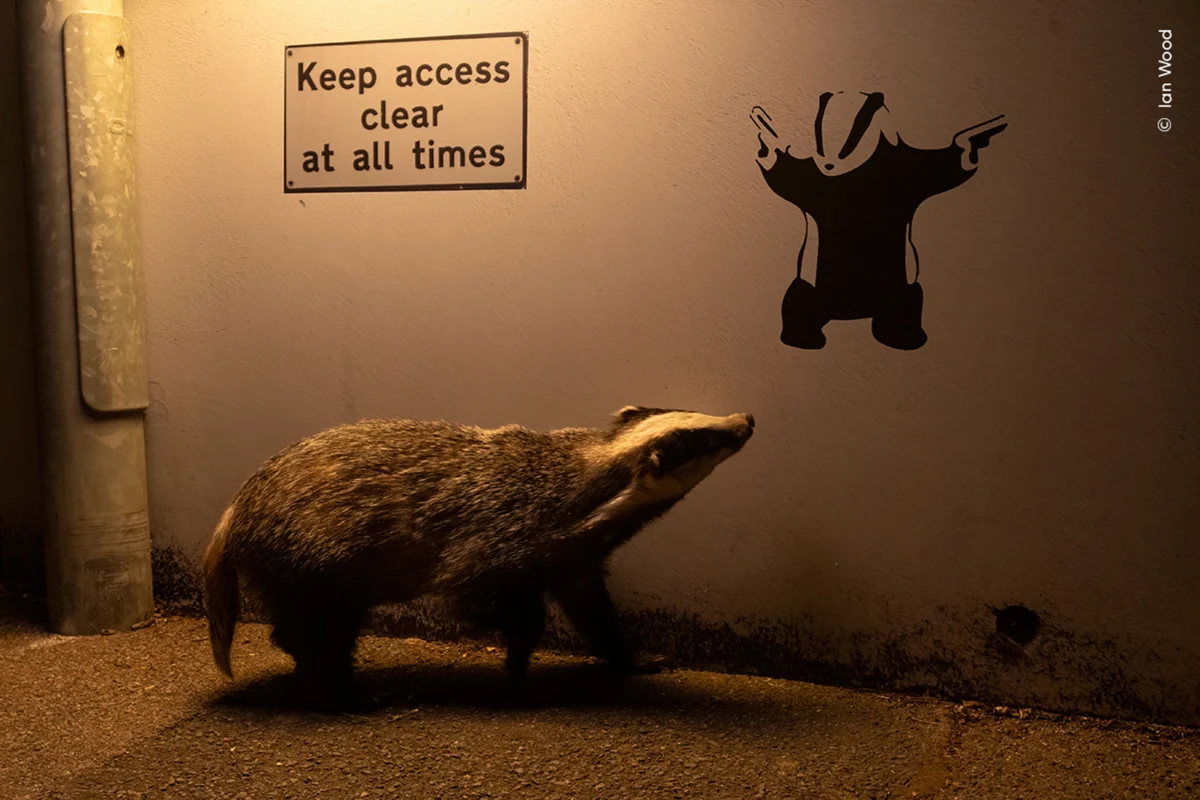
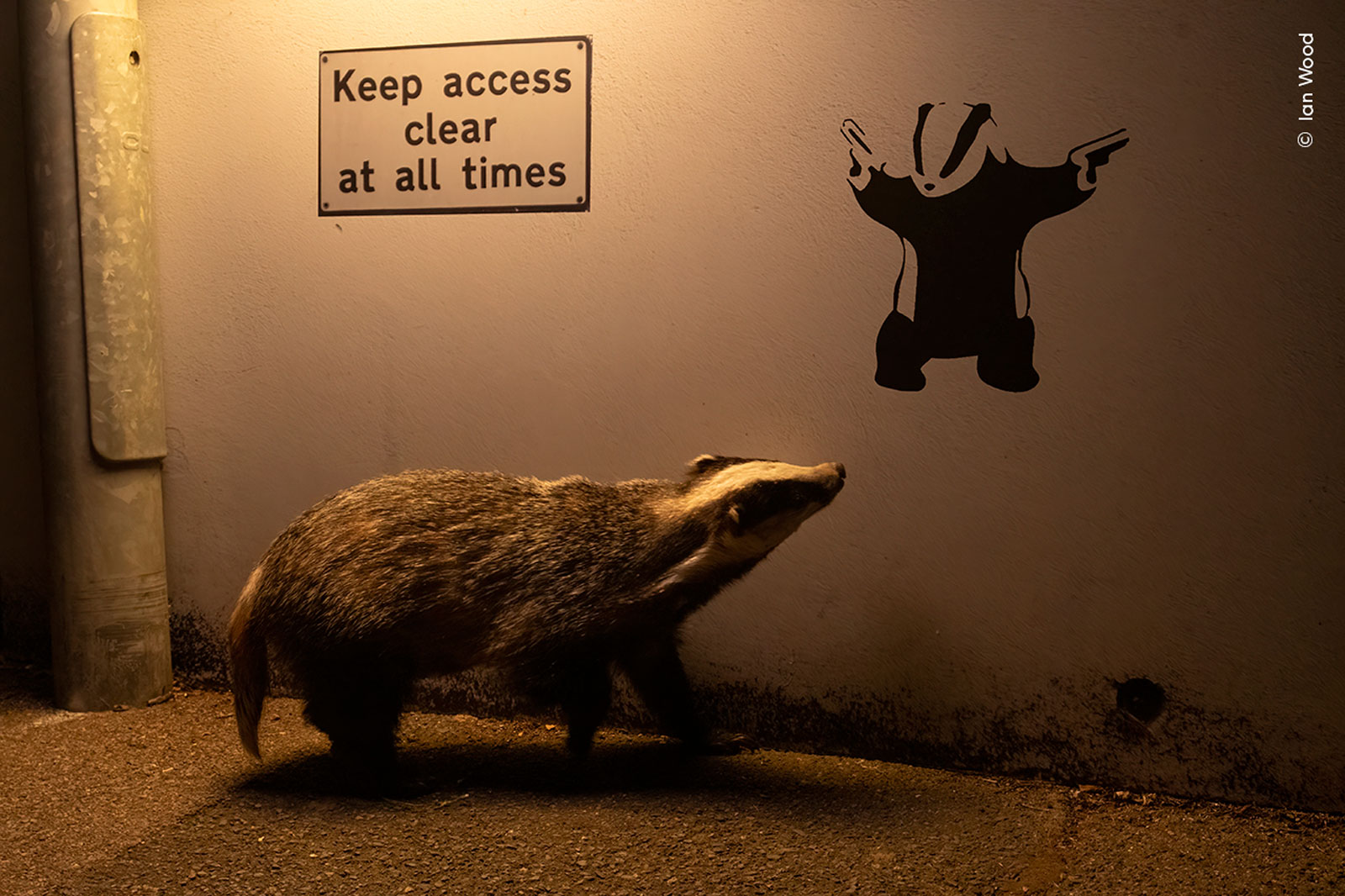
Ian Wood’s photograph, titled ‘No Access’, presents a captivating scene under the dim glow of a lamppost in St Leonards-on-Sea, East Sussex. It features a Eurasian badger, a nocturnal mammal native to the United Kingdom, pausing in its amble along a pavement to look up at a wall adorned with graffiti. The titular "No Access" scrawled on the wall serves as a powerful, almost ironic, commentary on the badger’s presence in a human-dominated environment.
The timing of Wood’s shot is impeccable, capturing the badger in a moment of apparent curiosity or momentary pause, its gaze directed squarely at the defiant message. The natural curiosity of the animal, combined with the stark, man-made backdrop, creates a narrative that resonates deeply with viewers. It highlights the increasingly blurred boundaries between human habitats and the natural world, a theme that has gained significant traction in contemporary wildlife conservation discussions. The image is not merely a portrait of an animal but a story about adaptation, resilience, and the subtle, often overlooked, interactions occurring in our backyards.
The Significance of the People’s Choice Award
The Wildlife Photographer of the Year People’s Choice Award, now in its tenth year, stands as a unique testament to the power of public engagement in conservation. Unlike the main competition, which is judged by an expert panel, this award empowers nature enthusiasts worldwide to cast their votes for their favourite image from a shortlist curated by the Natural History Museum, London, and an international judging panel. This year, the award saw a record-breaking participation, with over 76,000 votes cast by wildlife photography and nature fans from across the globe. This unprecedented level of public interaction underscores the growing global appetite for compelling wildlife narratives and the democratic spirit of the award.
The People’s Choice Award serves as a crucial bridge, connecting a broader audience with the critically important themes explored by wildlife photography. It democratises the appreciation of nature photography, allowing the public to highlight images that resonate most deeply with them, often for reasons beyond purely technical excellence. It demonstrates that the emotional impact and narrative strength of an image can be as powerful as its aesthetic perfection.
The Genesis of a Winning Shot: Ian Wood’s Dedication
Ian Wood’s journey to capture ‘No Access’ was one of patient observation and strategic planning, characteristic of dedicated wildlife photography. Wood, a British photographer, noted that residents in St Leonards-on-Sea had been leaving food scraps on pavements, inadvertently attracting local wildlife. This practice led to foxes, and eventually badgers from a nearby sett, venturing into the urban landscape to forage.
Having observed a badger routinely traversing the pavement alongside the graffiti-laden wall late one night, Wood recognised a unique photographic opportunity. To secure the shot, he meticulously set up a small hide at the edge of the road, anticipating the badger’s return. The ambient light from a single lamppost provided the sole illumination, creating the dramatic, intimate atmosphere seen in the final image. This method of working, patiently waiting for the natural behaviour of the subject, is a hallmark of ethical wildlife photography, ensuring minimal disturbance to the animal. Wood’s commitment to capturing this authentic moment, rather than staging it, speaks volumes about his respect for his subjects and the natural world.

A Photographer’s Plea: The Darker Side of the Image
While the public outpouring of "badger love" for his nominated photo was "beautifully overwhelming," Ian Wood revealed a "darker side" to his winning image, transforming it from a mere snapshot into a powerful conservation statement. Wood, who resides in rural Dorset and is actively involved in re-wilding efforts to enhance wildlife habitats, used his platform to highlight the ongoing badger cull in England.
The badger cull, a contentious government policy aimed at controlling bovine tuberculosis (bTB) by reducing badger populations, has been a subject of intense debate among scientists, conservationists, farmers, and the public for years. Proponents argue it is necessary to curb the spread of bTB in cattle, while opponents contend that its effectiveness is unproven, it is inhumane, and it has detrimental impacts on badger populations, a protected species in the UK. Wood expressed his profound concern: "The badger cull – which is still ongoing – has decimated their numbers, and I fear that unless the cull is stopped, we’ll only see badgers in urban settings in several parts of England."
This statement underscores a critical implication: as rural badger populations decline due to culling, badgers may increasingly be forced into urban environments in search of food and safer habitats, leading to more frequent human-wildlife conflicts and potentially exacerbating their vulnerability. Wood’s hope is clear: "My hope is for this image to raise awareness of the damaging effect of the badger cull and help push for change." The winning photograph thus transcends its artistic merit, becoming a poignant symbol and an urgent call to action for the protection of a beloved native species.
Official Acclaim: The Natural History Museum’s Perspective
Dr. Douglas Gurr, Director of the Natural History Museum, London, echoed the sentiments regarding the image’s deeper significance. He praised Wood’s photograph as a "flawlessly timed image [that] offers a unique glimpse of nature’s interaction with the human world, underscoring the importance of understanding urban wildlife." Dr. Gurr further emphasised that the "exceptional photograph serves as a powerful reminder that local nature and wildlife, often just outside our homes, can inspire and captivate us."
This statement from the head of one of the world’s leading natural history institutions highlights the museum’s commitment not only to showcasing biodiversity but also to fostering a deeper connection between people and the natural world, particularly within their immediate surroundings. The museum, as the developer and producer of the Wildlife Photographer of the Year competition, leverages the emotive power of photography to create advocates for the planet. The award-winning image perfectly aligns with this mission by bringing a complex conservation issue – the plight of badgers and the challenges of urban coexistence – directly into public discourse.
The Highly Commended: A Showcase of Global Talent
While ‘No Access’ claimed the top prize, four other images captivated the global voting public and received the "Highly Commended" distinction. These photographs, selected from the same shortlist of 25, represent the diverse talent and compelling narratives submitted to the prestigious competition:
-
‘Earth and Sky’ by Francisco Negroni (Chile): This unforgettable capture portrays a double lenticular cloud, spectacularly illuminated at nightfall by lava emitted from the Villarrica volcano in Chile. Negroni’s image is a dramatic testament to the raw power and ethereal beauty of natural phenomena, blending celestial grandeur with terrestrial might. The vibrant glow of the lava against the unusual cloud formation creates a scene of almost otherworldly majesty, showcasing the dynamic forces that shape our planet.
-
‘Edge of Night’ by Jess Findlay (Canada): An action shot of a ghostly barn owl making its exit through the hayloft window of a derelict barn, embarking on its nocturnal hunt. Findlay’s photograph perfectly captures the fleeting moment of an apex predator transitioning from its daytime roost to its hunting grounds. The soft light and the owl’s silent, almost spectral flight evoke the mystique of the nocturnal world and the intricate adaptations of creatures that thrive in darkness.
-
‘Whiteout’ by Michel d’Oultremont (Belgium): This image features a stoat, perfectly camouflaged against a pristine snowy landscape in Belgium, sitting upright to observe its territory. D’Oultremont’s photograph beautifully illustrates the remarkable adaptability of wildlife to their environments. The stoat’s alertness and its seamless integration into the wintry backdrop highlight the subtle details that often go unnoticed in the natural world, demanding a keen eye from both the photographer and the viewer.
-
‘Spiked’ by David Northall (South Africa): A gripping capture depicting a bloodied yet determined honey badger returning to finish off a Cape porcupine, which had vigorously defended itself earlier. Northall’s image is a visceral portrayal of the harsh realities of survival in the wild. It captures the tenacity of the honey badger, renowned for its fearless nature, and the formidable defensive capabilities of the porcupine, offering a powerful insight into the brutal elegance of predator-prey dynamics.
These highly commended images, alongside Wood’s winning entry, collectively demonstrate the extraordinary range and depth of modern wildlife photography, from stunning landscapes to intimate animal portraits and intense behavioural studies. Each photograph tells a unique story, inviting viewers to ponder the beauty, fragility, and complexity of the natural world.
The Broader Impact and Exhibition
The five celebrated images – ‘No Access’ and the four Highly Commended photographs – are currently on display both online and within the flagship exhibition at the Natural History Museum, London. The exhibition, which runs until June 29, 2025, offers visitors an immersive experience, allowing them to engage with these powerful visual narratives in a dedicated setting. The interactive voting screens within the exhibition further underscore the public-centric nature of the People’s Choice Award, allowing visitors to appreciate the selections that resonated most widely.

The Wildlife Photographer of the Year competition, now in its 60th edition, has consistently shone a light on inspiring and impactful stories from the natural world. It serves as a global platform, using photography’s unique emotive power to connect people with nature and, ultimately, to create advocates for our planet. The competition welcomes entries from amateur and professional photographers of all ages from around the world, fostering a diverse community united by a passion for wildlife and conservation.
The judging process for the sixty-first competition is already underway, with an international panel of experts meticulously reviewing new submissions. The winners of the main competition are eagerly anticipated, with the next annual awards ceremony scheduled to take place at the Natural History Museum, London, in October 2025. This continuous cycle of discovery, celebration, and advocacy ensures that the critical dialogue around wildlife conservation remains vibrant and engaging.
Urban Wildlife and the Future of Conservation Photography
Ian Wood’s ‘No Access’ serves as a potent reminder of the growing significance of urban wildlife photography. As human populations expand and natural habitats shrink, many species are increasingly adapting to, or being pushed into, urban environments. Documenting these interactions becomes vital for understanding biodiversity in the Anthropocene. Urban wildlife photography can highlight species resilience, illuminate potential conflicts, and foster a sense of local ownership and responsibility towards nature. It challenges preconceived notions of where "wildlife" exists, proving that remarkable natural stories unfold not just in remote wildernesses but also on our doorsteps.
The conversation sparked by Wood’s image regarding the badger cull also exemplifies the critical role of photography in environmental advocacy. A single image, widely shared and celebrated, can transcend scientific reports and policy debates, reaching a broad public audience with an emotional resonance that spurs awareness and action. It underscores that wildlife photography is not merely an art form but a powerful tool for education, conservation, and societal change. As we move forward, the lens of the wildlife photographer will continue to be indispensable in shaping our understanding of and our relationship with the natural world.