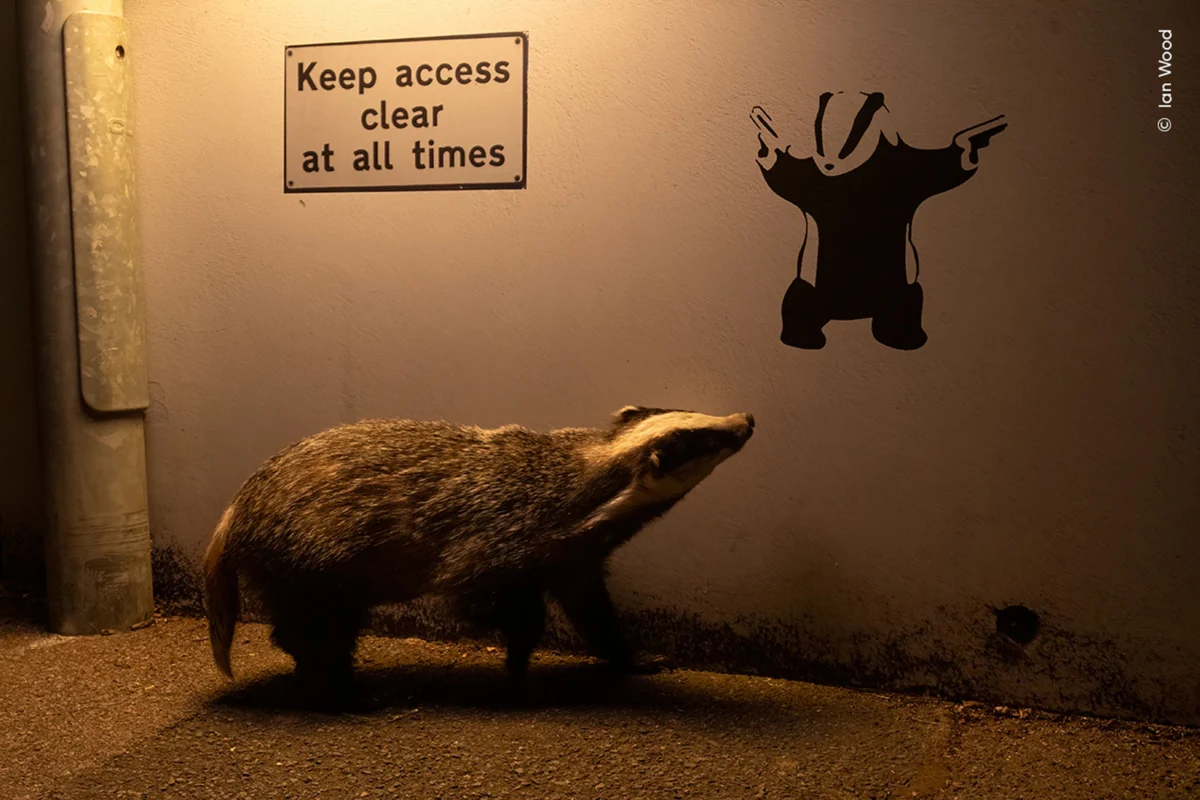
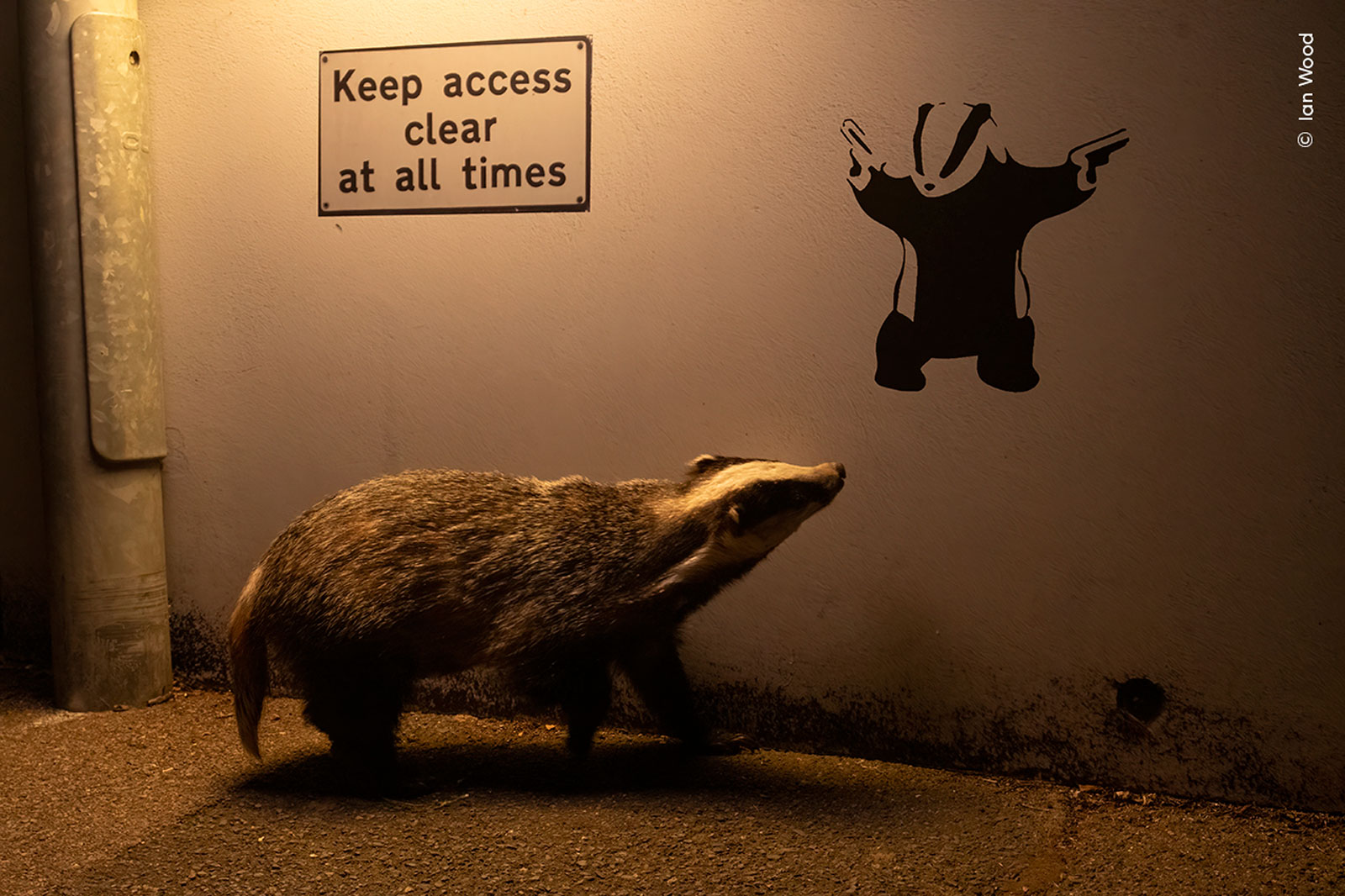
British photographer Ian Wood’s evocative image, "No Access," a perfectly timed capture of an unassuming Eurasian badger momentarily pausing to observe familiar graffiti in St Leonards-on-Sea, England, has been crowned the winner of the tenth edition of the Wildlife Photographer of the Year People’s Choice Award 2024. This poignant photograph, which brilliantly encapsulates the delicate and often challenging intersection of the natural world with human urban environments, resonated deeply with a global audience, securing the top honour in a highly competitive field.
The Winning Shot: A Glimpse into Urban Coexistence
Wood’s "No Access" is more than just a photograph; it is a narrative frozen in time. The image presents a Eurasian badger (Meles meles), a species emblematic of the British countryside, in an unexpected urban setting. Bathed in the soft, ambient glow of a lamppost on a late night, the badger is caught mid-amble, its distinctive striped face turned upwards, seemingly contemplating the bold, stark graffiti scrawled on a concrete wall. The titular "No Access" spray-painted message, ironically positioned above the wild creature, creates a powerful visual metaphor, prompting viewers to reflect on territoriality, human encroachment, and the resilience of wildlife adapting to increasingly fragmented habitats. The composition is flawless, highlighting the badger’s solitary journey through a human-dominated landscape, a subtle yet profound commentary on coexistence.
The image’s appeal lies not only in its aesthetic quality and technical execution – capturing a nocturnal animal in challenging light conditions – but also in its ability to provoke thought and emotion. It humanises the badger, inviting empathy and consideration for creatures that often navigate our shared spaces unseen. This particular badger, with its upward glance, appears to be an active participant in its environment, rather than a mere subject, making the interaction with the graffiti feel deliberate and symbolic.
A Decade of Public Voice: The People’s Choice Award
The Wildlife Photographer of the Year People’s Choice Award, now in its tenth year, serves as a vital democratic component of the prestigious Wildlife Photographer of the Year competition. Unlike the main competition, which is judged by an expert panel, this award empowers the public to cast their votes for their favourite image from a carefully curated shortlist. This year’s edition saw an unprecedented level of engagement, with over 76,000 wildlife photography enthusiasts and nature lovers from around the world participating in the voting process. This record-breaking turnout underscores the increasing global interest in wildlife conservation and the powerful role visual storytelling plays in fostering that connection.
The 25 nominated images, selected by the Natural History Museum, London, and an international judging panel from nearly 60,000 entries submitted to the sixtieth Wildlife Photographer of the Year competition, represented a diverse collection of moments from the natural world. From breathtaking landscapes to intimate animal portraits and dramatic action shots, each image told a unique story, highlighting both the beauty and vulnerability of our planet’s biodiversity. The People’s Choice Award provides a unique platform for these stories to reach an even wider audience, transforming passive viewing into active participation and advocacy.
The Photographer’s Journey: From Observation to Advocacy
Ian Wood’s journey to capturing "No Access" is a testament to the patience, dedication, and keen observational skills required in wildlife photography, particularly in urban environments. The story behind the image began in St Leonards-on-Sea, where Wood noticed a recurring pattern: residents leaving food scraps on the pavement for foxes. This unintended consequence also attracted badgers from a nearby sett, drawing them out of their natural nocturnal routines and into the town’s streets in search of an easy meal.

Having previously witnessed a badger ambling along the pavement beside the very wall adorned with the "No Access" graffiti, Wood recognised a unique photographic opportunity. He meticulously planned his shot, setting up a small hide on the edge of the road to minimise disturbance and allow for a natural interaction. The late hour meant that only the stark, artificial illumination from a lamppost served as his light source, adding a dramatic, almost theatrical quality to the scene. This deliberate choice of setting and lighting accentuates the badger’s presence, making it a stark figure against the human-made backdrop.
Wood’s commitment extends beyond capturing compelling images; he is also a passionate advocate for wildlife. Living in rural Dorset, he is actively engaged in re-wilding initiatives aimed at enhancing habitats for a wide array of species. This personal dedication to conservation underpins the deeper message embedded within "No Access."
Beyond the Frame: A Plea for Badger Conservation
While the public outpouring of "badger love" following the nomination and subsequent win was "beautifully overwhelming" and "truly humbling" for Wood, he notes a "darker side" to his image’s context. His win provides a powerful platform to shed light on the controversial and ongoing badger cull in England. This governmental policy, primarily aimed at curbing the spread of bovine tuberculosis (bTB) in cattle, involves the culling of badgers, which are believed to be a reservoir for the disease.
The badger cull has been a contentious issue in the UK for decades, sparking heated debates among farmers, scientists, conservationists, and the public. Proponents argue it is a necessary measure to protect livestock and the agricultural economy, citing evidence of badgers transmitting bTB to cattle. However, numerous scientific studies and conservation groups, including the Badger Trust, have questioned the effectiveness and ethics of the cull, highlighting concerns about its impact on badger populations, the potential for disease displacement, and the cruelty involved. Many experts advocate for alternative strategies, such as improved cattle testing, vaccination programs for both badgers and cattle, and enhanced biosecurity on farms.
Wood expresses a profound fear that "unless the cull is stopped, we’ll only see badgers in urban settings in several parts of England." This stark prediction underscores the severity of population decline in rural areas and the adaptive, yet desperate, measures badgers might resort to for survival, venturing into human-populated zones where food sources might be more readily available or less competitive. The irony of "No Access" winning an award for an image of a badger in an urban setting, while their rural populations face decimation, is not lost on Wood. His hope is that this image will "raise awareness of the damaging effect of the badger cull and help push for change," transforming a moment of art into a catalyst for vital conservation dialogue and policy reconsideration.
Echoes of the Wild: The Highly Commended Selections
While "No Access" captured the top honour, four other extraordinary images were also "Highly Commended," deeply impressing wildlife lovers across the globe and showcasing the immense talent within the competition. These images further underscore the diversity of natural history photography and the compelling stories it can tell:
-
"Earth and Sky" by Francisco Negroni (Chile): This unforgettable capture presents a breathtaking spectacle of a double lenticular cloud, dramatically illuminated at nightfall by the fiery lava emanating from the Villarrica volcano in Chile. Negroni’s image is a masterclass in combining elemental forces – earth, fire, and sky – into a single, awe-inspiring frame, highlighting the raw power and beauty of our planet’s geological activity. The vibrant hues of the lava against the dark, cloud-laden sky create a surreal and majestic scene, a testament to nature’s grand theatre.
-
"Edge of Night" by Jess Findlay (Canada): An action-packed shot, this photograph captures a ghostly barn owl (Tyto alba) in the fleeting moment it exits through the hayloft window of a derelict barn, embarking on its nocturnal hunt. Findlay’s image perfectly conveys the stealth and grace of this crepuscular predator. The soft light, perhaps from the emerging dawn or setting dusk, highlights the owl’s silent flight and its intricate feather patterns, creating a sense of ethereal movement against the rustic backdrop of human abandonment. It speaks to the adaptation of wildlife to human structures and the ongoing cycle of life and death.
-
"Whiteout" by Michel d’Oultremont (Belgium): This minimalist yet powerful image features a stoat (Mustela erminea) sitting upright, surveying its snowy territory. The stoat, with its winter white coat, blends almost perfectly into the pristine, snow-covered landscape of Belgium, a testament to its remarkable camouflage. D’Oultremont’s composition emphasizes the animal’s alertness and its ability to thrive in harsh conditions. The starkness of the white environment draws the viewer’s eye directly to the stoat, a small but resilient sentinel in a vast, silent world.
-
"Spiked" by David Northall (South Africa): Northall’s image is a gripping portrayal of nature’s relentless struggle for survival. It shows a bloodied yet fiercely determined honey badger (Mellivora capensis) returning to finish off a Cape porcupine (Hystrix africaeaustralis), which had valiantly attempted to defend itself earlier. This raw and visceral photograph captures the brutal reality of the food chain, showcasing the tenacity of the honey badger, known for its fearlessness, and the formidable defenses of the porcupine. It’s a stark reminder of the wild’s unforgiving nature and the sheer will to survive.
These highly commended images, alongside Wood’s winning entry, demonstrate the breadth and depth of wildlife photography, from stunning landscapes to poignant animal behaviours, all serving to deepen our appreciation and understanding of the natural world.
The Grand Stage: Wildlife Photographer of the Year Competition
The Wildlife Photographer of the Year competition, developed and produced by the Natural History Museum, London, stands as one of the world’s most prestigious showcases for wildlife photography. Celebrating its sixtieth edition this year, the competition has consistently pushed the boundaries of natural history photography, honouring images that are not only technically brilliant but also tell compelling stories and shed light on critical conservation issues. The selection process is rigorous: from almost 60,000 images submitted by amateur and professional photographers of all ages from around the globe, an international panel of experts meticulously sifts through entries to identify those that best exemplify artistic merit, scientific accuracy, and narrative power.

The competition’s overarching mission is profound: to shine a light on inspiring and impactful stories from the natural world, thereby creating advocates for our planet. Through the unique emotive power of photography, it connects people with nature, fostering a sense of wonder, responsibility, and urgency for conservation. The Natural History Museum, as the custodian of this competition, plays a crucial role in bringing these stories to millions worldwide, leveraging its platform to educate and inspire action.
Exhibition and Legacy
The winning image, "No Access," along with the four highly commended finalists, will be prominently displayed both online and on interactive voting screens within the flagship Wildlife Photographer of the Year exhibition at the Natural History Museum, London. This exhibition, a highlight for visitors, will run until June 29, 2025, offering ample opportunity for the public to engage with these powerful visual narratives. The physical exhibition provides a tangible experience, allowing viewers to appreciate the intricate details and emotional depth of each photograph in a dedicated space.
The legacy of such images extends far beyond the exhibition halls. They become tools for education, advocacy, and scientific understanding. They challenge perceptions, spark conversations, and can even influence policy, as Ian Wood hopes for his badger image. The annual cycle of the competition ensures a continuous flow of new perspectives and urgent messages from the natural world. Currently, entries for the sixty-first competition are undergoing the intense scrutiny of the international judging panel, with the winners slated to be announced at the next annual awards ceremony in October 2025 at the Natural History Museum, London.
In an era of rapid environmental change, the Wildlife Photographer of the Year competition remains a beacon, using the universal language of photography to remind humanity of its interconnectedness with nature and the imperative to protect the precious biodiversity that enriches our shared planet. Ian Wood’s "No Access" is not just a winning photograph; it is a resonant call to action, urging us to look closer at the wild lives coexisting alongside us, and to advocate for their continued presence.