The visual discrepancy between the majesty of a mountain range perceived by the human eye and the often-underwhelming representation captured by a smartphone camera has long been a point of frustration for amateur and professional photographers alike. While the human brain processes depth and scale with biological sophistication, the fixed wide-angle lenses standard on most mobile devices tend to exaggerate the distance between the foreground and the horizon, effectively shrinking massive geological formations into insignificance. This phenomenon, frequently discussed within the digital imaging community, serves as the primary catalyst for the instructional curriculum developed by Kate Wesson and the iPhone Photography School. The release of specialized modules within the iPhone Landscape Mastery course aims to bridge this technical gap, providing users with the methodological tools required to restore a sense of scale and drama to their outdoor imagery.
The Optical Dilemma of the Vanishing Horizon
The fundamental challenge in landscape photography via smartphone lies in the physics of the lens. Most modern smartphones, including the latest iterations of the iPhone, utilize a wide-angle lens as their primary sensor. This design is intentional, allowing users to capture a broad field of view, which is ideal for group portraits and tight indoor spaces. However, in the context of a vast mountain range, a wide-angle lens creates a "stretching" effect. By pulling more of the surrounding environment into the frame, the lens pushes distant objects further away in the composition.
Consequently, a peak that dominates the physical skyline may appear as a mere undulation on the horizon when viewed through a 24mm or 26mm equivalent lens. This technical limitation is often misinterpreted by users as a failure of the sensor’s resolution, when it is, in fact, a matter of focal length and perspective. The iPhone Landscape Mastery course addresses this by introducing the concept of lens compression—a technique typically reserved for DSLR users with telephoto lenses—and adapting it for the mobile interface.
A Chronological Evolution of Mobile Photography Hardware
To understand the current state of mobile landscape photography, one must examine the rapid technological progression of the smartphone camera over the last decade. The shift from basic documentation to artistic expression has been marked by several key hardware milestones:
- 2010–2012: The introduction of the iPhone 4 and 4S marked the first time mobile sensors reached a level of clarity that challenged entry-level "point-and-shoot" cameras. However, focal lengths remained fixed, and digital zoom resulted in significant pixelation.
- 2016: The release of the iPhone 7 Plus introduced the dual-lens system, featuring a dedicated telephoto lens. This was a pivotal moment for landscape photographers, as it allowed for optical magnification without the loss of detail associated with digital cropping.
- 2019–2021: The implementation of "Night Mode" and Deep Fusion technology allowed for high-dynamic-range (HDR) processing. This enabled photographers to capture the subtle textures of mountain shadows and bright snowcaps simultaneously, a feat previously impossible without manual bracketing.
- 2023–2024: The introduction of the 5x optical zoom on Pro Max models and the transition to 48-megapixel sensors have provided the raw data necessary for large-scale printing and advanced post-processing.
Despite these hardware advancements, the "small mountain" problem persists for those who rely solely on default settings. The instructional content provided by Wesson emphasizes that hardware is merely a tool; the mastery of scale requires a fundamental shift in how the photographer positions themselves relative to the environment.
Supporting Data: The Rise of the Mobile Creator Economy
The demand for specialized training, such as the iPhone Landscape Mastery course, is supported by broader industry trends. According to data from the Camera & Imaging Products Association (CIPA), global shipments of digital cameras have declined by over 90% since their peak in 2010. Conversely, the number of photos taken annually has skyrocketed, with estimates suggesting that over 90% of all photos taken in 2023 were captured on smartphones.
Market research indicates that "nature and travel" remains the most popular category for mobile photography on platforms like Instagram and Pinterest. However, a 2022 survey of social media users found that 64% of respondents felt their travel photos "did not accurately represent the scale and beauty" of the locations they visited. This gap between user intent and visual output has created a multi-million dollar industry for mobile photography education, as consumers seek to maximize the potential of the high-priced hardware in their pockets.
Technical Analysis of the Looming Mountain Technique
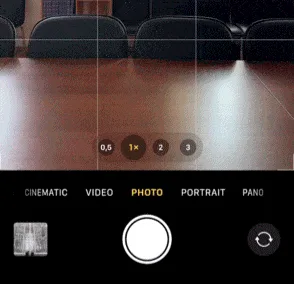
The "simple trick" alluded to in recent photography tutorials often involves a combination of focal length selection and physical positioning. To make a mountain appear larger, photographers are encouraged to move further away from their foreground elements while utilizing the telephoto (zoom) lens.
In optical terms, this is known as perspective distortion. When a photographer stands close to a foreground object (like a tree or a rock) and uses a wide lens, the foreground object appears disproportionately large compared to the background mountain. By moving back and zooming in, the photographer "compresses" the space between the foreground and the background. This causes the mountain to occupy a much larger percentage of the frame, creating the "looming" effect that more closely mirrors the human psychological experience of standing before a massive peak.
Furthermore, the course highlights the importance of "leading lines" and "layering." By placing a person or a known object in the mid-ground, the viewer’s brain is given a point of reference for scale. Without these markers, the vastness of a mountain range can become abstract and lose its impact.
Official Perspectives and Educational Frameworks
Kate Wesson, a prominent figure in the mobile photography space, has argued that the democratization of high-quality imagery is one of the most significant cultural shifts of the 21st century. In her curriculum, she posits that the "best camera is the one that’s with you," a sentiment popularized by photographer Chase Jarvis. However, Wesson adds the caveat that the utility of the device is capped by the user’s understanding of light and geometry.
The iPhone Photography School, the organization hosting the Mastery course, has reported a significant uptick in enrollment from demographics that traditionally relied on heavy professional gear. "We are seeing a trend where seasoned professionals are leaving their 20-pound gear bags at home and heading into the backcountry with nothing but an iPhone and a lightweight tripod," the organization noted in a recent white paper on mobile trends. "The focus has shifted from the technical specifications of the sensor to the creative potential of the software and the photographer’s eye."
Broader Impact and Implications for Tourism and Conservation
The ability for the general public to capture professional-grade landscape photos has far-reaching implications beyond the realm of social media aesthetics. There is a documented "Instagram effect" on national parks and remote wilderness areas. When a location is photographed in a way that emphasizes its epic scale and beauty, it often leads to a surge in tourism.
While this brings economic benefits to local communities, it also presents challenges for conservation. The "looming mountain" technique, by its nature, makes remote areas look even more majestic and inviting. Environmentalists have expressed concern that the ease of capturing and sharing such images can lead to "over-tourism" in fragile ecosystems.
Conversely, high-quality landscape photography serves as a powerful tool for environmental advocacy. When citizens can capture the grandeur of a mountain range with the device in their pocket, they are more likely to develop a personal connection to those landscapes. The iPhone Landscape Mastery course, while focused on technical skill, indirectly contributes to this visual record of the natural world, documenting glaciers, forests, and peaks during a period of rapid climatic change.
Conclusion: The Future of the Mobile Lens
As smartphone manufacturers continue to integrate artificial intelligence and computational photography into their devices, the physical limitations of small lenses are being mitigated by software. Features such as "Portrait Mode" for landscapes and AI-driven sky replacement are already common. However, the fundamental principles of composition and scale—the very topics taught in the iPhone Landscape Mastery course—remain the domain of the human operator.
The transition from "taking a picture" to "crafting an image" is the defining threshold for the modern mobile photographer. By understanding the physics of scale and the techniques required to make mountains loom large, users are able to transcend the basic snapshots of the past. As mobile technology continues to evolve, the gap between the professional gallery and the smartphone gallery continues to narrow, ensuring that the grandeur of the natural world is captured with the dignity and scale it deserves.