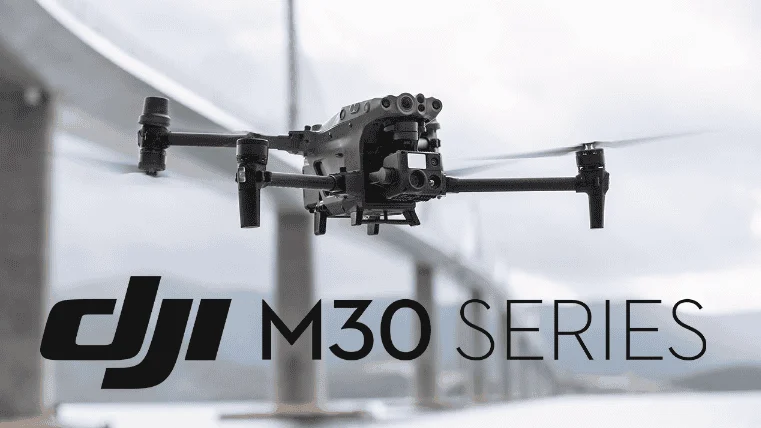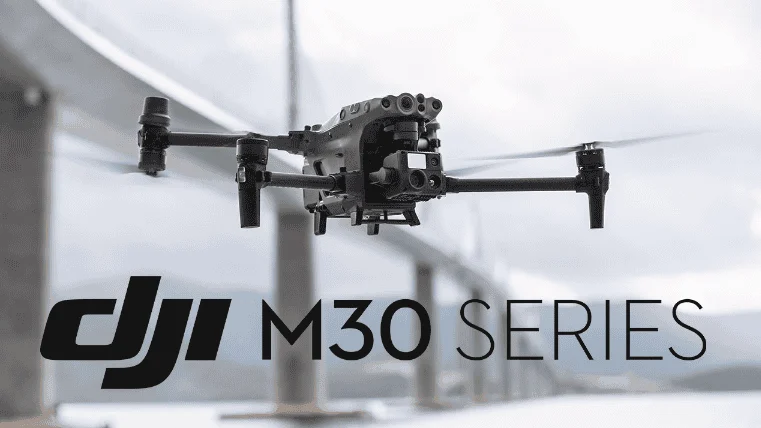
The landscape of industrial unmanned aerial systems (UAS) has reached a pivotal turning point as the DJI Matrice 30 (M30) series, equipped with the AVSS PRS-M30 parachute recovery system, gains the necessary technical validation to operate over human assemblies. This development addresses one of the most significant regulatory hurdles in the commercial drone industry: the inherent risk associated with flying heavy, high-speed aircraft in densely populated urban environments. By integrating an automated safety solution that mitigates kinetic energy in the event of a critical failure, the DJI M30 is no longer confined to isolated industrial sites, but can now be deployed for critical public safety and infrastructure missions in the heart of modern cities.
The Evolution of Operational Safety in Enterprise Drones
For years, the commercial drone sector has been caught between the immense potential of aerial data and the stringent safety requirements imposed by aviation authorities like the Federal Aviation Administration (FAA) in the United States and the European Union Aviation Safety Agency (EASA). Standard operating procedures generally prohibited flight over people (FOP) unless the operator secured a specific, often difficult-to-obtain waiver. The primary concern has always been the "ballistic descent" of a drone following a motor failure or software glitch, which could result in fatal injuries to bystanders.
The DJI M30, launched as a more portable yet equally powerful alternative to the larger Matrice 300 RTK, was designed with internal redundancies, such as dual-vision and ToF sensors on all six sides. However, even with these safeguards, mechanical or battery failures remain a statistical possibility. The integration of the PRS-M30 system by AVSS (Aerial Vehicle Safety Solutions Inc.) provides the "fail-safe" layer required by regulators to move from restricted flight to routine operations over crowds.
Technical Breakdown of the AVSS PRS-M30 Parachute System
The PRS-M30 is not merely a passive canopy; it is a sophisticated, integrated safety suite designed specifically for the DJI M30’s airframe. The system consists of three primary components: an autonomous triggering system (ATS), a flight termination system (FTS), and the parachute pod itself.
The Autonomous Triggering System utilizes independent sensors to monitor the drone’s flight telemetry in real-time. If it detects an abnormal pitch or roll angle, a sudden drop in altitude, or a total loss of power, it initiates the deployment sequence in milliseconds—often faster than a human pilot could react. Simultaneously, the Flight Termination System cuts power to the drone’s motors. This is a critical regulatory requirement, as it prevents the parachute lines from becoming entangled in spinning propellers and ensures the aircraft does not continue to fly away under power.
Once deployed, the parachute significantly reduces the drone’s terminal velocity. According to ASTM F3322-18 standards—the international benchmark for small UAS parachutes—the system must ensure that the impact energy is below specific thresholds to minimize the risk of serious injury. For the DJI M30, which weighs approximately 3.7 kg to 4 kg depending on the payload, this reduction in kinetic energy is the difference between a catastrophic accident and a manageable incident.
Chronology of Regulatory Progress and Testing
The journey toward certifying the DJI M30 for flight over people has been a multi-year effort involving rigorous third-party testing. The timeline of this achievement reflects the maturing of the drone industry:
- March 2022: DJI officially launches the Matrice 30 series, positioning it as the ultimate tool for first responders due to its IP55 weather resistance and compact folding design.
- Late 2022: AVSS begins the engineering phase for the PRS-M30, focusing on a "plug-and-play" design that does not void DJI’s manufacturer warranty.
- 2023: Intensive field testing begins. To meet ASTM F3322-18 standards, the system must undergo 45 successful deployment tests across various failure scenarios, including manual deployment and automatic deployment at full throttle.
- 2024-2025: Civil aviation authorities begin recognizing the combined M30 and AVSS data packages, allowing agencies to include "Flight Over People" and "Beyond Visual Line of Sight" (BVLOS) in their standard operating waivers.
Impact on Public Safety and Emergency Response
The ability to fly over crowds is most transformative for the public safety sector. Police departments and fire services often operate in "Drone as a First Responder" (DFR) programs, where a drone is dispatched from a rooftop station to the scene of an emergency before ground units arrive. In an urban setting, the path from the launch hub to the emergency site almost inevitably involves crossing over pedestrians, traffic, and public gatherings.
With the PRS-M30 integration, a DJI M30 can now legally and safely navigate these "over-people" corridors. In the event of a mid-flight failure, the drone would drift slowly to the ground, giving bystanders ample time to move and ensuring the impact is non-lethal. This capability allows for faster response times in search and rescue missions, where every second counts, and provides incident commanders with a continuous "eye in the sky" during large-scale public events like marathons, festivals, or protests.
Enhanced Capabilities for Urban Infrastructure Inspection
Beyond public safety, the industrial applications of the DJI M30 are significantly expanded. Infrastructure such as bridges, high-rise buildings, and power lines are frequently located in populated areas. Previously, inspecting a bridge in a major city might have required closing lanes of traffic or cordoning off pedestrian walkways to comply with safety regulations.
The certified safety of the M30 with a parachute allows utility companies to conduct these inspections with minimal disruption. The M30’s multi-sensor camera—featuring a 48MP zoom camera, a 12MP wide-angle camera, and a laser rangefinder—can capture high-resolution imagery and thermal data while the aircraft remains at a safe but effective distance. The thermal sensor on the M30T model is particularly useful for identifying "hot spots" in electrical grids or heat leaks in buildings, all while maintaining the highest safety standards for the public below.
Industry Perspectives and Market Implications
Industry analysts suggest that the move toward standardized parachute systems will drive the next wave of commercial drone adoption. "The integration of AVSS technology with the DJI M30 platform represents a shift from ‘experimental’ use to ‘essential’ infrastructure," says a leading UAS regulatory consultant. "It removes the liability barrier that has kept many large corporations and municipal governments from fully scaling their drone programs."
For DJI, the partnership with third-party safety manufacturers like AVSS reinforces their dominance in the enterprise market. While DJI provides the high-performance hardware and sophisticated software (DJI Pilot 2 and FlightHub 2), the addition of specialized safety hardware allows them to meet the specific legal requirements of different global regions without needing to redesign the base aircraft for every local market.
Technical Specifications and Operational Resilience
The DJI M30 is uniquely suited for these high-stakes operations due to its robust technical profile. Key specifications include:
- IP55 Rating: The drone can operate in heavy rain and high-dust environments, ensuring that safety missions are not grounded by inclement weather.
- Operating Temperature: From -20°C to 50°C, the M30 remains functional in extreme climates, from arctic patrols to desert inspections.
- O3 Enterprise Transmission: A four-antenna system ensures a stable video feed even in electromagnetically noisy urban environments, reducing the risk of "lost link" scenarios.
- Rapid Deployment: The M30 can be unfolded and in the air in under a minute, a critical factor for emergency services.
When paired with the AVSS PRS-M30, which weighs approximately 300 grams, the drone maintains a flight time of nearly 35-40 minutes. This minimal impact on battery life is a testament to the efficient engineering of the parachute system.
Broader Implications for the Future of UAS
The success of the DJI M30 and AVSS integration serves as a blueprint for the future of the "Advanced Air Mobility" (AAM) sector. As the industry moves toward autonomous delivery drones and even passenger-carrying air taxis, the principles of independent flight termination and parachute recovery will become mandatory.
By proving that a medium-weight industrial drone can safely operate over crowds today, DJI and AVSS are helping to build public trust. Social acceptance of drones is often cited as a major hurdle; seeing a drone equipped with a visible safety system helps alleviate the "fear factor" associated with overhead unmanned aircraft.
Conclusion
The confirmation that the DJI M30 can fly over crowds with the AVSS PRS-M30 system is more than a technical upgrade; it is a regulatory milestone that unlocks the full potential of the Matrice 30 series. By combining DJI’s world-class aerial engineering with AVSS’s specialized safety technology, the industry has provided a solution that balances innovation with public welfare. As more agencies and enterprises adopt this configuration, the presence of drones in our urban skies will become not just more common, but demonstrably safer, paving the way for a new era of aerial service and protection.