The industrial drone landscape has reached a significant regulatory and safety milestone as the DJI Matrice 30 (M30) series gains the specialized capability to operate over human assemblies through the integration of the PRS-M30 parachute system. Developed by Aerial Vehicle Safety Solutions Inc. (AVSS), this third-party safety hardware addresses one of the most stringent hurdles in unmanned aerial vehicle (UAV) operations: the mitigation of kinetic energy in the event of a critical system failure. By combining DJI’s enterprise-grade flight performance with a certified recovery system, operators in public safety, infrastructure inspection, and emergency response can now execute missions in densely populated urban environments that were previously restricted by aviation authorities.
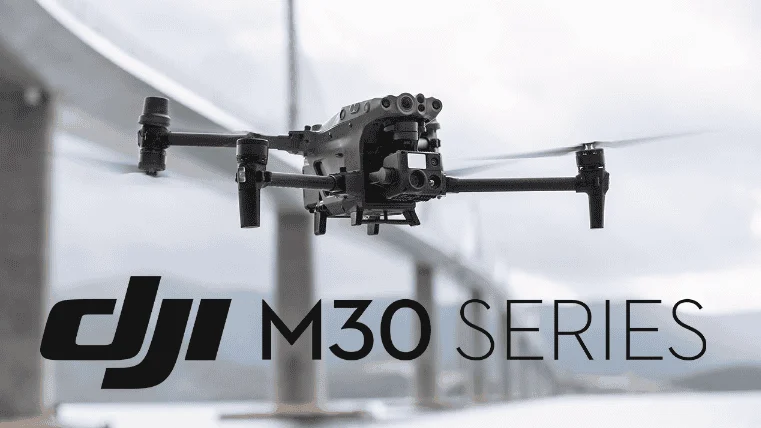
The Matrice 30, a flagship portable enterprise drone, was engineered to bridge the gap between the compact Mavic series and the heavy-lift Matrice 300 RTK. While its native features—including omnidirectional obstacle sensing and IP55 weather resistance—provide a robust foundation for safety, the addition of a dedicated parachute system transforms the platform into a tool capable of meeting the highest international safety standards. This advancement is particularly relevant for operations falling under the Federal Aviation Administration (FAA) Part 107 Category 2 and 3 frameworks in the United States, as well as similar European Union Aviation Safety Agency (EASA) Specific Category requirements, which mandate rigorous risk mitigation for flights over people.
The Mechanics of the PRS-M30 Safety System
The core of this technological leap is the PRS-M30, a peripheral specifically designed to interface with the DJI M30’s internal architecture. The system operates through a multi-layered approach to safety, beginning with an autonomous triggering mechanism. In the event of a catastrophic failure, such as a motor loss, battery malfunction, or extreme pitch/roll instability, the PRS-M30’s onboard sensors detect the anomaly within milliseconds.
Upon detection, the system initiates a two-step emergency protocol. First, it activates a Flight Termination System (FTS), which cuts power to the drone’s motors. This is a critical requirement for regulatory compliance, as it ensures that the parachute does not become entangled in spinning propellers. Second, it deploys a high-strength canopy that slows the drone’s descent to a velocity that minimizes the impact energy to levels deemed safe for human bystanders.
The PRS-M30 is designed for ease of use, featuring a "plug-and-play" installation that does not require the drone to be opened or permanently modified, thus preserving the manufacturer’s warranty. It also includes a manual trigger on the pilot’s remote controller, allowing for human intervention if the operator perceives a ground-level hazard that the automated sensors might not yet have registered.
Technical Specifications and Operational Resilience
The DJI M30 series itself provides the high-performance backdrop for these safety innovations. Launched as a solution for "anytime, anywhere" operations, the M30 and its thermal-equipped counterpart, the M30T, offer a unique blend of power and portability. The drone features a maximum flight time of approximately 41 minutes and a wind resistance rating of 15 meters per second (approx. 33 mph), making it suitable for the turbulent conditions often found between high-rise buildings in urban centers.
Its imaging suite is equally formidable. The standard M30 includes a 48-megapixel 1/2-inch CMOS sensor zoom camera capable of 5x to 16x optical zoom and up to 200x digital zoom, alongside a 12-megapixel wide-angle camera. The M30T variant adds a 640×512 resolution radiometric thermal camera, which is essential for search and rescue (SAR) operations and identifying structural hotspots during firefighting. These sensors, when combined with the ability to fly safely over crowds, allow public safety agencies to maintain a constant eye on evolving situations without the need for large exclusion zones on the ground.
Furthermore, the M30’s IP55 rating ensures that safety is not compromised by environmental factors. The drone is protected against dust and low-pressure water jets, allowing it to remain operational during heavy rain or snow—conditions where traditional manual inspections or ground-based security might be hampered.
Regulatory Context: Navigating Operations Over People (OOP)
For years, the "Operations Over People" (OOP) restriction has been a bottleneck for the commercial drone industry. Under standard FAA Part 107 regulations, flying a drone directly over a crowd is prohibited unless the drone meets specific weight and kinetic energy thresholds or the operator has obtained a specialized waiver.
The integration of the AVSS parachute system is a direct response to these regulatory demands. By adhering to the ASTM F3322-18 standard—the international benchmark for small UAS parachutes—the M30 with the PRS-M30 provides the documented proof of safety required by aviation authorities. This standard involves a rigorous testing process, including dozens of successful deployments across various failure scenarios, to ensure the system’s reliability.
With this certification, commercial operators can apply for waivers with a much higher probability of approval. This is a game-changer for news organizations covering public events, municipal governments monitoring city marathons, and construction firms overseeing busy job sites. The ability to fly over people legally and safely reduces the logistical burden of clearing streets or redirecting pedestrian traffic, thereby lowering the overall cost of drone operations.
Sector-Specific Applications and Impact
The implications of the DJI M30’s enhanced safety profile span multiple critical sectors:
1. Public Safety and Law Enforcement:
Police departments often face the dilemma of tracking a suspect or monitoring a large protest where the flight path inevitably crosses over uninvolved civilians. Previously, this required a difficult choice between maintaining visual contact and adhering to safety protocols. With a parachute-equipped M30, law enforcement can prioritize mission objectives with the assurance that a technical failure will not result in a casualty on the ground.
2. Emergency Medical Services and Disaster Response:
In the aftermath of a natural disaster, such as a flood or earthquake, survivors often congregate in open areas. Drones are vital for delivering small medical supplies or assessing the health of a crowd. The M30’s ability to hover directly over these groups safely allows for more precise communication and resource allocation.
3. Infrastructure and Urban Inspection:
Inspecting bridges, telecommunication towers, and building facades in a city environment usually involves flying near sidewalks and roads. The PRS-M30 mitigates the risk of a drone falling into moving traffic or onto pedestrians, allowing utility companies to perform routine maintenance with minimal disruption to the public.
4. Large-Scale Event Management:
From music festivals to sporting events, organizers use drones for crowd flow analysis and security. The M30 provides a high-altitude vantage point that can identify bottlenecks or security breaches in real-time. The safety system ensures that the drone itself does not become a hazard to the thousands of attendees below.
Chronology of Development
The journey toward this capability began shortly after the release of the DJI Matrice 30 in early 2022. Recognizing the platform’s potential as a workhorse for urban missions, AVSS began the engineering process to adapt its parachute technology to the M30’s unique frame. By late 2023 and early 2024, the PRS-M30 underwent extensive field testing to meet ASTM standards.
The collaboration represents a broader trend in the UAV industry: the move toward modular safety. Rather than building every safety feature into the drone—which would increase weight and cost for all users—manufacturers and third-party developers are creating specialized kits that can be added based on the specific risk profile of a mission.
Analysis of Broader Industry Implications
The success of the DJI M30 and AVSS integration signals a maturing drone market. It shifts the focus from "what the drone can see" to "how the drone can safely exist" within human-centric environments. This evolution is a prerequisite for the eventual realization of Urban Air Mobility (UAM) and large-scale drone delivery networks.
From an economic perspective, the availability of certified safety systems increases the "uptime" for drone service providers. When a drone is grounded due to regulatory restrictions, it represents a lost return on investment. By enabling flight over crowds, the M30 becomes a more versatile asset, capable of performing a wider variety of contracts.
However, the industry must remain vigilant. While parachute systems significantly reduce risk, they are not a substitute for pilot training and comprehensive maintenance programs. The "safety stack" for industrial drones must include not only hardware like the PRS-M30 but also robust software (like DJI’s FlightHub 2 for fleet management) and rigorous operational procedures.
Future Outlook
As aviation authorities like the FAA and EASA continue to refine their rules for drone integration into national airspaces, the role of safety peripherals will only grow. We are likely to see even deeper integration, where parachute status is displayed directly on the primary flight display of the drone’s remote controller, and where "geofencing" technology automatically prevents a drone from entering a crowded area if its safety systems are not armed.
The DJI M30, equipped with the AVSS PRS-M30, stands as a testament to what is possible when hardware innovation meets regulatory necessity. It provides a blueprint for how the drone industry can continue to expand its footprint while maintaining the public’s trust. In the modern era, where the sky is becoming increasingly crowded with unmanned aircraft, the ability to fall safely is just as important as the ability to fly.