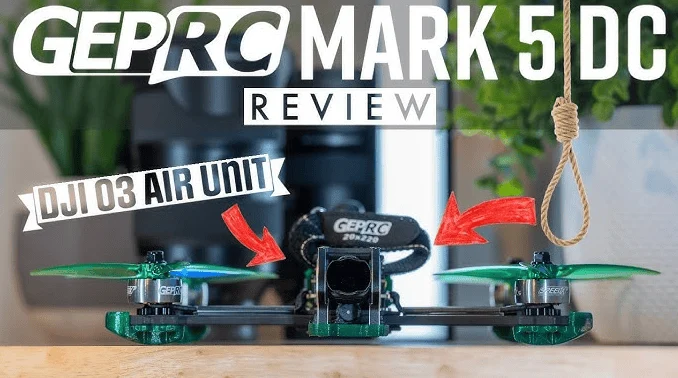
The rapid evolution of First-Person View (FPV) technology has reached a significant milestone with the release and subsequent market dominance of the GEPRC MARK5 DC HD O3 FPV. As the drone industry pivots from hobbyist-grade equipment toward professional-level tools capable of high-end cinema production, the MARK5 series represents a convergence of durability, high-fidelity digital transmission, and optimized flight dynamics. Designed specifically to integrate the DJI O3 Air Unit, this model addresses the long-standing challenges of FPV flight, including the intrusive appearance of propellers in recorded footage and the physical fragility of high-performance racing frames. By analyzing the technical specifications, the design lineage, and the broader implications for the aerial cinematography market, it becomes clear that the MARK5 DC (DeadCat) variant is a pivotal development in the current unmanned aerial vehicle (UAV) landscape.
The Evolutionary Lineage of the GEPRC MARK Series
The GEPRC MARK series has long been recognized within the FPV community for its robust structural engineering. The series began as a response to the need for a "freestyle" frame that could withstand the high-velocity impacts associated with acrobatic flight. Early iterations, such as the MARK2 and MARK4, focused primarily on weight distribution and rigidity for analog transmission systems. However, the introduction of the DJI Digital FPV System and the subsequent O3 Air Unit necessitated a complete redesign of the internal architecture.
The MARK5 was developed as a "ground-up" platform to accommodate the larger footprint of modern digital video transmitters (VTx). Unlike its predecessors, which often required aftermarket modifications to fit HD hardware, the MARK5 was engineered with a modular internal structure. The "DC" or DeadCat designation refers to the specific geometry of the arms. In a traditional "X" frame, the motors are equidistant from the center, which often results in the propellers being visible in the camera’s wide-angle field of view. The DeadCat configuration pulls the front arms further apart and pushes the rear arms back, clearing the camera’s line of sight without sacrificing the flight characteristics required for aggressive maneuvers.
Technical Analysis of the DJI O3 Air Unit Integration
The defining feature of the GEPRC MARK5 DC HD O3 is its seamless integration of the DJI O3 Air Unit. This component has effectively disrupted the FPV market by narrowing the gap between FPV drones and traditional cinema drones. The O3 Air Unit features a 1/1.7-inch CMOS sensor, capable of recording 4K video at 60 frames per second (fps) with a 155-degree ultra-wide field of view.
From a journalistic and technical perspective, the inclusion of RockSteady 2.0 and HorizonSteady image stabilization within the O3 unit is a critical advancement. Previously, FPV pilots were forced to mount a secondary "action camera," such as a GoPro, on top of the drone to achieve professional-grade stabilization. This added significant weight, reduced flight time, and altered the center of gravity. The MARK5 DC HD O3 eliminates this requirement for many use cases, as the onboard O3 system provides stabilized, high-bitrate footage (up to 50 Mbps) directly to the internal microSD card. This "all-in-one" approach has made the MARK5 a preferred choice for production houses looking to minimize equipment overhead while maintaining broadcast-quality output.
Propulsion Systems and Flight Performance Data
To support the weight of the HD hardware and maintain the agility required for freestyle flight, GEPRC equipped the MARK5 with the SPEEDX2 2107.5-1960KV motors. These brushless motors are optimized for 6S (six-cell) Lithium Polymer (LiPo) battery systems, which have become the industry standard for 5-inch drones due to their high voltage and reduced current draw.
Technical data indicates that the 1960KV rating provides an ideal balance of low-end torque and high-end RPM. When paired with the GEP-F722-45A All-In-One (AIO) flight controller and a 45A BLHeli_32 Electronic Speed Controller (ESC), the drone exhibits a highly linear throttle response. This precision is vital for "proximity flying," where pilots navigate through narrow gaps or close to moving subjects. The use of the F722 processor ensures that the flight controller can handle high-frequency PID (Proportional-Integral-Derivative) loops, resulting in a "locked-in" feel that minimizes prop-wash oscillation during sharp turns or rapid descents.
Structural Integrity and Material Engineering
The MARK5 frame is constructed from high-strength T700 carbon fiber, a material known for its superior strength-to-weight ratio compared to standard carbon fiber blends. The side plates are reinforced with 7075 aluminum alloy, a high-grade aerospace material that protects the sensitive DJI O3 camera. This "camera cage" design is a significant departure from older FPV designs that left the lens exposed to frontal impacts.
Furthermore, GEPRC has implemented a sophisticated thermal management system. The DJI O3 Air Unit is known to generate significant heat, especially when recording at 4K resolution while the drone is stationary. The MARK5 frame includes specialized CNC-machined heat sinks and strategically placed airflow vents that utilize the prop-wash to cool the internal electronics during flight. This engineering choice prevents thermal throttling, ensuring that the video transmission remains stable even during extended sessions in high-ambient-temperature environments.
Market Impact and the Shift Toward Bind-N-Fly (BNF)
The success of the GEPRC MARK5 DC HD O3 reflects a broader trend in the UAV industry: the transition from "Do-It-Yourself" (DIY) builds to "Bind-N-Fly" (BNF) solutions. Historically, the FPV sector was dominated by enthusiasts who hand-soldered every component. However, as the technology has grown more complex—involving digital protocols, high-speed ESCs, and sophisticated GPS modules—the demand for factory-tuned, ready-to-fly professional drones has surged.
Industry analysts note that the MARK5 has lowered the barrier to entry for professional cinematographers. By providing a pre-tuned platform that adheres to the "DeadCat" geometry, GEPRC has enabled filmmakers to focus on the creative aspects of flight rather than the technical hurdles of drone assembly. This shift has also impacted the secondary market, where the demand for specialized FPV components has been supplemented by a demand for reliable, warrantied consumer products.
Comparative Positioning and Competition
In the competitive landscape of 5-inch HD drones, the GEPRC MARK5 faces challenges from other industry leaders, such as the iFlight Nazgul series and the Emax Hawk. However, the MARK5 distinguishes itself through its specific focus on the "cinematic freestyle" niche. While the Nazgul is often cited for its raw speed and aggressive "X" frame geometry, the MARK5 DC variant is frequently favored by those who prioritize a clean video feed and structural longevity.
The integration of the ELRS (ExpressLRS) or TBS Crossfire radio protocols as factory options further solidifies its position. ELRS, an open-source long-range radio system, has seen explosive growth due to its low latency and high refresh rates. By offering these protocols out of the box, GEPRC ensures that the MARK5 is compatible with the most advanced radio links currently available, providing pilots with the confidence to fly several kilometers away or behind solid obstacles.
Regulatory Compliance and the Future of 5-Inch Drones
As global aviation authorities, such as the FAA in the United States and EASA in Europe, implement stricter regulations on UAVs, the 5-inch drone category faces new challenges. The GEPRC MARK5, typically weighing between 600g and 800g with a battery, falls into categories that require Remote ID compliance and pilot certification in many jurisdictions.
GEPRC has responded to these regulatory shifts by ensuring the MARK5 can be equipped with external Remote ID modules. Looking forward, the industry expects a move toward more integrated compliance features. The MARK5 serves as a bridge in this era of transition, offering the high-performance capabilities demanded by professionals while remaining adaptable to the evolving legal framework governing the skies.
Conclusion: A Benchmark for Modern FPV
The GEPRC MARK5 DC HD O3 FPV is more than a recreational quadcopter; it is a sophisticated piece of industrial design that captures the current state of aerial technology. By combining the cinematic prowess of the DJI O3 system with a rugged, "DeadCat" optimized frame, it has set a new benchmark for what a 5-inch drone can achieve. Whether utilized for high-speed chase scenes in feature films or for the expressive artistry of freestyle flight, the MARK5 represents a mature, reliable, and highly capable platform. As digital transmission continues to improve and battery technology advances, the foundations laid by the MARK5 series will likely influence the next generation of professional FPV drones, ensuring that the sky remains a canvas for increasingly immersive and high-definition storytelling.