In the competitive landscape of modern commerce, the transition from simple utility to strategic marketing has become a defining characteristic for successful fleet-operating businesses. Every mile driven by a commercial vehicle represents a critical touchpoint in the consumer journey, transforming standard transportation into a mobile billboard that projects a company’s values, expertise, and reliability. This evolution in branding strategy is driven by the realization that a unified fleet identity is one of the most cost-effective methods for building local market dominance and establishing immediate consumer trust.
The Strategic Evolution of Mobile Advertising
The concept of vehicle branding has moved far beyond simple door decals and contact phone numbers. Historically, business vehicles were secondary to fixed signage; however, as urban density increases and consumer attention spans shorten, the "passive" nature of mobile advertising has proven more effective than traditional stationary billboards. According to data from the Outdoor Advertising Association of America (OAAA), a single wrapped vehicle can generate between 30,000 and 70,000 impressions daily, depending on the region and distance traveled.
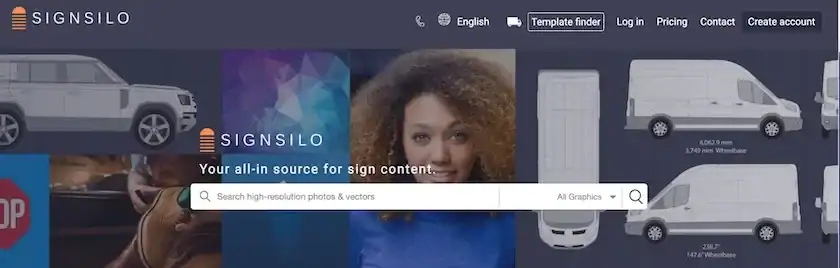
This shift has created a high demand for professional-grade design resources that can scale across diverse vehicle types. The modern branding paradigm dictates that a service van, a delivery truck, and a corporate sedan must all speak the same visual language. To achieve this, businesses are increasingly turning to specialized digital hubs like SignSilo, which provide the foundational architecture for high-resolution, production-ready graphics. By leveraging precision templates and high-quality vectors, companies can ensure that their brand identity remains undistorted regardless of the vehicle’s contours or dimensions.
The Role of SignSilo in Modern Fleet Branding
The technical execution of a vehicle wrap is a complex process that begins long before the vinyl touches the paint. The primary challenge for sign-making businesses and wrap shops is the need for absolute precision. SignSilo has emerged as a pivotal resource in this sector, offering a comprehensive library designed to bridge the gap between creative concept and physical application.
The SignSilo ecosystem provides several key categories of assets:
- Precision Vehicle Templates: These are 1:10 scale blueprints of virtually every vehicle make and model on the road, ensuring that designers can account for door handles, fuel caps, and body lines.
- High-Resolution Wrap Designs: Pre-configured layouts that can be customized to fit specific brand colors and messaging.
- Vector Graphics and Logos: Scalable assets that maintain perfect clarity at any size, which is essential for large-scale truck wraps.
- Stock Photography and Professional Fonts: Specialized imagery and typography curated specifically for high-visibility outdoor use.
By providing these resources at a budget-friendly price point, the platform allows smaller wrap shops to compete with large-scale advertising agencies, democratizing the ability to produce world-class fleet aesthetics.
A Chronology of Vehicle Graphics Technology
The journey to modern high-definition wraps has been shaped by decades of chemical and digital innovation. Understanding this timeline provides context for why today’s branding is more durable and vibrant than ever before.

- The Early 1900s: Commercial branding was limited to hand-painted signage. This was time-consuming, expensive, and difficult to replicate across multiple vehicles.
- The 1950s: The introduction of pressure-sensitive vinyl decals allowed for basic logo placement, though full-color imagery was not yet feasible.
- The 1980s: Computer-aided design (CAD) began to influence the industry, allowing for more precise cutting of vinyl lettering.
- The 1990s: The "Vinyl Revolution" occurred. Large-format inkjet printers allowed for the first full-color photographic wraps. The first major milestone was the 1993 Pepsi wrap, which signaled to the corporate world that the entire vehicle surface was now a canvas.
- The 2010s to Present: Advancements in "air-release" vinyl technology and UV-resistant inks have made wraps easier to install and more resistant to fading, leading to the current era of high-fidelity fleet branding.
Economic Impact and Cost-Per-Impression Analysis
When analyzing the return on investment (ROI) of marketing channels, vehicle wraps consistently outperform traditional media in terms of cost-per-thousand impressions (CPM). Recent marketing studies indicate that while a 30-second television spot in a major market may cost upwards of $20 per 1,000 viewers, and a newspaper ad may cost $10 to $12, a vehicle wrap typically costs less than $0.50 per 1,000 impressions.
For a small to medium-sized enterprise (SME), the initial investment in a high-quality wrap—ranging from $2,500 to $5,000—provides a marketing asset that lasts between five and seven years. When amortized over the life of the wrap, the daily cost of advertising is often less than the price of a cup of coffee. Furthermore, unlike digital ads that require recurring payments, a vehicle wrap is a one-time capital expenditure that continues to work as long as the vehicle is on the road.
The Psychology of Consumer Trust
The impact of a wrapped fleet extends beyond mere visibility; it deeply influences consumer psychology. In the home services sector—such as HVAC, plumbing, or electrical work—trust is the primary currency. When a technician arrives at a residential property in a professionally wrapped vehicle, it provides immediate "social proof" of the company’s legitimacy.
Industry surveys suggest that 75% of consumers form an opinion about a company’s reliability based on the appearance of their service vehicles. An unmarked or poorly maintained van can trigger "stranger danger" or a perception of "fly-by-night" operations. Conversely, a clean, well-branded vehicle from a company using high-quality SignSilo templates suggests an attention to detail that customers expect to see reflected in the actual service work. This "halo effect" ensures that the brand is associated with professionalism before the representative even speaks to the client.
Technical Precision and Production Quality
The difference between a mediocre wrap and a powerful brand ambassador lies in the technical execution. This is why the availability of "free testers" and high-quality templates is vital for the industry. SignSilo’s provision of free tester downloads allows professionals to verify the compatibility of files with their specific printing hardware and software workflows before committing to a full subscription.
Professional wrap shops must navigate several technical hurdles:
- Contour Mapping: Ensuring that text does not get lost in deep recesses or "broken" by door seams.
- Color Consistency: Matching the vinyl print exactly to the company’s official Pantone colors across different batches.
- Material Selection: Choosing the right cast vinyl for complex curves versus calendered vinyl for flat surfaces.
By using standardized, high-quality assets, shops can reduce the "trial and error" phase of production, leading to faster turnaround times and higher profit margins.
Official Responses and Industry Outlook
Industry leaders in the signage and graphics sector emphasize that the future of fleet branding is moving toward "Integrated Mobility Branding." This involves not just the wrap itself, but how it interacts with digital marketing efforts. For example, many companies are now integrating QR codes into their vehicle designs, allowing pedestrians to instantly scan a van and book an appointment or visit a landing page.

"A vehicle wrap is no longer a static image; it is the physical manifestation of a digital brand," says one industry analyst. "Platforms like SignSilo are essential because they provide the high-fidelity building blocks that allow a brand to look just as sharp on a 20-foot box truck as it does on a high-resolution smartphone screen."
Broader Implications for Market Presence
As urban environments become more cluttered with advertisements, the "neighborhood effect" of vehicle wraps becomes more valuable. When residents see the same branded vehicle parked at a neighbor’s house or driving through local intersections, it creates a sense of ubiquity. This perceived market dominance makes the business the "default" choice in the consumer’s mind when a need for that service arises.
The transition from a simple fleet to a "trusted fleet" is a strategic move that pays dividends in brand equity and customer acquisition. By utilizing professional resources, maintaining visual consistency, and understanding the psychological impact of mobile branding, businesses can transform their vehicles into their most powerful sales tools. The goal, as the industry suggests, is not merely to cover a vehicle in vinyl, but to build a brand that moves with the rhythm of the community it serves. Through the combination of creative excellence and technical precision, the modern fleet becomes a rolling testament to a company’s commitment to quality and professional excellence.