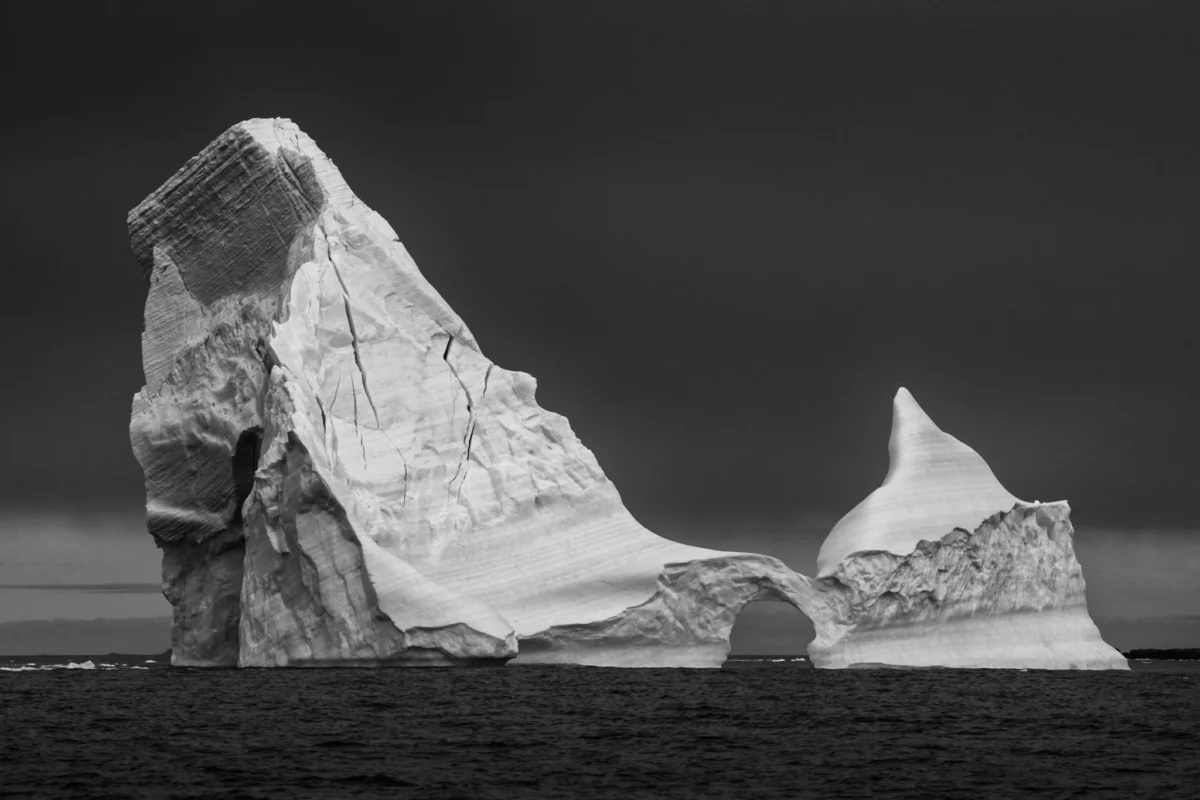
A land of ice is a realm of constant transformation, with new patterns and structures emerging through the clash of natural forces. During one of my earlier expeditions to the remote shores of the last continent, I observed a particularly delicate ice arch and diligently adjusted my camera. After finally settling on a composition, framing the delicate arch between two towering spires of ice, a rumble echoed across the water. Within seconds, the entire structure gave way and plunged into the sea, crackling like thunder and generating a cascade of waves. One of the most spectacular displays of nature’s artistry, carved by tumultuous seas, long winters, and raging winds, vanished before my eyes.
For those who have followed my photographic journey, the profound fascination with our planet’s polar regions is likely apparent. This deep connection to icy landscapes, both Arctic and Antarctic, took root early in life. At the tender age of four, my family relocated to Baffin Island, a decision that profoundly shaped my perception of the world through the ever-shifting lens of ice. Despite our relative remoteness, I felt an intimate connection to the vast, untamed wilderness that surrounded me.
Childhood Immersed in the Icy North
Our presence in the Baffin Island community was among the few non-Inuit households. These formative years were spent navigating a frozen realm, a landscape that demanded respect and understanding. Guided by the wisdom of Inuit elders, I acquired essential skills: learning to track animals across the snow-covered expanses, discerning treacherous ice from stable ground, and enduring the extreme cold. These experiences were not merely survival lessons; they laid the foundational groundwork for my eventual career as a National Geographic photographer. My life’s trajectory has been irrevocably shaped by the profound influence of ice and the enduring warmth of Inuit culture, making the Arctic and Antarctic regions perennial subjects of my work.
The Ephemeral Artistry of Ice
The act of photographing ice offers an inexhaustible wellspring of creative potential. The interplay of light, ice crystals, and atmospheric conditions conjures an astonishing spectrum of optical phenomena. Light bends, refracts, and scatters through frozen structures in unpredictable ways, forging intricate patterns and textures that are unique to each moment. Even observing the same iceberg from an identical vantage point, each click of the shutter can yield a distinctly different image. These dynamic environmental conditions, while challenging, also present opportunities for unparalleled artistic expression. An overcast sky, for instance, can mute details, transforming a majestic iceberg into an undifferentiated mass against a somber horizon. However, it is precisely within these environmental constraints of our planet’s icy kingdoms that a peculiar sense of creative freedom emerges. They compel exploration of unconventional photographic approaches, leading to more compelling images and, frequently, a richer narrative behind each frame.
A Moment of Loss: The Antarctic Ice Arch
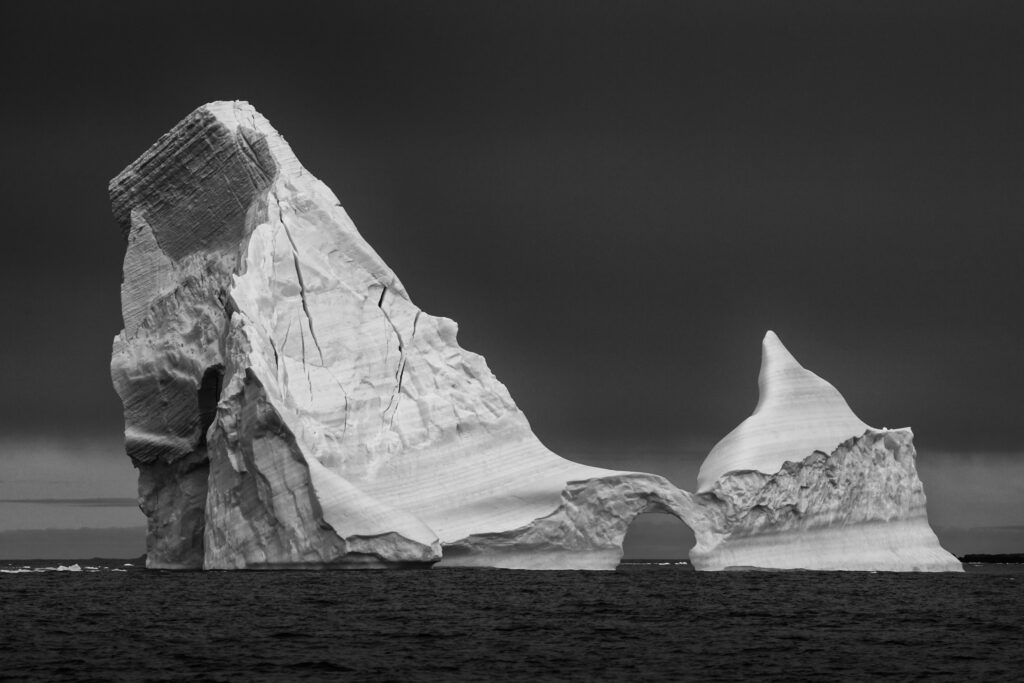
The ephemeral nature of ice was starkly illustrated during an expedition to the remote shores of Antarctica. A particularly delicate ice arch, a breathtaking testament to the forces of nature, had formed. As I meticulously adjusted my camera, seeking the perfect composition to capture its fragile elegance framed between two towering spires of ice, a low rumble echoed across the water. Within moments, the entire structure, a masterpiece sculpted by tumultuous seas, prolonged winters, and relentless winds, succumbed to gravity. It fractured and plunged into the ocean with a sound like thunder, generating a dramatic cascade of waves. This spectacular, fleeting display of nature’s artistry, a momentary wonder, vanished before my eyes, a poignant reminder of the impermanence inherent in these frozen landscapes.
The Fragility of Polar Ecosystems
Life in the polar regions, despite the apparent harshness, thrives in a delicate balance. Even in the heart of a polar winter, a hidden reservoir of life exists beneath the snow and within the icy seas. Iconic animals such as seals, polar bears, and various seabird species have not only adapted to the capricious and unforgiving nature of their environment but depend on its cyclical ebb and flow for critical life processes. These include raising their young, securing sustenance through hunting, and finding mates. Through millennia of evolution, the most challenging aspects of their habitat have become the very foundation of their survival and resilience.
However, this intricate interdependence renders polar ecosystems exceptionally fragile. With the accelerating rate of ice melt in both the Arctic and Antarctic seas, the future of some of Earth’s most iconic and charismatic animals is becoming increasingly uncertain. Scientific data underscores the severity of this trend.
Supporting Data: Arctic Sea Ice Decline
- Extent: Arctic sea ice extent has been declining significantly since satellite records began in 1979. The average rate of decline for September sea ice extent is 13% per decade relative to the 1981-2010 average. (Source: National Snow and Ice Data Center – NSIDC)
- Volume: Not only is the extent shrinking, but the ice is also becoming thinner. Multiyear ice, which survives at least one summer melt season, has dramatically decreased. In March 2024, the average thickness of Arctic sea ice was estimated to be significantly lower than in previous decades. (Source: Various climate research institutions)
- Impact on Wildlife: Polar bears, for instance, rely on sea ice as a platform for hunting seals. Reduced ice extent means longer distances to travel, reduced hunting success, and increased mortality rates, particularly for cubs. Seal populations, also dependent on ice for breeding and resting, face similar pressures.
Supporting Data: Antarctic Ice Shelf Collapse
- Antarctic Peninsula: This region has experienced some of the most rapid warming on Earth. Several ice shelves, including the Larsen A and B shelves, have collapsed in recent decades, the latter in 2002, disintegrating into the sea in a matter of weeks.
- Iceberg Formation: While iceberg calving is a natural process, increased glacial melt rates contribute to larger and more frequent calving events, impacting ocean currents and marine ecosystems.
- Krill Decline: Antarctic krill, a keystone species in the Southern Ocean food web, are dependent on sea ice for their life cycle. Declining sea ice is linked to a decrease in krill populations, with cascading effects on whales, seals, penguins, and fish. (Source: British Antarctic Survey)
A Personal Witness to Change
Over the decades, I have had the profound privilege of witnessing the Arctic, my childhood home and a place where I first felt a sense of belonging, evolve before my eyes. This evolution is not a gradual, imperceptible shift but a discernible, accelerating transformation driven by global climate change. The very ice that defined my early understanding of the world is receding, altering the landscapes and threatening the intricate web of life they support.
The Gatefold of ‘Ice Waterfall’ and its Message
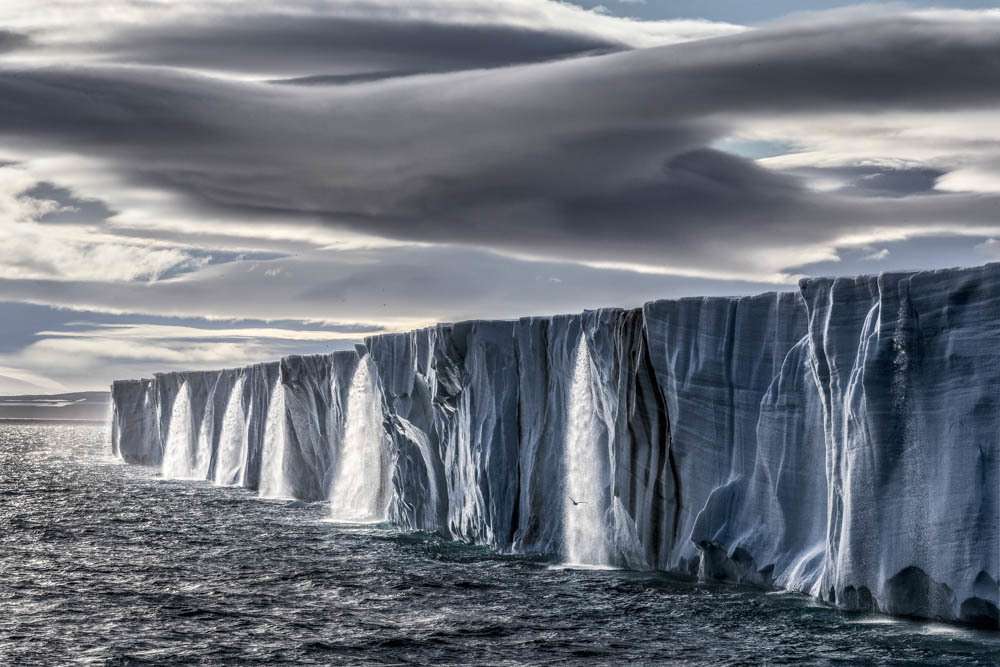
One of my most recognized works, the photograph titled "Ice Waterfall," encapsulates this confluence of art, storytelling, and conservation. This image, which has found a place in homes worldwide, features dark clouds, dramatic ice falls, and the vast expanse of the Nordaustlandet ice cap. It is a visual narrative of a vanishing Arctic. "Ice Waterfall" has become more than just a photograph; it is an advocate for polar regions. Its powerful imagery has been recognized and utilized by prominent figures, including former U.S. Vice President Al Gore, who has championed climate action.
The photograph played a pivotal role as the gatefold opening spread in National Geographic’s "Cool It" Issue in 2015, a testament to its narrative strength and thematic relevance. Furthermore, it graced the cover of Pearl Jam’s 2020 album, "Gigaton," underscoring its resonance across diverse cultural platforms. Whether viewed on a small digital screen or displayed as a large-format art print in a gallery setting, the photograph’s impact remains undiminished. It stands as a timeless piece, carrying an urgent call to action regarding the critical state of our planet’s polar environments.
The Power of Art in Conservation
The artistic interpretation of these fragile environments serves a crucial purpose beyond aesthetic appreciation. Photographs like "Ice Waterfall" and "The Last Stand" are designed to evoke an emotional response, fostering a deeper connection between viewers and the natural world.
"The Last Stand": A Symbol of Antarctic Vulnerability
The photograph, "The Last Stand," captures a moment of profound vulnerability in Antarctica. It depicts a delicate ice arch, a fleeting natural sculpture, poised on the brink of collapse. The caption accompanying the image emphasizes the urgency: "I hurried to capture the delicate arch before it plunged into the sea below. The beauty of Antarctica is as fragile as it is captivating." This image serves as a stark visual metaphor for the precarious state of Antarctic ice formations and, by extension, the entire Antarctic ecosystem. The rapid disintegration of ice shelves and glaciers in this region is a direct indicator of rising global temperatures.
The implications of these collapses are far-reaching:
- Sea Level Rise: The melting of ice shelves and glaciers contributes significantly to global sea level rise, threatening coastal communities worldwide. The Intergovernmental Panel on Climate Change (IPCC) projects that global mean sea level could rise by between 0.28 and 1.01 meters by 2100, depending on future emissions scenarios.
- Ocean Circulation: The influx of large volumes of freshwater from melting ice can disrupt crucial ocean currents, such as the Atlantic Meridional Overturning Circulation (AMOC), which plays a vital role in regulating global climate patterns.
- Biodiversity Loss: The unique habitats supported by Antarctic ice, including those for krill and penguins, are under direct threat. Disruptions to these ecosystems can lead to widespread biodiversity loss.
A Call to Collective Action
Despite the escalating pressures of a warming world and the observable evidence of environmental degradation, there remains a discernible opportunity to alter our course and safeguard our fellow wildlife. This endeavor is not solitary; it requires the collective will and action of individuals who share a profound appreciation for the natural world.
The support of readers, conservationists, and policymakers is paramount. By raising awareness, advocating for sustainable practices, and supporting scientific research, we can work towards mitigating the impacts of climate change. The challenges are immense, but the resilience of nature, coupled with human ingenuity and a shared commitment to conservation, offers a pathway towards a more hopeful future for Earth’s polar regions and the life they sustain.
The narrative of ice is a story of transformation, resilience, and, increasingly, of fragility. As a photographer, my role has been to bear witness, to capture the fleeting beauty and the profound challenges facing these critical environments. The images are not merely records of what exists but potent calls to action, urging us to recognize our interconnectedness with the natural world and to act decisively to protect it for generations to come.
The journey of understanding and protecting these frozen frontiers is ongoing. It is a journey that began with childhood wonder and has evolved into a lifelong commitment to chronicling and advocating for the preservation of Earth’s most pristine and vital ecosystems.
With gratitude and a resolute hope for a better future,
Paul Nicklen