Waking before dawn aboard the SeaLegacy 1, the predawn chill of the Pacific was a familiar sensation. Our expedition, a journey from Mexico to Tahiti, had settled into a rhythm, but this particular morning thrummed with an electric anticipation. The crew and I, clad in our dive gear, prepared for what promised to be the most significant dive of our voyage. Under the luminous glow of a full moon, we slipped into the inky blackness of the ocean depths.
Initially, the underwater world presented a deceptive calm. This tranquility was ephemeral, soon to be shattered by the churning waters that signaled the commencement of one of the ocean’s most awe-inspiring natural phenomena.
The Fakarava Atoll: A Haven for Marine Life
Fakarava, an atoll situated approximately 700 nautical miles north of Papeete in French Polynesia, is renowned globally for its pristine lagoons, idyllic beaches, and vibrant coral reefs. This UNESCO Biosphere Reserve is a sanctuary for an astonishing diversity of marine life. Countless species of fish, seabirds, sea turtles, and majestic manta rays inhabit its waters, largely undisturbed throughout most of the year. However, the warmer months herald a unique and dramatic event: the annual aggregation and spawning of thousands of resident groupers.
The Chronology of a Marine Event
The aggregation of groupers at Fakarava begins weeks prior to the peak spawning period. Females, laden with eggs, and males, ready to fertilize them, migrate towards the mouth of the atoll’s channel. This channel, a critical nexus connecting the lagoon to the open ocean, spans an area of roughly 10 by 30 nautical miles. The tidal currents, a powerful force of nature, play a pivotal role. Every six hours, the deep, clear waters of the Pacific surge into the lagoon, and then, for the subsequent six hours, they recede. This rhythmic exchange of water not only flushes essential nutrients into the sea but also creates the ideal conditions for dispersing the fertilized grouper eggs.

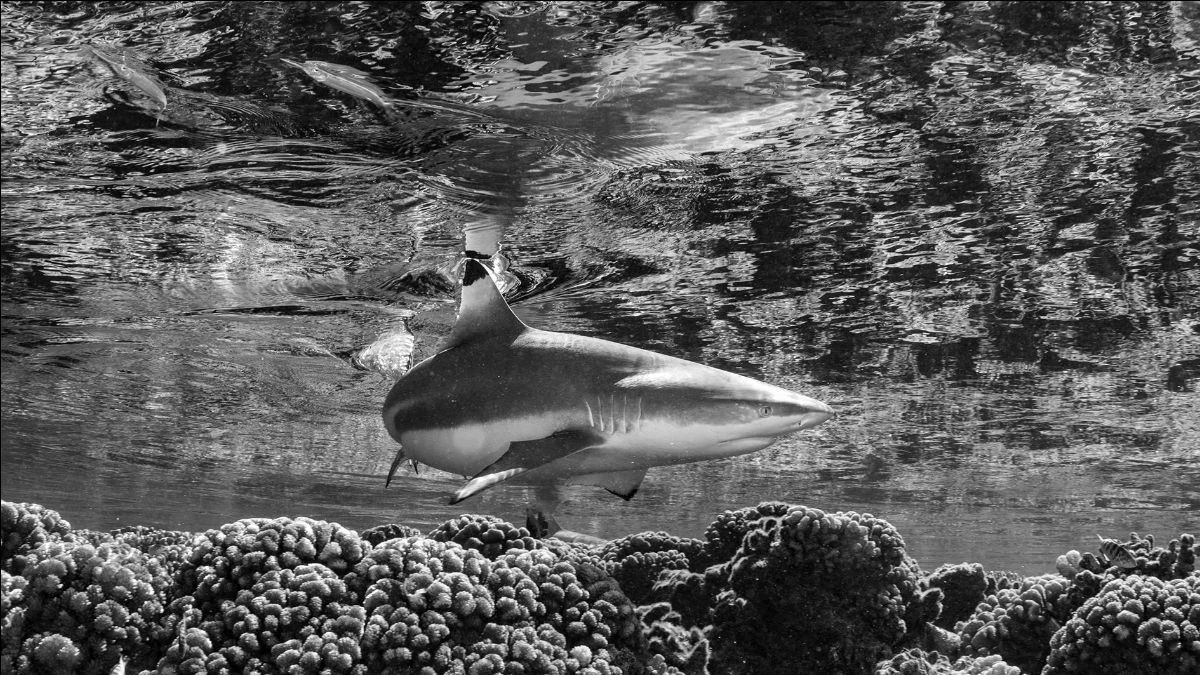
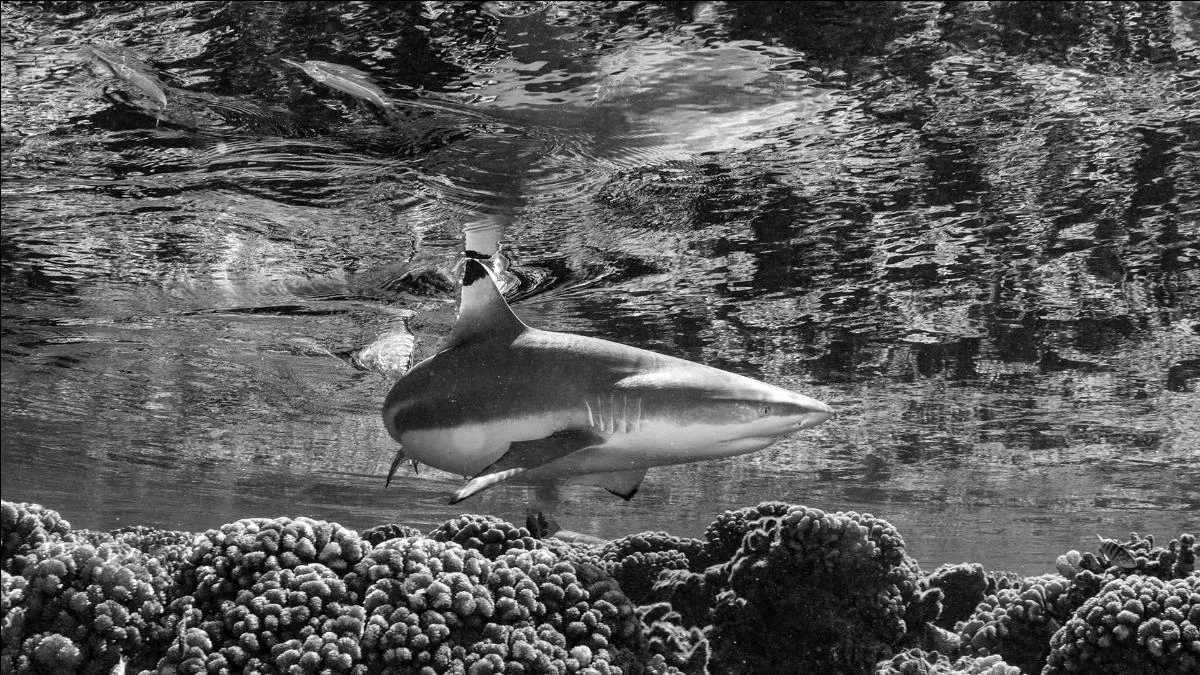
The culmination of this preparatory phase occurs around the time of the full moon. As the tide reaches its zenith, the stage is set for the mass spawning event. Following closely in the wake of the migrating groupers, a formidable gathering of sharks descends upon the area, transforming the reefs into a scene of intense predatory activity.
Witnessing the Spectacle: A Diver’s Perspective
Our team strategically positioned ourselves at the edge of the atoll, securing a clear vantage point overlooking the channel’s mouth. As we descended along the reef drop-off, the water gradually revealed thousands of groupers nestled among the coral formations. These fish, masters of camouflage, appeared to understand the importance of stillness, relying on their natural coloration to evade detection by the circling predators. Their large eyes would meticulously track the progress of the prowling sharks. Periodically, the profound silence of the deep would be rent by the sharp, echoing crunch of a successful hunt, immediately followed by the chaotic thrashing of numerous sharks in pursuit.
At approximately 100 feet below the surface, the intensity escalated. Female groupers began releasing their eggs into the water column, and the surrounding environment erupted into a frenzied ballet of reproduction and predation. With each ascent of a female to deliver her clutch of eggs, a swarm of males would converge, releasing milt to fertilize them. Simultaneously, thousands of groupers, responding to an ancient biological imperative, raced to ensure the perpetuation of their species. This extraordinary display of life’s continuity unfolded amidst the swift, decisive movements of hundreds of sharks, a spectacle orchestrated by nature in its most raw and powerful form. The experience was simultaneously breathtaking and humbling, a fleeting moment of profound biological drama.
Ecological Significance: The Interconnectedness of Ocean Life
Many of the vital cycles observed in nature, though appearing chaotic or even violent to human observers, serve indispensable purposes within their respective ecosystems. The intricate balance of an ecosystem, honed over millennia, is a testament to the interconnectedness of its components. Every element, from the subtle mottling of a grouper’s scales to the fate of each individual egg—whether fertilized or consumed by another organism—contributes to this delicate equilibrium.
Predators, such as sharks, are not merely agents of destruction but integral components of this balance. They play a crucial role in nutrient cycling, distributing vital resources across the reef and influencing the health and structure of the marine environment. The presence of a healthy shark population is a clear indicator of a thriving and well-functioning ecosystem.

A Call for Conservation: Protecting Vital Marine Ecosystems
The observation at Fakarava underscores a fundamental truth: humanity’s existence is intrinsically linked to the health of the ocean and its inhabitants. We do not merely "learn to live with" sharks and other wildlife; rather, our very survival is predicated on the vital roles they have played in the ocean’s intricate web of life for eons, long before human exploitation began.
The dramatic events witnessed during the Fakarava grouper spawning serve as a powerful reminder of the intricate and often unseen processes that sustain marine life. Capturing the wonder, drama, and inherent beauty of such pristine environments is paramount. The ultimate aim is to foster a deeper appreciation for these wild and vital ecosystems, thereby inspiring and galvanizing local and international efforts to ensure their protection for future generations.
Supporting Data and Scientific Context
The Fakarava atoll is part of the Tuamotu Archipelago, a chain of low-lying coral islands in French Polynesia. The specific spawning aggregation observed is believed to be primarily of the Napoleon wrasse (Cheilinus undulatus), a species known for its large size and significant role in reef ecosystems. These aggregations are crucial for the reproductive success of species that may otherwise struggle to find mates in vast ocean environments.
Studies on similar spawning aggregations in other regions have highlighted their vulnerability to overfishing. When fishing pressure is high, particularly during these predictable aggregation events, populations can be decimated rapidly, with long-lasting consequences for the ecosystem. For example, research published in Marine Ecology Progress Series has documented drastic declines in grouper populations at aggregation sites following the introduction of commercial fishing. The protection of these sites is therefore critical for the long-term viability of grouper species and the health of coral reef ecosystems.
Broader Implications and Future Outlook
The spectacle at Fakarava is not merely an isolated event but a microcosm of the broader challenges facing marine biodiversity worldwide. The increasing pressures from climate change, pollution, and overfishing threaten the delicate balance of ocean ecosystems. Events like the grouper spawning highlight the need for robust conservation measures, including the establishment and effective enforcement of marine protected areas.

The work of organizations like SeaLegacy, in documenting and sharing these natural wonders, plays a vital role in public education and advocacy. By bringing these events to a wider audience, they aim to foster a sense of stewardship and encourage actions that support marine conservation. The success of these efforts hinges on a collective understanding that the health of our oceans is not an abstract concept but a fundamental determinant of planetary well-being.
The hope is that by witnessing and understanding the profound interconnectedness of life within these extraordinary marine environments, we can collectively commit to safeguarding them, ensuring that future generations can marvel at the same vital cycles that have sustained life for millennia.
With gratitude and enduring hope for the future of our oceans,
Paul Nicklen