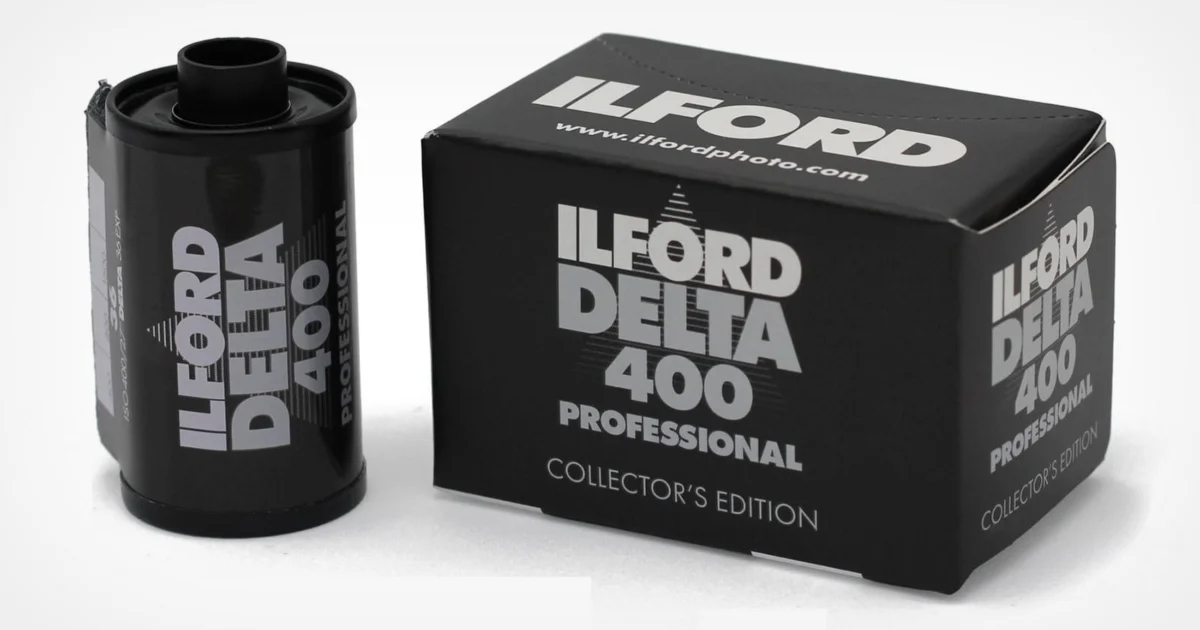
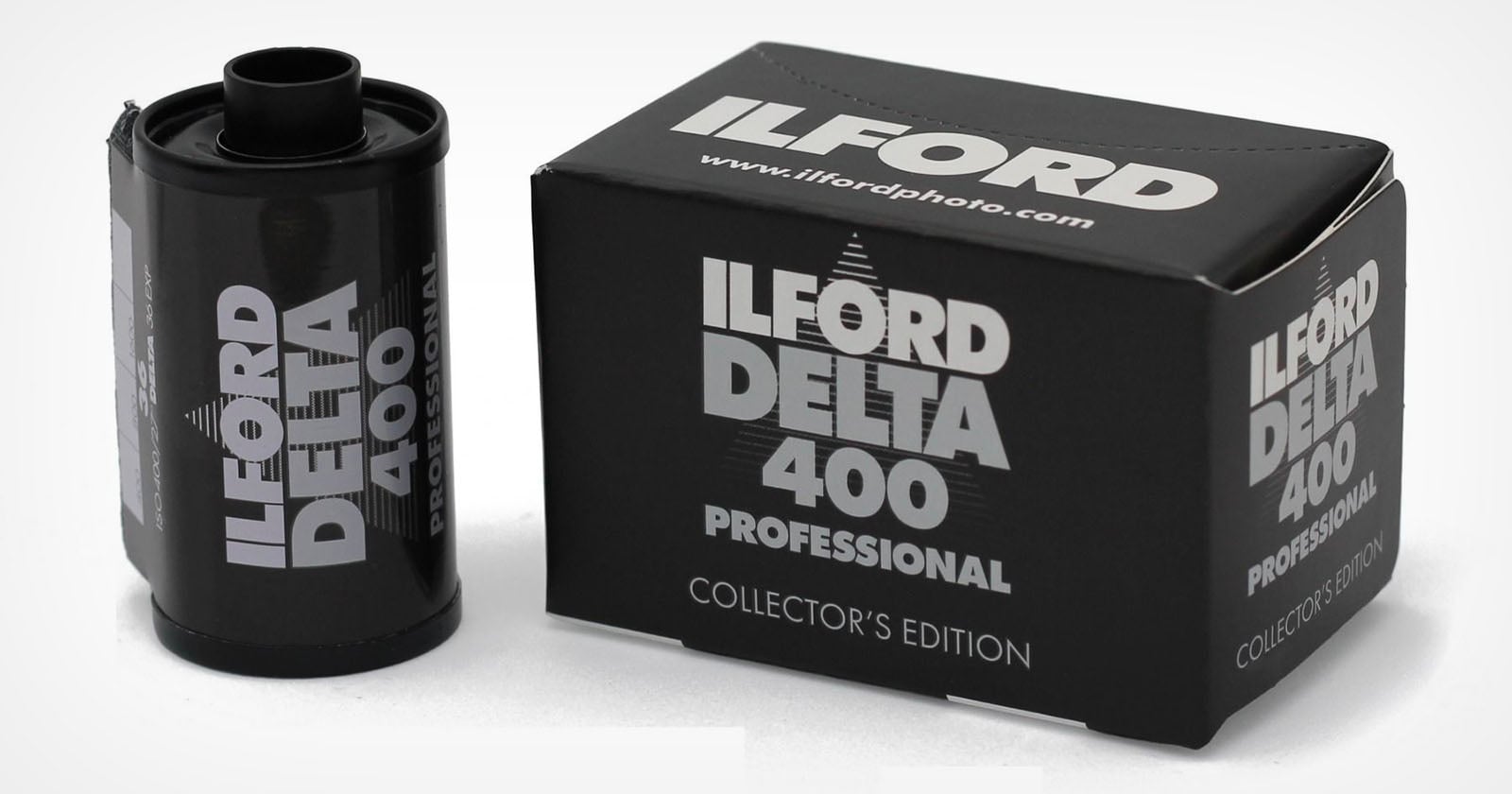
Ilford Photo, a venerable name in the world of analog photography, has officially announced the release of a new limited-edition black-and-white film, the Ilford Delta 400 Professional Collector’s Edition. This significant announcement introduces a premium iteration of its acclaimed Delta 400 Professional emulsion, featuring technical enhancements aimed at delivering superior image quality, packaged in an exclusive all-black aesthetic. The film is currently available in the popular 135 format, but only for a restricted period and in extremely limited quantities, sparking considerable interest and discussion within the global film photography community.
The core of this new offering lies in its refined technical specifications. While retaining the fundamental characteristics that have made the standard Delta 400 Professional a staple for discerning photographers – notably its professional-grade, high-quality, and super-sharp black-and-white renditions with exceptionally fine grain – the Collector’s Edition boasts a crucial upgrade. Ilford has coated this special emulsion onto what it describes as a “clearer roll film base with anti-halation protection.” This distinction sets it apart from its regular counterpart, promising tangible improvements that resonate deeply with the demands of modern analog workflows, particularly in the realm of scanning and digital archiving.
Technical Refinements and Performance Enhancements
The introduction of a clearer film base is a notable engineering decision. Traditional film bases, often with a slight tint, can sometimes introduce minor color casts or diffusion when scanned, potentially affecting the neutrality and clarity of the digital file. A clearer base aims to mitigate these issues, offering a more transparent medium for light transmission during the scanning process. This can result in cleaner digital conversions, truer blacks, and more accurate tonal separation, reducing the need for extensive post-processing adjustments. For photographers who blend analog capture with digital darkroom techniques, this represents a significant advantage, streamlining their workflow and preserving the integrity of the original exposure.
Complementing the clearer base is the integration of an anti-halation protection layer. Halation, a common phenomenon in film photography, occurs when light passes through the emulsion and hits the film base, reflecting back into the emulsion from the back side. This secondary exposure creates a soft glow or "halo" around bright highlights, particularly noticeable when shooting against strong light sources or scenes with stark contrast. While some photographers appreciate the aesthetic of halation, an anti-halation layer works to absorb or diffuse this reflected light, thereby reducing its occurrence. The benefit is a cleaner delineation of edges, improved sharpness, and enhanced shadow detail, as stray light no longer encroaches upon adjacent emulsion layers. Ilford’s claim of subtle improvements to dynamic range, shadow detail, scanning fidelity, and overall sharpness directly stems from these combined technical advancements. The film’s speed and processing times remain consistent with the standard Delta 400 Professional, ensuring compatibility with existing darkroom practices and development charts.
The Enigma of Limited Availability and Strategic Intent
Perhaps the most compelling aspect of this release is its limited-edition status. Despite offering discernible improvements over the standard Delta 400 Professional, Ilford has priced the Collector’s Edition identically at $15.19 per roll and made it available only “in very limited quantities while stocks last.” This immediately begs the question, as articulated by many in the community: "why make this new film limited if it’s better than the original?"
Ilford has provided a candid explanation, albeit through a less formal channel – the comment section of its Instagram post announcing the film. The company stated, “It’s a test to see what people think and if there’s a market for it.” This reveals a strategic approach to product development and market research. Rather than committing to a full-scale, permanent production run for a potentially more expensive product, Ilford is using this limited release to gauge consumer demand and collect real-world feedback on the enhanced emulsion.
The company further elaborated that if the response is positive and users are enthusiastic about the film’s performance, they would “certainly consider manufacturing it again as a regular product.” However, this potential future availability comes with a caveat: the price would “likely be higher than the existing product.” This economic reality underscores the manufacturing complexities involved. The addition of an anti-halation layer, and potentially the specific clear base material, likely adds to production costs. These costs, if absorbed into a mass-produced product, would necessitate a higher retail price to maintain profitability. This release marks the first instance of one of Ilford’s 35mm black-and-white films being coated onto this clearer roll-film base with anti-halation protection, suggesting a novel application of technology previously perhaps reserved for their roll film formats or specialized products.
Historical Context and Ilford’s Legacy
To fully appreciate the significance of this release, it’s essential to consider Ilford Photo’s long-standing history and its pivotal role in the analog photography landscape. Founded in 1879 by Alfred Hugh Harman in Ilford, England, the company has been at the forefront of photographic material innovation for over a century. From pioneering photographic plates to iconic films like HP5 Plus and FP4 Plus, Ilford has consistently been a benchmark for quality and reliability in black-and-white photography.
The Delta series, introduced in the late 1980s, represented a significant technological leap for Ilford. Unlike traditional cubic-grain emulsions (like HP5 Plus), Delta films utilize tabular grain technology. This advanced crystal structure allows for a more efficient capture of light, resulting in finer grain, higher sharpness, and improved acutance at equivalent film speeds. Delta 400 Professional, specifically, is renowned for its excellent push-processing capabilities, making it a versatile choice for a wide range of lighting conditions and artistic interpretations. Its ability to produce extremely smooth tonality and sharp detail has cemented its place as a favorite among fine art photographers, photojournalists, and enthusiasts alike. This Collector’s Edition, therefore, builds upon an already highly regarded foundation, pushing the boundaries of what is achievable with a 400-speed black-and-white film.
The Resurgence of Analog and Market Dynamics
The timing of this release is particularly pertinent given the ongoing resurgence of film photography. Over the past decade, driven by a desire for tactile experiences, unique aesthetics, and a slower, more deliberate photographic process, analog photography has witnessed a remarkable renaissance. This trend is not merely nostalgic; it’s fueled by a new generation of photographers discovering film, alongside experienced practitioners returning to its charms. Black-and-white film, in particular, holds a timeless appeal, offering a unique medium for artistic expression that transcends color.
In this vibrant, yet niche, market, manufacturers like Ilford are strategically navigating demand. The concept of a "collector’s edition" taps into both the enthusiasm for premium products and the inherent desire for scarcity. Such releases often generate significant buzz, driving immediate sales and fostering brand loyalty. For Ilford, it also serves as a low-risk method to innovate. Developing new film emulsions is an incredibly complex and capital-intensive endeavor, requiring specialized machinery, precise chemical formulations, and stringent quality control. Testing a new formulation or enhancement on a limited scale allows for real-world validation without the immense financial commitment of a full production line retooling or a widespread marketing campaign for a completely new product.
Distribution Challenges and Consumer Outlook
The distribution strategy for the Collector’s Edition further highlights its unique position. Priced at $15.19, it is explicitly stated to be available "in-store only," not through Ilford’s online shop. This decision has several implications. Firstly, it provides crucial support to brick-and-mortar photography retailers, who play a vital role in fostering local film communities and providing hands-on expertise. Secondly, it could be a deliberate strategy to control the initial rollout, allowing Ilford to monitor regional demand more closely and gather feedback from direct interactions between retailers and customers. However, for many enthusiasts, particularly those in areas without readily accessible authorized Ilford retailers, this "in-store only" policy adds a layer of difficulty to acquiring the film. The scramble to locate stock through Ilford’s online store locator and potentially travel to obtain it underscores the perceived value and desirability of this limited offering.
The reaction from the film photography community has been predictable: a mix of excitement, frantic searching for stock, and lively discussions across online forums and social media platforms. Many are eager to test the claims of improved dynamic range and sharpness, especially for a film that already performs at such a high level. The inherent scarcity of "very limited quantities" fuels a sense of urgency, transforming the acquisition of a roll into a mini-quest for dedicated film photographers.
Broader Implications for the Analog Industry
This strategic move by Ilford carries broader implications for the analog photography industry as a whole. It demonstrates that innovation is not stagnant in the world of film. While much of the recent "new" film news has revolved around re-releases of discontinued emulsions or niche artisanal productions, Ilford’s Collector’s Edition represents a forward-looking development of an existing, popular product. This signals a healthy commitment to refining and improving film technology, even in a market often perceived as traditional.
Moreover, Ilford’s use of social media comments to explain their rationale points to a modern, direct line of communication between manufacturers and their passionate consumer base. This transparency, even if informal, helps build trust and engage the community in the product development process. If this "test" proves successful, it could pave the way for other manufacturers to experiment with limited runs of enhanced emulsions, potentially leading to a new era of specialized, high-performance films tailored to specific photographic needs.
The potential for this Collector’s Edition to transition into a regular product, albeit at a higher price point, also sheds light on the economic realities of film manufacturing. It suggests that consumers might be willing to pay a premium for demonstrably superior products, validating further investment in research and development within the analog sector. This could encourage other companies to explore similar paths, ultimately enriching the choices available to film photographers worldwide.
In conclusion, the Ilford Delta 400 Professional Collector’s Edition is more than just a new film; it’s a strategic market experiment, a testament to ongoing innovation in analog photography, and a direct engagement with a passionate user base. Its technical enhancements promise a superior photographic experience, while its limited availability and unique distribution model create a sense of urgency and exclusivity. As photographers eagerly seek out and test this unique emulsion, the collective feedback will ultimately determine whether this refined Delta 400 earns a permanent place in Ilford’s esteemed product line, potentially shaping the future trajectory of premium black-and-white film offerings. The hope within the community is clear: that this film is not only good but popular enough to return as a regular product, ensuring that the pursuit of photographic excellence in black-and-white continues to evolve.