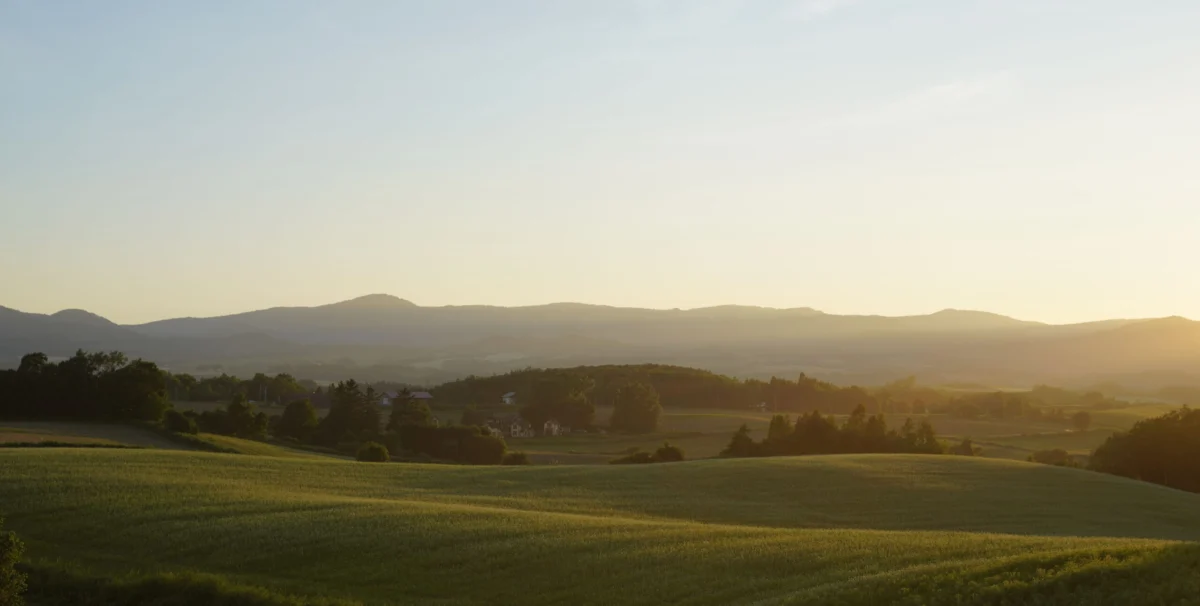
The transition from dense urban environments to the expansive rural landscapes of northern Japan has provided a unique lens through which contemporary photographers are documenting the intersection of atmospheric science and aesthetic minimalism. For Geoff Chaplin, a photographer whose work often explores the subtleties of light and environment, the move from a lifetime of city dwelling to the farmlands of Hokkaido has facilitated a rigorous study of the "blue hour" and the psychological impact of rural stillness. This shift is not merely a change in scenery but represents a broader movement of "I-turn" and "U-turn" migrations in Japan, where professionals seek the "slow life" (seikatsu) amidst the declining population densities of the northern prefectures. In the Tokachi region of Hokkaido, where the horizon is dominated by the Daisetsuzan volcanic mountain range, the act of photography becomes an exercise in patience, requiring an acute awareness of meteorological shifts and the nuanced behavior of light in high-latitude regions.
Geographic and Meteorological Context of the Tokachi Region
Hokkaido, Japan’s second-largest island, is characterized by its dramatic seasonal shifts and volcanic topography. The Tokachi Plain, where much of the region’s agriculture is centered, offers a vast, unobstructed view of the sky, making it a primary location for landscape photography. On the specific dates of mid-September 2026, the region experienced a stabilized high-pressure system followed by a rapid cyclonic transition, providing a rare opportunity to document two distinct atmospheric states.
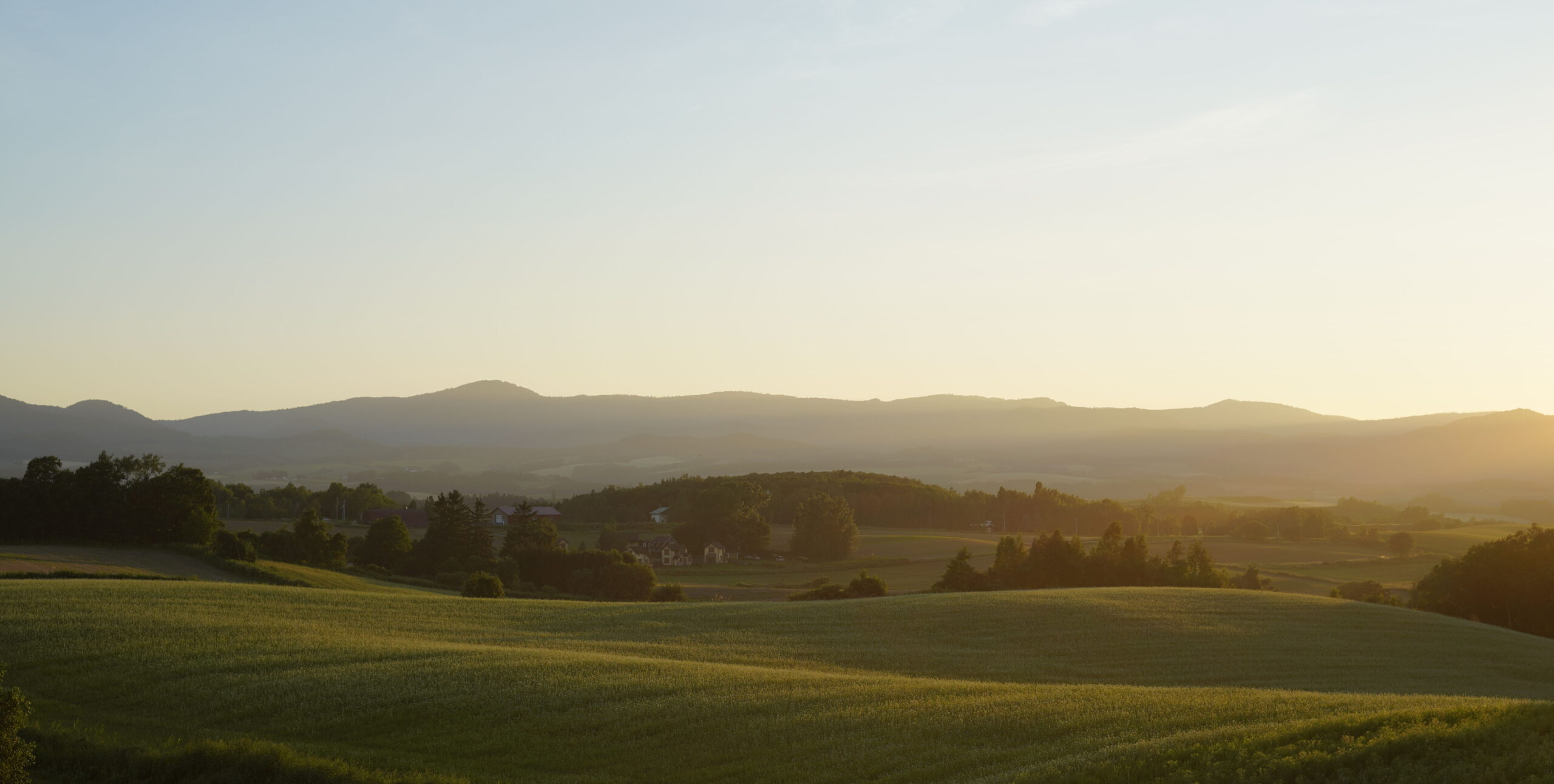
The first evening of observation was marked by a temperature of 29 degrees Celsius—unusually warm for the region at that time of year—dropping sharply as the sun descended. This temperature gradient creates a specific type of atmospheric clarity. In these conditions, the air is often free of the heavy humidity found in central Japan, allowing for greater visibility of distant peaks such as Asahidake and Tokachidake. Asahidake, standing at 2,291 meters, is the highest peak in Hokkaido and serves as a critical focal point for photographers. Its height ensures that it catches the final rays of the sun long after the lowlands have fallen into shadow, a phenomenon known as alpenglow.
The First Phase: A Study in Minimalist Composition
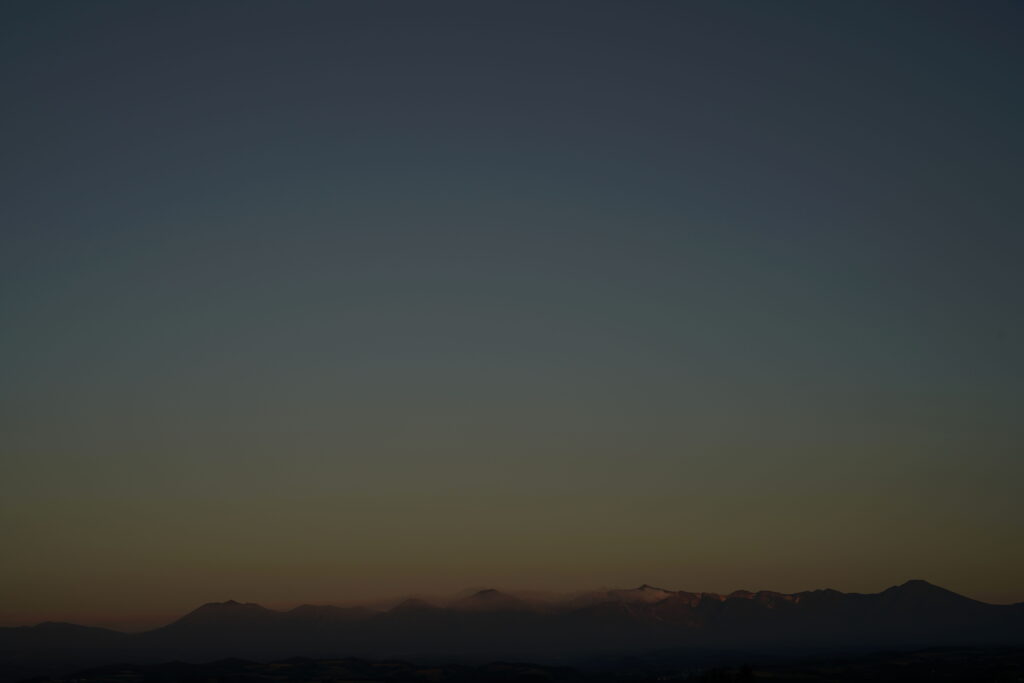
On the first day of the study, the sky was devoid of cloud cover, presenting a challenge to traditional landscape composition which often relies on clouds to provide structure and "drama." Instead, the focus shifted toward the gradient of the sky and the subtle illumination of the terrestrial features. Chaplin’s approach mirrored the aesthetic found in Richard Misrach’s The Sky Book, a seminal work that strips away the groundscape to focus entirely on the celestial. However, to maintain a sense of place, Chaplin anchored his images with the distant silhouettes of the mountain ranges located 25 to 50 kilometers away.
The technical execution of these images involved the use of a Sony A7Riii paired with a Loxia Zeiss Planar 50mm lens. The choice of a 50mm prime lens is significant; it approximates the human field of vision, avoiding the distortion of wide-angle lenses and providing a "natural" perspective that emphasizes the vastness of the space without exaggerating it. Shooting at f/8 and ISO 100, the photographer captured the "Peace" of the environment—a silence punctuated only by the distant sound of a single vehicle and the rhythmic breathing of the observer.
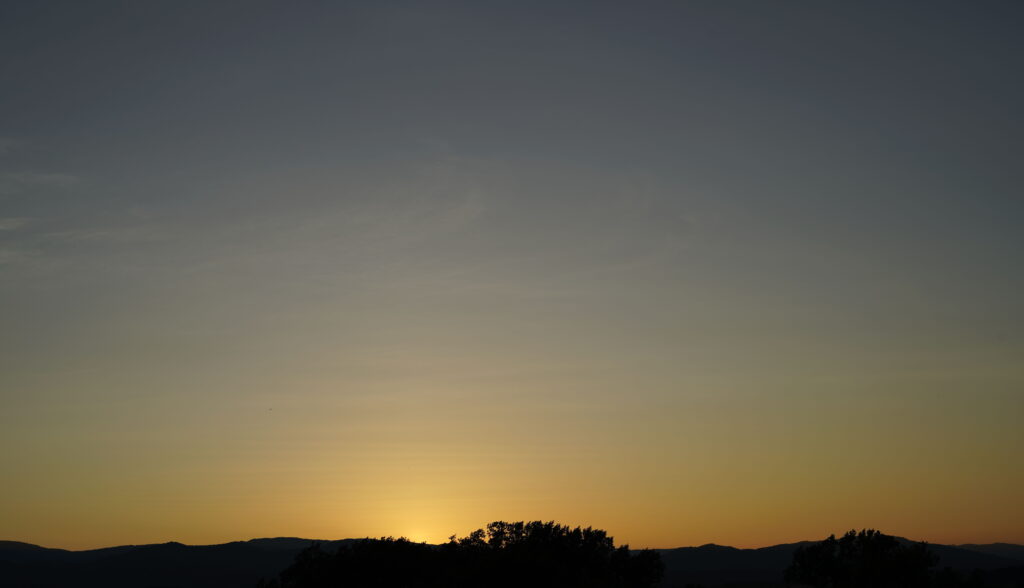
One of the most scientifically notable captures from this session was the illumination of volcanic gases emanating from Tokachidake. As an active volcano, Tokachidake frequently vents steam and sulfurous gases. During the sunset, these plumes are illuminated from below, creating a glowing trail that contrasts sharply against the deepening blue of the dusk sky. This interaction between geothermal activity and atmospheric light serves as a reminder of the volatile nature of the Hokkaido landscape, even in moments of perceived tranquility.
Chronology of Atmospheric Transition
The transition between the two days of the study provides a clear timeline of how environmental factors influence both the subject and the photographer.
- Day 1, 17:30 – 18:30: High-pressure stability. Clear skies, low wind velocity (approx. 2-4 knots), and minimal avian activity. The psychological state was one of "internal calm," reflected in the minimalist, high-clarity images.
- Day 1, 19:00: Reflection on the "Tragic" Symphony (Mahler’s 6th). The realization that the silence of nature is often a precursor to change or a mask for underlying geological and biological tensions.
- Day 2, 17:30 – 18:30: The approach of a low-pressure system. Increased wind speed, dropping barometric pressure, and a significant increase in noise from local bird populations.
- Day 2, 18:45: The presence of other observers. A female photographer was noted at the viewpoint, utilizing the human figure (Chaplin) as a scale against the sunset, highlighting the social dimension of landscape appreciation.
The Second Phase: The Pre-Storm Atmosphere
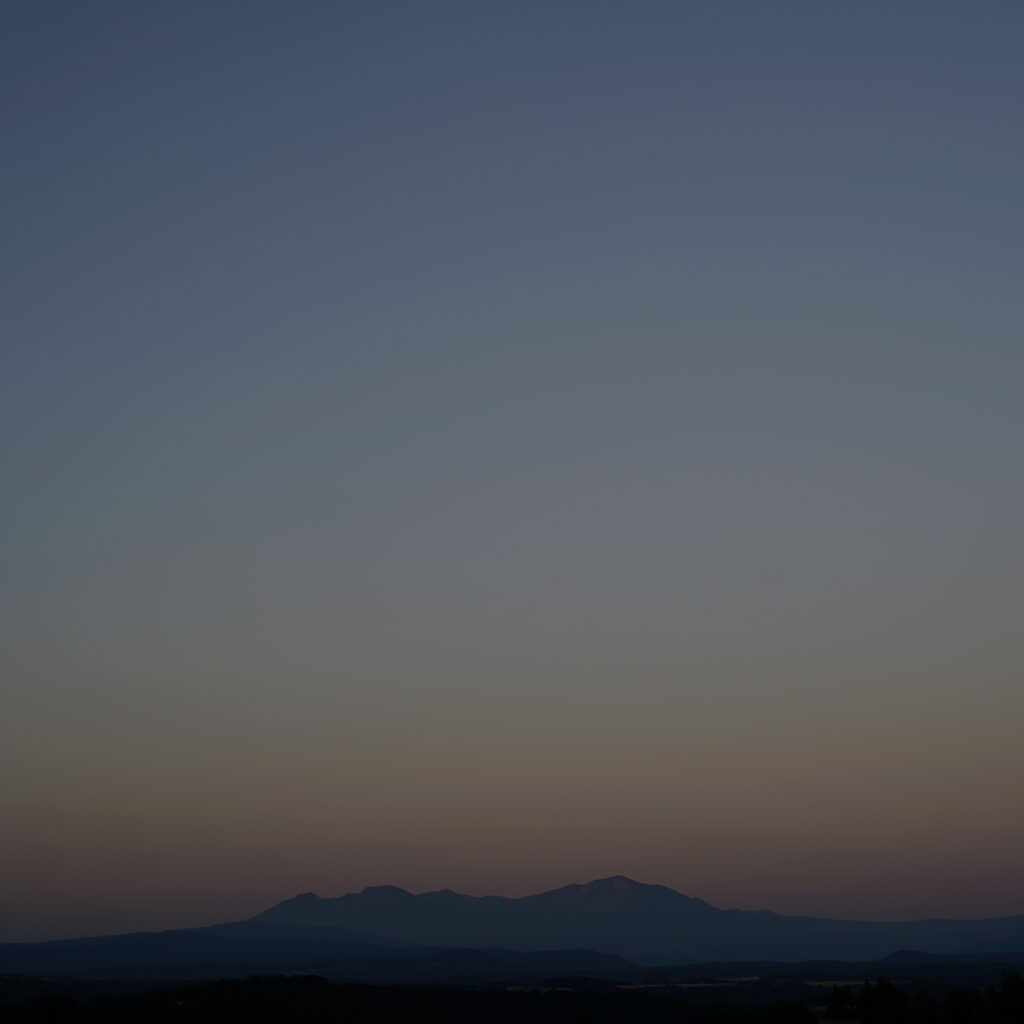
The second evening presented a stark contrast to the first. Meteorology dictates that birds and other wildlife are highly sensitive to changes in barometric pressure; the noisy "chattering" observed was a biological reaction to the impending thunderstorm forecasted for the following day. This shift in the "soundscape" fundamentally altered the photographic process. The "internal calm" of the previous day was replaced by a sense of urgency and restlessness.
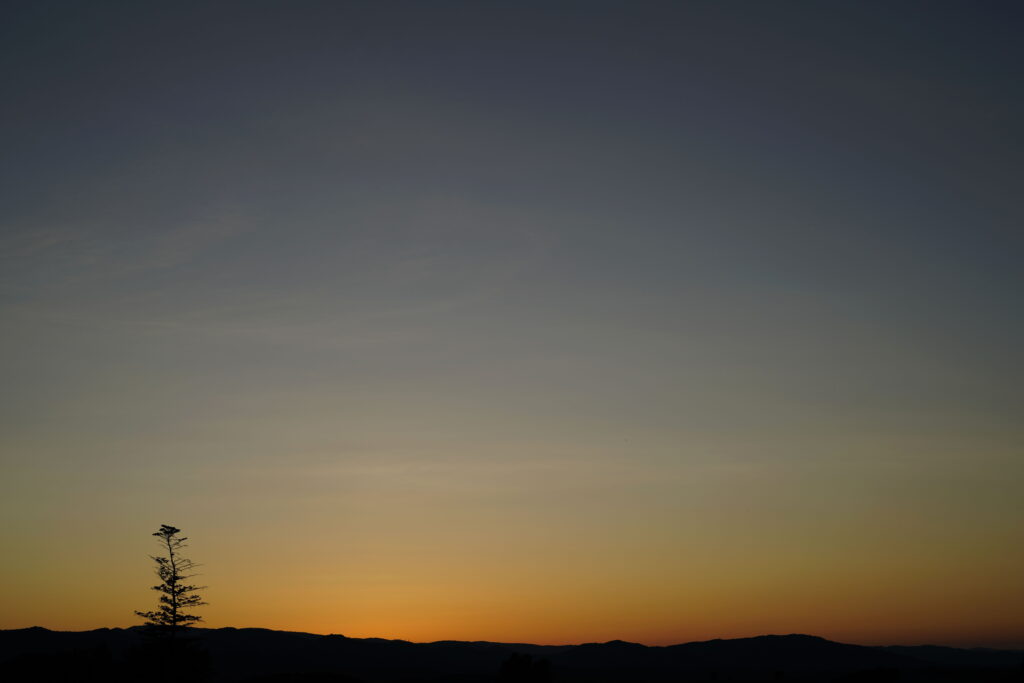
For this session, the equipment was swapped for a Sony 20mm f/1.8 lens. The move to a wider focal length allowed for a more inclusive capture of the sky, documenting the gathering of subtle atmospheric haze that precedes a storm. The wider field of view also captured the interaction between the observer and the environment more holistically. The resulting images were less about the singular focus of a mountain peak and more about the "vibe" of the impending weather change.
Technical Analysis and Equipment Performance
The use of high-resolution digital sensors like the Sony A7Riii (42.4 megapixels) allows for significant post-capture flexibility. Chaplin noted that while most shots were kept in their standard color setting, small contrast adjustments and cropping were utilized to refine the final output. The Loxia Zeiss 50mm lens is particularly favored by landscape photographers for its manual focus precision and "sunstar" rendering, though in the clear conditions of the first night, its primary value was its exceptional micro-contrast, which allowed for the rendering of the fine volcanic gases on Tokachidake.
In contrast, the 20mm lens used on the second night provided the necessary breadth to capture the "tourist fumes" and agricultural chemicals as they were dispersed by the increasing breeze. The technical ability of modern optics to resolve these fine particulate matters contributes to a "factual" representation of the air quality in rural Hokkaido, which, while cleaner than urban centers, is still subject to the ebb and flow of local industry and tourism.
Broader Implications: Photography and the "Rural Peace"
The study conducted over these two days transcends mere hobbyist photography and enters the realm of environmental documentation. In the context of modern Japan, the "peace" of Hokkaido is a commodity. As urban centers like Tokyo and Osaka face increasing heat-island effects and noise pollution, the silence of the Tokachi farmlands represents a vital psychological resource.
However, as Chaplin’s reference to Mahler’s 6th Symphony suggests, this peace is often fragile. The symphony, known as the "Tragic," features a hammer blow representing the cruel strokes of fate. In a landscape dominated by active volcanoes (Tokachidake) and the certainty of seasonal storms, the "calm" is merely a temporary state between periods of natural upheaval.
From a journalistic perspective, these photographic records serve as a baseline for the changing climate of Hokkaido. The "bearable" 29-degree heat mentioned is part of a trend of warming summers in Northern Japan, which is affecting everything from crop yields to the timing of the autumn colors (koyo). The photographer’s observation of "agricultural chemicals and tourist fumes" dispersing in the wind also touches upon the delicate balance between Hokkaido’s primary industries: farming and tourism.
Conclusion: The Observer’s Role in a Changing Landscape
The two-day study in Hokkaido underscores the importance of the photographer as a witness to the subtle shifts in the natural world. By documenting the transition from a clear, silent evening to a noisy, pre-storm dusk, the work captures the dual nature of the Japanese wilderness: its capacity for profound stillness and its inherent volatility.
As the weather forecast predicted rain and thunderstorms following the second night, the window for this specific type of observation closed. For the photographer, the experience was a reminder that capturing "peace" is a time-sensitive endeavor. For the broader public, such images and the accompanying analysis provide a necessary connection to the rural environments that sustain the nation’s spirit, even as those environments undergo their own silent, atmospheric transformations. The intersection of high-end digital imaging and the raw, unfiltered reality of the Hokkaido horizon remains one of the most compelling frontiers in contemporary landscape photography.