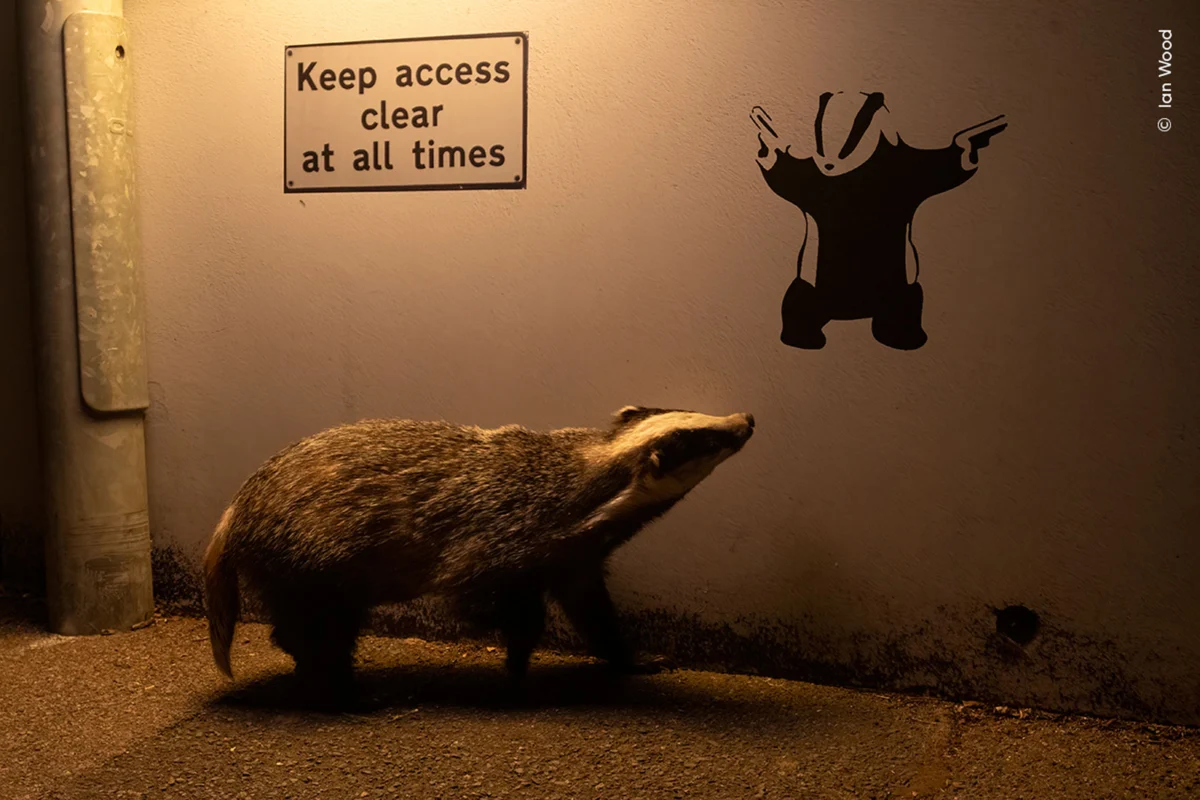
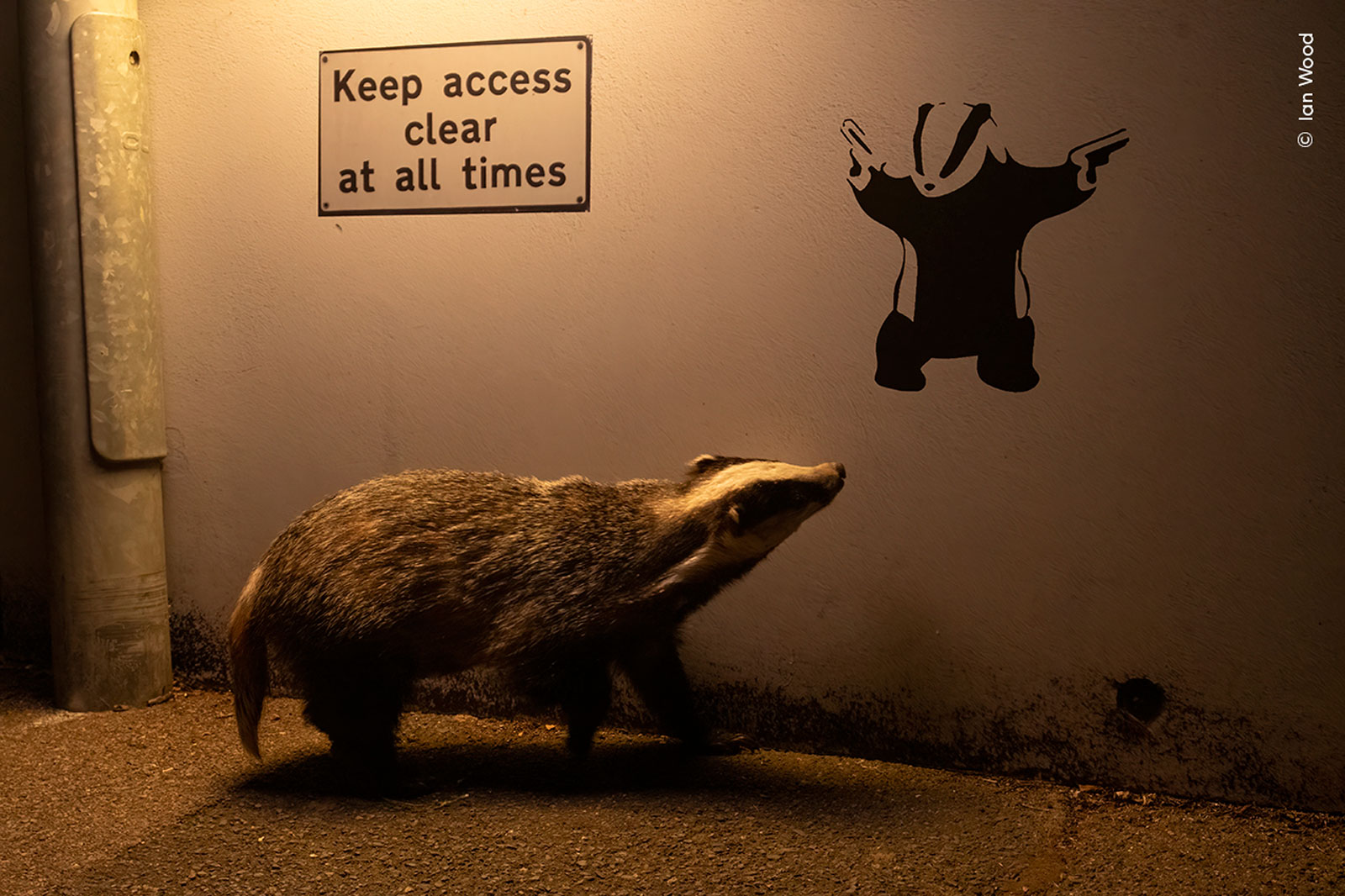
The tenth edition of the prestigious Wildlife Photographer of the Year People’s Choice Award has crowned "No Access," a poignant and perfectly timed photograph by British photographer Ian Wood, as its winner for 2024. The captivating image features an ambling Eurasian badger in St Leonards-on-Sea, England, captured in the fleeting moment it glances up at a wall emblazoned with familiar graffiti spelling "No Access." This compelling juxtaposition of urban human imprint and resilient wildlife interaction resonated deeply with a global audience, securing the top spot in a competition that saw unprecedented public participation.
A Moment of Urban Wildlife Poetry
Ian Wood’s award-winning photograph transcends mere documentation, offering a narrative rich in irony and quiet observation. The image, bathed in the soft, ambient glow of a lamppost, depicts a creature often associated with rural landscapes navigating a decidedly urban environment. The badger, a typically nocturnal and somewhat elusive mammal, is caught in a vulnerable yet defiant pose, its gaze seemingly acknowledging the stark graffiti that ironically speaks to barriers and exclusion. This candid snapshot was the result of Wood’s patient observation, having noticed local badgers foraging in St Leonards-on-Sea, drawn by food scraps left by residents for foxes. Understanding the rhythms of these nocturnal visitors, Wood strategically positioned himself in a small hide at the edge of the road, anticipating the perfect moment under natural urban light. The resulting photograph is not just a beautiful wildlife portrait but a profound commentary on the increasing convergence of human and animal worlds.
Record-Breaking Public Engagement
The 2024 People’s Choice Award witnessed an extraordinary surge in public interest, receiving over 76,000 votes from wildlife photography enthusiasts and nature advocates worldwide. This record-breaking turnout underscores the growing global fascination with the natural world and the power of visual storytelling to connect diverse communities. From an initial shortlist of 25 nominated images, carefully curated by the Natural History Museum, London, and an international judging panel from nearly 60,000 submissions to the main 60th Wildlife Photographer of the Year competition, "No Access" emerged as the clear favourite. The People’s Choice Award, by its very nature, democratises the selection process, allowing the public to champion images that evoke personal connection and highlight pertinent environmental themes.
A Deeper Message: The Plight of the Badger
While the image’s charm and wit are undeniable, photographer Ian Wood has articulated a profound and urgent message behind his winning capture. He revealed that the "outpouring of badger love" following his nomination was "beautifully overwhelming," yet he pointed to a "darker side" to the image. Wood, who resides in rural Dorset and is actively involved in re-wilding efforts to enhance wildlife habitats, expressed grave concerns over the ongoing badger cull in England.

The badger cull, a contentious policy initiated by the UK government, aims to control the spread of bovine tuberculosis (bTB) in cattle by reducing badger populations, which are considered a reservoir for the disease. First implemented in 2013, the policy has been a subject of intense scientific and ethical debate. Proponents argue it is a necessary measure to protect the agricultural industry, while a significant body of scientific evidence and numerous conservation organisations, including the Badger Trust and the RSPCA, have questioned its effectiveness and animal welfare implications. Critics often cite studies suggesting that culling can disrupt badger social structures, potentially leading to increased movement and even a wider spread of bTB, a phenomenon known as the "perturbation effect." Furthermore, the culling methods themselves have faced scrutiny, raising concerns about their humaneness.
Wood fears that the continued decimation of badger numbers in rural areas, if unchecked, will lead to a future where these iconic creatures are predominantly found in urban settings, forced to adapt to human-dominated landscapes in search of dwindling resources and safer havens. His hope is that "No Access" will serve as a powerful catalyst, raising awareness about the detrimental impact of the badger cull and galvanising public support for policy change, advocating for more humane and scientifically robust solutions to bTB control.
Official Recognition and Broader Context
Dr. Douglas Gurr, Director of the Natural History Museum, London, lauded Wood’s photograph, stating, "Ian’s flawlessly timed image offers a unique glimpse of nature’s interaction with the human world, underscoring the importance of understanding urban wildlife." Dr. Gurr’s remarks highlight a critical aspect of contemporary conservation: the increasing necessity to acknowledge and protect wildlife thriving within or on the fringes of human habitation. The museum’s mission, deeply rooted in fostering a deeper appreciation for the natural world, finds a strong echo in Wood’s image, which reminds viewers that "local nature and wildlife, often just outside our homes, can inspire and captivate us." This aligns with the broader goals of the Wildlife Photographer of the Year competition itself, which seeks to use photography’s unique emotive power to connect people with nature and inspire advocacy for the planet.
Highly Commended: A Global Panorama of Nature’s Wonders
Beyond the winning image, the People’s Choice Award also recognised four "Highly Commended" images that captivated the public’s imagination, each telling a unique story from diverse corners of the globe:
-
"Earth and Sky" by Francisco Negroni: This breathtaking capture from Chile presents an unforgettable spectacle of nature’s raw power. It features a double lenticular cloud, dramatically illuminated at nightfall by the incandescent lava flow emanating from the Villarrica volcano. Negroni’s image is a testament to the dynamic forces shaping our planet, showcasing the sublime beauty and destructive potential of volcanic activity. The interplay of fiery earth and ethereal sky creates a visual masterpiece that speaks to the vastness and mystery of the natural world.
-
"Edge of Night" by Jess Findlay: An action-packed shot from a derelict barn, Findlay’s photograph captures a ghostly barn owl in mid-flight, exiting through a hayloft window to embark on its nightly hunt. The image perfectly conveys the stealth and predatory grace of this nocturnal bird, its white plumage a stark contrast against the deepening twilight. It highlights the resilience of wildlife that adapts to and often thrives in proximity to human structures, albeit abandoned ones, underscoring the delicate balance between natural habitats and human development.
-
"Whiteout" by Michel d’Oultremont: From the snowy landscapes of Belgium, d’Oultremont’s image portrays a stoat, an agile and cunning predator, sitting upright to observe its territory. The creature’s winter coat provides perfect camouflage against the pristine white environment, making it almost indistinguishable from its surroundings. This photograph beautifully illustrates the remarkable adaptations of animals to their challenging environments and the intricate dance of survival in the wild.
-
"Spiked" by David Northall: This intriguing and visceral image tells a dramatic tale of survival and tenacity. It shows a bloodied yet determined honey badger returning to finish off a Cape porcupine, a creature known for its formidable defensive quills. The photograph is a stark reminder of the brutal realities of the food chain and the relentless struggle for existence in the wild. Northall’s image captures a moment of raw, untamed nature, where persistence and instinct are paramount.
These four images, alongside "No Access," were selected from the initial shortlist of 25 by the Natural History Museum and an international judging panel comprising experts in wildlife photography, conservation, and visual arts. The rigorous selection process ensures that nominated images not only possess exceptional technical merit and artistic vision but also convey compelling narratives about the natural world.
The Legacy and Future of Wildlife Photographer of the Year

The Wildlife Photographer of the Year competition, developed and produced by the Natural History Museum, London, stands as a global beacon for wildlife photography. For six decades, it has shone a light on inspiring and impactful stories from the natural world, transforming observers into advocates for our planet. The competition welcomes both amateur and professional photographers of all ages from around the world, harnessing photography’s unique emotive power to forge a profound connection between humanity and nature. It serves as a vital platform for raising awareness about critical conservation issues, celebrating biodiversity, and inspiring future generations to protect our fragile ecosystems.
The five celebrated images – Ian Wood’s "No Access" and the four "Highly Commended" photographs – are currently on display both online and on interactive voting screens within the flagship exhibition at the Natural History Museum, London, until June 29, 2025. This extended exhibition period provides ample opportunity for visitors to experience these powerful visual narratives firsthand and reflect on their messages.
Looking ahead, the judging process for the sixty-first Wildlife Photographer of the Year competition is already underway, with an international panel of experts meticulously evaluating new submissions. The winners of this upcoming edition will be unveiled at the eagerly anticipated annual awards ceremony, scheduled to take place at the Natural History Museum, London, in October 2025, continuing a proud tradition of celebrating photographic excellence and promoting global conservation efforts. The enduring appeal of the Wildlife Photographer of the Year competition lies in its ability to capture moments of unparalleled beauty, profound truth, and urgent relevance, reminding us all of our shared responsibility to the wild world.