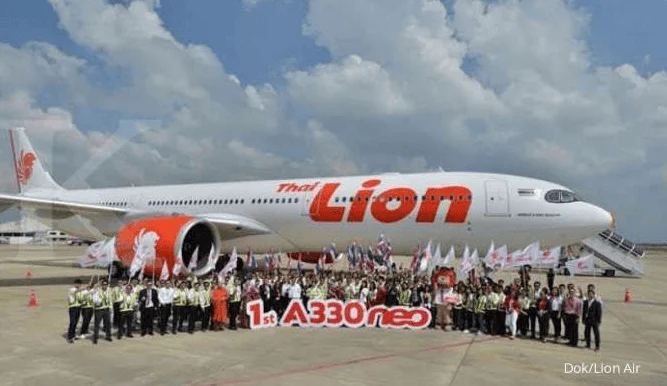
The ceremony was attended by high-ranking officials and industry leaders, including the French Ambassador to Thailand and the Head of Airbus Thailand. Their presence highlighted the international cooperation involved in the delivery and the strategic importance of the Thai aviation market within the broader Southeast Asian region. For Thai Lion Air, a subsidiary of Indonesia’s Lion Air Group, the induction of the Airbus A330neo (New Engine Option) is not merely a fleet addition but a calculated move to enhance its competitive edge in the long-haul, low-cost (LHLC) segment.
Technical Specifications and Engineering Excellence of the A330neo
The Airbus A330neo is the latest evolution of the highly successful A330 wide-body family, incorporating technologies developed for the more advanced A350 XWB. The primary driver of the aircraft’s efficiency is the Rolls-Royce Trent 7000 engine. These engines, combined with a new high-span wing and optimized aerodynamics, allow the A330neo to achieve a 14% reduction in fuel burn per seat compared to the previous generation A330ceo (Current Engine Option).
Beyond fuel efficiency, the A330neo features advanced "Sharklets"—wingtip devices made of composite materials that extend the wingspan to 64 meters. This design increases lift while reducing drag, allowing the aircraft to operate with greater efficiency during the cruise phase of flight. For an airline like Thai Lion Air, which operates on thin margins characteristic of the budget sector, these marginal gains in fuel consumption translate into significant reductions in operating costs over long-distance routes.
The aircraft delivered to Thai Lion Air is the A330-900 variant, which offers a range of approximately 7,200 nautical miles (13,334 kilometers). This range capability enables the airline to connect Bangkok with distant markets in Northern Asia, Australia, and potentially even Eastern Europe, providing a flexible platform for network growth.
Enhancing Passenger Experience: The Airspace by Airbus Cabin
Thai Lion Air has configured its A330neo fleet in a high-density, single-class layout capable of accommodating up to 436 passengers. While the seat count is maximized to support the low-cost business model, the "Airspace by Airbus" cabin philosophy ensures that passenger comfort remains a priority. This cabin design includes several key features intended to reduce traveler fatigue and enhance the overall flight experience.
The Airspace cabin offers larger overhead bins, providing 66% more volume than previous generations, which is particularly beneficial for low-cost carriers where passengers often rely heavily on carry-on luggage. Furthermore, the cabin features advanced LED mood lighting systems that can be programmed to simulate different times of day, helping to regulate passengers’ circadian rhythms and mitigate the effects of jet lag on long-haul journeys.
Technological improvements also extend to the environmental controls within the cabin. The A330neo is equipped with the latest fourth-generation In-Flight Entertainment (IFE) capabilities and high-speed Wi-Fi connectivity options. Perhaps most importantly for passenger comfort, the aircraft boasts one of the quietest cabins in its class, utilizing advanced sound-dampening materials to create a more serene environment during flight.
Strategic Operational Planning and International Expansion
The acquisition of the A330neo is central to Thai Lion Air’s "Don Mueang Hub" strategy. Historically, Don Mueang International Airport has served as the primary gateway for low-cost carriers in Bangkok. By basing wide-body aircraft at this airport, Thai Lion Air can offer long-haul international connections to passengers who are already utilizing the airport for domestic or regional flights.
While the delivery took place during a period of global travel restrictions due to the COVID-19 pandemic, the airline’s leadership maintained a long-term perspective. The initial operational plan for the A330neo involved a phased entry into service, focusing first on high-demand regional routes before transitioning to true long-haul missions. The airline identified several key markets for the A330neo, including:
- Japan and South Korea: High-volume tourist routes from Bangkok to Tokyo, Osaka, and Seoul require the capacity and efficiency that the A330neo provides.
- China: As one of Thailand’s largest tourism source markets, the ability to deploy 436-seat aircraft to secondary Chinese cities offers a significant economy of scale.
- Australia: The A330neo’s range makes routes to Melbourne and Sydney technically and economically viable for a low-cost operator.
In addition to passenger services, the A330neo significantly boosts Thai Lion Air’s cargo capabilities. The aircraft’s underfloor hold provides substantial space for palletized freight, allowing the airline to capitalize on the surging demand for air cargo that characterized the pandemic era. This dual-revenue stream—passenger and freight—is essential for the financial sustainability of the airline during periods of fluctuating travel demand.
Economic and Environmental Impact on Thailand’s Aviation Sector
The introduction of the A330neo by Thai Lion Air has broader implications for the Thai economy and the country’s aviation industry. Thailand’s "Thailand 4.0" initiative seeks to position the country as a regional aviation hub for maintenance, repair, and operations (MRO) as well as logistics. The presence of advanced aircraft like the A330neo supports this goal by requiring high-tech maintenance infrastructure and skilled personnel.
From an environmental perspective, the A330neo aligns with global aviation’s push toward "Net Zero" carbon emissions. By replacing older, less efficient aircraft with the neo generation, Thai Lion Air is actively reducing its carbon footprint per passenger kilometer. The 25% reduction in CO2 emissions compared to previous-generation aircraft of a similar size is a critical factor for airlines operating in a regulatory environment that is increasingly focused on sustainability and carbon taxation.
Furthermore, the expansion of Thai Lion Air’s international network via the A330neo serves as a catalyst for the tourism industry. By providing affordable, direct long-haul flights, the airline lowers the barrier to entry for international tourists, supporting hotels, restaurants, and local businesses across Thailand. This "multiplier effect" is a cornerstone of the Thai government’s economic recovery plans.
Chronology of Thai Lion Air’s Fleet Evolution
To understand the significance of the A330neo delivery, one must look at the timeline of Thai Lion Air’s growth. Since its inception in 2013, the airline has rapidly scaled its operations:
- 2013: Thai Lion Air commences operations with Boeing 737-900ER aircraft, focusing on domestic routes.
- 2015-2017: The airline expands its regional footprint, adding more narrow-body aircraft and launching flights to neighboring ASEAN countries.
- 2018: The carrier receives its first wide-body aircraft, the Airbus A330-300, to test the long-haul market.
- 2020: The pandemic forces a temporary suspension of international flights and a restructuring of the fleet.
- 2021 (October 7): The arrival of the first two A330-900 (A330neo) units marks the beginning of a new era of efficiency and expanded reach.
This chronology demonstrates a steady progression from a domestic startup to a sophisticated international player. The transition from the A330-300 to the A330neo represents a logical upgrade, allowing the airline to maintain crew commonality while benefiting from superior fuel economics.
Industry Context: The Competitive Landscape in Southeast Asia
Thai Lion Air does not operate in a vacuum. The Southeast Asian low-cost long-haul market is one of the most competitive in the world. Major players such as AirAsia X (Malaysia), Thai AirAsia X, and Scoot (Singapore) have all invested heavily in wide-body fleets.
The A330neo allows Thai Lion Air to compete directly with Thai AirAsia X, which also utilizes the A330 platform. By opting for the neo, Thai Lion Air gains an immediate advantage in fuel burn over competitors still operating older A330-300 models. Additionally, the high-density 436-seat configuration allows Thai Lion Air to offer some of the lowest "cost per available seat mile" (CASM) in the industry, enabling aggressive pricing strategies to capture market share.
Industry analysts suggest that the success of Thai Lion Air with the A330neo will depend on its ability to maintain high load factors (percentage of seats filled) on its long-haul routes. With 436 seats to fill per flight, the airline must rely on robust digital marketing, travel agency partnerships, and the continued appeal of Thailand as a global destination.
Conclusion: A Future-Ready Airline
The delivery of the first two Airbus A330neo aircraft is a testament to Thai Lion Air’s resilience and strategic foresight. By investing in the latest aviation technology during a global crisis, the airline positioned itself to lead the recovery of the Thai travel sector. The combination of the Rolls-Royce Trent 7000 engines, the Airspace cabin, and the massive 436-seat capacity creates a powerful tool for low-cost, long-distance travel.
As international borders reopened and global travel demand surged back to pre-pandemic levels, the A330neo has become the backbone of Thai Lion Air’s international network. It embodies the intersection of economic efficiency and passenger comfort, proving that "budget" travel does not have to come at the expense of modern technology or environmental responsibility. For the passengers, the aviation industry, and the Thai economy, the arrival of these aircraft on that October day in 2021 was the start of a promising new chapter in the skies of Southeast Asia.