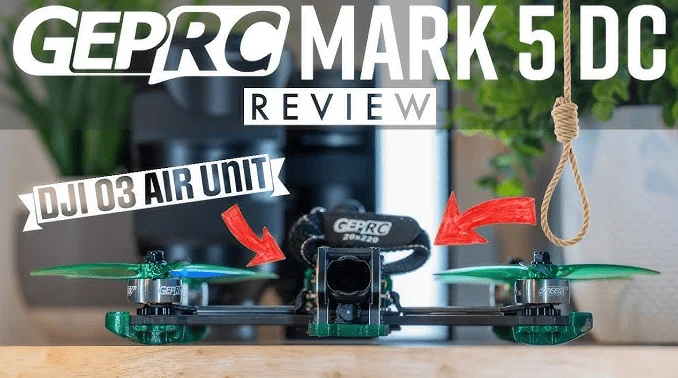
The rapid evolution of First-Person View (FPV) technology has reached a significant milestone with the release and widespread adoption of the GEPRC MARK5 DC HD O3 FPV. This aircraft represents a sophisticated fusion of high-performance engineering and state-of-the-art digital imaging, specifically designed to meet the rigorous demands of professional aerial cinematographers and freestyle enthusiasts alike. By integrating the DJI O3 Air Unit into a refined "DeadCat" frame geometry, GEPRC has addressed one of the most persistent challenges in the FPV industry: the need for a stable, agile platform that can capture high-fidelity 4K footage without the intrusive presence of propellers in the camera’s field of view.
The Evolution of the MARK Series: A Chronological Perspective
The GEPRC MARK series has long been regarded as a flagship line within the FPV community. To understand the significance of the MARK5 DC HD O3, one must examine the progression of its predecessors. The series began with the MARK2 and MARK4, which were primarily focused on structural rigidity and weight optimization for analog racing and freestyle. However, as the industry pivoted toward high-definition digital transmission—pioneered by DJI and later followed by Walksnail and HDZero—the requirements for frame design shifted dramatically.
In 2022, the original MARK5 was launched, introducing a modular frame design and improved crash durability. The "DC" or DeadCat variant followed shortly thereafter, specifically catering to the cinematic market. Unlike the traditional "X" or "Squashed X" configurations where the motors are equidistant from the center, the DeadCat configuration pushes the front arms outward and backward. This adjustment ensures that the high-angle lens of modern digital cameras does not capture the spinning propellers, a critical requirement for professional-grade production. The latest iteration, featuring the DJI O3 Air Unit, represents the culmination of this design philosophy, eliminating the necessity for a secondary heavy action camera like a GoPro for many mid-tier professional applications.
Structural Integrity and Aerodynamic Design
The foundation of the GEPRC MARK5 DC HD O3 FPV is its high-strength carbon fiber frame. Utilizing 5mm thick arms and a 2.5mm top plate, the aircraft is engineered to survive the high-impact environments typical of freestyle flight. The use of 7075-T6 aluminum alloy components in the camera mount provides a "roll cage" effect, protecting the expensive DJI O3 camera module from direct frontal impacts.
The DeadCat (DC) structure is not merely an aesthetic choice; it is a functional necessity for the ultra-wide 155-degree field of view provided by the O3 system. By optimizing the center of gravity (CoG), GEPRC engineers have ensured that despite the asymmetrical arm placement, the flight controller’s PID (Proportional, Integral, Derivative) loops can maintain a locked-in feel. This results in a drone that tracks smoothly through corners and remains stable during high-speed "punch-outs" or complex acrobatic maneuvers.
Technical Specifications and Power Systems
Under the hood, the MARK5 DC HD O3 is equipped with a suite of premium electronics designed for reliability and peak output. The core specifications include:
- Flight Controller: GEP-F722-45A AIO (or equivalent stack depending on the specific batch), utilizing the high-speed F7 processor to handle complex Gyro data and OSD (On-Screen Display) overlays.
- ESC (Electronic Speed Controller): 45A to 50A BLHeli_32, supporting high-frequency PWM and bi-directional DShot for precise motor timing and "RPM filtering."
- Motors: SPEEDX2 2107.5-1960KV (for 6S configurations). These motors are noted for their high torque-to-weight ratio, allowing for rapid recovery during low-altitude maneuvers.
- Propellers: Gemfan 5136 three-blade propellers, which are balanced to minimize "jello" or high-frequency vibrations in the video feed.
The transition to 6S (six-cell) battery systems has become the industry standard for 5-inch drones. By running at a higher voltage (22.2V to 25.2V), the MARK5 experiences lower current draw for the same power output compared to older 4S systems. This reduction in "voltage sag" ensures that the pilot has consistent power throughout the entire flight duration, which typically ranges from 4 to 8 minutes depending on the aggressiveness of the flight.
The DJI O3 Air Unit: A Paradigm Shift in Imaging
The integration of the DJI O3 Air Unit is the defining feature of this model. Historically, FPV pilots had to choose between a low-latency flight feed for the goggles and a high-quality recording on a separate camera. The O3 Air Unit bridges this gap by offering a 1/1.7-inch CMOS sensor capable of recording 4K video at 60 frames per second (fps) with a bitrate of up to 120Mbps.
For professional videographers, the inclusion of the D-Cinelike color profile is a vital tool. This flat color profile preserves dynamic range in the highlights and shadows, allowing for extensive color grading in post-production. Furthermore, the unit supports DJI’s RockSteady technology, an onboard electronic image stabilization (EIS) system that mimics the smoothness of a mechanical gimbal without the weight or fragility. This allows the GEPRC MARK5 to produce "buttery smooth" cinematic shots even while performing aggressive flips and rolls.
Market Positioning and Industry Implications
The release of the GEPRC MARK5 DC HD O3 comes at a time when the "Bind-N-Fly" (BNF) market is reaching maturity. Previously, serious FPV pilots were expected to build their own aircraft from individual components to ensure quality. However, GEPRC’s factory tuning and assembly quality have shifted the narrative. Industry analysts suggest that the rise of high-quality BNF drones is expanding the market to include traditional photographers and commercial videographers who require FPV capabilities but lack the technical expertise or time to build and solder their own rigs.
"We are seeing a professionalization of the FPV sector," notes an industry consultant specializing in unmanned aerial systems. "Drones like the MARK5 O3 are no longer just toys for hobbyists; they are becoming essential tools in the kits of automotive cinematographers, real estate marketers, and event filmmakers. The reliability of the DJI O3 link combined with GEPRC’s airframe durability creates a platform that can actually be used on a professional set."
Operational Best Practices for Professional Use
To maximize the lifespan and performance of the GEPRC MARK5 DC HD O3, pilots are encouraged to follow specific operational protocols. Given the power of the 6S system, battery management is paramount. Utilizing LiPo batteries with a capacity between 1300mAh and 1500mAh provides the optimal balance of wing loading and flight time.
Furthermore, the use of Neutral Density (ND) filters is highly recommended for daytime filming. Because the DJI O3 camera has a fixed aperture, ND filters allow the pilot to lower the shutter speed to double the frame rate (the 180-degree shutter rule), which introduces natural motion blur and enhances the cinematic quality of the footage. GEPRC often includes or offers compatible ND filter sets (ND8, ND16, ND32) specifically for the O3 housing.
Maintenance is another critical factor. The high-speed vibrations of FPV flight can loosen screws over time. Pilots should regularly inspect the motor bolts and the stack screws, ensuring that the dampening gummies under the flight controller remain pliable to prevent gyro noise.
Safety, Regulations, and the Future Landscape
As the GEPRC MARK5 falls into the category of a 5-inch drone, it typically exceeds the 250-gram weight limit established by many aviation authorities, such as the FAA in the United States or EASA in Europe. Consequently, operators must ensure compliance with local regulations, including pilot registration and, in some jurisdictions, the installation of Remote ID modules if the aircraft is being used for commercial purposes.
The future of the MARK series and similar platforms appears to be heading toward further miniaturization of electronics and increased autonomy. While the MARK5 is a manual "acro" drone, the inclusion of GPS modules (often standard or an easy add-on for the MARK5) allows for "GPS Rescue" functionality. This safety feature can automatically fly the drone back toward the takeoff point and initiate a controlled descent if the video signal or radio link is lost—a crucial fail-safe for expensive digital setups.
Conclusion: A Synthesis of Power and Precision
The GEPRC MARK5 DC HD O3 FPV is more than just an incremental update; it is a refined tool that reflects the current peak of consumer-grade FPV technology. By combining a "prop-free" DeadCat frame design with the industry-leading DJI O3 digital system, GEPRC has provided a solution that satisfies the dual needs of adrenaline-fueled freestyle and high-definition storytelling.
As the FPV landscape continues to broaden, the MARK5 stands as a testament to how far the industry has come from the days of grainy analog feeds and fragile, custom-built frames. For the pilot looking to transition from beginner-level equipment to a professional-grade platform, or for the cinematographer seeking to add a dynamic new perspective to their portfolio, the GEPRC MARK5 DC HD O3 represents a sound investment in both performance and visual quality. Its presence in the market underscores a broader trend toward high-performance, ready-to-fly solutions that do not compromise on the raw, immersive experience that defines FPV flight.