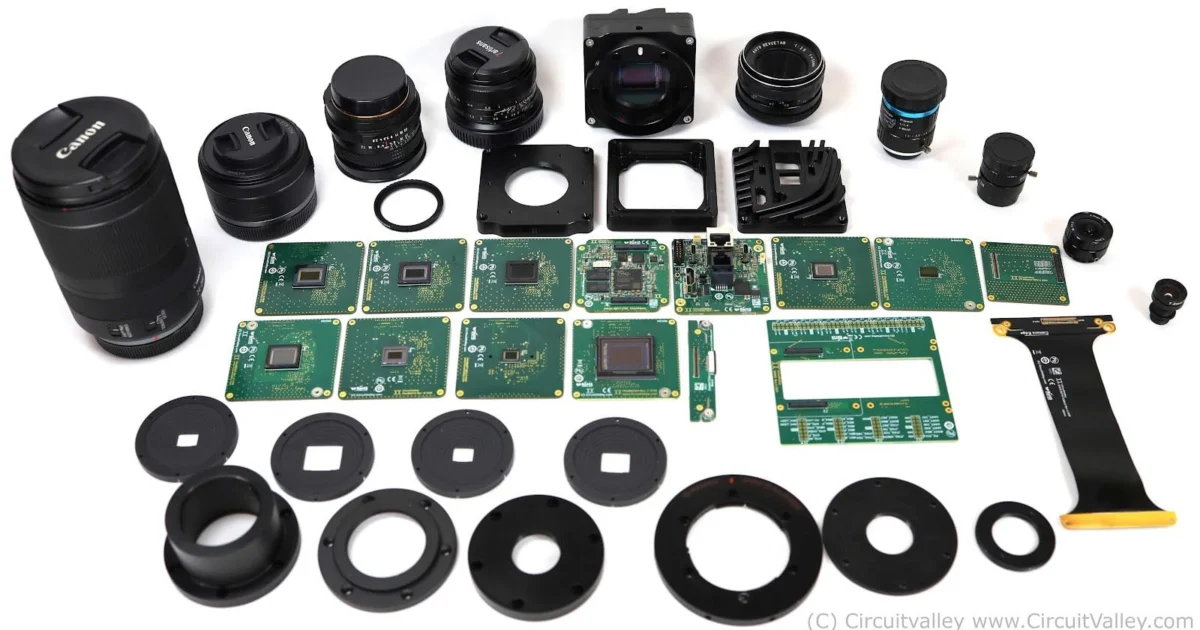
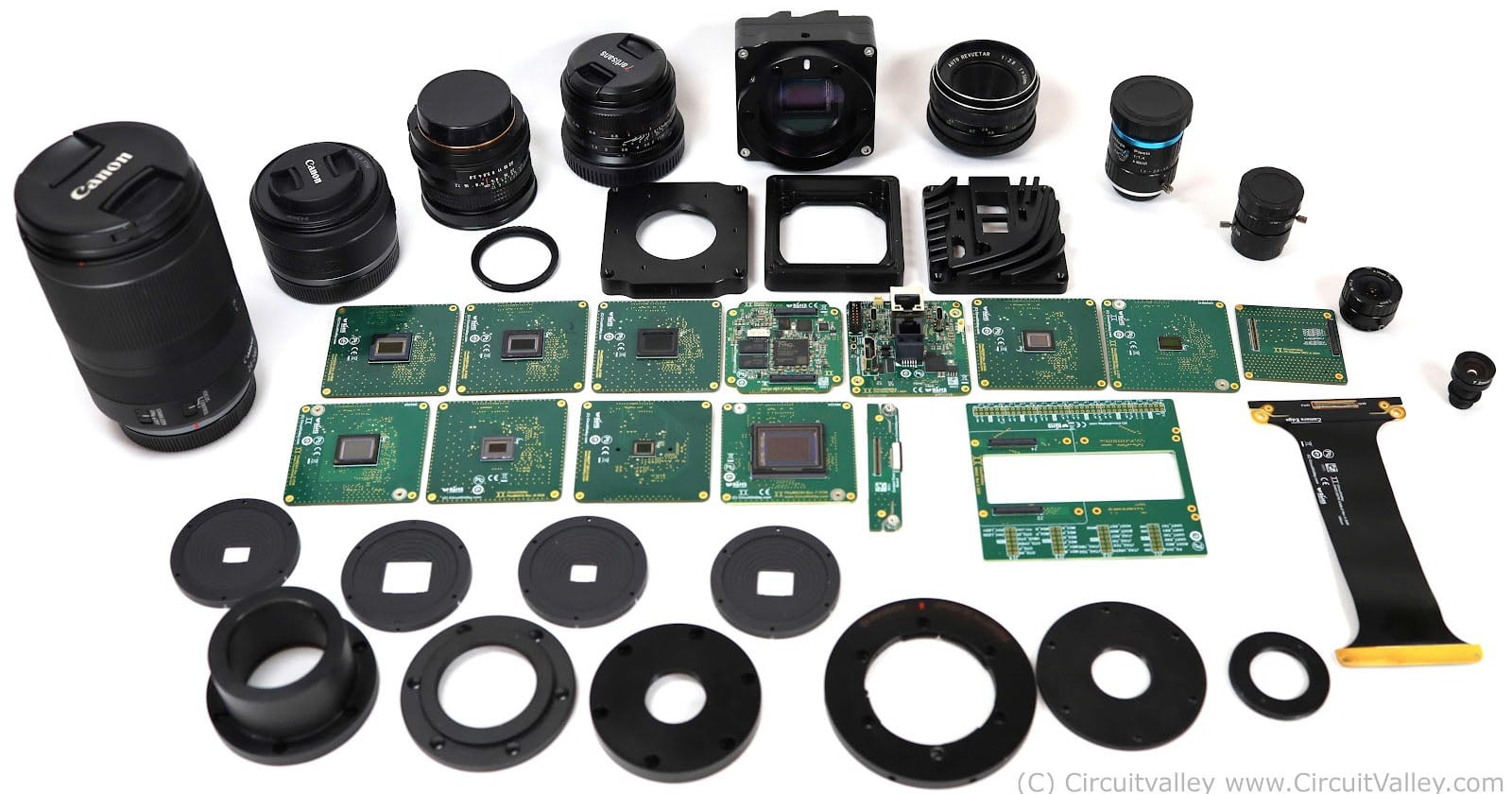
German electronics innovator CircuitValley has officially launched the CHC5 on Kickstarter, heralding it as "the world’s first commercially available modular camera system for advanced imaging." This groundbreaking platform distinguishes itself through an unparalleled ability for users to freely interchange image sensors and lens mounts, offering an expansive spectrum of sensor sizes, formats, and optical configurations. Designed not for the casual photographer but for the rigorous demands of engineers, researchers, and developers, the CHC5 represents a significant leap forward in customizable machine vision and high-end image acquisition.
The CHC5: A Deep Dive into Modular Design and Open-Source Philosophy
At its core, the CHC5 system is built around a philosophy of ultimate flexibility and user empowerment. Unlike traditional industrial or consumer cameras, which often present a fixed sensor-lens combination or a proprietary ecosystem, the CHC5 allows for the complete decoupling of critical imaging components. Users can swap out image sensors, which are mounted on uniform, standardized boards, and change lens mounts to accommodate a vast array of optics. This modularity is not merely a convenience but a fundamental design principle that addresses long-standing challenges in specialized imaging applications.
The system’s open-source nature further amplifies its potential. CircuitValley has made the entire hardware and software stack available on GitHub, inviting a global community of developers to customize, adapt, and expand the camera’s capabilities for even the most niche applications. This transparency and accessibility are critical for fields where specific hardware configurations and bespoke software functionalities are often prerequisites for successful project execution. By open-sourcing its design, CircuitValley aims to foster innovation and accelerate development cycles in areas traditionally hampered by closed ecosystems and prohibitive costs.
Addressing Critical Pain Points for Engineers and Researchers
For decades, professionals in robotics, industrial automation, scientific research, and specialized medical imaging have faced a dilemma. Building a custom camera solution typically involves navigating a labyrinth of closed ecosystems, limited hardware options, and restricted software access. Adapting to new sensor technologies, switching lens mounts to optimize for specific working distances or fields of view, or modifying image processing pipelines often proves to be a complex, time-consuming, and exorbitantly expensive endeavor. In many cases, these modifications are outright impossible without significant re-engineering or purchasing entirely new, specialized systems that can cost tens of thousands of dollars.
CircuitValley’s CHC5 directly confronts these challenges. The company explicitly states its mission: "For developers, researchers, and engineers, building a custom camera solution typically means working around closed ecosystems, limited hardware options, and restricted software access. Even simple changes – like adapting a new sensor, switching lens mounts, or modifying processing pipelines – can be complex, costly, or outright impossible." The CHC5 promises to dismantle these barriers, offering a platform where every component can be changed or upgraded. This transforms the device from "just a camera" into a "flexible imaging platform," providing granular control over both firmware and software.
Historical Context and Market Differentiation: Beyond the Consumer Realm
The concept of a modular camera is not entirely new, even if its successful implementation has been elusive in the mainstream consumer market. Photographers might recall Ricoh’s ill-fated GXR compact digital camera, which featured swappable camera-unit modules containing both a sensor and a lens. While the GXR was an interesting and clever idea, it ultimately failed to achieve commercial success, largely due to its high cost, limited lens selection within its modular system, and perhaps a target audience that wasn’t fully ready for such a departure from traditional camera designs.
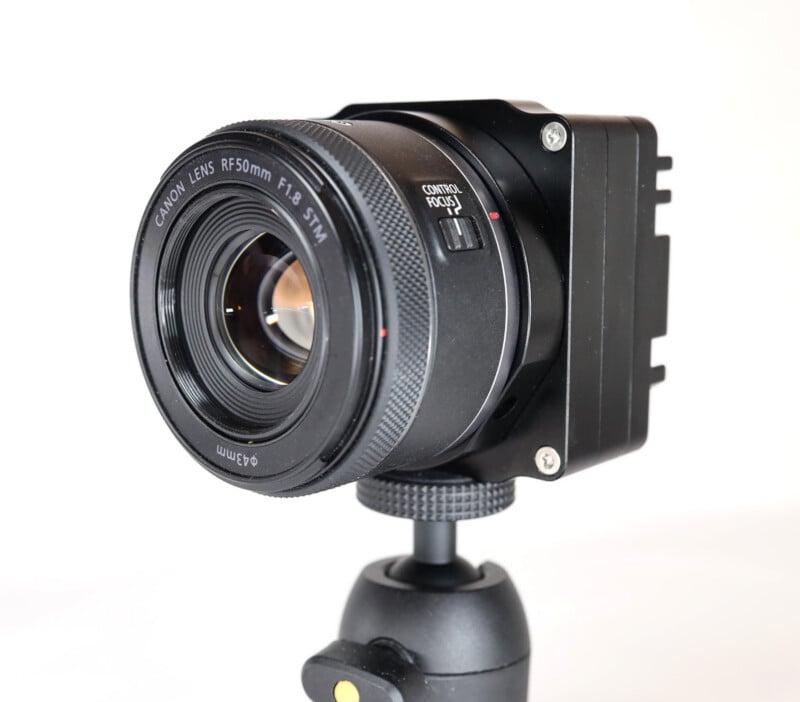
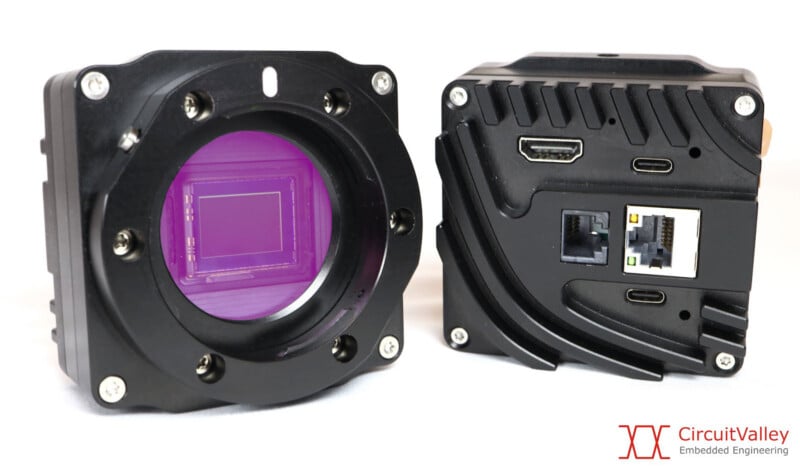
The CHC5, while similar in spirit, diverges sharply in its execution and, crucially, its target audience. It is not designed for the general photography enthusiast, but rather for a highly specialized professional segment. This distinction is paramount. Industrial and scientific applications prioritize performance, customizability, and integration capabilities over ergonomic design or consumer-friendly features. The CHC5’s robust, box-shaped design, visible circuit boards, and focus on specific industrial interfaces (like Ethernet, USB-C, and HDMI, as seen in product imagery) underscore its industrial-grade intent. This strategic focus on a niche but highly demanding market segment positions the CHC5 for a different trajectory than its consumer predecessors.
Technical Specifications and Expansive Flexibility
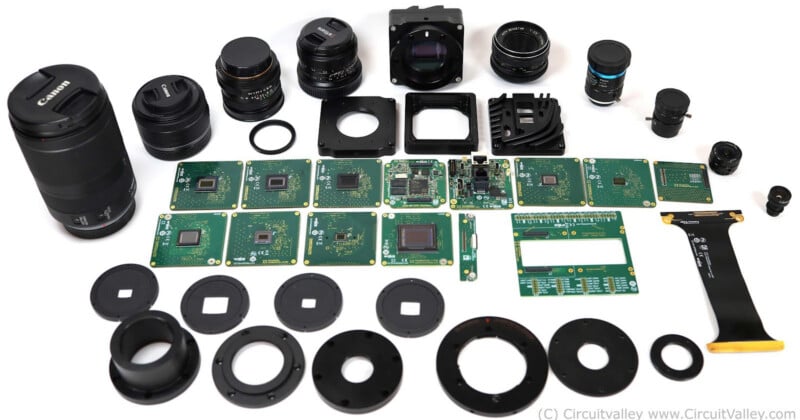
The CHC5’s modularity extends to a comprehensive selection of imaging components. For lens mounts, the system currently supports a wide array of industry standards and popular photographic mounts, including C, CS, Canon RF, Sony E, M42, S, and Micro Four Thirds (M43). This broad compatibility ensures that users can leverage existing lens inventories or select optics precisely suited for their application, whether it’s high-magnification microscopy, wide-angle machine vision, or specialized spectroscopic imaging.
On the sensor front, CircuitValley offers both rolling shutter and global shutter options, catering to different motion capture requirements. Rolling shutter sensors, while generally more cost-effective and capable of higher resolution, can introduce artifacts like "jello effect" when capturing fast-moving objects. Global shutter sensors, in contrast, capture the entire image simultaneously, making them indispensable for applications involving high-speed motion analysis, robotics, and industrial quality control where precise, undistorted images are critical.
The available sensor lineup includes a wide range of Sony IMX models, known for their performance and reliability in industrial applications, with resolutions spanning from 5 to 20.3 megapixels. A notable offering is the 10.7-megapixel Sony IMX294 Micro Four Thirds sensor. This sensor utilizes Sony’s renowned Starvis technology, which is designed for exceptional low-light performance and high sensitivity, making it ideal for applications requiring imaging in challenging lighting conditions or where maximizing signal-to-noise ratio is paramount. The ability to switch between these diverse sensors means an engineer can, for instance, develop a prototype with a cost-effective rolling shutter sensor and then seamlessly upgrade to a high-speed global shutter or a high-sensitivity Starvis sensor for final deployment without changing the entire camera system.
Applications and Broader Impact
The potential applications of the CHC5 are vast and varied, spanning numerous industries and research domains:
- Industrial Automation and Quality Control: From inspecting manufacturing defects on assembly lines to guiding robotic arms with precision, the CHC5’s flexibility allows factories to adapt imaging systems to specific product lines or inspection criteria without extensive retooling. Its robust design and open-source nature make it suitable for integration into complex industrial environments.
- Scientific Research: Researchers in biology, chemistry, physics, and astronomy can customize the camera for specific experimental setups. Whether it’s high-speed imaging of chemical reactions, low-light microscopy, or capturing astronomical phenomena, the ability to swap sensors and lenses offers unparalleled adaptability.
- Robotics and Autonomous Systems: For navigation, object recognition, and environmental mapping in robotics, the CHC5 provides developers with the freedom to experiment with different sensor resolutions, sensitivities, and shutter types to optimize performance for various robotic tasks and lighting conditions.
- Medical Imaging: In specialized medical devices or laboratory analysis, the CHC5 could be adapted for custom endoscopic applications, diagnostic imaging, or microscopic analysis, where specific sensor characteristics and optical pathways are crucial.
- Education and Prototyping: Universities and educational institutions can use the CHC5 as an invaluable teaching tool, allowing students to learn about camera design, image processing, and machine vision principles by directly interacting with and modifying hardware and software components. Startups and R&D departments can rapidly prototype and iterate on imaging solutions, significantly reducing development time and costs.
- Custom Vision Systems: For niche applications that require unique imaging parameters—such as agricultural sensing, specialized surveillance, or artistic installations—the open-source nature means developers aren’t constrained by commercial product roadmaps.
The democratizing effect of an open-source, modular platform cannot be overstated. It lowers the barrier to entry for innovation, allowing smaller teams, academic labs, and individual developers to create sophisticated imaging solutions that were previously only accessible to well-funded corporations or specialized military contractors.
Timeline, Pricing, and Accessibility
CircuitValley’s journey with the CHC5 has been a significant undertaking, with the company stating it has been in development for four years, a testament to the complexity and thoroughness required for such an ambitious project. The official launch on Kickstarter marks a crucial transition from development to commercial availability.
For backers, the pricing structure is designed to be accessible, especially when compared to proprietary industrial camera systems. Individual sensor modules start at under $200. The camera base itself, which includes a sensor and lens mount of choice, is priced around $680. This tiered pricing allows users to acquire precisely what they need, scaling their investment with their project requirements. For those requiring the full suite of options, CircuitValley also offers a comprehensive developer kit. This kit, which includes all available sensor modules and lens mounts, is priced at €2,999, or approximately $3,473 at current exchange rates, providing an all-in-one solution for extensive experimentation and development.
CircuitValley expects to begin shipping the CHC5 to Kickstarter backers in January, a swift turnaround from the campaign launch, indicating a well-prepared production pipeline. This timeline is crucial for developers and researchers eager to integrate the CHC5 into ongoing projects or kickstart new ones.
Future Outlook and Challenges
The success of the CHC5 will depend not only on its initial sales but also on the strength and engagement of the open-source community it aims to cultivate. A thriving community can contribute new sensor integrations, develop specialized software modules, create custom enclosures, and even design new hardware components, continuously expanding the platform’s capabilities and longevity. This collaborative model has proven incredibly powerful in software development and is increasingly gaining traction in hardware.
However, challenges remain. Ensuring robust documentation, providing timely support, and managing the complexity of diverse user-generated modifications will be critical for CircuitValley. Furthermore, while the open-source nature is a significant advantage, it also means that the ecosystem’s growth will rely heavily on external contributions, which can be unpredictable. Despite these potential hurdles, the CHC5 represents a bold and promising direction for advanced imaging, offering a powerful, flexible, and accessible tool for the innovators of tomorrow. Its arrival could fundamentally alter how specialized imaging solutions are conceived, developed, and deployed across industries and scientific disciplines.
Image credits: CircuitValley
Affiliate Disclosure: PetaPixel articles may include affiliate links; we may earn a commission if you buy through one.