The Royal Observatory Greenwich, in collaboration with ZWO, has announced Ali Alobaidly as the prestigious ZWO Astronomy Photographer of the Year 18. Alobaidly’s breathtaking and meticulously detailed image, titled The Quiet Predator, captured the elusive Shark Nebula, earning him the top prize of £10,000, approximately $13,400. This highly anticipated annual competition, now in its eighteenth year, continues to showcase the unparalleled talent of astrophotographers worldwide, drawing attention to the wonders of our cosmos through a lens of both scientific precision and artistic vision.
A Legacy of Celestial Observation: The ZWO Astronomy Photographer of the Year Competition
The ZWO Astronomy Photographer of the Year competition, organized by the Royal Observatory Greenwich, stands as one of the most respected platforms for astrophotographers globally. Established to celebrate the beauty of the night sky and inspire a deeper appreciation for astronomy, the competition has grown exponentially since its inception. Each year, it attracts thousands of entries from amateurs and professionals alike, spanning numerous categories that highlight various facets of celestial observation, from distant galaxies to intricate lunar landscapes and dynamic atmospheric phenomena. The competition serves not only as a showcase for stunning imagery but also as a powerful tool for public engagement with science, demonstrating the accessibility and captivating nature of astronomical research and exploration.
The judging process involves a distinguished panel of experts, including astronomers, art editors, and photography specialists, who meticulously evaluate submissions based on technical excellence, artistic merit, and the scientific interest of the subject matter. The consistent quality and innovation displayed by entrants, year after year, underscore the rapid advancements in astrophotography technology and techniques, making the judges’ task increasingly challenging, yet profoundly rewarding.
Ali Alobaidly’s Triumph: The Quiet Predator
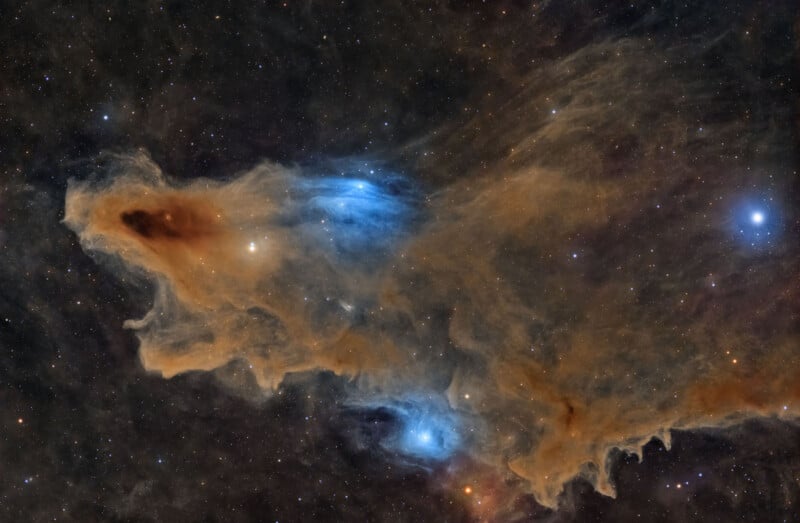
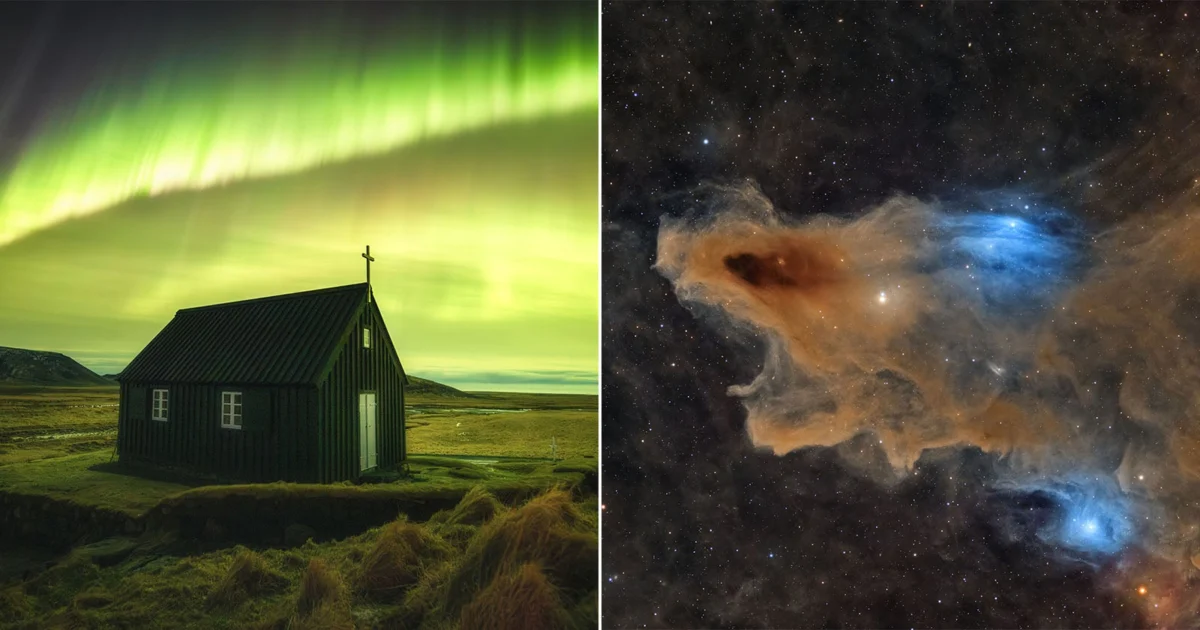
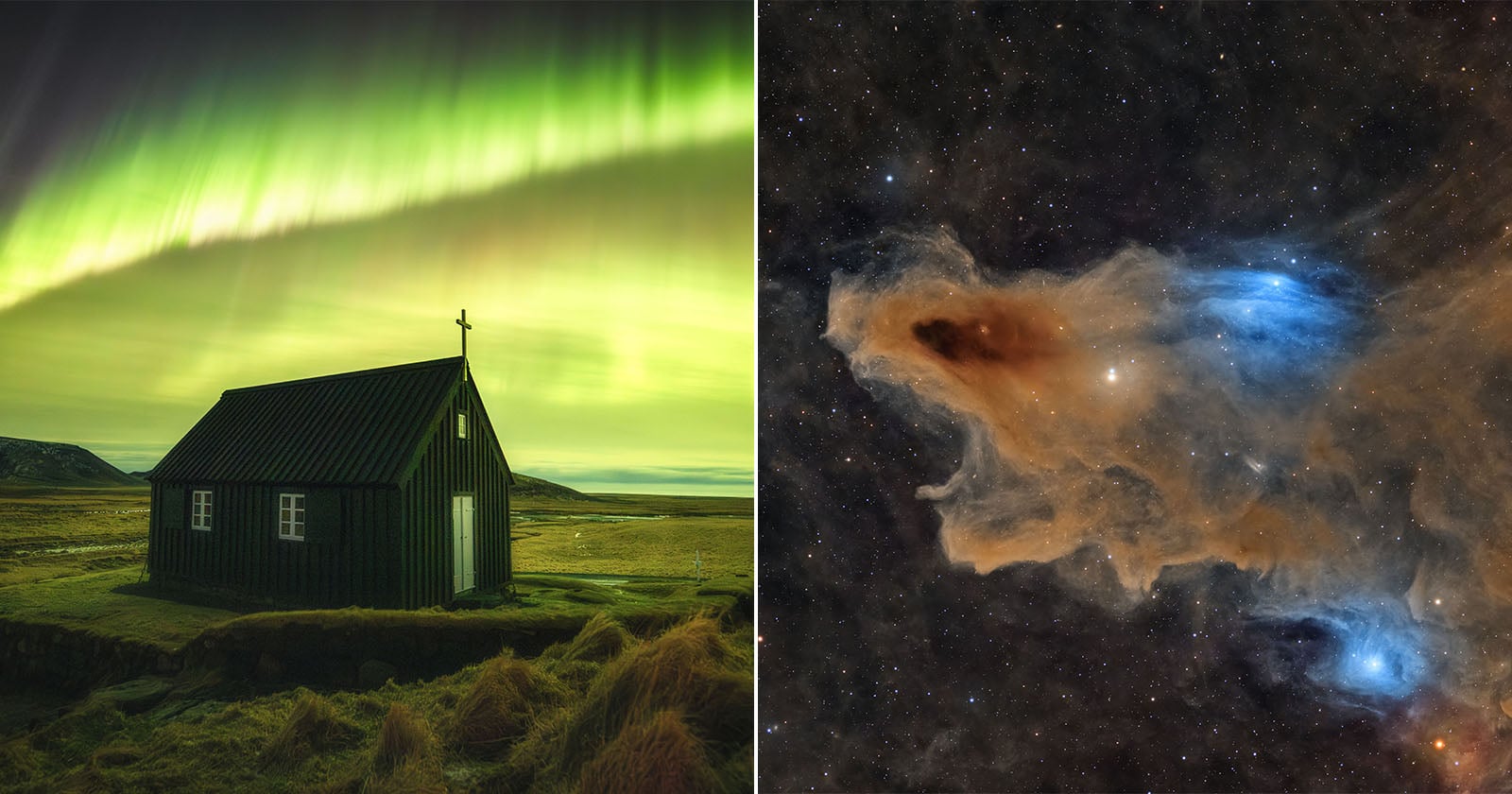
Ali Alobaidly’s winning photograph, The Quiet Predator, is an extraordinary depiction of the Shark Nebula (LDN 1235), located nearly 650 light-years away in the constellation Cepheus. This dark nebula, a vast cloud of dense interstellar dust, is renowned for its striking, silhouette-like appearance, which, as its name suggests, evokes the form of a formidable marine predator lurking in the cosmic depths. Alobaidly’s image masterfully captures the nebula’s intricate structures, highlighting the interplay of light and shadow created by the starlight-blocking dust.
Steve Marsh, Art Editor at BBC Sky at Night Magazine and a seasoned competition judge, lauded the photograph, stating, "Sometimes a photograph comes alive through its flawless presentation, pin-sharp details and dynamic contrast of light and dark. This is such an image. The Shark Nebula is already a striking object, but when it is resolved to the point where even detail-rich distant galaxies can be seen through it, you know you’re looking at something very special." This endorsement underscores the exceptional technical skill required to capture such a faint and diffuse object with such clarity, revealing not just the nebula itself, but also the myriad stars and even more distant galaxies twinkling through its translucent edges.
Alobaidly, whose winning photo also secured the top position in the highly competitive "Stars and Nebulae" category, expressed profound gratitude for the recognition. "Receiving this award is a tremendous honor. I am in awe of the extraordinary work of my fellow photographers, each deserving of this recognition," he remarked. He further elaborated on the personal significance of his subject choice: "The juxtaposition of an oceanic predator prowling the skies above the Kuwaiti desert is something I find deeply poetic, and it is what first drew me to this remarkable region of the sky. To me, it represents perfectly my love for both the Universe and the deserts of my ancestors." This deeply personal connection to his work adds another layer of narrative to the already stunning visual, intertwining cosmic grandeur with cultural heritage.
Beyond the aesthetic appeal, Alobaidly harbors a broader ambition for his astrophotography. He hopes his work will ignite inspiration in others, encouraging them to venture outdoors and experience the splendor of the night sky. Furthermore, he aims to contribute to scientific research through his photographic endeavors, making astronomy more accessible and engaging for a wider audience. This aspiration aligns perfectly with the competition’s mission to bridge the gap between scientific exploration and public appreciation.
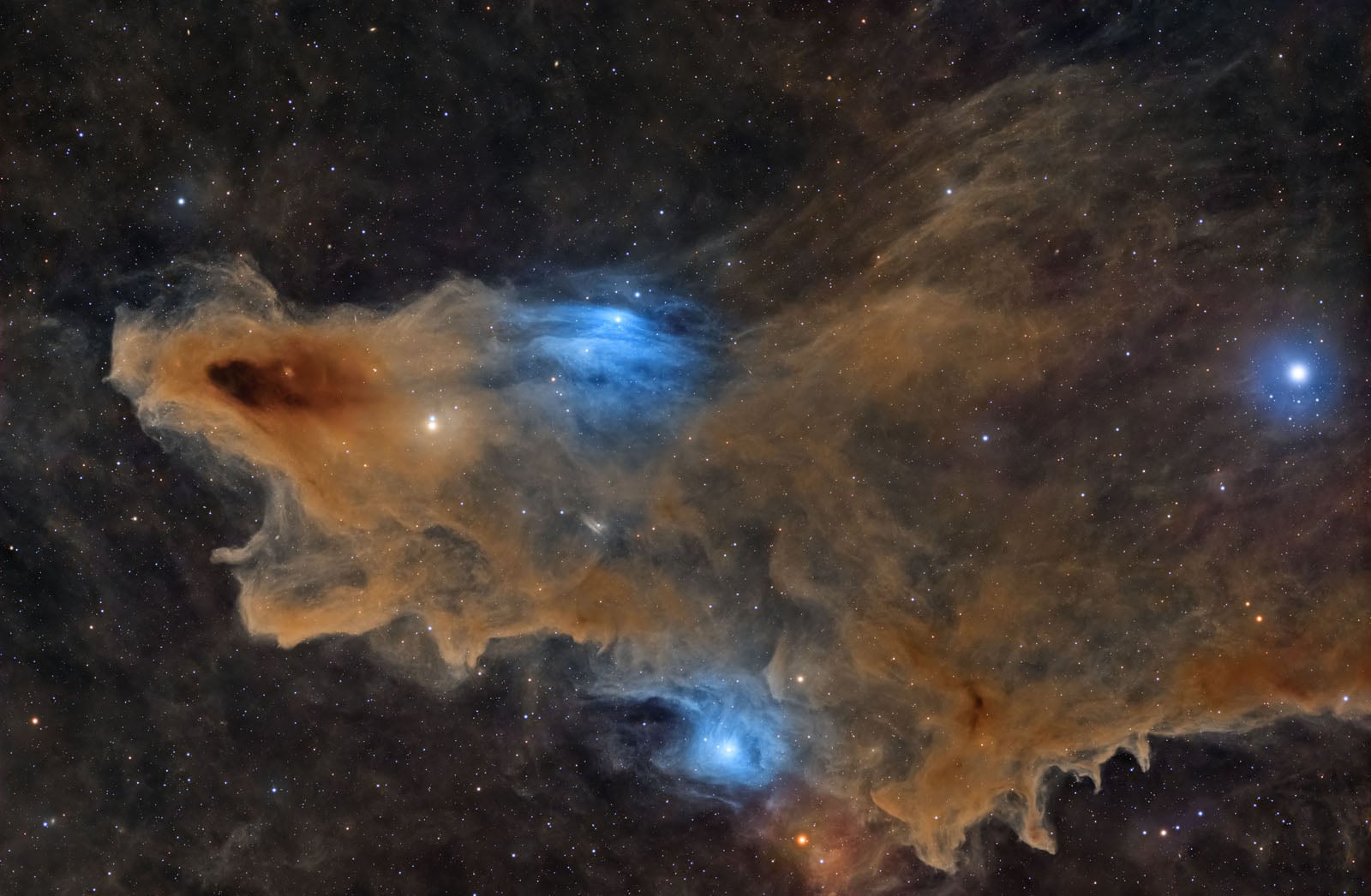
Sam Wen, Founder and CEO of ZWO, the astronomy equipment and telescope company that proudly supports the annual competition, echoed the judges’ sentiments. "This year’s Overall Winner, The Quiet Predator by Ali Alobaidly, is a stunning blend of technical excellence and artistic vision. Showcasing the intricate structures of a rarely photographed nebula, the image combines remarkable detail with a striking composition and color palette, inviting viewers to explore the hidden beauty of the cosmos," Wen stated. He also highlighted a significant historical aspect of Alobaidly’s victory: "A result of exceptional skill, patience and dedication, this outstanding image also marks a historic milestone, as Ali is the first Overall Winner from Kuwait in the competition’s history." This achievement not only celebrates Alobaidly’s individual talent but also shines a light on the growing astrophotography community in the Middle East, fostering a more diverse and inclusive global appreciation for the night sky.
Emerging Talent: Nikolaos Strimpoulis and Mineral Moon
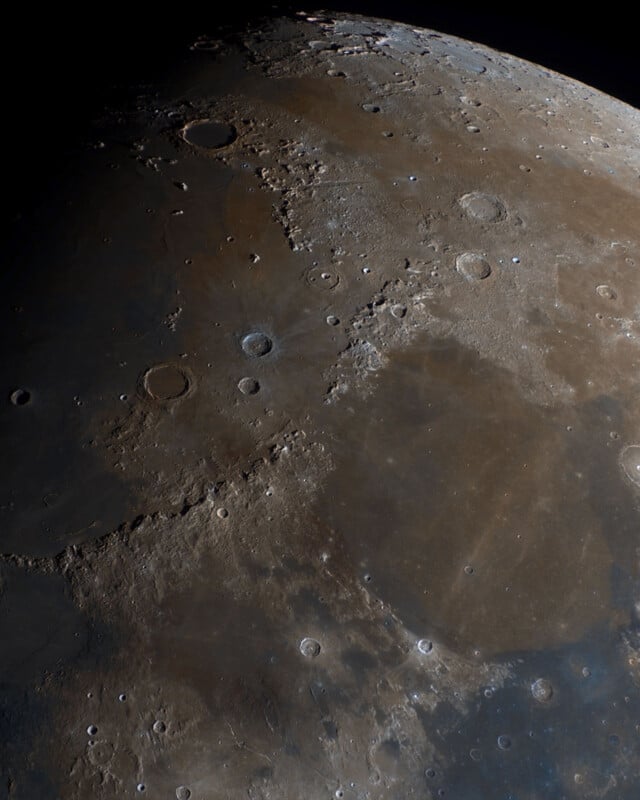
The future of astrophotography looks bright, as evidenced by the outstanding achievement of 15-year-old Nikolaos Strimpoulis from Greece, who was named this year’s ZWO Young Astronomy Photographer of the Year. His winning entry, Mineral Moon, offers a strikingly colorful and highly detailed close-up of Earth’s closest celestial neighbor, a subject that has captivated countless photographers throughout history.
Strimpoulis’s Mineral Moon transcends a mere visual representation, providing an enhanced view of the lunar surface that reveals subtle color variations indicative of different mineral compositions. These chromatic nuances, often invisible to the naked eye, are brought to life through advanced imaging techniques, offering insights into the Moon’s geological history and formation. Craters, lunar maria, and rugged terrains are depicted with remarkable clarity, showcasing the young photographer’s meticulous attention to detail and sophisticated post-processing skills.
Judge Steve Marsh commended Strimpoulis’s work, noting, "Many of us start our astrophotography journey with the Moon — some of us stay there forever! But often we don’t delve deep into the subtle colors of its mineral deposits until much later. This amazing young astrophotographer has achieved perfectly developed coloring in this photograph." This recognition highlights not only the technical prowess of Strimpoulis but also his advanced understanding of how to interpret and present astronomical data in an aesthetically compelling manner, a skill that belies his young age. His win serves as an inspiration to aspiring young astronomers and photographers, demonstrating that age is no barrier to achieving excellence in this demanding field.
A Spectrum of Celestial Wonders: Category Winners and Special Awards
Beyond the overall and young photographer accolades, the ZWO Astronomy Photographer of the Year 18 competition celebrated excellence across eight primary categories and two special awards. Each category winner, including Nikolaos Strimpoulis, received a prize of £1,500, while runners-up were awarded £500, and highly commended entries secured £250. Special prize winners received £750, acknowledging diverse contributions to the art and science of astrophotography.
- Stars & Nebulae: As previously mentioned, Ali Alobaidly’s The Quiet Predator not only claimed the overall title but also triumphed in this category, recognized for its exceptional portrayal of the Shark Nebula’s intricate structures.
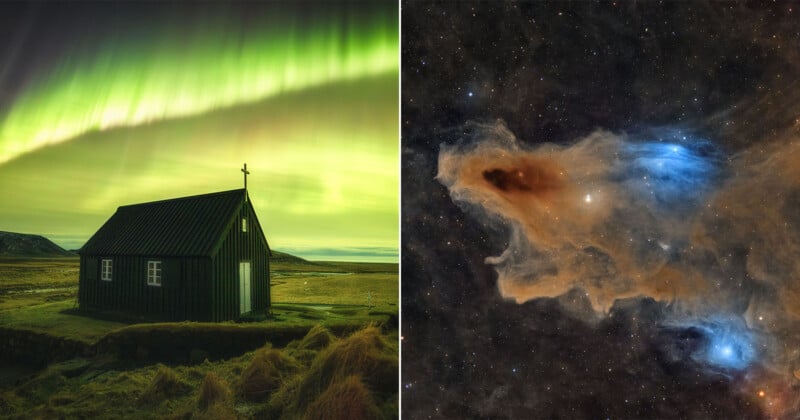
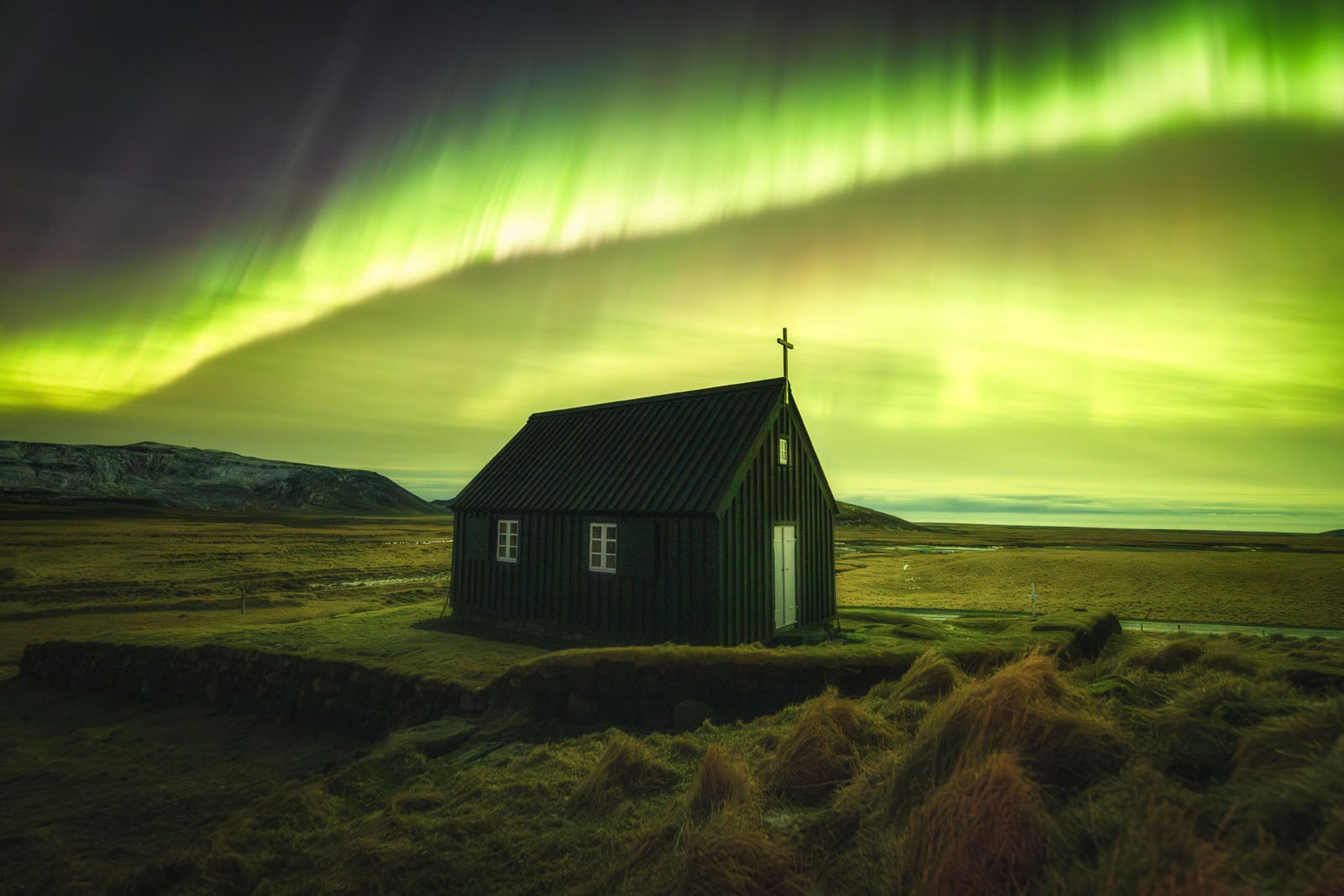
- Aurorae: Radoslav Sviretsov was honored for The Crown, an enchanting photograph that captures the ethereal green glow of the aurora borealis arching gracefully over a quaint, dark wooden church. The image beautifully blends terrestrial elements with celestial majesty, showcasing the dynamic and often spiritual connection between humanity and the night sky.
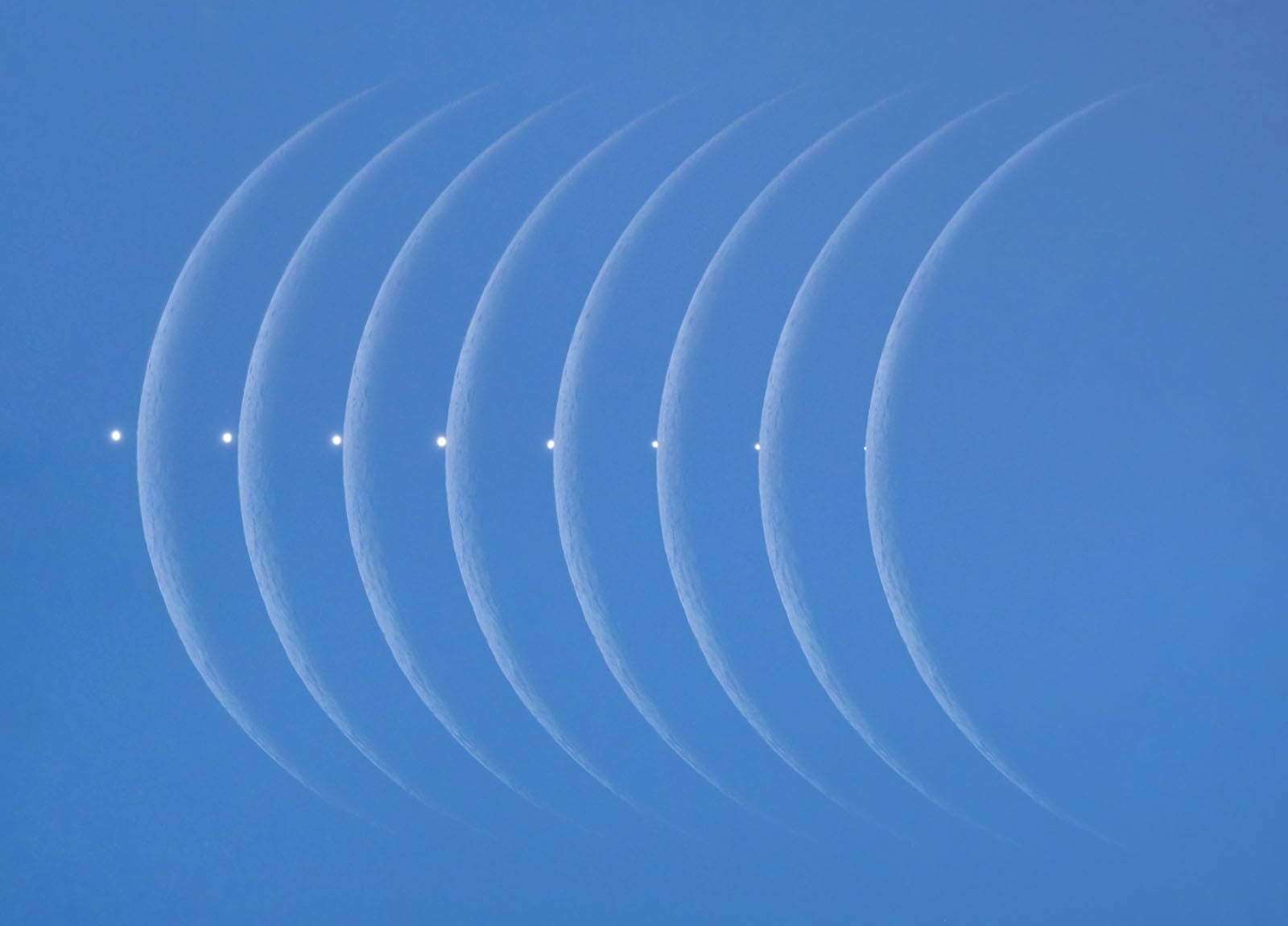
- Our Moon: Petr Horalek’s Venusian Pearl on the Moon is a captivating composite image illustrating the delicate dance between Venus and the crescent Moon. The sequential stages of Venus passing behind the Moon against a clear sky demonstrate a profound understanding of celestial mechanics and patient observation, transforming a common astronomical event into a poetic visual narrative.
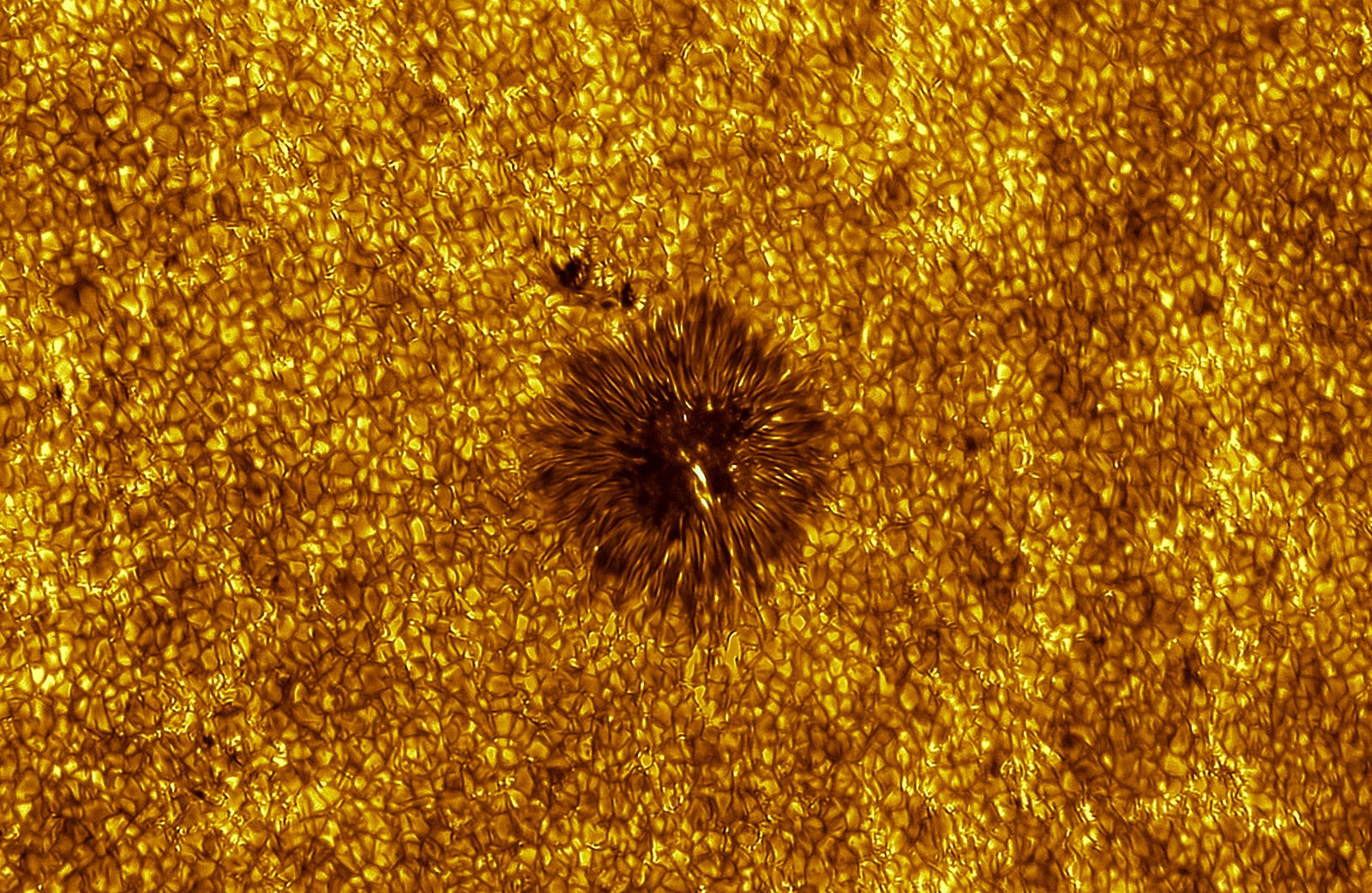
- Our Sun: Miguel Claro’s Active Region 4122 provides a high-resolution, detailed view of the Sun’s surface, focusing on a prominent dark sunspot surrounded by the granular, golden-yellow texture of the photosphere. This image highlights the Sun’s dynamic and ever-changing nature, offering valuable insights into solar activity and its potential impacts on Earth.
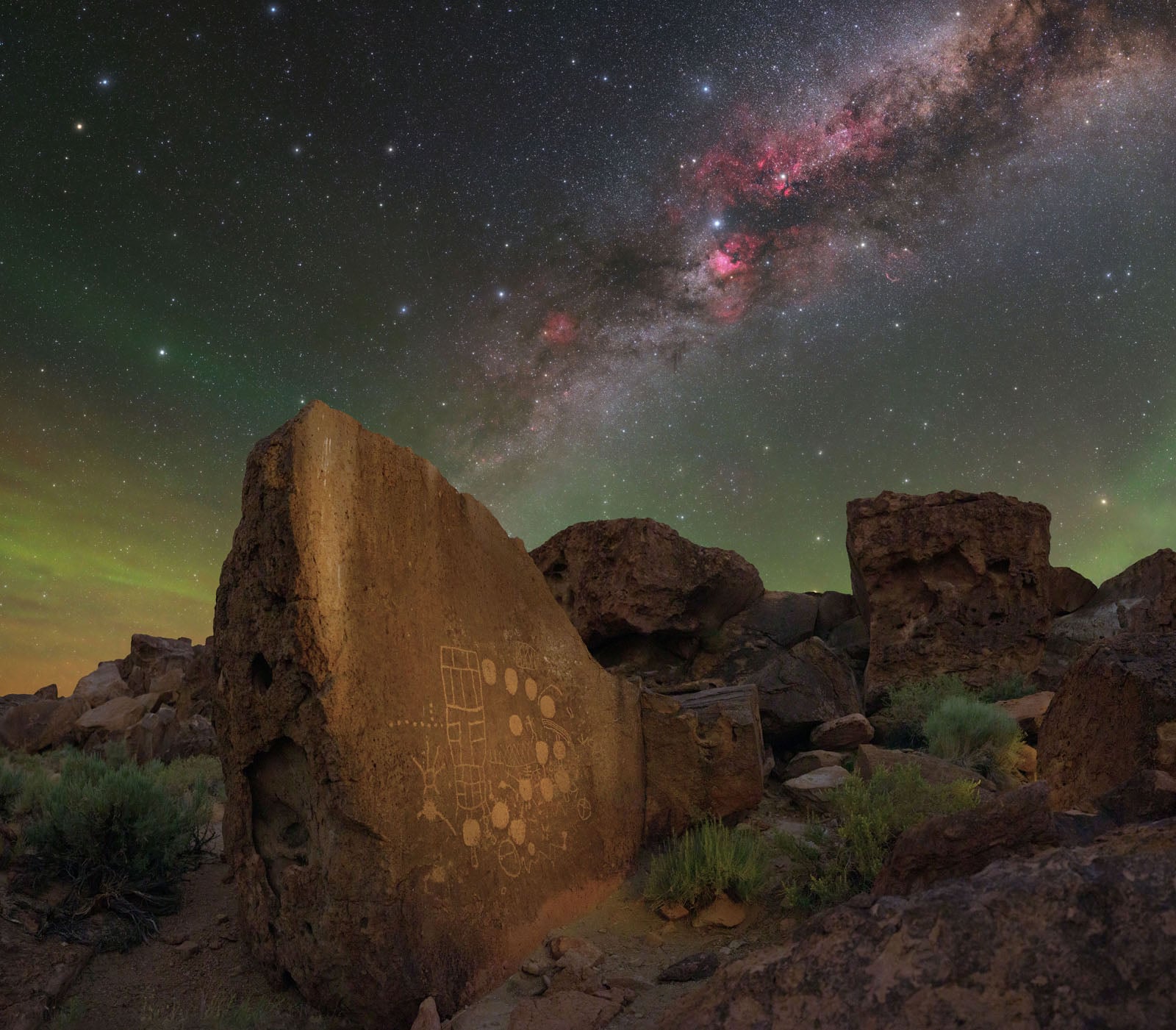
- People and Space: Max Inwood’s A Message From the Ancients is a thought-provoking composition featuring ancient petroglyphs etched into a weathered rock, set against a vibrant, star-filled night sky. The photograph beautifully juxtaposes humanity’s enduring quest to understand the cosmos with the timelessness of the universe itself, bridging millennia of human observation.
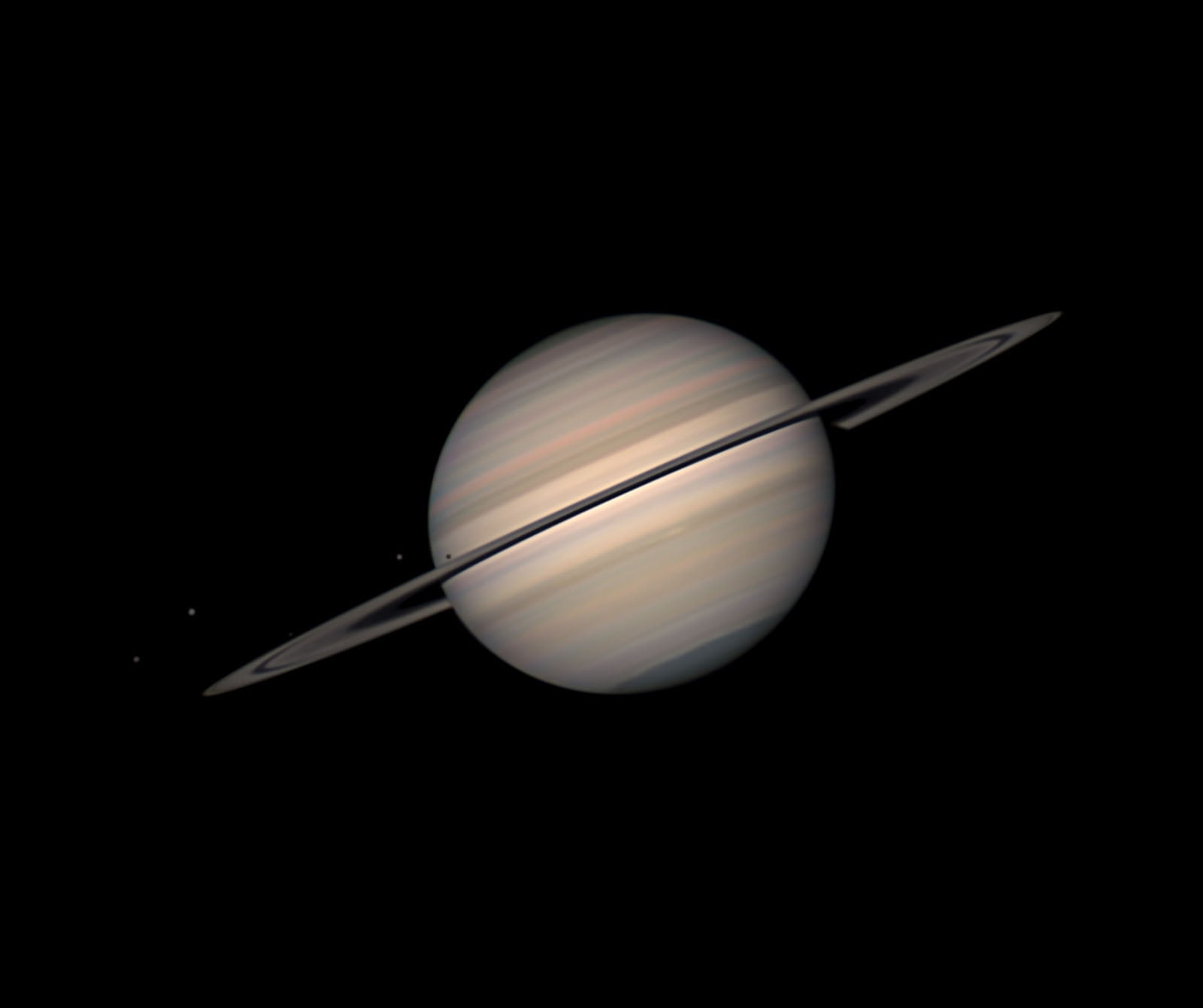
- Planets, Comets, and Asteroids: Tom Williams’ Saturnian Equinox offers a stunning depiction of Saturn, showcasing its iconic rings and several small moons against the deep black of space. Capturing Saturn during its equinox, when the rings are seen edge-on, presents a unique observational challenge and a rare perspective of the gas giant.
- Skyscapes: Stefano Pellegrini’s Botswana Star Trail is an artistic long-exposure photograph featuring the majestic silhouettes of baobab trees framing a night sky ablaze with colorful, circular star trails. The image evokes a sense of ancient wonder and the Earth’s continuous rotation beneath an unchanging stellar canopy, located in the unique landscape of Botswana.
- Galaxies: Zhiyu Jia and Xinran Li collaborated on NGC 4753: A Symphony of Dust Lanes in Virgo, an intricate image of a glowing, orange, web-like structure of dust and gas at the heart of a diffuse elliptical galaxy. This deep-space marvel underscores the complex and diverse morphologies found within the galactic realm.
Two special awards further acknowledged exceptional contributions:
- The Sir Patrick Moore Prize for Best Newcomer: Haocheng Zhu was recognized for M1: Echoes of an Ancient Explosion, a vivid portrayal of the Crab Nebula, a colorful, filamentary supernova remnant. This award celebrates burgeoning talent and encourages new astrophotographers to continue their explorations.
- The Annie Maunder Open Category: Paweł Paweł’s Reverse Astronomy: Mother won this category, which encourages creative image processing and artistic interpretation. The image, a dark, textured surface with a central, irregular hole surrounded by a vibrant blue and white ring, challenges conventional astrophotography by exploring the artistic boundaries of astronomical inspiration.
The Enduring Impact and Future of Astrophotography
Dr. Greg Brown, Royal Observatory Greenwich Astronomer and a competition judge, encapsulated the ongoing excitement surrounding the event. "I never tire of seeing the new entries into the ZWO Astronomy Photographer of the Year competition. For a sky that, at least in some ways, is remarkably unchanging from year to year, the skill and innovation of the entrants, coupled with improvements in technology, means that there is always a wealth of new sights to be seen even in targets that have been observed many times over," Dr. Brown commented. He further reflected on the collaborative spirit and passion of the community: "The images from this, the 18th year of the competition, continue to show the growth of a community whose passion to capture the stunning variety of our Universe knows as few bounds as the subjects of their images. The only issue, of course, is how difficult a job this makes for the judges — although, as issues go, it’s a great one to have!"
The annual ZWO Astronomy Photographer of the Year competition is more than just a contest; it is a global celebration of curiosity, technical mastery, and artistic expression. It serves as a vital platform for science communication, making complex astronomical phenomena accessible and engaging to a broad public. The increasing quality and diversity of entries each year highlight the rapid evolution of astrophotography techniques and equipment, allowing amateur astronomers to capture images once only possible with professional observatories. This democratization of deep-space imaging fosters a widespread appreciation for the universe and inspires future generations of scientists, artists, and explorers.
All the winning photographs, along with a selection of highly commended entries, will be exhibited at the National Maritime Museum in London. The exhibition opens to the public tomorrow, September 18, 2026, offering visitors a unique opportunity to immerse themselves in the breathtaking beauty of the cosmos as captured by the world’s leading astrophotographers. This exhibition stands as a testament to the enduring human fascination with the stars and the remarkable ability of photography to bring the distant universe closer to home.