The annual grouper spawning event in the Fakarava atoll, a remote paradise in French Polynesia, presents one of the ocean’s most extraordinary spectacles. For a few weeks each year, this UNESCO Biosphere Reserve transforms into a vibrant theater where the fundamental cycles of life and death play out in a breathtaking, and for some, a harrowing, display. Marine biologists and conservationists observe this event not just as a natural wonder, but as a critical indicator of the health of one of the planet’s most vital marine ecosystems.
The Genesis of a Spectacle: Fakarava’s Unique Ecosystem
Fakarava, located approximately 700 nautical miles north of Papeete, is renowned for its pristine lagoons, extensive coral reefs, and a remarkable abundance of marine life. The atoll’s geography, characterized by two large passes connecting its vast lagoon to the open ocean, plays a crucial role in supporting this biodiversity. The predictable ebb and flow of oceanic currents, driven by tidal cycles, create an environment rich in nutrients and ideal for the aggregation of numerous species.
For most of the year, Fakarava’s waters teem with a diverse array of fish, including countless species of reef fish, sharks, sea turtles, and manta rays, all coexisting in a relatively stable ecosystem. However, as the waters warm during specific periods, a profound shift occurs. This transition marks the beginning of the highly anticipated grouper spawning season, a period of intense activity that draws both prey and predators to a central stage.
The Countdown to Spawning: A Gathering of Thousands
The prelude to the main event begins weeks in advance of the full moon. Large numbers of resident groupers, particularly the Napoleon wrasse (Cheilinus undulatus) and various species of Epinephelus, begin to congregate. These fish, often solitary for much of the year, are drawn to specific locations near the mouths of the atoll’s channels. Females, heavy with eggs, and males, ready to fertilize them, navigate towards these convergence points.

The chosen spawning grounds are typically areas where the powerful oceanic currents are most pronounced. The tidal exchange, occurring roughly every six hours, facilitates the dispersal of nutrients into the sea and provides the ideal conditions for the successful fertilization and subsequent distribution of the groupers’ eggs. This intricate dance between lunar cycles, tidal patterns, and the biological imperative of reproduction underscores the delicate balance of the Fakarava ecosystem.
As the full moon approaches, signaling the peak of the spawning period, the density of groupers increases dramatically. They position themselves along the coral heads, relying on their natural camouflage to remain undetected by the growing contingent of predators. The visual of thousands of these large fish, each seemingly claiming its own coral outcrop, creates an eerie calm before the storm. Their large eyes constantly track the movements of the sharks, a silent acknowledgment of the imminent danger and the complex food web at play.
The Apex Predators Arrive: Sharks as Keystone Species
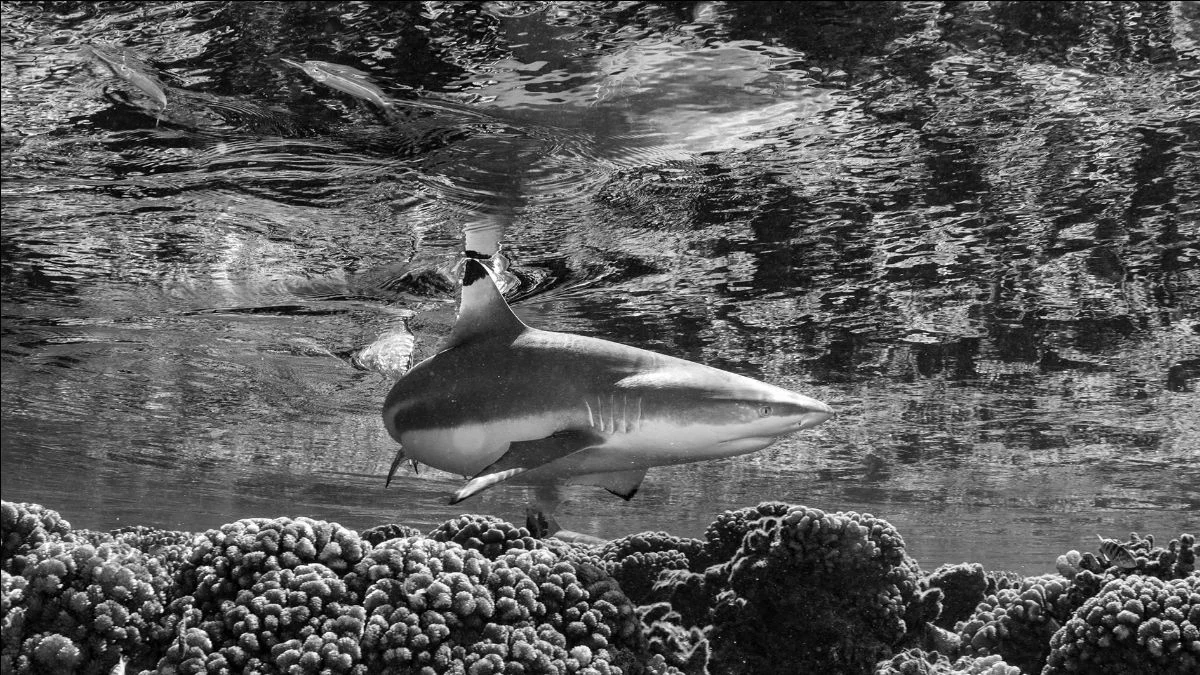
Following closely in the wake of the aggregating groupers are hundreds of sharks. These apex predators, a hallmark of healthy marine ecosystems, are drawn to Fakarava by the promise of an abundant and readily available food source. Species commonly observed during this event include grey reef sharks (Carcharhinus amblyrhynchos), blacktip reef sharks (Carcharhinus melanopterus), and occasionally larger species like tiger sharks (Galeocerdo cuvier) and even hammerhead sharks (Sphyrna spp.), depending on the specific location and depth.
These sharks, often perceived as menacing, play an indispensable role in maintaining the ecological integrity of the reef. Their presence serves as a natural population control for the groupers, ensuring that only the strongest and most successful breeders contribute to the next generation. Furthermore, their feeding activities help to redistribute vital nutrients across the reef system, supporting a wider range of marine life.
A Frenzy of Life and Death: The Spawning Event Unfolds
The climax of the Fakarava grouper spawning event is a mesmerizing and often visceral display of nature’s raw power. As the tide reaches its zenith around the full moon, the groupers initiate their reproductive ritual. Females ascend into the water column, releasing clouds of eggs, which are immediately met by the milt released by the attending males. This synchronized release triggers a feeding frenzy among the sharks.

Divers and researchers, positioned at strategic vantage points, witness this extraordinary scene. The waters, moments before seemingly calm, erupt into a vortex of activity. Sharks, moving with astonishing speed and precision, dart through the swirling clouds of eggs and milt. The silence of the depths is punctuated by the sounds of crunching jaws and the powerful thrashing of bodies as sharks feed on both the adult groupers and the released gametes.
The event is fleeting, often lasting only a matter of minutes to an hour, but its impact is profound. The sheer volume of activity, the intermingling of life-giving reproductive material with the predatory drive, creates a spectacle that is both beautiful and brutal. It is a stark reminder of the interconnectedness of all life within the ocean, where survival is intrinsically linked to the success of reproduction and the efficiency of predation.
The Ecological Significance: More Than Just a Spectacle
The Fakarava grouper spawning event is more than just a visual marvel; it is a crucial ecological phenomenon with far-reaching implications for the health of the Pacific Ocean. The aggregation of such a large biomass of groupers and sharks in one location provides invaluable opportunities for scientific observation and data collection.
Supporting Data and Scientific Insights:
- Biomass Concentration: The event highlights the importance of specific aggregation sites for the reproductive success of large fish populations. These sites are often critical for species that are otherwise dispersed.
- Predator-Prey Dynamics: The synchronized spawning event creates a predictable food source for apex predators, influencing their foraging behavior and population dynamics. Studies of these events can provide insights into the feeding ecology of sharks.
- Ecosystem Health Indicator: The presence of large numbers of healthy groupers and a robust shark population is a strong indicator of a well-functioning marine ecosystem. Declines in either group could signal underlying environmental stressors or overfishing.
- Nutrient Cycling: The release of eggs and milt, and the subsequent consumption by sharks and other scavengers, contributes to nutrient cycling within the reef system, fertilizing plankton blooms and supporting the broader food web.
- Conservation Value: Understanding the timing and location of these spawning events is critical for effective marine protected area management and for developing strategies to mitigate threats such as illegal fishing.
Historical Context and Human Impact
For millennia, indigenous communities in the Pacific have likely observed these spawning events, integrating them into their traditional knowledge systems and sustainable fishing practices. However, the advent of industrial fishing and the increasing demand for seafood have placed unprecedented pressure on fish stocks globally. Overfishing of groupers, particularly those targeted for their meat and swim bladders, has led to significant population declines in many regions.

The Fakarava atoll, due to its remote location and designation as a UNESCO Biosphere Reserve, has been relatively protected from the most severe impacts of commercial fishing. This protection has allowed populations of groupers and sharks to persist, making events like the annual spawning more robust. However, the threat of illegal, unreported, and unregulated (IUU) fishing remains a constant concern for conservationists.
Broader Impact and Implications: A Call for Protection
The Fakarava grouper spawning event serves as a powerful testament to the resilience of marine ecosystems when given the opportunity to thrive. It underscores the vital role that apex predators like sharks play in maintaining ecological balance. As the renowned marine biologist Eugenie Clark famously stated, "When you see a shark underwater, you should say, ‘How lucky I am to see this beautiful animal in his environment.’" This sentiment is particularly relevant in the context of Fakarava, where the presence of numerous sharks is a sign of a healthy and functioning ecosystem.
The implications of this natural spectacle extend beyond scientific observation. It highlights the urgent need for continued and strengthened conservation efforts to protect these critical marine habitats. The success of Fakarava as a marine protected area offers a model for other regions facing similar ecological challenges.
Inferred Statements and Reactions:
- Marine Biologists: Researchers involved in studying the event would likely emphasize the importance of continued monitoring and research to understand the long-term impacts of climate change and human activities on these spawning aggregations. They would advocate for the expansion of marine protected areas and the implementation of stricter fishing regulations.
- Conservation Organizations: Groups focused on marine conservation would use the Fakarava event as a compelling example of why sharks and other large marine predators are essential for ocean health. They would likely launch campaigns to raise public awareness and support for shark conservation initiatives.
- Local Communities: While not directly quoted in the provided text, it can be inferred that local communities in French Polynesia, who rely on the health of the ocean for their livelihoods, would have a vested interest in the preservation of Fakarava’s unique ecosystem. Their traditional knowledge and participation are crucial for effective conservation.
The Future of Fakarava: Hope for a Balanced Ocean
The Fakarava grouper spawning event is a vivid illustration of the complex and often brutal beauty of the natural world. It is a reminder that we do not "learn to live with" sharks and other wildlife; rather, our very existence is intrinsically linked to their well-being and the health of the ecosystems they inhabit. The ongoing efforts to protect places like Fakarava are not merely about preserving a natural wonder, but about safeguarding the vital ecological processes that sustain life on our planet. The hope is that by capturing and sharing the wonder, drama, and beauty of such events, inspiration can be ignited for local and global actions to protect these wild and vital ecosystems for generations to come. The continued success of this annual congregation of life will depend on the collective commitment to conservation and a deeper understanding of our place within the intricate web of marine life.