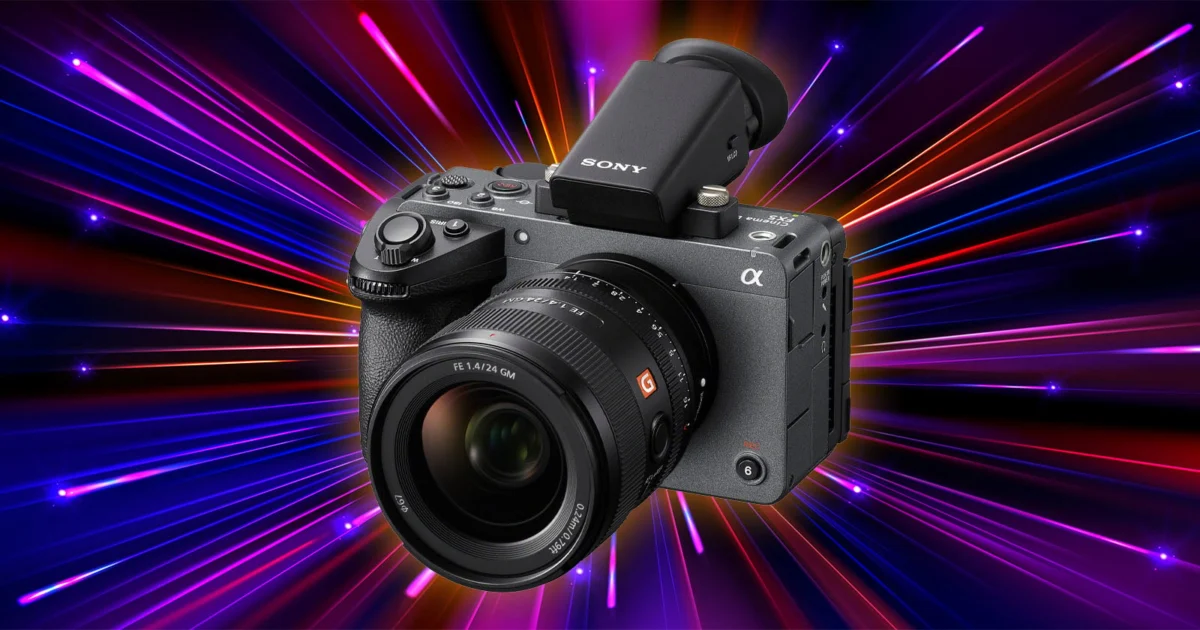
This summer, the cinematic landscape was dominated by Christopher Nolan’s epic feature, The Odyssey, a film that not only surpassed the coveted $1 billion mark at the global box office but also reignited a niche industry discussion around a specialized piece of filmmaking equipment: the camera blimp. Nolan, renowned for his unwavering commitment to immersive, large-format filmmaking, chose to shoot The Odyssey entirely on IMAX cameras. While this decision delivered unparalleled visual grandeur, it also necessitated the deployment of massive blimp systems to silence the notoriously loud mechanical operation of these cinematic behemoths, leading to unprecedented logistical challenges on set, including actors requiring mirror systems just to see one another around the enormous apparatus. This contemporary reintroduction of the blimp system into the mainstream conversation has, in turn, cast a spotlight on the historical significance of such devices, revealing a rich, decades-long effort to achieve pristine on-set audio amidst the clamor of production.
The Unavoidable Roar: Camera Noise in Film Production
For nearly a century, sound has been an integral, yet often challenging, component of motion picture production. From the earliest days of synchronized sound in the late 1920s, filmmakers and sound engineers have grappled with the inherent noise generated by film cameras. The mechanisms required to transport film stock through the camera gate, along with the rotating mirror shutter system, produce a distinct and often disruptive mechanical whirring or clicking sound. In the studio environment, particularly during dialogue scenes, this camera noise can be catastrophic, bleeding into microphone recordings and rendering dialogue unusable, necessitating costly and time-consuming Automated Dialogue Replacement (ADR) in post-production. Directors like Christopher Nolan, who prioritize in-camera effects and authentic on-set audio capture, view ADR as a last resort, making active noise suppression an essential part of their production workflow.
Early solutions to this problem were rudimentary but effective. Sound blankets, known as "barneys," were soft, padded coverings draped over cameras to absorb some of the mechanical vibrations and dampen acoustic output. While somewhat effective, barneys offered limited noise reduction and could interfere with camera operation and cooling. The true innovation arrived with the development of hard blimps – rigid, sound-insulated enclosures specifically designed to encase the camera body. These blimps were typically constructed from heavy, sound-absorbing materials like wood, metal, and specialized acoustic foams, effectively creating a miniature, isolated sound stage around the camera mechanism. They featured strategically placed windows for the lens and viewfinder, and often incorporated internal ventilation systems to prevent the camera from overheating. The advent of hard blimps revolutionized on-set sound recording, allowing for clearer dialogue and more nuanced soundscapes to be captured live.
IMAX: A Colossus with a Voice
The IMAX format stands as a pinnacle of large-format cinema, celebrated for its unparalleled image resolution, expansive aspect ratios, and immersive viewing experience. Developed in Canada in the late 1960s, IMAX utilizes 70mm film stock that runs horizontally through the camera, as opposed to the vertical orientation of standard 70mm or 35mm film. This horizontal movement allows for a much larger image area per frame, yielding an astonishing level of detail and clarity when projected onto gargantuan screens. However, this impressive technical feat comes at a significant operational cost: IMAX cameras are notoriously massive, heavy, and, crucially, loud. The complex mechanisms required to transport and stabilize the wide 70mm film stock at speeds up to 24 frames per second (and often higher for slow-motion sequences) generate considerable mechanical noise, often reaching decibel levels that make direct sound recording impossible without intervention.
Christopher Nolan has long been a champion of the IMAX format, consistently integrating it into his filmography to deliver a visceral, expansive cinematic experience. From The Dark Knight to Dunkirk and Oppenheimer, Nolan has pushed the boundaries of IMAX photography, often opting to shoot significant portions, if not the entirety, of his features with these specialized cameras. His commitment stems from a belief in the tangible, tactile quality of film and the unparalleled immersion offered by the format, contrasting sharply with the increasingly digital landscape of contemporary filmmaking. This artistic conviction means that for Nolan, the logistical challenges, including managing the cameras’ formidable acoustics, are simply part of the creative process.

"The Odyssey" and the Modern Blimp’s Return to Prominence
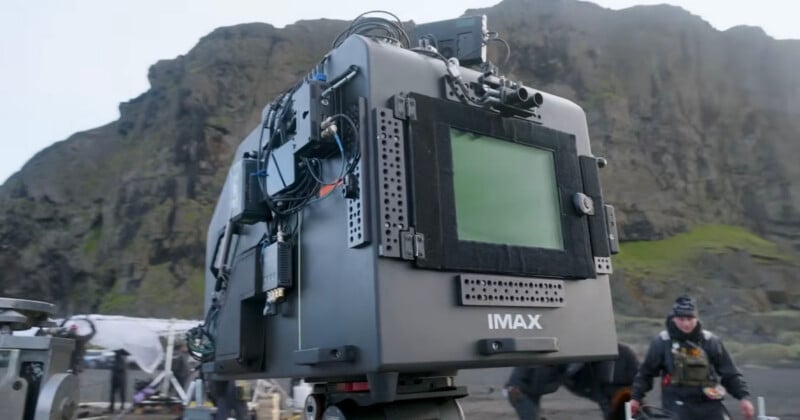
The production of The Odyssey serves as a prime example of Nolan’s uncompromising vision. Filming the entire epic on IMAX cameras was a monumental undertaking, demanding meticulous planning and the deployment of specialized equipment. The IMAX blimp system, designed to encase these already colossal cameras, transformed them into truly gargantuan machines. These bespoke enclosures are engineered to provide maximum sound dampening, allowing the delicate process of dialogue capture and ambient sound recording to proceed unimpeded, even with the mechanical whir of the IMAX camera just feet away.
However, the sheer scale of the blimped IMAX camera introduced a unique set of logistical hurdles on the set of The Odyssey. With the camera’s dimensions significantly expanded by its sound-dampening housing, it became an imposing physical barrier. Actors, engrossed in their performances and needing to maintain eye contact or spatial awareness, found their line of sight obstructed by the enormous apparatus. To overcome this, the production team devised an ingenious, yet seemingly archaic, solution: a mirror system. Actors like Tom Holland and Jon Bernthal, performing in medieval costumes amidst expansive outdoor sets, reportedly relied on strategically placed mirrors to see each other and maintain continuity of performance around the blimped 70mm behemoth. This anecdote underscores the dedication required to realize Nolan’s vision, highlighting the trade-offs between technical ambition and practical on-set realities.
Nolan’s philosophical approach to filmmaking, which prioritizes practical effects, minimal CGI, and authentic on-set sound, makes the use of blimps not merely a technical necessity but an artistic imperative. By mitigating camera noise, he ensures that the raw, immediate performances and ambient sounds captured during principal photography contribute directly to the final cinematic experience, reducing the reliance on artificial post-production interventions. The overwhelming box office success of The Odyssey, surpassing $1 billion globally, not only validates Nolan’s artistic choices but also demonstrates that audiences continue to respond to the immersive quality that such meticulous production values deliver. The film’s critical and commercial triumph reinforces the idea that for certain high-stakes productions, the traditional methods of sound control, even those that seem cumbersome, remain invaluable.
A Blast from the Past: Parisa Taghizadeh and the SLR Blimp
While Christopher Nolan’s use of IMAX blimps brought these devices into the contemporary spotlight, the concept of silencing cameras on a film set is far from new. The recent appearance of veteran film stills photographer Parisa Taghizadeh, known as "Tag," on the Out of Frame podcast, offered a fascinating glimpse into the historical application of camera blimps for still photography. Tag showcased her own vintage SLR blimp system, a relic from an era when both film and early digital single-lens reflex (SLR) cameras produced significant shutter noise.
Tag’s blimp system was a robust, custom-designed housing that would completely encase an SLR or film camera. Its primary purpose was identical to its IMAX counterpart: to muffle the distinctive mechanical clack of the shutter and the whir of the film advance or mirror mechanism. In the delicate environment of a film set, where sound engineers are meticulously capturing dialogue and ambient audio, the sound of a stills camera firing could easily ruin a take. Tag explained that these blimps were essential for her work, allowing her to capture candid, spontaneous moments without disrupting the live recording.
Operationally, Tag’s blimp system required the camera to be physically placed inside the housing, with a wired connection extending out. This connection provided her with external controls – typically two buttons: one for autofocus activation and another for shutter release. This setup meant that while the camera was silenced, the photographer’s interaction with it became somewhat detached and less immediate. Tag recounted her experiences using the blimp system, notably during the production of the acclaimed TV show Top of the Lake, where precision and discretion were paramount. She described the blimp as "cumbersome" and "heavy," adding significant bulk and weight to an already substantial camera. However, she also shared a curious sentiment, noting that the sheer mass and specialized nature of the blimped camera made her feel "important," a testament to the unique role and specialized equipment required of film stills photographers in that era. Her narrative highlights the critical balance between the need for silent operation and the physical demands placed on the photographer.

The Technological Shift: From Mechanical Roar to Electronic Silence
The evolution of camera technology has largely rendered blimps obsolete for still photographers working with modern equipment. The paradigm shift began with the widespread adoption of mirrorless cameras, which fundamentally changed how images are captured and how shutters operate. Unlike traditional SLRs, mirrorless cameras do not have a moving mirror mechanism that flips up and down to expose the sensor. This eliminates a significant source of mechanical noise. Furthermore, mirrorless cameras introduced and perfected the electronic shutter.
An electronic shutter functions by rapidly turning the camera’s image sensor on and off, or by reading out pixels sequentially, without any physical moving parts. This allows for completely silent shooting, making it possible for photographers to capture images in sensitive environments – such as film sets, quiet ceremonies, or wildlife photography – without creating any audible disturbance. The electronic shutter offers numerous advantages beyond silence, including higher burst rates, reduced vibration, and sometimes faster shutter speeds. This technological leap has effectively eliminated the need for heavy, cumbersome blimps for stills photographers, freeing them from the constraints that Parisa Taghizadeh and her contemporaries faced.
However, the noise challenge for motion picture cameras, particularly those still utilizing mechanical film transport, persists. While digital cinema cameras have largely replaced film cameras in many productions, offering quieter operation and different workflow advantages, the demand for large-format film, especially IMAX, endures, driven by directors like Nolan. These film cameras, by their very nature, involve mechanical movement of film, which generates noise, thus keeping the blimp system relevant in that specific, high-end niche.
The Broader Implications for Filmmaking
The story of camera blimps, from Tag’s vintage SLR housing to Nolan’s modern IMAX enclosures, encapsulates a fascinating tension in filmmaking: the perpetual pursuit of artistic integrity balanced against technological advancements and practical limitations.
Artistic Integrity vs. Technological Convenience: Christopher Nolan’s continued reliance on IMAX film cameras and their associated blimps demonstrates a clear preference for a specific aesthetic and production philosophy. For him, the immersive quality of large-format film and the authenticity of on-set sound outweigh the logistical complexities and the availability of quieter, digital alternatives. This highlights that artistic vision can and often does dictate technological choices, even if it means embracing older, more cumbersome methods. Directors committed to a certain look, feel, or sound will continue to seek out tools that align with their vision, regardless of ease of use.
The Enduring Legacy of Film and Specialized Equipment: The fact that IMAX blimps are still being developed and utilized underscores that film, despite the dominance of digital, maintains a significant, albeit specialized, place in the industry. For certain projects and certain directors, the unique characteristics of film stock – its dynamic range, color rendition, and grain structure – remain irreplaceable. This perpetuates the need for specialized equipment, including sound-dampening solutions, which continue to evolve in design and material science, even if their fundamental purpose remains unchanged.
The Evolving Role of Crew Members: The obsolescence of blimps for stills photographers, courtesy of mirrorless technology, reflects the broader evolution of roles within film crews. Stills photographers can now operate with unprecedented freedom and discretion, unburdened by bulky equipment. Conversely, on sets like The Odyssey, the focus shifts to designing integrated blimp systems that are as unobtrusive as possible, given their necessary size, requiring collaboration between camera manufacturers, sound engineers, and production designers. The mirror system deployed on The Odyssey set exemplifies the creative problem-solving that remains crucial in filmmaking, adapting to the unique demands of high-concept productions.
Cost-Benefit Analysis: The use of blimped IMAX cameras for a film like The Odyssey represents a significant investment in both equipment and logistical planning. However, for a director and studio committed to delivering a premium, immersive cinematic experience that attracts global audiences and critical acclaim, the benefits – in terms of visual grandeur, authentic sound, and artistic fidelity – clearly justify the considerable expense and effort. This reiterates that in Hollywood, especially for tentpole productions, artistic ambition and technical excellence are often prioritized, pushing the boundaries of what is logistically feasible.
In conclusion, the journey of the camera blimp, from a crucial tool for silencing early film and DSLR cameras to an essential, albeit colossal, component for modern IMAX productions, is a testament to the enduring importance of sound control in cinema. While technological advancements have rendered some forms of blimp obsolete, the fundamental challenge of capturing pristine audio on set persists. Christopher Nolan’s The Odyssey has served as a powerful reminder that for directors with a singular artistic vision, the pursuit of unparalleled cinematic immersion often requires embracing and innovating upon traditional solutions, ensuring that the legacy of sound dampening continues to play a vital, if sometimes unseen, role in bringing stories to life on the big screen.