For years, the discourse around photographic lighting has predominantly centered on illuminating the subject. Techniques for flattering portraiture, dynamic product shots, and dramatic fashion spreads invariably focus on the primary light sources directed at the central figure or object. While the fundamentals of light placement, such as key, fill, and rim lights, are extensively covered, the role of background or ambient lighting often remains a secondary consideration, sometimes relegated to a simple exposure adjustment or an afterthought. However, a deeper understanding and intentional application of lighting principles to the background can profoundly elevate an image, adding depth, narrative, and a refined aesthetic that transcends mere subject illumination. This article delves into the critical, yet often underutilized, art of background lighting, exploring how the three fundamental principles of light—Intensity, Direction, and Quality—can be leveraged to create more cohesive, compelling, and visually rich photographs, regardless of whether the shoot takes place in a controlled studio or an expansive environmental setting.
The Foundational Shift: Integrating Background Illumination
Historically, photography’s initial emphasis on lighting evolved from replicating natural light to meticulously controlling artificial sources for portraiture. Early studio photographers, such as those working with daguerreotypes and calotypes, often relied on large windows and reflectors to illuminate their subjects, with the background often being a painted canvas that was simply "there." As artificial lighting technology advanced, particularly with the advent of flash powder and later continuous lights and strobes, the focus remained largely on isolating and enhancing the subject. The background, if not entirely neutral, was often treated as a flat plane requiring uniform illumination to avoid distraction.
However, contemporary photographic practice, informed by centuries of art and visual psychology, recognizes that every element within the frame contributes to the overall narrative and aesthetic impact. The background is not merely empty space; it is an active participant in the visual dialogue. By treating background lighting with the same intentionality as subject lighting, photographers gain an expanded toolkit for creative expression. This strategic shift moves beyond merely preventing the background from appearing too dark or too bright, transforming it into a dynamic canvas that can emphasize the subject, dictate mood, and add crucial contextual information. This approach is universally applicable, enhancing genres from high-fashion editorials to intimate portraits and meticulous product photography, demonstrating that a holistic approach to scene illumination yields superior results.
Principle One: The Nuances of Light Intensity

The intensity of light, defined as its brightness relative to the scene, is arguably the most straightforward principle to grasp, yet its impact on background dynamics is often underestimated. In a studio environment, or even when controlling ambient light outdoors, manipulating background light intensity allows for a vast spectrum of visual outcomes.
A fundamental concept in photographic lighting, the Inverse Square Law, dictates that the intensity of light decreases proportionally to the square of the distance from the source. While commonly applied to subject lighting, its implications for backgrounds are equally profound. A background light placed closer to the backdrop will appear significantly brighter and fall off more rapidly than one placed further away, even at the same power setting. This physical principle provides immediate control over the background’s perceived brightness, allowing a white backdrop to appear pure white, various shades of grey, or even deep black, simply by adjusting the light’s power or distance.
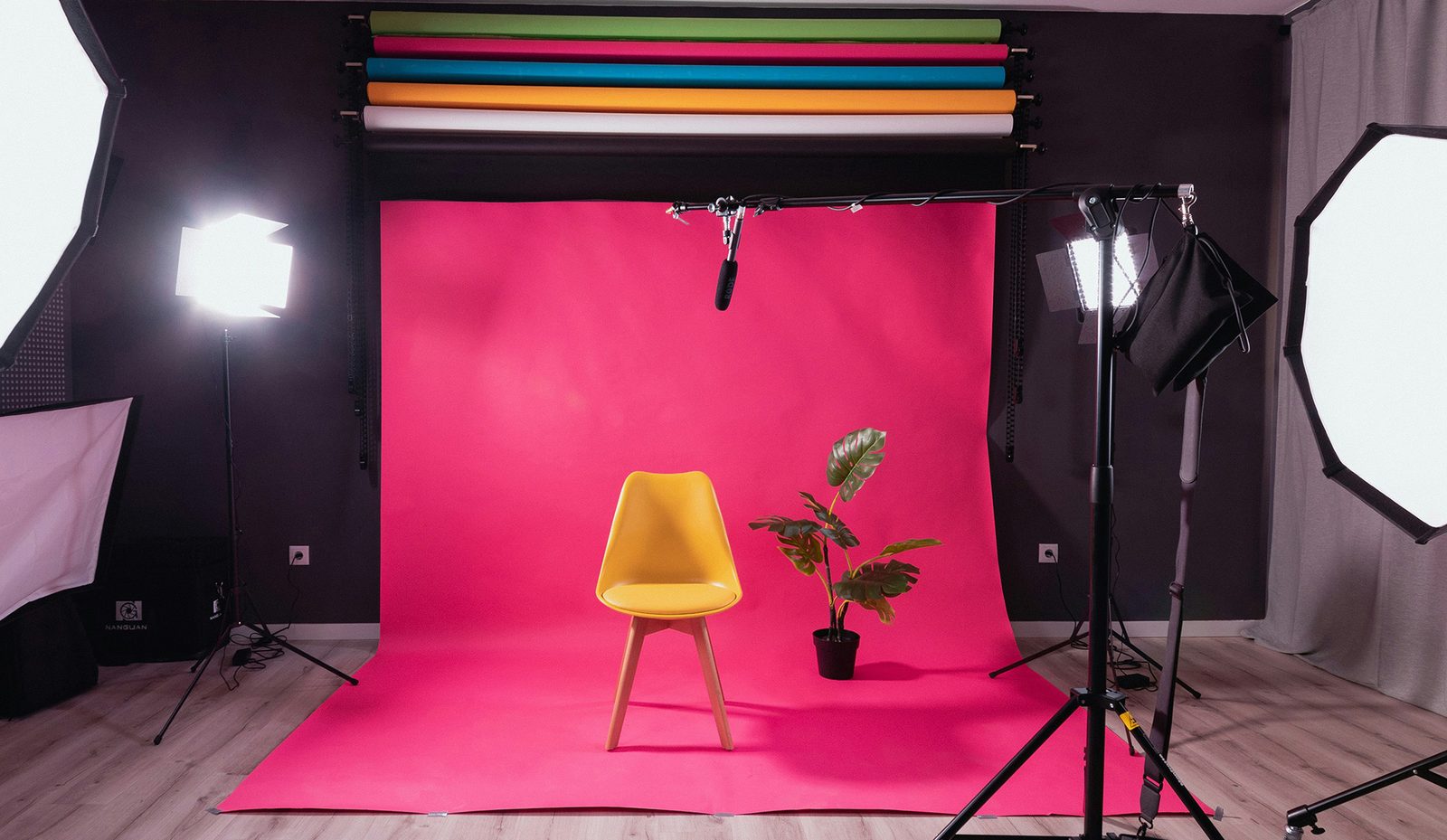
Beyond mere brightness, intensity directly influences the perceived saturation of colored backgrounds. As demonstrated through practical experimentation with various seamless paper rolls (e.g., Pure White, Deep Yellow, True Blue, Plum, Pecan, Orange, Flamingo), a change in light intensity significantly alters both the luminosity and chroma of the backdrop. A dimly lit colored background will appear desaturated and muted, conveying a somber or subtle mood. Conversely, a brightly lit colored background will pop with vibrant saturation, evoking energy, cheerfulness, or dramatic impact. For instance, a "Deep Yellow" backdrop, when minimally lit, might register as a dull ochre, but with increased intensity, it transforms into a radiant, almost golden hue. This control over saturation, achievable without changing the physical backdrop, offers immense creative flexibility and cost-effectiveness compared to purchasing numerous colored rolls.

Furthermore, varying background intensity can significantly impact the overall mood and separation of the subject. A background that is slightly darker than the subject creates a sense of depth and can make the subject "pop" forward, enhancing three-dimensionality. A background brighter than the subject can produce a high-key, airy, or ethereal feel. The precise calibration of this intensity ratio is crucial for achieving specific artistic visions, from dramatic low-key portraits where the background fades into obscurity, to vibrant high-key compositions where both subject and environment are brightly illuminated. Professional photographers frequently utilize incident light meters to measure background illumination independently of the subject, ensuring precise control over these critical intensity relationships and achieving the desired visual contrast.
Principle Two: Sculpting Space with Light Direction
While a studio backdrop might appear as a flat plane, the direction of light applied to it can create remarkable illusions of depth, dimension, and dynamic interest. Unlike subject lighting, where direction dictates shadows and highlights on a three-dimensional form, background lighting uses direction to sculpt the perception of the background itself.

In a controlled studio environment, directional options for a flat backdrop are often perceived as limited to a 180-degree arc in front of it. However, this perspective overlooks the power of light falloff and intentional placement. By positioning a single light source to illuminate only one side of the backdrop, rather than centering it, photographers can introduce a gradient effect. The area closer to the light will be brighter, gradually fading into a darker tone further away. This gradient adds visual interest, breaking the monotony of a uniformly lit background and creating a sense of subtle movement or depth. It can guide the viewer’s eye, subtly drawing attention towards the brighter side where the subject might be positioned, or away from a distracting element.
Beyond simple gradients, directional lighting can be used to emphasize texture on a backdrop, even subtle ones. A light raking across a textured surface will highlight its irregularities, creating dramatic shadows and tactile presence. Conversely, a flat, frontal light will minimize texture. In environmental photography, understanding natural light direction as a background element is paramount. A setting sun or a window light can act as a powerful directional background light, casting long shadows, creating dramatic highlights, and imbuing the scene with a specific time-of-day or atmospheric quality.
Sophisticated directional control also allows for precise subject separation. A carefully aimed background light can create a subtle halo or rim around the subject, helping them stand out from the background without creating harsh outlines. This is particularly effective when the subject and background share similar tonal values, preventing them from blending into one another. Tools like barn doors, flags, and gobos (go-betweens) are instrumental in shaping the light beam, allowing photographers to paint with light on the background, creating specific patterns, beams, or vignettes that further enhance the image’s compositional strength. For instance, a focused beam of light can create a spotlight effect on a specific area of the background, drawing the eye to a prop or design element that reinforces the narrative.

Principle Three: The Transformative Power of Light Quality
The quality of light, referring to its hardness or softness, its spectral characteristics (color), and its spread (focused or broad), offers the most ambiguous yet potentially most impactful avenue for background enhancement. It encompasses all modifications applied to the raw light output.
Hard vs. Soft Light:
The choice between hard and soft light for a background significantly alters the visual feel. A softbox or umbrella will diffuse light evenly across a backdrop, creating a smooth, uniform tone often preferred for classic portraits where the background should recede gently. Conversely, a bare strobe or a snooted light produces hard light, capable of creating dramatic hotspots, sharp shadows, and emphasizing texture with stark clarity. This can be used to create intentional patterns on the background, or to add a raw, edgy aesthetic that complements a particular subject or narrative.

Modifiers for Refined Control:
-
Grids and Snoots: These modifiers restrict the light spread, creating a focused beam. When applied to background lighting, they allow for selective illumination, creating spotlights, vignettes, or dramatic light cones. This precision control is invaluable for guiding the viewer’s eye. For example, to emphasize intricate eye makeup, a photographer might use a snoot with flags to create a narrow beam of light that diagonally intersects the background, pointing directly towards the subject’s eyes, without affecting the primary subject lighting. This technique adds an active, directional element to the background that supports the subject without distracting from it.
-
Gels: A Palette of Possibilities: Color gels are perhaps the most versatile tools for transforming background quality. They allow photographers to introduce color theory directly into their lighting setup, moving beyond monotonous solid backdrops.

- Color Theory Integration: By selecting gels that are complementary to the subject’s wardrobe or skin tone, photographers can create vibrant contrasts. Analogous colors can build harmonious, serene moods. Monochromatic schemes, where different shades of a single color are used for subject and background lighting, can create sophisticated, unified aesthetics.
- Mood Creation: Warm-colored gels (ambers, reds) can evoke feelings of warmth, passion, or aggression. Cool-colored gels (blues, greens) can suggest calm, melancholy, or futuristic themes. The subtle application of a gel can completely change the emotional resonance of an image without altering the subject’s primary lighting.
- Cost-Effectiveness and Versatility: Gels are significantly more affordable than purchasing multiple rolls of seamless paper. A small pack of gels can unlock an infinite spectrum of background colors and moods, offering unparalleled creative freedom and efficiency. This makes advanced color experimentation accessible to photographers with varying budgets.
- Advanced Gel Techniques: Layering gels, combining different colored gels on multiple background lights, or even projecting textured patterns with gobos and gels, can create complex, multi-dimensional backgrounds that become integral parts of the photographic composition.
Strategic Integration and Creative Implications
The true mastery of background lighting lies in the strategic integration of Intensity, Direction, and Quality. These principles are not isolated techniques but synergistic elements that, when combined, create a cohesive and impactful image. For example, a photographer might use a low-intensity, directionally off-center, gelled light to create a subtle, warm gradient on a background, evoking a sense of dawn or twilight, while keeping the subject brightly lit and sharp. This holistic approach ensures that the background actively contributes to the image’s narrative and aesthetic, rather than merely existing behind the subject.
The implications for various photographic genres are significant. In fashion photography, sophisticated background lighting can enhance the mood of a collection, create dynamic environments, or subtly guide the viewer’s eye towards specific garments. For portraiture, it allows photographers to craft bespoke atmospheres that reflect the subject’s personality or the desired emotional tone, moving beyond standard studio looks. In product photography, precise background lighting can emphasize product features, create appealing visual textures, or evoke a brand’s specific aesthetic.

Beyond artistic expression, mastering these techniques offers practical advantages. The ability to manipulate a single backdrop into countless variations through light alone translates to increased efficiency and resourcefulness in the studio. Photographers can achieve a wider range of looks with less equipment, saving both time and money. This deep understanding empowers photographers to move beyond technical proficiency, transforming light into a powerful tool for storytelling and artistic differentiation.
Conclusion: The Unseen Force of the Background
The journey through the principles of Intensity, Direction, and Quality reveals that background lighting is far more than a secondary consideration; it is a fundamental pillar of compelling photographic composition. By intentionally applying these principles, photographers gain unparalleled control over the mood, depth, and narrative of their images. From subtly shifting color saturation with intensity adjustments, to sculpting gradients with directional light, and transforming atmospheres with colored gels or focused beams, the background becomes an active, dynamic element in the photographic frame. This enriched perspective not only elevates the technical skill of the photographer but also expands their creative horizons, allowing them to craft images that resonate deeply with viewers and tell more complete, evocative stories. The unseen force of the background, when mastered, becomes an indispensable tool in the pursuit of photographic excellence.