The landscape of Business-to-Business (B2B) digital advertising has undergone a radical transformation leading into 2026, driven by a definitive shift toward video-first communication and a heightened demand for visual authenticity. As corporate decision-makers face an increasingly saturated digital environment, the efficacy of traditional, static lead-generation tactics has waned, replaced by high-impact video campaigns that prioritize immediate value and trust signals. Industry data from early 2026 suggests that B2B buyers now consume an average of 15 to 20 minutes of professional video content daily during the discovery phase of the procurement cycle. Consequently, the role of high-quality stock media has evolved from a mere budget-saving alternative to a strategic necessity for brands requiring operational velocity and cross-platform agility.
The Evolution of B2B Buyer Behavior and the Rise of Video
The primary challenge facing B2B marketers in 2026 is the "attention deficit" among executive-level prospects. Unlike Business-to-Consumer (B2C) audiences, B2B buyers are characterized by a strong reliance on first impressions and a need for logical, problem-solving narratives that justify capital expenditure. Research indicates that the average attention span for a sponsored B2B post on professional networks has shrunk to under three seconds. To combat this, brands have pivoted toward video ads that deliver a "hook" within the first 1.5 seconds.

The shift toward video-first marketing is most visible in the social media sphere. Platforms like LinkedIn, Meta, and even TikTok have integrated sophisticated B2B targeting tools, allowing companies to reach specific job titles and industries with surgical precision. However, the bottleneck for most firms remains content production. Traditional video shoots are often too slow and expensive to keep pace with the rapid iteration required for modern performance marketing. This has positioned stock media libraries, such as Shutterstock, as the backbone of the 2026 creative workflow.
Strategic Shift: Prioritizing Trust Over Aesthetics
A significant finding in 2026 marketing reports is that "over-produced" or "hyper-polished" visuals often result in lower conversion rates among B2B audiences. This phenomenon is attributed to a growing skepticism toward corporate "gloss." Today’s buyers favor authenticity and transparency—visuals that reflect real-life office environments, diverse teams, and genuine human interactions.
The modern B2B conversion engine relies on three core pillars:

- Authenticity: Messaging that acknowledges specific pain points through relatable scenarios.
- Immediate Value: Delivering a solution or a clear takeaway within the first ten seconds of playback.
- Transparency: Using visuals that signal a brand is grounded in reality, rather than hidden behind an idealized, artificial veneer.
Stock media has adapted to this trend by moving away from the "clichéd" office imagery of the early 2010s. Modern libraries now offer "UGC-styled" (User-Generated Content) professional footage that mimics the look and feel of organic social media posts while maintaining the high technical standards required for brand safety.
Platform-Specific Optimization: A Multi-Channel Approach
In 2026, a "one-size-fits-all" video strategy is no longer viable. High-converting campaigns must be tailored both technically and creatively to the specific requirements of the host platform.
Meta Ads (Facebook and Instagram)
For B2B brands utilizing Meta’s ecosystem, the focus is on "lifestyle-centric" business visuals. These ads perform best when they appear native to the user’s feed. Statistics show that vertical video formats (9:16) on Instagram Reels and Facebook Stories see a 35% higher click-through rate (CTR) than traditional landscape formats in the B2B sector. Stock media providers have responded by offering vast collections of vertical-first clips featuring candid professional interactions, remote work setups, and collaborative technology use.
YouTube Ads
YouTube remains the premier destination for mid-funnel B2B engagement. Here, "problem-solution" storytelling is the dominant format. High-converting YouTube ads often utilize scenario-based stock footage to visualize a specific business challenge—such as supply chain disruptions or cybersecurity threats—before presenting the product as the resolution. The ability to source diverse, scenario-specific clips allows marketing teams to build these narratives without the logistical burden of a multi-location film shoot.
Short-Form Campaigns (TikTok and Shorts)
TikTok has emerged as a surprising but potent channel for B2B discovery in 2026, particularly for SaaS and fintech brands. The requirement here is high-energy, fast-paced content that leverages "lo-fi" aesthetics. Stock footage that can be easily edited with text overlays and fast cuts is essential for brands looking to maintain a daily posting cadence without sacrificing quality.
Operational Velocity and the Scaling of Creative Efforts
One of the most critical metrics for marketing departments in 2026 is "operational velocity"—the speed at which a team can move from a campaign concept to a live, optimized ad. The competitive landscape requires brands to test multiple creative variations (A/B testing) simultaneously to identify which visuals resonate with specific industry segments.

By utilizing extensive stock libraries, creative teams can eliminate the "creative lag" associated with custom production. A marketing manager can download ten different clips representing different industries—healthcare, manufacturing, finance, and logistics—and deploy ten tailored ad sets within a single afternoon. This level of agility is what separates market leaders from laggards in the current economic climate.
The Role of Licensing Clarity in Mitigating Risk
As the volume of digital content explodes, the legal complexities surrounding media usage have intensified. In 2026, the risk of copyright infringement or "right of publicity" lawsuits is a significant concern for global enterprises. The legal bottleneck—where creative assets are held up by legal departments for weeks of verification—is a major hurdle to campaign efficiency.
Professional stock agencies like Shutterstock have addressed this by providing "indemnification-backed" licensing. This ensures that every person, property, and trademark appearing in a video clip has been properly cleared for commercial use. For B2B brands, this licensing clarity offers:
- Speed to Market: Bypassing lengthy internal legal reviews for every individual asset.
- Global Rights: Ensuring that a campaign launched in North America can be legally distributed across European and Asian markets without regional licensing conflicts.
- Model Releases: Guaranteeing that the individuals featured in the footage have consented to their likeness being used in a commercial context, which is vital for maintaining brand reputation.
The Authenticity Paradox in the Age of AI
The year 2026 marks a turning point in the relationship between human-centric media and Artificial Intelligence. While AI-generated video has become more accessible, it has also led to an "authenticity crisis." Many B2B buyers have developed a subconscious "uncanny valley" filter, where they instinctively distrust visuals that appear too perfect or lack genuine human nuance.
In this environment, "real" stock media—captured by human cinematographers featuring human actors—has become a premium trust signal. Brands that rely on authentic stock footage are seeing higher engagement rates than those utilizing purely AI-generated environments. However, the most successful firms are using a hybrid approach: using AI tools to edit, color-grade, and format real-world stock footage, thus combining the efficiency of AI with the soul of human-captured media.
Broader Impact and Industry Implications
The reliance on high-quality stock media for B2B conversions has broader implications for the creative economy. We are seeing a professionalization of the stock contributor network, where cinematographers are producing niche, industry-specific content that was previously only available via custom commissions. This includes high-resolution footage of specialized medical procedures, advanced manufacturing robotics, and sustainable energy infrastructure.
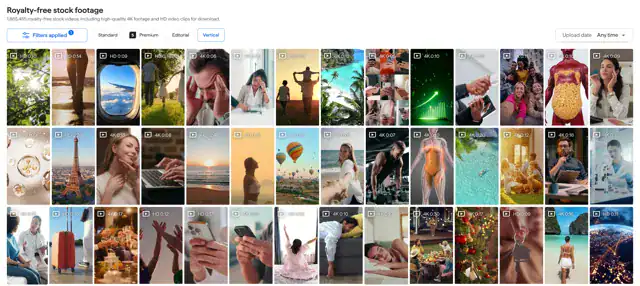
Furthermore, the democratization of high-quality video assets has leveled the playing field. Small-to-Medium Enterprises (SMEs) can now produce B2B video ads that rival the production value of Fortune 500 companies. This shift is driving increased competition across all B2B sectors, forcing brands to focus more on the quality of their value proposition and the clarity of their messaging rather than just the size of their production budget.
Conclusion: The Path Forward for B2B Marketers
As we look toward the remainder of 2026, the integration of stock media into the B2B marketing stack is no longer optional. The data is clear: video drives conversions, authenticity builds trust, and operational speed wins market share. By leveraging quality-assured libraries, brands can navigate the complexities of multi-platform advertising while maintaining the legal safeguards and creative standards necessary for professional B2B engagement.
The focus has moved definitively from "perfection" to "performance." In the high-stakes world of B2B sales, the brands that can most effectively use visual storytelling to simplify complex solutions and signal reliability will be the ones that thrive. Stock media provides the raw materials for this storytelling, enabling a level of scale and precision that was previously unimaginable in the corporate advertising space.