The Evolution of the Creative Workflow
The traditional workflow for digital marketing was historically fragmented. For over a decade, the process involved searching for a stock image, purchasing and downloading the file, opening a resource-intensive local application like Adobe Photoshop, performing edits, and finally exporting the asset for social media or web use. This "multi-hop" process created significant friction, particularly for small-to-medium enterprises (SMEs) that lacked dedicated design departments.
Shutterstock Editor was introduced to bridge this gap. By embedding a design workspace directly within the browser, the platform effectively removed the download-and-upload cycle. Since its initial launch and subsequent iterations, the tool has evolved from a basic cropping utility into a comprehensive design environment. This evolution corresponds with the rise of "content velocity"—the speed at which brands must produce and iterate on visuals to remain relevant in algorithmic feeds like Instagram, TikTok, and LinkedIn.

Core Functionalities and Technical Integration
The power of the Shutterstock Editor lies in its integration with the company’s massive library of over 400 million images and vectors. Unlike standalone design tools where users must source assets externally, the Editor allows for seamless transition from discovery to modification.
1. Template-Driven Design
The platform provides a library of professionally designed templates tailored to specific industry standards. These include pre-sized layouts for Facebook ads, Instagram Stories, YouTube thumbnails, and LinkedIn banners. By starting with a template, users avoid the common pitfall of "blank canvas syndrome," ensuring that their compositions follow established design principles regarding hierarchy, balance, and white space.
2. Intelligent Resizing and Aspect Ratio Management
One of the most significant technical hurdles for non-designers is managing different aspect ratios across various social platforms. The "Smart Resize" feature utilizes automated scaling to adapt a single design into multiple formats. For instance, a square Instagram post can be converted into a vertical Story or a horizontal web banner with minimal manual adjustment. This feature addresses the "repurposing" needs of modern marketing, where a single campaign must exist in dozens of different dimensions simultaneously.

3. Brand Kit and Visual Identity Preservation
Consistency is the cornerstone of brand trust. The Editor includes a "Brand Kit" functionality that allows users to upload and store brand-specific assets, including logos, custom color hex codes, and specific typography. This ensures that every piece of content produced—regardless of which team member creates it—adheres to the company’s visual identity. In a journalistic and corporate context, this minimizes the risk of brand dilution.
The Role of Artificial Intelligence in Modern Editing
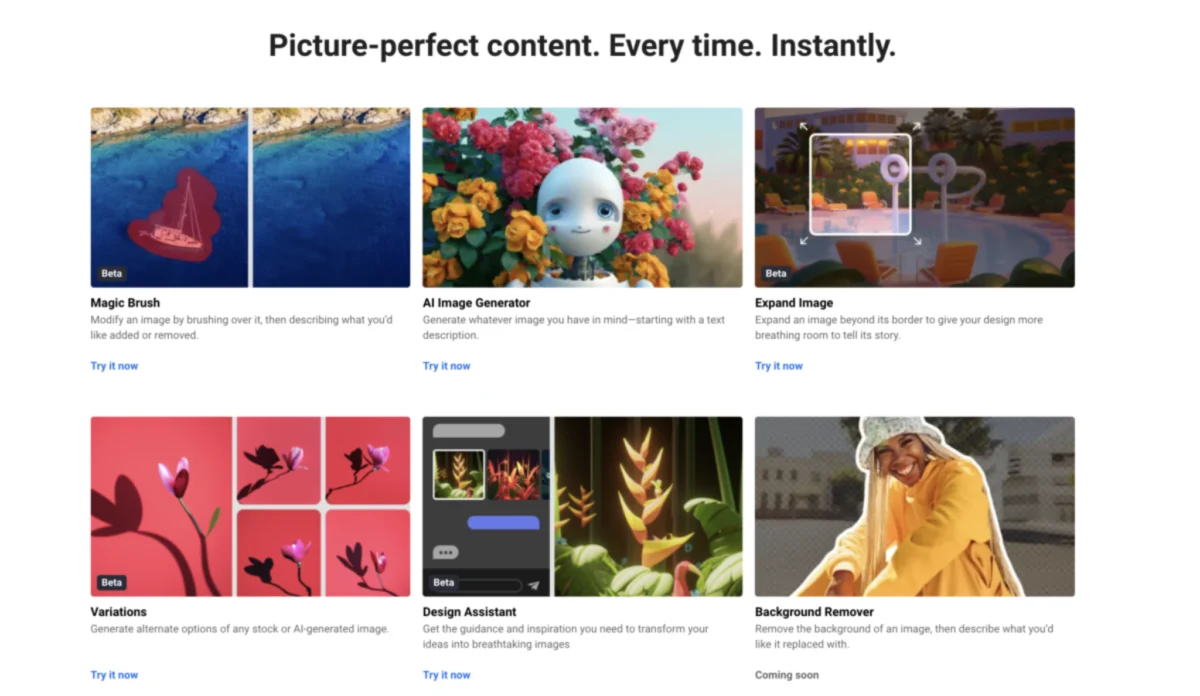
In recent years, Shutterstock has aggressively integrated artificial intelligence into its editing suite. This move is part of the broader "Shutterstock Creative Flow" initiative, which aims to automate the more tedious aspects of design.
One of the most prominent AI features is the automated background removal tool. Historically, "cutting out" an object from a complex background required precise path-making in professional software. Shutterstock’s AI-powered engine performs this task in seconds, allowing users to isolate subjects and place them into new compositions. Additionally, the Editor leverages AI for "predictive performance" insights in some regions, helping users understand which types of imagery are likely to perform best for specific audiences based on historical data.

Chronology of Development: From Library to Ecosystem
To understand the current impact of the Shutterstock Editor, it is necessary to examine the company’s chronological shift toward a full-service creative ecosystem:
- 2003–2010: Shutterstock establishes itself as a leading provider of royalty-free stock photography, focusing on volume and searchability.
- 2016: The initial launch of Shutterstock Editor. The tool was positioned as a simple way for users to "try before they buy," allowing for basic edits on watermarked images.
- 2018–2020: The platform introduced more robust features, including templates and the ability to upload custom logos, moving closer to the functionality of competitors like Canva.
- 2021: Acquisition of PicMonkey. This strategic move brought advanced photo editing and design capabilities into the Shutterstock fold, significantly enhancing the Editor’s feature set.
- 2022–Present: Launch of "Creative Flow." This integrated suite combines the Editor with AI image generation, content calendars, and data-driven insights, representing the culmination of the company’s transition into a SaaS provider.
Market Context and Competitive Landscape
The rise of browser-based editing tools is a direct response to the "Prosumer" market. While Adobe remains the industry standard for professional designers, tools like Shutterstock Editor, Canva, and Adobe Express cater to the 90% of business users who need "good enough" design delivered quickly.
According to industry data, the global stock image market is expected to grow significantly, but the value is increasingly shifting toward "value-added services." By providing an editor, Shutterstock increases user retention. Once a business has its brand assets, templates, and history stored within the Shutterstock ecosystem, the "switching cost" to another stock provider becomes much higher. This ecosystem-lock is a common strategy in the tech industry, mirroring the models used by Google Workspace and Microsoft 365.

Economic Impact on Small Businesses and Solopreneurs
For the solopreneur or the small business owner, the economic implications of the Shutterstock Editor are measurable in both time and capital.
- Reduced Software Overhead: A subscription to professional design suites can cost hundreds of dollars annually per user. By using a built-in editor, businesses can consolidate their spending.
- Labor Efficiency: A task that might take a freelance designer two hours to turn around—such as adding text to an image and resizing it for three platforms—can be completed by an in-house marketing coordinator in fifteen minutes using the Editor.
- Licensing Compliance: Using an integrated editor ensures that the images being used are properly licensed. The Editor automatically tracks which assets have been purchased, reducing the legal risk associated with using unlicensed imagery found on the open web.
Official Responses and Strategic Vision
Shutterstock leadership has frequently emphasized that their goal is to be a "one-stop shop" for creativity. In various investor communications, the company has highlighted that the integration of editing tools is designed to "remove the friction between having an idea and seeing it published."
The company’s focus on "Creative Flow" suggests that the Editor is no longer viewed as an "extra" feature, but as the central hub where users spend their time. By keeping users on the platform longer, Shutterstock can better analyze user behavior to improve its search algorithms and AI generation models.

Broader Impact and Future Implications
The long-term impact of tools like the Shutterstock Editor is the further blurring of the line between "stock" and "original" content. As editing becomes more accessible, the "raw" stock photo is increasingly just a starting point. Users are layering text, applying brand-specific filters, and using AI to modify the original asset until it becomes a unique piece of brand collateral.
Furthermore, the integration of video editing into this browser-based environment is the next frontier. As social media pivots toward video-first content (Reels, Shorts, TikToks), the demand for "Shutterstock Editor for Video" has grown. The company has already begun integrating basic video trimming and text-overlay features, suggesting that the "Hidden Power" of the browser will soon extend into the realm of motion graphics.
In conclusion, the Shutterstock Editor represents a paradigm shift in the creative industry. It acknowledges that in the modern digital economy, the value of an image is not just in its aesthetic quality, but in its versatility and the speed at which it can be deployed. By empowering users to create on-brand visuals without leaving their browser, Shutterstock has transformed from a mere warehouse of images into an essential engine of digital commerce. For businesses looking to compete in an increasingly visual marketplace, the ability to iterate rapidly while maintaining professional standards is no longer a luxury—it is a requirement for survival.