Technical Evolution and the Rise of Mobile Street Photography
The democratization of photography through the iPhone has led to a surge in urban documentation. According to industry data, over 90% of all photos taken globally are now captured on smartphones. For street photographers, the iPhone offers a level of discretion that large DSLR cameras cannot match. In adverse weather conditions, this portability is amplified. The ability to quickly pull a device from a pocket, capture a frame, and return it to a dry environment allows for a reactive style of shooting that aligns with the "decisive moment" philosophy popularized by Henri Cartier-Bresson.
Furthermore, Apple’s integration of computational photography—specifically Smart HDR and Deep Fusion—has mitigated many of the traditional challenges of low-light and high-contrast environments common in stormy weather. These systems automatically blend multiple exposures to preserve detail in both the bright reflections of a rain-slicked street and the deep shadows of an urban alleyway.
A Chronology of the Bad-Weather Shoot: Preparation and Execution
A successful street photography session in adverse conditions follows a logical progression from meteorological monitoring to post-production.
Phase 1: Pre-Departure and Equipment Check
Professional mobile photographers monitor localized weather apps such as Dark Sky or AccuWeather to identify the exact window of transition—when a storm begins or ends. Preparation involves ensuring the iPhone is fully charged, as cold temperatures during snow can accelerate battery depletion. While modern iPhones are water-resistant, photographers often employ a microfiber cloth to keep the lens clear of droplets that can cause unwanted blurring or light refraction.
Phase 2: Field Execution and Tactical Positioning
Once on-site, the photographer must identify "fishing holes"—static locations with strong architectural lines where they can wait for a subject to enter the frame. This reduces the physical strain of navigating slick streets and allows for more precise compositional planning.
1. Leveraging Rain as a Narrative Tool
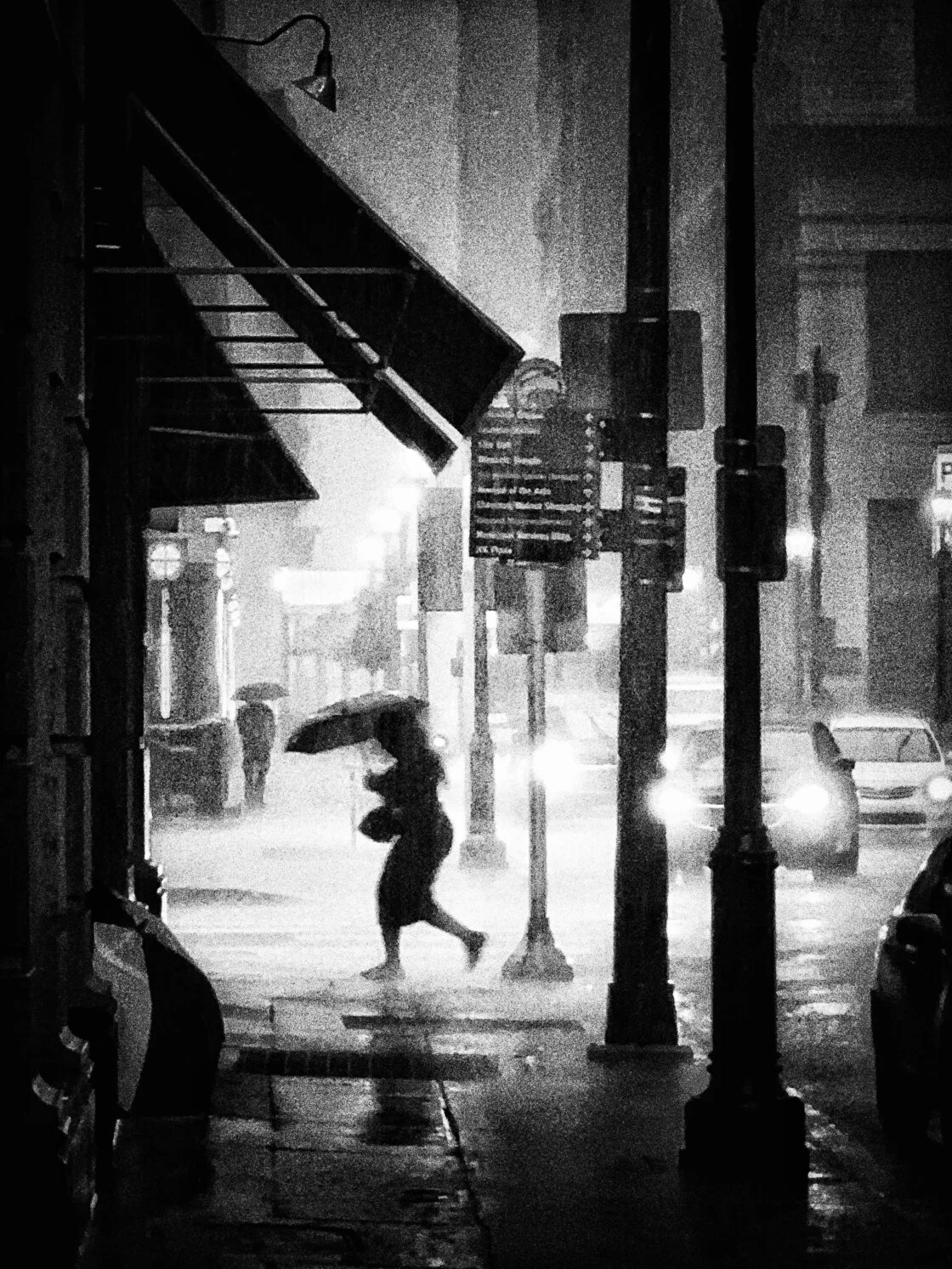
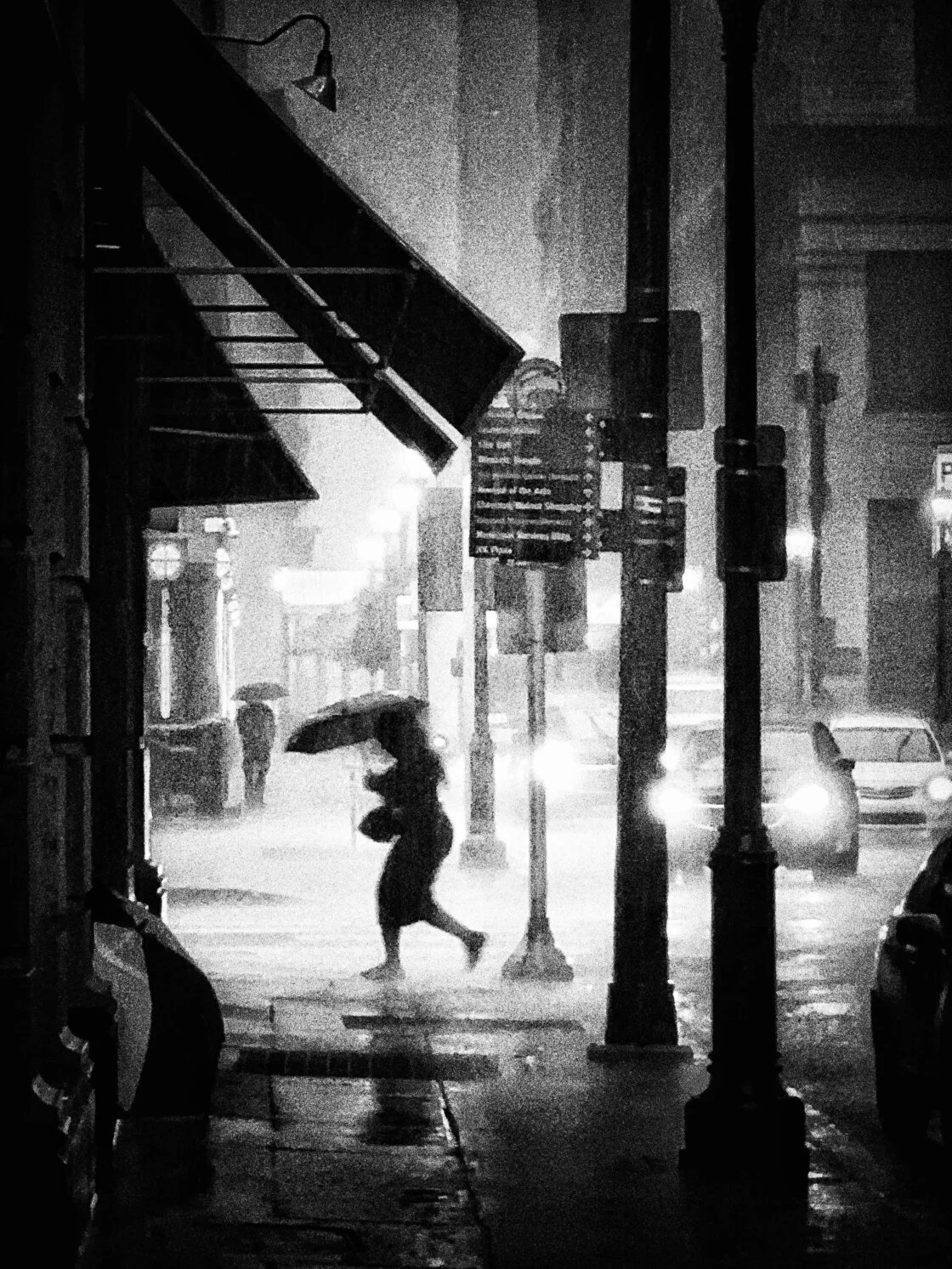
Rain transforms the urban environment into a reflective, high-contrast stage. Journalistic observation suggests that rainy conditions alter human behavior, creating "storytelling moments" as pedestrians interact with the elements. Umbrellas, for instance, serve as more than just functional tools; they provide bold geometric shapes and vibrant color pops against the gray backdrop of a storm.
To maximize these opportunities without risking equipment, photographers often utilize urban "blind spots"—bus stops, awnings, and archways. These locations provide a dry vantage point from which to observe the street. The contrast between the dark, sheltered area and the bright, wet street creates a natural frame, drawing the viewer’s eye toward the movement in the center of the image.
2. Macro Perspectives: Shooting Through Glass
One of the most effective techniques for atmospheric street photography involves using glass as a secondary lens. By positioning the iPhone lens close to a window covered in raindrops—such as those in a cafe or on a public bus—the photographer can create a multi-layered composition.
Technically, this requires manual focus intervention. By tapping the screen to lock focus on the droplets themselves, the background scene becomes a soft, impressionistic blur. This technique leverages the iPhone’s wide aperture to create a shallow depth of field, a look traditionally associated with high-end prime lenses.
3. The Physics of Puddle Reflections
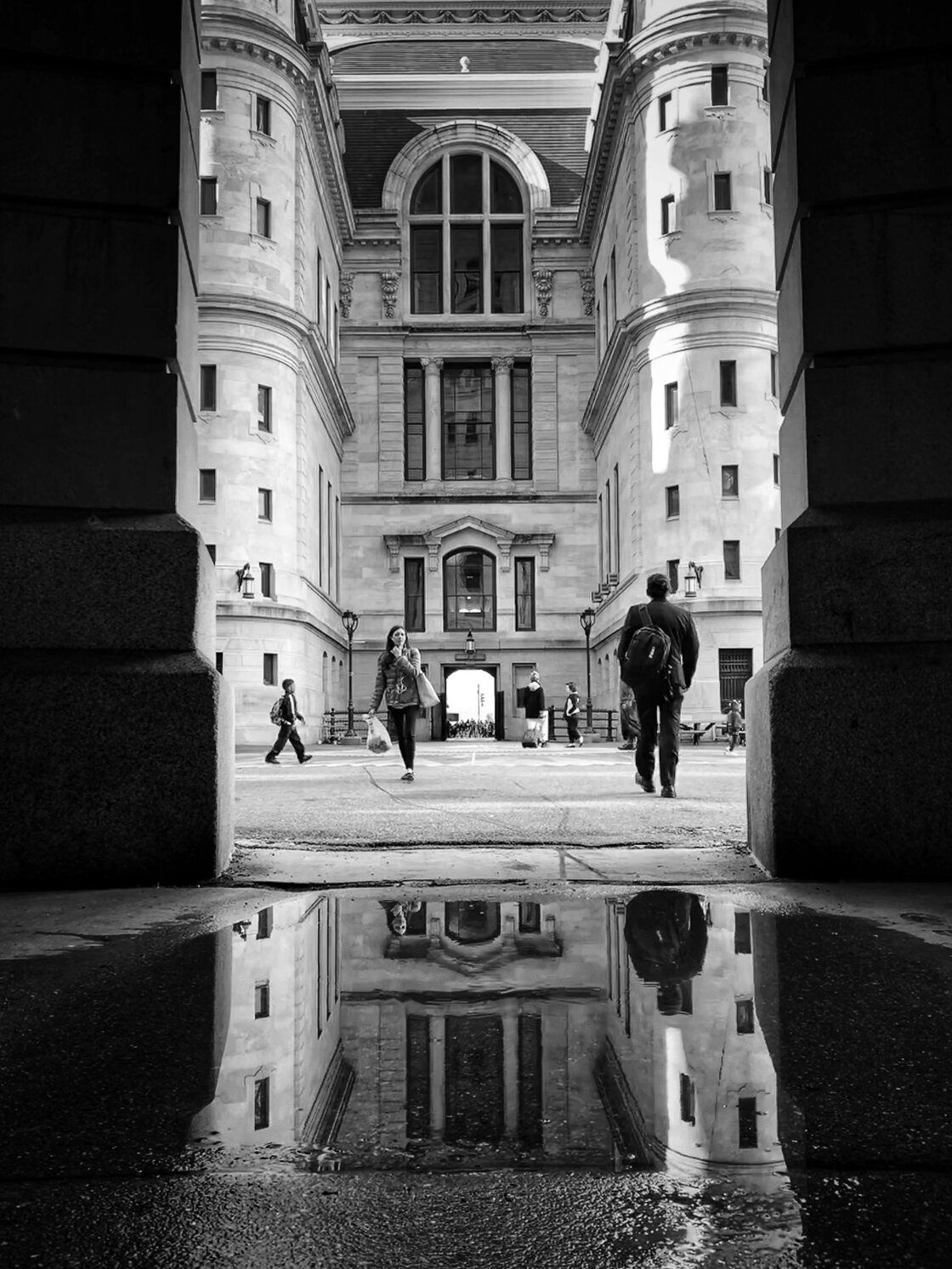
Post-rain conditions offer a unique opportunity for symmetry through puddle reflections. This requires a low-angle approach. To achieve the best results, photographers often invert their iPhones, placing the camera lens as close to the water’s surface as possible. This minimizes the "gap" between the subject and the reflection, creating a seamless symmetrical image.
Data from composition studies suggest that symmetry is one of the most powerful tools for engaging a viewer’s attention. By capturing a building or a pedestrian reflected in a street-level pool, the photographer provides a perspective that is rarely seen by the casual observer.
4. Advanced Composition: The Inversion Technique
In the editing phase, reflection photos can be enhanced by a simple 180-degree rotation. By flipping the image so the reflection appears at the top and the "real" world at the bottom, the photographer creates a surreal, disorienting effect. This forces the viewer to linger on the image to decipher its orientation, a key metric in successful visual communication.
5. Snow Photography and the Challenge of White Balance
Snow offers a complete visual reset of the city, stripping away distracting colors and replacing them with a minimalist white palette. However, snow presents a significant technical challenge for the iPhone’s internal light meter. Because camera sensors are calibrated to "18% gray," a frame filled with bright white snow often results in an underexposed, "muddy" image.
To counteract this, photographers must manually override the exposure. By tapping the subject and swiping up on the sun icon, the exposure is increased, ensuring the snow remains white while maintaining detail in the subject. This manual adjustment is crucial for maintaining the "airy" aesthetic of a winter scene.
6. Capturing Motion and Storytelling in Winter
The physical struggle of navigating snow provides rich subject matter. Photographers look for "gestures"—the hunch of a shoulder against the wind or the sweep of a snow shovel. These actions convey the human condition in a way that static, fair-weather photos cannot. Using the iPhone’s "Burst Mode" is essential here; by holding or dragging the shutter button, the camera captures 10 frames per second, allowing the photographer to select the exact moment of peak action or the perfect stride of a pedestrian.
7. Atmospheric Depth through Fog
Fog acts as a natural "diffuser," softening light and hiding distracting background elements. This creates a sense of "atmospheric perspective," where objects closer to the camera are dark and sharp, while those further away gradually fade into the gray.
For the most impactful fog photos, a strong foreground subject is required to anchor the composition. A lone figure walking into the mist creates a sense of mystery and solitude. Furthermore, fog is ideal for capturing "leading lines"—roads, bridges, or fences that recede into the distance, providing the image with a profound sense of depth.
8. The Strategic Use of Silhouettes
In low-visibility conditions like fog or heavy rain, fine detail is often lost. Rather than fighting this, experienced photographers lean into it by creating silhouettes. By exposing for the bright background (the fog or a street lamp), the subject in the foreground becomes a dark, graphic shape. This strips the subject of their identity, turning them into a universal symbol that any viewer can identify with.
9. Post-Processing: The Power of Black and White
The final step in the bad-weather workflow is often the removal of color. Rainy and foggy days are naturally monochromatic. By converting these images to black and white in apps like Adobe Lightroom, Snapseed, or the specialized "Blackie" app, the photographer emphasizes texture, contrast, and form over hue.
Black and white editing is particularly effective for urban scenes where artificial light sources—car headlights or neon signs—create high-contrast "hot spots." This aesthetic pays homage to the history of film noir and classic street photography, lending the iPhone image a timeless, archival quality.
Broader Impact and Implications for Modern Art
The shift toward bad-weather photography represents a broader trend in the art world: the move away from perfection and toward "mood" and "atmosphere." As social media platforms become saturated with hyper-saturated, idealized images, the raw, gritty, and emotive nature of bad-weather street photography stands out.
From a journalistic perspective, these images serve as a more accurate record of urban life. They document the resilience of city dwellers and the changing character of the environment. As climate patterns become more volatile, the ability to document these shifts through the lens of a ubiquitous mobile device ensures that the story of the modern city is told in all its conditions—not just the sunny ones.
Andrew Gimblet’s work serves as a case study for this movement. By focusing on the "lone figure" against the "Philadelphia backdrop," he highlights the intersection of technology and fine art. His approach demonstrates that the iPhone is no longer just a communication device; it is a sophisticated tool for environmental documentation and artistic expression, capable of turning a "bad" day into a masterpiece of street photography.