The stark, ethereal beauty of Norway’s fjords often conceals a raw power that few observers are privileged to witness. For weeks, a team of wildlife photographers and researchers had navigated these challenging waters, their primary objective to document the elusive orca pods that frequent the northern coasts. The prevailing conditions were a testament to the Arctic’s unforgiving nature: extended periods of darkness, with daylight hours reduced to a mere "pink glow" at midday, coupled with frigid temperatures and turbulent seas. Despite the persistent pursuit, sightings of the iconic black fins slicing through the choppy waters were infrequent, and moments of extraordinary behavior even rarer.
The expedition’s initial phases were characterized by the humbling reality of their quest. Orcas, particularly those found in Norwegian waters, are known for their more reserved nature compared to their counterparts in British Columbia, who are frequently observed breaching and exhibiting acrobatic displays. Norwegian orcas, while still powerful predators, typically engage in less overt surface activity. This distinction made the eventual, spectacular event all the more significant.
The breakthrough occurred on a particularly unexceptional morning. The team was tracking a pod at a considerable distance. Initial observations suggested a quiescent gathering, with only the presence of large male orcas discernible. The vastness of the ocean and the limited visibility offered little to suggest the imminent display of natural power that would soon unfold. This relative calm, however, was about to be shattered.
A Sudden Transformation: The Feeding Frenzy
The shift from dormancy to explosive activity was abrupt and unexpected. Something, an unseen catalyst, triggered a profound change within the orca pod. Though still distant, their behavior became unmistakably animated, indicative of a feeding frenzy. This sudden surge of energy immediately galvanized the observation team.
"We came alive, our senses suddenly alert and active, as if flicked on by a switch," recounted one of the observers, a sentiment echoed by the entire team present. The vessel immediately accelerated, its crew working meticulously to maintain a safe and respectful distance from the now highly active animals. They navigated at approximately 20 knots, matching the speed of the orcas’ dynamic movement. Crucially, for the first time during their observation period, the conditions aligned favorably. The typically rough waters had calmed, and the sea surface was cooperative, offering a rare opportunity for clear observation and photography.

The Majestic Breach: A Spectacle of Power
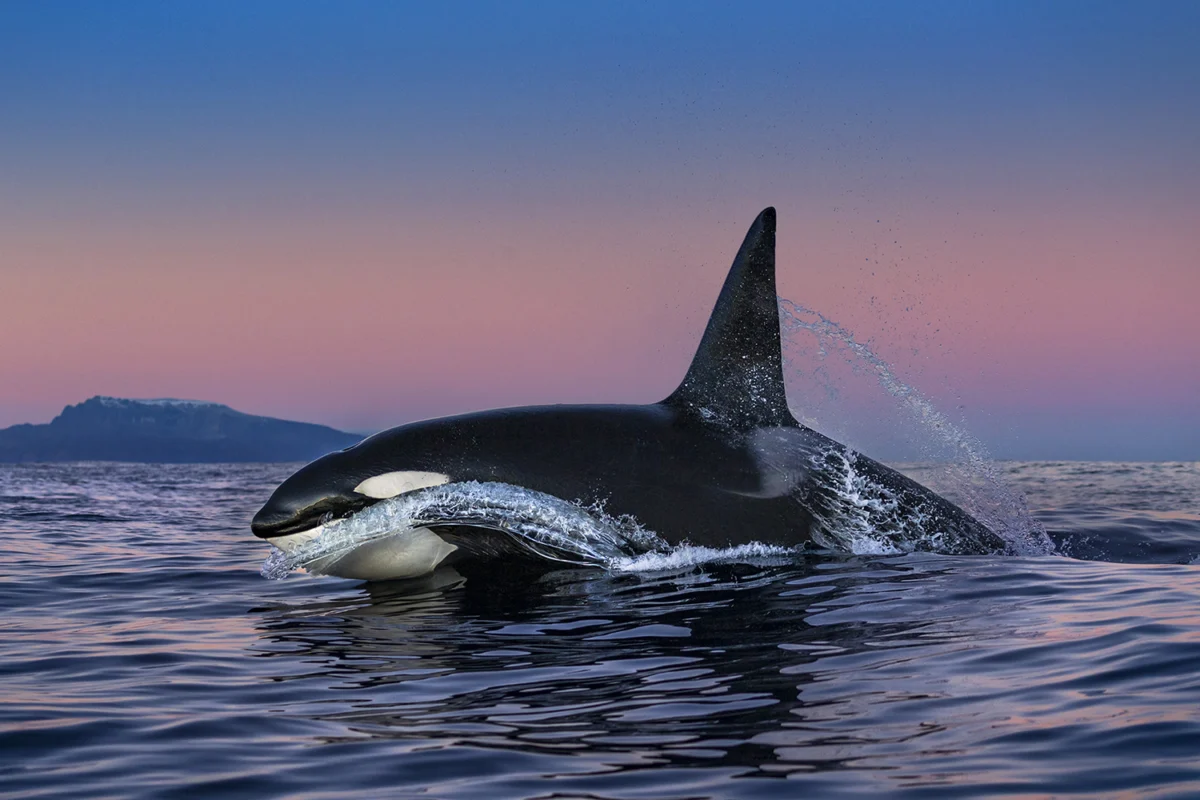
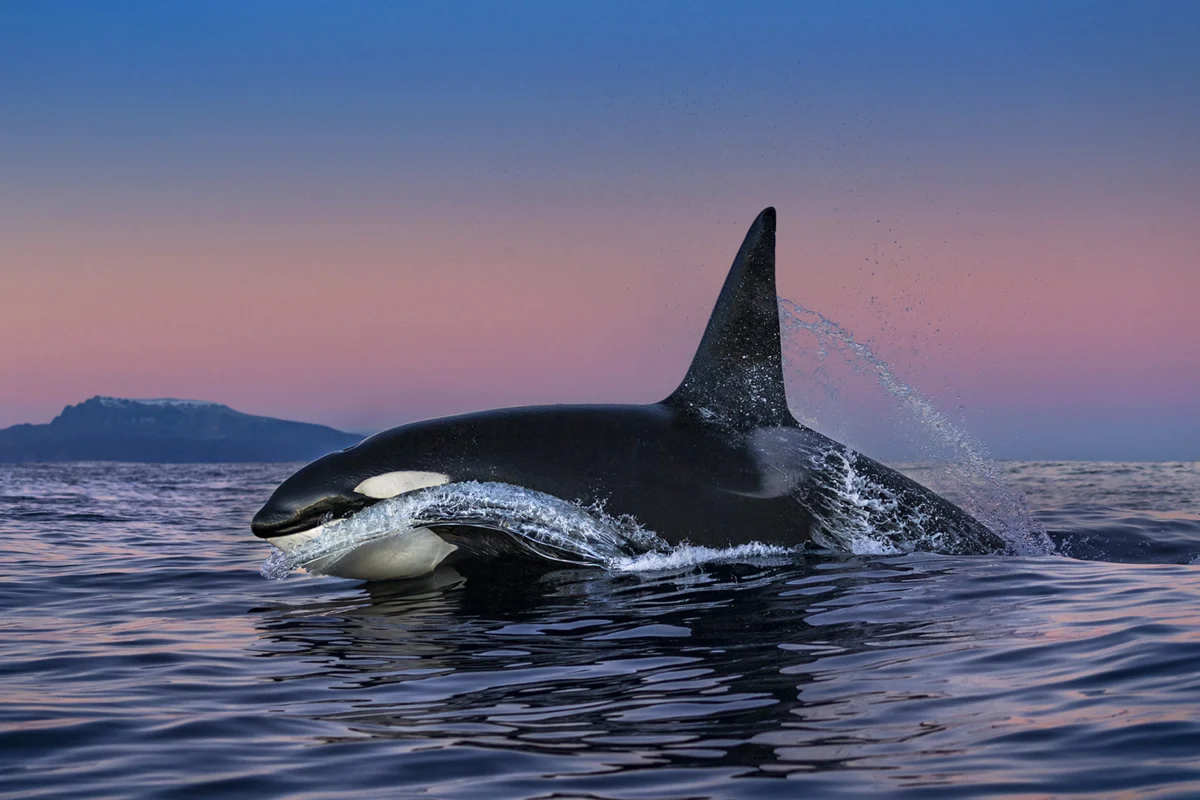
It was then that a particularly massive male orca, estimated to weigh around 12,000 pounds and measure approximately 25 feet in length, began to porpoise with astonishing speed and intensity. The term "porpoising" in cetacean behavior refers to a rapid, successive leaping and diving through the water, often indicative of high energy levels or pursuit of prey. In this instance, the orca’s movements were so powerful that it appeared as if explosions of water were emanating from its body with each surge.
The visual impact was immense. The orca’s dorsal fin, standing six feet tall, and its pectoral fins, described as being the size of a car hood, were starkly silhouetted against the marine environment. The sheer force of its leaps created a dramatic spray, a testament to its raw strength and agility.
Capturing the Moment: The Art and Science of Wildlife Photography
The photographic challenge presented by this event was substantial. The low light conditions, typical of the Arctic winter, demanded a delicate balance between achieving a fast enough shutter speed to freeze the rapid motion and capturing sufficient light to render the image clearly. The sky, as if to complement the drama unfolding below, had transformed into a canvas of soft pink and orange hues, with the majestic Norwegian mountains forming a dramatic backdrop on the horizon.
Photographers often face a critical decision in such moments: prioritizing shutter speed to prevent motion blur or aperture settings to manage depth of field and light. In this specific instance, the combination of the atmospheric light and the orca’s explosive movements necessitated a rapid shutter speed.
"With single-lens reflex cameras, it was always hard to tell I was getting the shot or not," one photographer noted. The mechanical process of a DSLR camera involves a mirror that lifts and a shutter that opens and closes for each frame. This brief period, often happening ten times per second when shooting at high frame rates, renders the photographer temporarily "blind" to the live view. The uncertainty of capturing the perfect shot amidst such a fleeting and dynamic event is a familiar challenge for professionals.
However, on this occasion, the photographer expressed a sense of profound relief and satisfaction. "It was one of those occasions when, after it is over – a split second that passes by in the blink of an eye – I was able to sit down quietly in the back of the boat, safe in the knowledge that I likely did get the shot." The successful capture of the image was attributed in part to the skilled piloting of the boat by Goran, a colleague who had masterfully maintained the optimal distance and speed, allowing for unparalleled photographic opportunities.

The Verdict: A Perfect Capture
Upon reviewing the captured images on the camera’s LCD screen, the photographer experienced a moment of profound clarity. The entire composition, the "whole package," as described, was present. The intricate details, such as the water droplets cascading off the orca’s eye and running down its sleek body, were rendered with remarkable sharpness. The interplay of light, the moody atmosphere, and the vibrant colors all converged to create what was deemed a "perfect" photograph.
The initial apprehension about the sharpness of the image, given the challenging low-light conditions and the extreme speed of the subject, dissipated upon closer inspection. The photographer scrolled through the images, "just waiting for that mistake that told me I had failed somehow. It never came." This confirmed the exceptional quality of the photographs, a testament to both the photographer’s skill and the opportune confluence of natural elements.
Broader Implications and Context
This event highlights several key aspects of marine biology and wildlife photography:
- Orca Behavior in Norwegian Waters: The observation reinforces the understanding that Norwegian orcas, while powerful, exhibit different behavioral patterns than those in other regions. Their less frequent breaching does not diminish their predatory prowess, as evidenced by the dramatic feeding frenzy.
- The Importance of Environmental Conditions: The successful documentation of this event underscores the critical role of favorable environmental conditions in wildlife observation. The calm waters and specific lighting of that particular morning were instrumental in enabling the photographers to capture such high-quality images.
- Technological Advancements in Photography: While the photographer noted the inherent challenges of DSLR technology in fast-paced wildlife photography, the ultimate success of capturing the sharp, detailed images speaks to the continued evolution of camera technology, enabling photographers to document increasingly challenging subjects.
- The Value of Patience and Persistence: The weeks of unsuccessful searching preceding this moment underscore the dedication required in wildlife research and photography. Such fleeting moments of spectacular natural behavior are the reward for sustained effort and a deep understanding of animal ecology.
The Enduring Gift of Nature
The photographer concluded by reflecting on the profound significance of such encounters. These moments, when nature’s raw beauty is translated through the lens of a camera, are described as "gifts." They represent "a perfect little bottle of light and time that will live on forever," preserving a fleeting spectacle for wider appreciation and scientific understanding. The successful capture of this orca’s dramatic feeding frenzy serves as a powerful reminder of the wild, untamed beauty that still exists in the world’s remote corners, waiting to be discovered and shared.
The research team, by enduring the harsh conditions and demonstrating remarkable patience, has provided a valuable contribution to our understanding and appreciation of these magnificent marine mammals. The images and the narrative surrounding their capture offer a compelling glimpse into the dynamic lives of Norwegian orcas, a testament to the enduring power and beauty of the natural world. The successful documentation of this event will undoubtedly contribute to ongoing conservation efforts and public awareness regarding the importance of protecting these marine ecosystems.