The allure of the forbidden, the whispered warnings to avoid the westernmost reaches of Oahu, beckoned photographers Cristina Mittermeier and Paul Nicklen. Driven by a National Geographic deadline and a photographer’s instinct for the authentic, they ventured where tourists were discouraged, seeking a glimpse into one of Hawaii’s last bastions of traditional culture. What they found defied expectations, transforming a professional assignment into a profound connection with a community that embodies the true spirit of Aloha, a spirit defined by the Hawaiian proverb, "E hele me ka puʻolo," meaning to make every person, place, or condition better than before, always.
This journey, initially undertaken with the expectation of encountering suspicion and wariness, revealed a depth of generosity, warmth, and unparalleled hospitality from the residents of the West Side of Oahu. Mittermeier and Nicklen’s experience underscores a critical point often missed by casual visitors: that beneath a guarded exterior, forged by historical challenges and a fierce desire to protect their heritage, lies a community deeply rooted in ancestral traditions and a profound connection to the land and sea.
Unveiling the Cultural Tapestry of Oahu’s West Side
The western shores of Oahu, particularly areas like Makaha, are not merely picturesque landscapes; they are living museums of Hawaiian culture. The narrative of this region is deeply intertwined with the history of the Hawaiian people, a history marked by periods of immense prosperity, devastating loss, and resilient survival. By the time of Hawaii’s annexation in 1898, the native Hawaiian population had dwindled to approximately 40,000, a stark decline attributed to introduced diseases and the conflicts of the colonial era. In the century since, generations have strived to maintain and pass on the fragile threads connecting them to their ancestors and ancestral lands.

The communities along the West Side have navigated significant socio-economic challenges. Reports from various Hawaiian community organizations have consistently highlighted ongoing struggles with addiction, violence, and homelessness, issues that have fractured families and strained community resources. Despite these adversies, the core of these communities remains steadfastly connected to the rhythm of the ocean, a force that has shaped their lives and traditions for millennia.
This deep connection is evident in the preservation of traditional crafts and practices. In Makaha, surfboard shapers continue to handcraft boards, a deliberate act of resistance against the impersonal efficiency of mass production. This dedication to artisanal skill is a testament to a commitment to preserving the integrity of their heritage. Similarly, wayfinders are being trained to read the stars, a skill honed by ancient Polynesian voyagers, ensuring that this invaluable knowledge is not lost to the modern world. For these communities, surfing transcends mere sport or lifestyle; it is an intrinsic part of their identity, a spiritual connection that flows through their bloodlines. The demographic makeup of these areas is predominantly of Polynesian descent, comprised of respected watermen and women whose ties to the land and sea are ineffable.
Encounters with Cultural Guardians
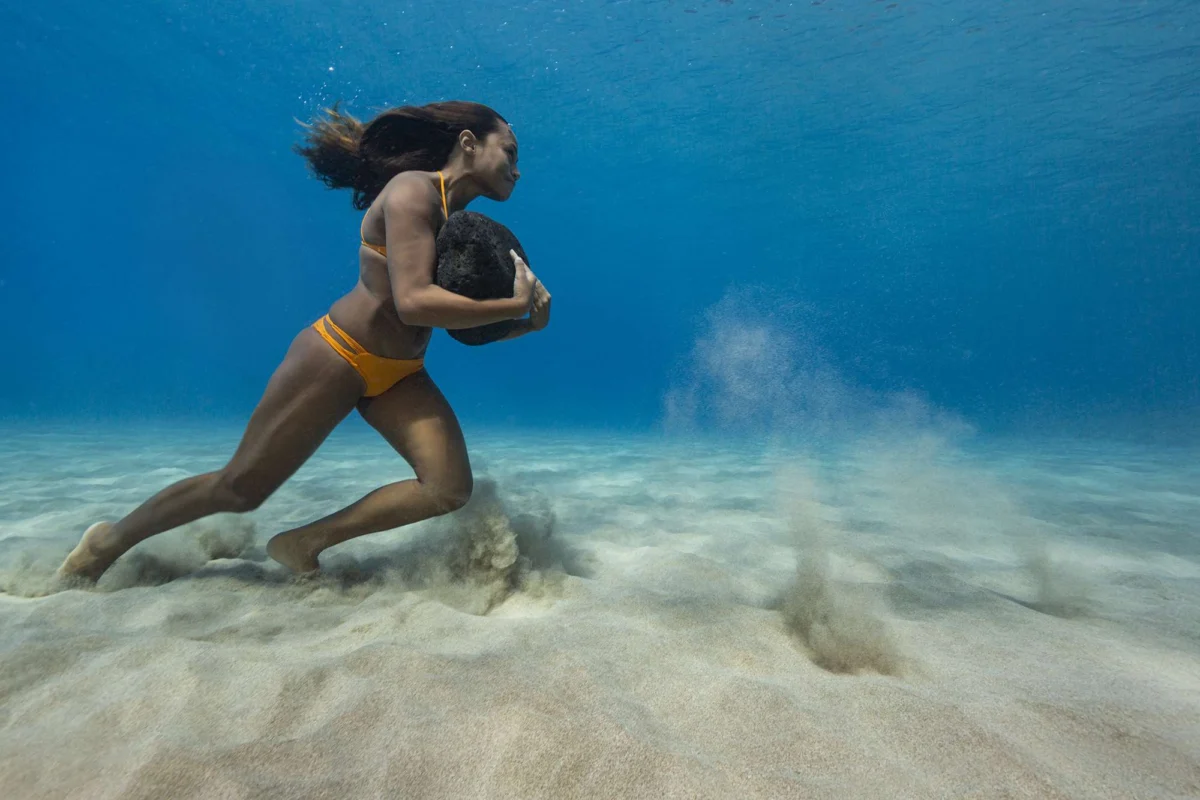
During their extended stay, Mittermeier and Nicklen, with the guidance of local icon Brian Keaulana, were granted access to some of the island’s most revered figures. Keaulana, a celebrated surfer, stuntman, and scion of one of Hawaii’s most esteemed families, served as an invaluable bridge between the outsiders and the community. His daughter, Ha’a Keaulana, a prodigious surfer and granddaughter of the legendary Buffalo Keaulana, exemplifies the fierce dedication and physical prowess that defines the younger generation of water athletes. Her rigorous training regimen, which includes carrying a 50-pound boulder underwater while fellow surfers cling to her, demonstrates a level of commitment and resilience that is awe-inspiring. This practice, a testament to the demanding physical and mental conditioning required of elite surfers in challenging conditions, highlights the unique training methodologies developed within these communities.
Another pivotal encounter was with Sulu’ape Keone Nunes, a master of traditional Hawaiian tattooing. Nunes shared the profound significance behind each intricate design, illustrating how Hawaiians historically wore their lineage, achievements, and spiritual beliefs etched onto their skin. These tattoos are not mere ornamentation; they are living chronicles of identity and cultural belonging, serving as a powerful visual representation of the stories passed down through generations. Understanding these deeply personal and cultural expressions provided Mittermeier and Nicklen with a more nuanced appreciation for the guarded nature of the community, recognizing that their heritage is a treasure to be fiercely protected.

The "End of the Road" and the Paradox of Isolation
The phrase "end of the road" often implies a place of desolation or abandonment. However, for Mittermeier and Nicklen, it signified the beginning of a profound cultural immersion. The decision to venture to the West Side, despite widespread advisement against it, stemmed from a belief that the most authentic experiences often lie in less-traveled territories. This pursuit of the genuine led them to a community that, while facing external pressures, has actively worked to preserve its cultural integrity.
The "forbidden" nature of this region, as perceived by many tourists, can be attributed to a complex interplay of factors. Historically, the West Side has been associated with economic disparities and social challenges, leading to a perception of it being less welcoming to outsiders. Furthermore, the growing influx of tourism across other parts of Oahu has placed immense pressure on traditional communities to safeguard their unique way of life. The advice to avoid the "end of the road" is, in essence, a protective mechanism, a subtle plea for respect and understanding for a culture that has endured significant historical trauma and continues to fight for its preservation.
Reconnecting with a Cherished Ohana
Years after their initial visit, Mittermeier and Nicklen found themselves compelled to return, fulfilling a promise made to their newfound Hawaiian family. The return journey felt like a temporal displacement, a crossing back into a familiar, yet cherished, past. As they approached the iconic coastline, the scene was remarkably unchanged: local surfers and beachgoers filled the shores, the air alive with the sounds of music.
The immediate recognition and welcome they received spoke volumes about the depth of the bonds formed. Moki, a local resident and dear friend, exemplified the enduring Aloha spirit by not only acknowledging their arrival but by actively reserving a parking space with his baby stroller – a gesture of profound consideration and a clear indication that they were not merely visitors, but beloved members of the community. This act, performed a decade after their initial encounter, underscored the power of genuine connection and the lasting impact of their initial respect for the local culture.

The warmth of the greetings – "Alohas," hugs, laughter, and smiles – under the familiar lifeguard station of 47B, painted a vivid picture of a community that, despite its challenges, opens its heart to those who approach with sincerity and respect. This experience powerfully illustrates the Hawaiian concept of "ohana," a term that extends beyond immediate family to encompass a broader network of kinship and mutual support.
The Enduring Aloha Spirit: A Lesson in Resilience and Generosity
The narrative of the West Side of Oahu, as experienced by Mittermeier and Nicklen, is a profound testament to the enduring Aloha spirit. In the face of historical adversity, economic hardship, and societal challenges, the people of this region have cultivated a remarkable capacity for compassion and generosity. The act of ensuring everyone has a parking spot and a shady place to sit, even amidst their own struggles, is not merely hospitality; it is a demonstration of a deeply ingrained cultural value, a commitment to collective well-being that prioritizes the needs of others.
This resilience is rooted in a profound connection to their heritage and a fierce determination to protect it. The careful guarding of their traditions, the passing down of ancestral knowledge, and the deep respect for the land and sea are the cornerstones of their identity. While they may appear guarded to outsiders, this reserve is not born of animosity, but from a deep understanding of the preciousness of what they possess and the necessity of its preservation for future generations.
The story of Oahu’s West Side, as unveiled by Mittermeier and Nicklen, offers a compelling counter-narrative to simplistic portrayals of Hawaiian tourism. It highlights the importance of looking beyond the surface, of engaging with communities on their own terms, and of recognizing the profound cultural wealth that exists in places often overlooked or misunderstood. Their journey serves as a powerful reminder that true understanding and connection are forged not through fleeting visits, but through genuine engagement, mutual respect, and an open heart, embodying the timeless wisdom of "E hele me ka puʻolo." The lasting impact of their experience is a testament to the power of human connection and the universal appeal of a culture that, despite its trials, continues to offer warmth, generosity, and an unwavering spirit of Aloha.