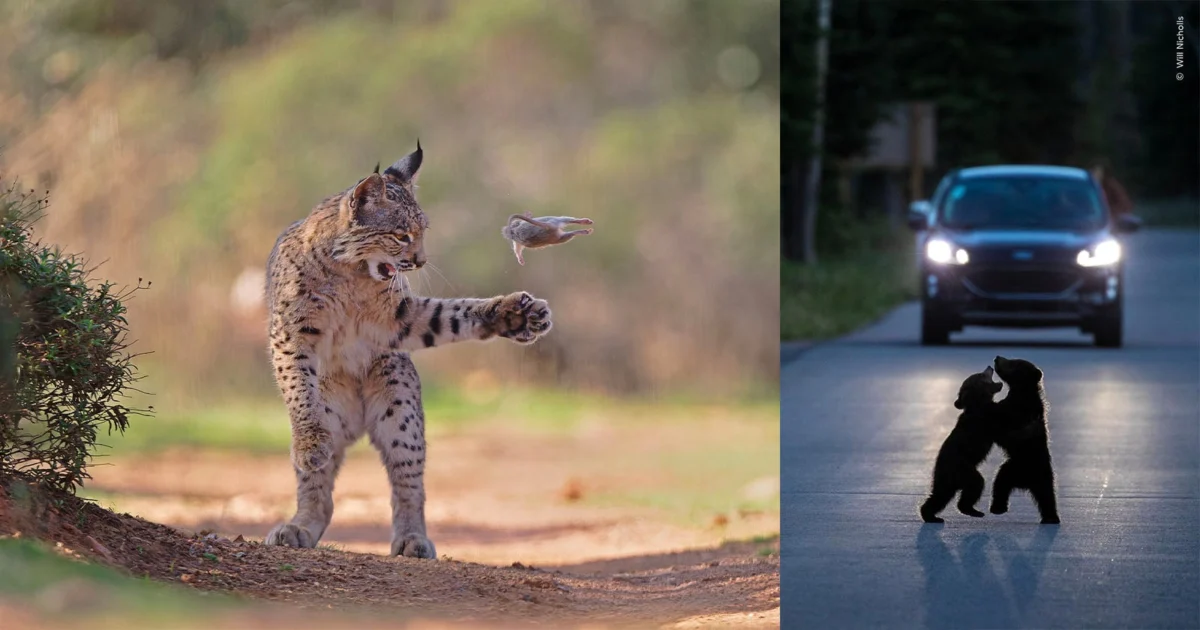
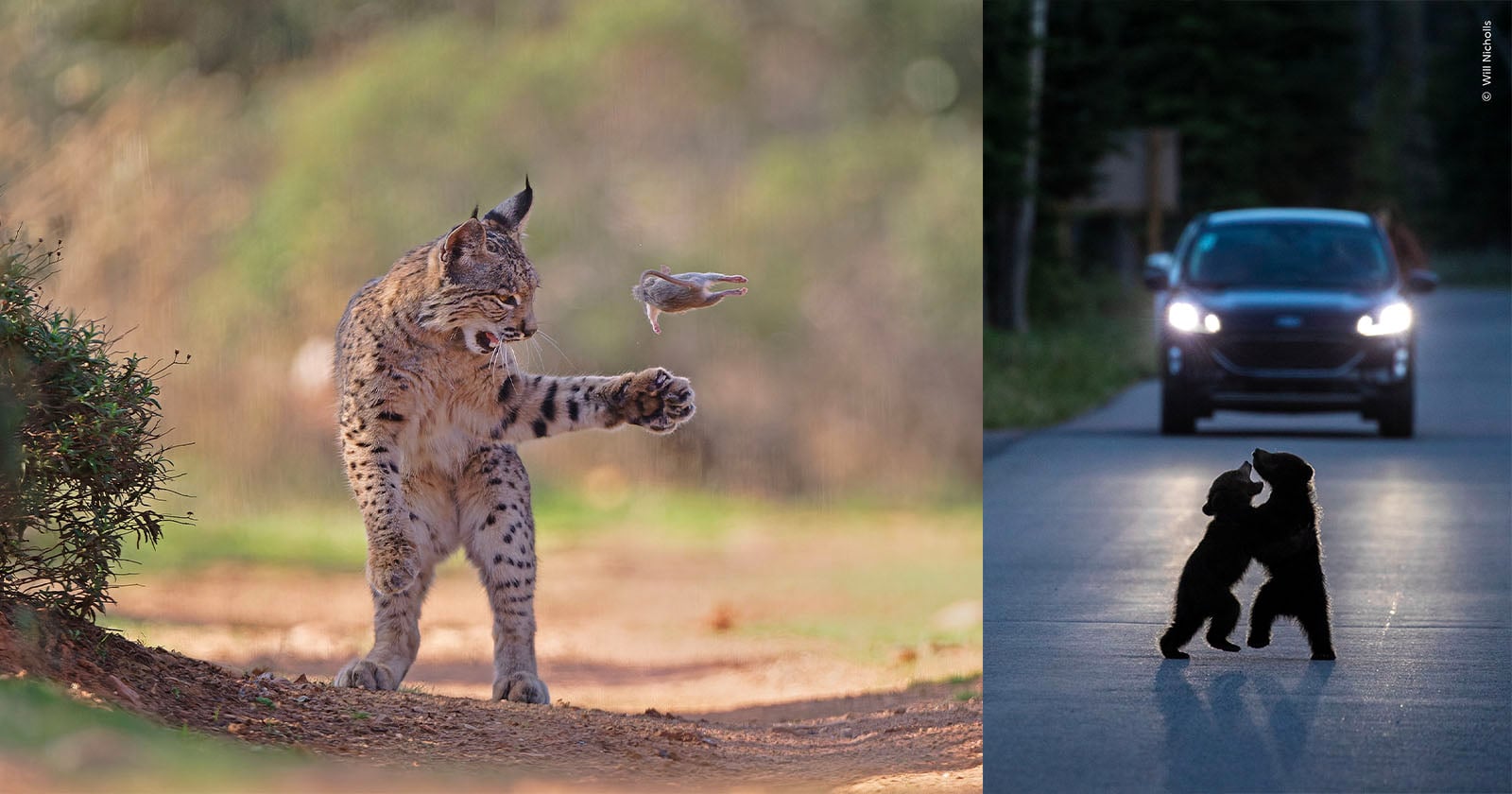
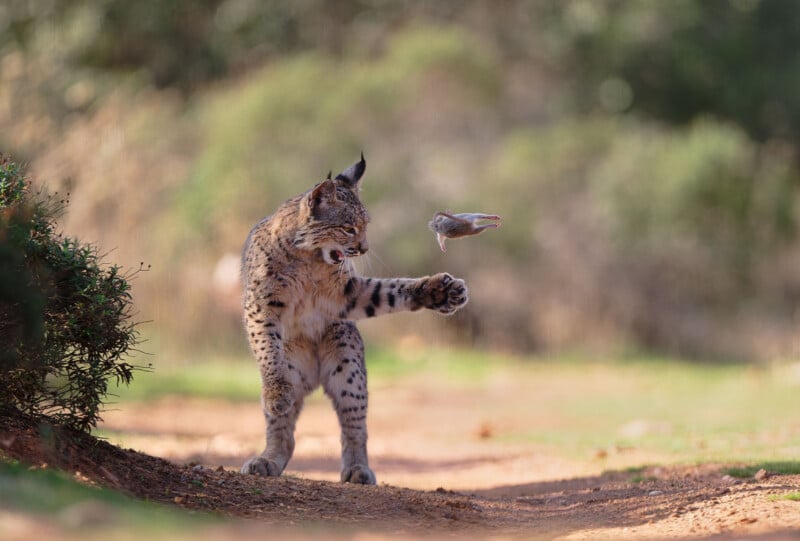
Austrian photographer Josef Stefan has been honored with the highly coveted Wildlife Photographer of the Year Nuveen People’s Choice Award 2026 for his extraordinary image, "Flying Rodent." The captivating photograph, depicting a young Iberian lynx in Spain playfully tossing a rodent into the air before consuming it, garnered a record-breaking 85,917 votes from a global audience, highlighting the immense public interest in wildlife and the art of its capture. This recognition places Stefan’s work at the forefront of wildlife photography, celebrating both artistic excellence and the inherent drama of the natural world.
The Unforgettable Image: "Flying Rodent"
Stefan’s winning photograph is a testament to patience, skill, and a deep understanding of animal behavior. Taken in Torre de Juan Abad, a municipality within the Castilla-La Mancha region of Spain, the image freezes a fleeting yet fascinating moment. A young Iberian lynx, a species known for its elusive nature and critical conservation status, is captured mid-action, its focus entirely on its prey. The rodent, suspended in the air, becomes a central element in a dynamic composition that speaks volumes about the predator-prey relationship. The scene, observed by Stefan from a carefully established hide over two weeks, unfolded for approximately 20 minutes as the lynx engaged in this playful ritual before eventually taking its meal behind a bush. This behavior, while seemingly playful, is a common and vital part of a wild feline’s hunting repertoire, often serving to hone predatory skills, test the prey’s vitality, or simply to "play" with food before the final act of consumption.
A Glimpse into Lynx Behavior
The "play" exhibited by the lynx in Stefan’s photograph is more than mere amusement; it’s an intrinsic part of its survival strategy. Young predators, much like domestic cats, often engage in such behaviors to practice and perfect their hunting techniques. Tossing, batting, and re-catching prey helps develop coordination, timing, and strength—skills essential for successful hunting in the wild. For a species like the Iberian lynx, which relies heavily on hunting small mammals and birds, particularly rabbits, mastering these skills from a young age is paramount. The 20-minute duration of this interaction also provides valuable insight into the lynx’s energy expenditure and decision-making process, highlighting the intricate balance between exertion and reward in the wild.
The Photographer’s Quest
Josef Stefan’s success is not merely a stroke of luck but the culmination of dedicated effort. Spending two weeks observing lynx from a hide requires immense patience, discipline, and a profound respect for the animals’ natural rhythms. A hide, strategically placed to minimize disturbance, allows photographers to witness authentic behaviors without influencing them. This ethical approach is crucial in wildlife photography, ensuring that the images captured are true representations of nature. Stefan’s commitment to immersing himself in the lynx’s habitat ultimately paid off, allowing him to capture a moment that not only won an international award but also offers a rare and intimate look into the life of a magnificent, yet vulnerable, predator.
Conservation Context: The Iberian Lynx
The setting of the photograph in Spain is particularly significant because the Iberian lynx (Lynx pardinus) is one of the world’s most endangered feline species. Historically, its population plummeted due to habitat loss, prey scarcity (especially rabbits affected by disease), and road accidents. However, intensive conservation efforts, primarily in Spain and Portugal, have led to a remarkable comeback. Programs involving captive breeding, reintroduction, and habitat restoration have seen the population grow from fewer than 100 individuals at the turn of the millennium to over 1,000 in recent years. Torre de Juan Abad, like other areas in Andalusia and Castilla-La Mancha, plays a crucial role in these conservation initiatives, providing suitable habitats for the lynx to thrive. Stefan’s image not only celebrates the beauty of this animal but also serves as a poignant reminder of successful conservation efforts and the species’ continued vulnerability, underscoring the importance of ongoing protection.
The People’s Voice: Nuveen’s Choice Award
The Nuveen People’s Choice Award is a distinct category within the prestigious Wildlife Photographer of the Year competition, distinguished by its democratic selection process. Unlike the main awards, which are decided by an expert international judging panel, this accolade is determined entirely by public vote. The record-breaking 85,917 votes cast this year underscore the growing global engagement with wildlife conservation and photography. This award serves as a powerful testament to the public’s ability to connect with and be moved by images that capture the essence of the natural world. Nuveen, a global investment manager with a focus on sustainable investing, sponsors this award, aligning with its commitment to promoting environmental stewardship and celebrating initiatives that highlight biodiversity. Their partnership with the Natural History Museum, London, amplifies the message of conservation to a broader audience.
Democratizing Wildlife Appreciation
The concept of a "People’s Choice" award democratizes the appreciation of wildlife photography. It allows individuals from all walks of life, regardless of their background in photography or natural sciences, to participate in recognizing images that resonate with them. This inclusive approach fosters a sense of collective ownership and responsibility towards the natural world. The overwhelming response to the voting process reflects a deep-seated human connection to nature and a desire to celebrate its wonders, even in an increasingly urbanized world. It also demonstrates the power of visual storytelling to transcend cultural and geographical boundaries, uniting people under a shared appreciation for Earth’s biodiversity.
The WPY Legacy and Scale
The Wildlife Photographer of the Year competition, developed and produced by the Natural History Museum, London, is globally recognized as one of the most prestigious photography competitions of its kind. Now in its 61st year, it attracts tens of thousands of entries from professionals and amateurs alike, all vying for recognition and the opportunity to showcase the planet’s incredible biodiversity. For the 2026 competition, a staggering 60,636 entries were submitted from 113 countries and territories. From this vast pool, an international judging panel—comprising experts in photography, wildlife, conservation, and science—curated a shortlist of just 24 exceptional photographs. Josef Stefan’s "Flying Rodent" emerged victorious from this highly competitive shortlist, demonstrating its profound impact on the public consciousness. The main competition winners, representing the pinnacle of photographic artistry and narrative power, were announced in the Fall of the preceding year, setting the stage for the People’s Choice announcement in early 2026.
Beyond the Winner: Highly Commended Works
While "Flying Rodent" captured the top spot, four other images received "Highly Commended" recognition, each telling a compelling story and demonstrating exceptional photographic skill. These images, too, resonated deeply with wildlife enthusiasts globally, contributing to the record vote count.
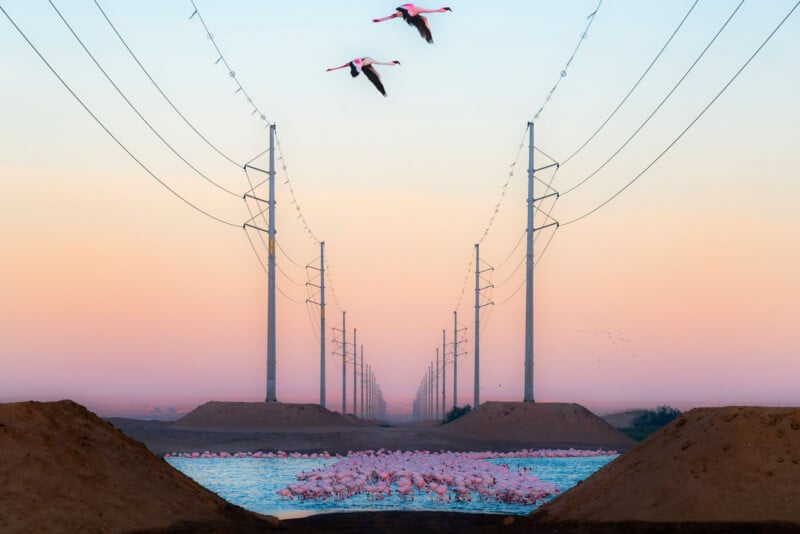
Nature’s Resilience Amidst Industry: Brisson’s Flamingos
Alexandre Brisson’s (Switzerland) image presents a stark and thought-provoking tableau of flamingos in Walvis Bay, Namibia. Against a backdrop of towering power lines and industrial infrastructure, a large flock of these elegant birds stands out, highlighting the often-uncomfortable juxtaposition of nature and human development. Walvis Bay is a critical wetland site, hosting immense numbers of migratory birds, including thousands of flamingos. Brisson’s photograph serves as a powerful visual commentary on the challenges of coexistence, prompting reflection on humanity’s footprint on natural habitats and the resilience of wildlife in adapting to altered landscapes. It underscores the delicate balance required to preserve biodiversity in an industrializing world.
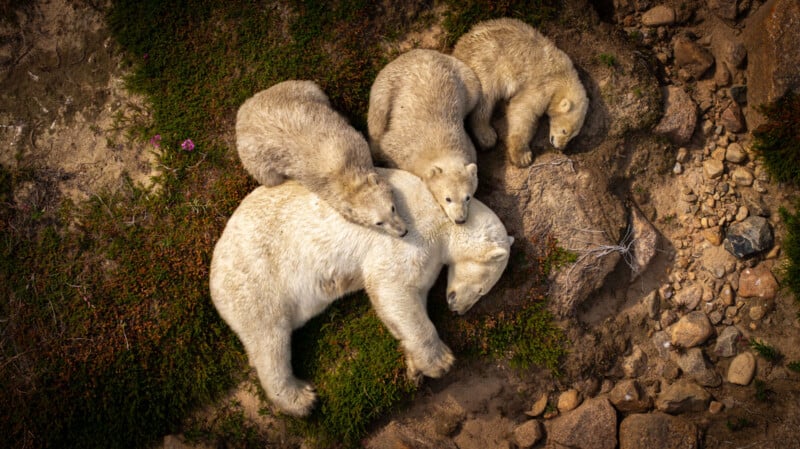
A Poignant Pause in the Arctic: Paetkau’s Polar Bears
Christopher Paetkau’s (Canada) highly commended photograph captures a tender moment: a mother polar bear and her three cubs resting peacefully in the summer heat on the Hudson Bay coast, Canada. While seemingly idyllic, this image carries a profound environmental message. The "summer heat" in the Arctic is a growing concern, directly linked to climate change and the rapid melting of sea ice, which is the polar bear’s primary hunting platform. Hudson Bay is particularly vulnerable, experiencing earlier ice break-ups and later freeze-ups, forcing bears to spend longer periods on land, away from their main food source of seals. Paetkau’s photograph, therefore, becomes a poignant symbol of the challenges faced by these iconic Arctic predators and a stark reminder of the urgent need for climate action to protect their future.
Wild Encounters on the Asphalt: Nicholls’ Bear Cubs
Will Nicholls’ (UK) image offers a dramatic silhouette of two young bear cubs rearing up and playfully fighting in the middle of a quiet road in Jasper National Park, Canada. This photograph beautifully captures the playful innocence of youth in the wild but also subtly hints at the increasing interface between wildlife and human infrastructure. National parks like Jasper are vital sanctuaries for species like bears, yet roads cutting through these areas introduce risks such as vehicle collisions. Nicholls’ image serves as a powerful visual narrative about the importance of responsible tourism, speed limits, and wildlife corridors to ensure the safety of animals and promote harmonious coexistence in shared landscapes. It’s a charming yet cautionary tale about respecting wildlife in their natural habitats.
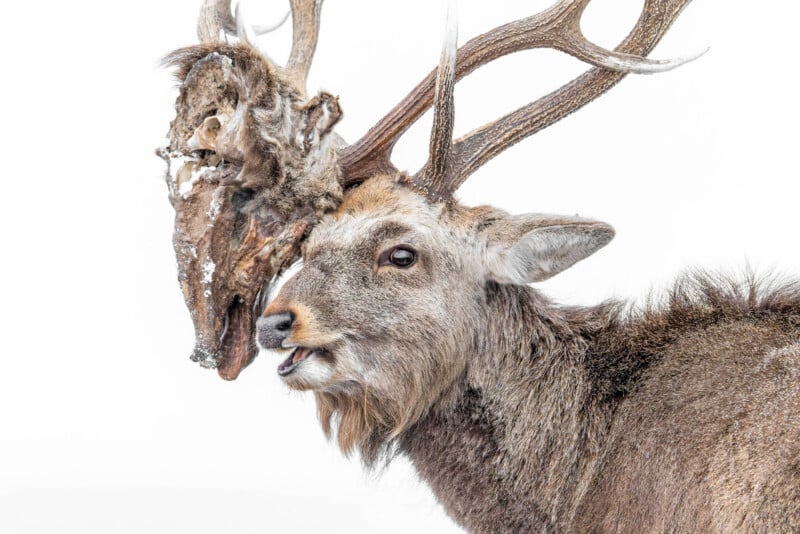
The Unyielding Cycle of Life: Nagira’s Sika Deer
Kohei Nagira’s (Japan) photograph presents perhaps the most visceral and challenging image among the highly commended works: a sika deer carrying the interlocked, severed head of a rival male. The grim reality depicted is a stark reminder of the harsh, unyielding cycle of life and death in the wild, particularly during the rutting season when male deer engage in fierce territorial battles. Antler entanglement can lead to the death of one or both combatants, a natural but often brutal outcome. Nagira’s image captures the aftermath, a macabre trophy of a victory hard-won or perhaps a somber testament to a tragic end. It offers a raw, unfiltered glimpse into the intense competition for survival and mating rights that defines much of the animal kingdom.
Curatorial Insight and Public Acclaim
Dr. Douglas Gurr, Director of the Natural History Museum, London, expressed his delight at the public’s engagement: "It’s been wonderful to see all the votes coming in to choose the photograph set for display in our flagship exhibition here at the Natural History Museum. Whether showcasing fascinating behavior or platforming a powerful story, this year’s selection of images was truly exceptional. Thank you to everyone who voted!" His statement underscores the museum’s role not just as a repository of natural history but as a dynamic platform for public education and engagement through powerful visual narratives. The People’s Choice Award, in particular, amplifies this mission by directly involving the public in the celebration of wildlife photography’s ability to inform, inspire, and provoke thought.
The Enduring Power of Wildlife Photography
Wildlife photography is more than just capturing beautiful images; it is a critical tool for conservation, education, and scientific documentation. Each photograph tells a story, highlights a species, or illustrates an ecological principle, making complex environmental issues accessible and relatable to a global audience. The Wildlife Photographer of the Year competition, through its various awards, consistently showcases the highest standards of this art form, inspiring both aspiring photographers and conservationists.
Inspiring Conservation Action
The powerful imagery produced by competitions like WPY plays a crucial role in conservation. By bringing the beauty, fragility, and drama of the natural world into homes and galleries, these photographs foster empathy and a deeper understanding of biodiversity. They can highlight endangered species, document the impacts of climate change, or celebrate successful conservation efforts, thereby mobilizing public support and influencing policy decisions. "Flying Rodent" for instance, not only celebrates the Iberian lynx but subtly reminds us of its journey from near extinction. The highly commended images, from flamingos amidst industry to polar bears in summer heat, each carry a message that transcends mere aesthetics, urging viewers to consider their role in protecting these vital ecosystems.
Ethical Considerations in the Field
The integrity of wildlife photography hinges on ethical practices. Photographers like Josef Stefan, who spend weeks in hides to capture authentic moments without disturbing the animals, exemplify this commitment. The competition itself emphasizes ethical standards, ensuring that images are obtained without causing distress to wildlife or damaging their habitats. This includes guidelines against baiting, harassment, or manipulating scenes. Such practices not only maintain the credibility of the art form but also uphold the fundamental principle of respect for nature, which is at the heart of conservation.
Exhibition Details and Legacy
Josef Stefan’s winning photograph, "Flying Rodent," along with the four highly commended images, will be prominently showcased at the Wildlife Photographer of the Year exhibition at the Natural History Museum, London. These images will be featured on dedicated voting screens and "Flying Rodent" will also grace the main gallery wall alongside the overall winning images of the competition. The exhibition, a global phenomenon that tours across continents, will remain open to the public until Sunday, July 12, 2026. This extended display period ensures that a vast audience will have the opportunity to experience these remarkable photographs firsthand, absorbing their beauty and the critical messages they convey, further cementing the legacy of these extraordinary visual narratives and their profound impact on our understanding and appreciation of the natural world.