The landscape of 21st-century conflict has been fundamentally altered by the rapid industrialization of First-Person View (FPV) drones, with Ukraine emerging as the global epicenter for this technological revolution. Driven by the exigencies of a prolonged and high-intensity conflict, Ukraine has transitioned from a reliance on imported commercial technology to a robust, domestic manufacturing powerhouse capable of producing millions of specialized unmanned aerial vehicles (UAVs). This shift is not merely a tactical adjustment but a comprehensive national strategy involving multibillion-dollar investments, the integration of artificial intelligence, and a decentralized production model that has redefined the concept of military-industrial mobilization.
The Strategic Imperative: From Hobbyist Tools to Sovereign Weapons
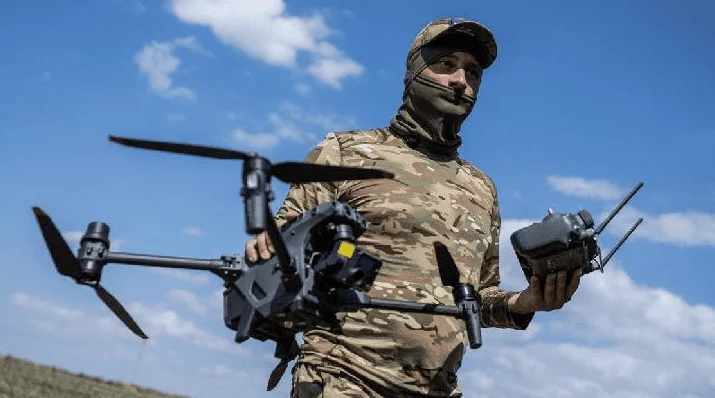
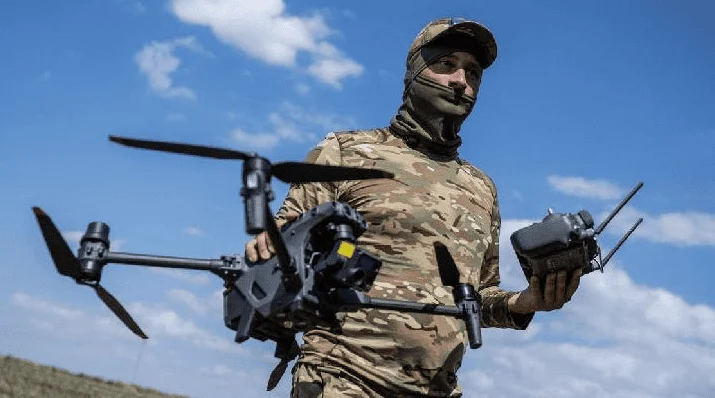
In the early stages of the 2022 invasion, the Ukrainian defense apparatus relied heavily on off-the-shelf commercial drones for reconnaissance. However, as the front lines stabilized and electronic warfare (EW) capabilities became more sophisticated, the need for specialized, low-cost, and expendable strike assets became apparent. FPV drones—maneuverable craft piloted via virtual reality goggles that provide a "bird’s-eye" perspective—offered a solution to the shortage of traditional artillery and precision-guided munitions.
By 2024, the Ukrainian government had formalized this necessity into a state-led industrial policy. The allocation of over $2.6 billion for drone procurement represents one of the most significant shifts in defense spending in the country’s history. This funding is not directed solely toward large-scale state enterprises but is distributed across a network of over 200 domestic companies and hundreds of smaller "grassroots" workshops. This ecosystem has enabled a rapid iterative cycle, where feedback from the front lines is incorporated into hardware and software updates within days rather than months.
Industrial Targets and the 2025 Production Roadmap
The scale of Ukraine’s drone ambitions is reflected in its production targets. For the year 2025, the Ukrainian Ministry of Digital Transformation and the Ministry of Strategic Industries have set an aggressive goal of producing 4.5 million FPV drones. This figure underscores a transition toward "industrialized attrition," where the volume of precision strikes can compensate for traditional disadvantages in heavy armor or manpower.
To reach these targets, the government has streamlined the "Brave1" defense tech cluster, a platform designed to fast-track the certification and procurement of new drone models. Previously, the process of bringing a new military technology to the field could take years; under the current streamlined regulations, a drone can move from a prototype to a signed state contract in as little as six weeks. This bureaucratic efficiency has been a cornerstone of the production surge, allowing local manufacturers to scale operations without the traditional bottlenecks of defense procurement.
Chronology of Ukraine’s Drone Evolution
The trajectory of Ukraine’s drone industry can be categorized into four distinct phases:
- The Volunteer Phase (February 2022 – late 2022): Initial efforts were characterized by crowdfunding campaigns to buy commercial DJI and Autel drones. Volunteers began modifying these for "grenade drops," but they were highly susceptible to signal jamming.
- The "Army of Drones" Initiative (2023): The government launched a formal fundraising and procurement drive, moving toward the mass acquisition of FPV components. This period saw the birth of the "kamikaze" FPV drone as a mainstay of the infantry.
- Industrial Decentralization (2024): Large-scale domestic assembly lines began to replace individual workshops. The focus shifted to "hardened" drones capable of resisting electronic warfare and the development of long-range FPV variants.
- The AI and Autonomous Era (2025 and beyond): Current efforts are focused on integrating AI-driven terminal guidance systems. These allow drones to lock onto targets automatically in the final seconds of flight, rendering electronic jamming ineffective by removing the need for a continuous pilot-to-drone link.
Technical Superiority and the Economics of Attrition
The primary driver behind the proliferation of FPV drones is their extraordinary cost-to-effect ratio. A standard FPV drone, equipped with a shaped-charge warhead capable of destroying a multi-million-dollar main battle tank, costs between $400 and $600 to produce. In comparison, a single 155mm artillery shell can cost upwards of $3,000, and a Javelin anti-tank missile exceeds $175,000 per shot.
The technical advantages of these systems include:
- Extreme Precision: Unlike traditional artillery, which relies on ballistic calculations and "area of effect," an FPV pilot can steer a drone directly into the weakest point of an armored vehicle, such as the engine deck or the turret ring.
- Operational Flexibility: FPV drones are used for "hunter-killer" missions, search-and-destroy operations against infantry in trenches, and even aerial interceptions of other drones.
- Rapid Innovation: Because the software is often open-source or domestically developed, Ukrainian engineers can rapidly change frequency bands to bypass new Russian electronic warfare systems.
Recent data highlights the efficacy of this approach. In February 2025, Ukrainian officials reported a 22% increase in successful FPV strikes compared to the previous month. This surge is attributed to improved pilot training programs and the deployment of "mother-ship" drones—larger UAVs that carry FPV drones deep behind enemy lines before releasing them, effectively extending their operational range from 10 kilometers to over 30 kilometers.
Addressing the Challenges: Supply Chains and Electronic Warfare
Despite the rapid growth, the Ukrainian drone industry faces significant hurdles. The most pressing issue remains the dependency on foreign components, particularly microchips, flight controllers, and brushless motors sourced from China. As global export restrictions tighten and supply chains become politicized, Ukraine has begun a concerted effort to "localize" the production of these critical components. Efforts are underway to manufacture domestic carbon fiber frames, propellers, and even basic circuit boards to ensure that production cannot be throttled by external geopolitical pressure.
Security is another major concern. Centralized factories are high-priority targets for long-range missile strikes. To mitigate this risk, Ukraine has adopted a "cell-based" manufacturing model. Production is spread across hundreds of inconspicuous, small-scale locations, making it nearly impossible for an adversary to dismantle the entire industry with a single strike.
Furthermore, the "electronic arms race" remains a constant threat. As Russian forces deploy more sophisticated "trench EW" and vehicle-mounted jammers, Ukrainian developers are forced to innovate. The shift toward digital signal transmission and the aforementioned AI-assisted targeting are direct responses to this challenge, ensuring that the drones remain viable in a highly contested electromagnetic environment.
Official Responses and Global Implications
Ukrainian officials have emphasized that the drone industry is not only a military necessity but a pillar of the future national economy. Mykhailo Fedorov, the Minister of Digital Transformation, has frequently stated that Ukraine aims to be the global leader in defense technology. By fostering a competitive market of private manufacturers, the government is creating a high-tech sector that will have significant export potential once hostilities conclude.
International observers and NATO allies are closely monitoring Ukraine’s progress. The conflict has served as a "living laboratory" for modern warfare, and many Western defense doctrines are now being rewritten to include mass-produced, low-cost drones. The Ukrainian model of decentralized, rapid-iteration manufacturing is being studied as a potential blueprint for future defense industrial bases in Europe and North America.
Future Outlook: Swarms and Deep Strikes
Looking toward the remainder of 2025, the focus of Ukrainian production is expected to shift toward autonomous "swarm" technology. This involves multiple drones communicating with each other to coordinate attacks, overwhelming enemy defenses through sheer numbers and synchronized movements. Additionally, the development of "long-range FPVs" or "one-way attack drones" with ranges exceeding 100 kilometers is expected to increase, allowing Ukraine to strike logistical hubs and command centers with the same precision previously reserved for the immediate front line.
The integration of drones into every level of the military hierarchy—from the individual squad to the strategic command—represents a permanent change in how wars are fought. Ukraine’s commitment to producing 4.5 million units is a testament to its belief that technological superiority, coupled with industrial scale, is the most viable path to national security.
Conclusion
The rise of FPV drone production in Ukraine is a landmark event in the history of military technology. Through a combination of state investment, private sector innovation, and a decentralized manufacturing strategy, Ukraine has created a defense industry that is as resilient as it is lethal. While challenges regarding supply chains and electronic warfare persist, the momentum of the Ukrainian drone program suggests a future where technology and mass production are the primary arbiters of success on the battlefield. This evolution has not only empowered Ukraine’s defense but has also set a new standard for the global defense industry, signaling the end of the era of exclusively high-cost, low-volume military procurement.