As the photography and videography industries emerge from a period of intense reflection on 2025’s technological advancements and market shifts, the focus now squarely turns to the horizon of 2026. This forward-looking perspective, informed by an analysis of extensive rental and purchase data, particularly from industry observers like LensRentals.com, projects several pivotal areas of innovation poised to redefine professional and enthusiast workflows. The past few years have been marked by rapid transitions, from the widespread adoption of mirrorless camera systems to the burgeoning influence of artificial intelligence. Against this backdrop, 2026 is anticipated to be a year where foundational technologies mature, new paradigms emerge, and user experiences undergo significant enhancements. This report delves into five critical developments expected to gain substantial traction in the coming year, each promising to unlock new creative potential and streamline operational efficiencies.
The Resurgence of Third-Party Lenses in Mirrorless Ecosystems
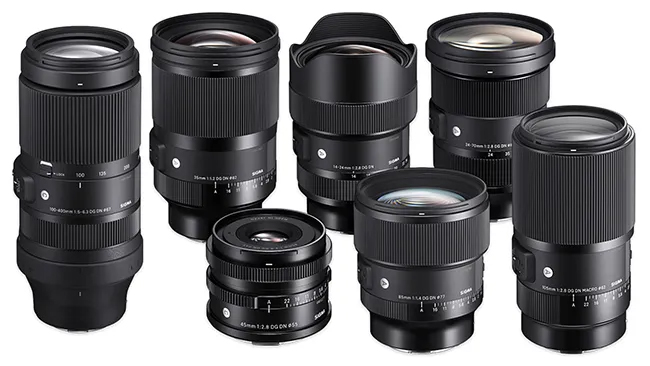
For over a decade, photographers and videographers operating within the DSLR landscape enjoyed a vast and competitive ecosystem of third-party lenses. Manufacturers such as Sigma, Tamron, and Tokina offered compelling alternatives to first-party optics, providing a diverse range of focal lengths, apertures, and price points for Canon, Nikon, and Sony systems. This robust competition fostered innovation and accessibility, allowing creatives to build comprehensive kits without exclusive reliance on proprietary brands. However, the industry’s significant pivot to mirrorless camera systems, marked by the introduction of new, often proprietary, lens mounts like Sony’s E-mount, Canon’s RF-mount, and Nikon’s Z-mount, initially disrupted this equilibrium.
The transition presented considerable technical and licensing challenges for third-party manufacturers. Developing lenses for these new mounts required reverse-engineering, securing official licensing agreements, or significant R&D investment to ensure compatibility and performance. Consequently, the initial years of the mirrorless era saw a notable reduction in third-party options for many systems, particularly for Canon RF and Nikon Z mounts, which were more tightly controlled than Sony’s E-mount, which saw earlier and more extensive third-party support from companies like Sigma and Tamron. Sony’s proactive engagement with third-party developers, or perhaps a less restrictive approach to its mount specifications, allowed for a faster proliferation of alternative lenses, offering consumers a broader selection and more competitive pricing.

However, recent indicators suggest a significant shift. Both Sigma and Tamron have demonstrated a growing commitment to expanding their offerings for the Canon RF and Nikon Z mounts. This renewed focus is driven by the increasing market penetration of these mirrorless systems and a clear demand from users for more varied and affordable lens options. Industry analysts predict that 2026 will witness a substantial acceleration in the release of third-party lenses for these platforms. This expansion is crucial for the long-term health and growth of the mirrorless market, as it democratizes access to high-quality optics, fosters greater competition, and provides photographers with enhanced flexibility in their gear choices. The availability of diverse third-party lenses is expected to not only drive down overall lens costs but also stimulate innovation across the entire industry, ultimately benefiting the end-user with more specialized and high-performance options.
The Democratization of Speed: Affordable Fast Primes
Historically, fast prime lenses—those with exceptionally wide apertures like f/1.2 or f/1.4—have occupied a premium segment of the market. Renowned for their ability to capture stunning images in low light and produce exquisite shallow depth of field (bokeh), these lenses often came with prohibitive price tags, placing them out of reach for many photographers. Iconic lenses such as the Leica Noctilux series, which has offered f/1.2 apertures since the 1960s, or Canon’s early f/1.2 lenses from the 1980s, were technological marvels but remained high-end specialty items. The manufacturing processes for such optics, demanding extreme precision in grinding large glass elements and intricate mechanical designs, traditionally contributed to their elevated cost.
However, recent developments signal a potential paradigm shift towards more accessible fast primes. A notable example, even if hypothetical for the general market at scale, could be seen in the theoretical introduction of a Canon RF 45mm f/1.2 STM lens priced significantly below the typical $1,000 threshold for such speeds. While Canon’s current RF 50mm f/1.2L USM stands as a professional-grade, premium offering, the concept of a sub-$500 f/1.2 lens, particularly one utilizing a stepper motor (STM) for quieter and smoother autofocus, represents a groundbreaking achievement in manufacturing efficiency and optical design.
This trend towards affordability is likely fueled by advancements in materials science, sophisticated computer-aided optical design, and highly automated manufacturing processes. These innovations reduce production costs while maintaining or even improving optical quality. For 2026, the industry anticipates a more frequent introduction of such affordable, fast primes across various brands and mounts. This democratization of wide-aperture lenses is expected to have a profound impact, empowering a broader segment of photographers—from enthusiasts to emerging professionals—to experiment with creative techniques previously reserved for those with larger budgets. It promises to make distinctive visual aesthetics, characterized by creamy bokeh and superior low-light performance, more attainable, thereby expanding the creative toolkit for a wider user base and potentially reshaping photographic styles.
AI’s Evolution: From Generative Spectacle to Workflow Enhancement
The past few years have firmly established artificial intelligence (AI) at the forefront of technological discourse, and the photography and videography sectors have been no exception. The initial wave of AI adoption has largely been dominated by generative AI models capable of creating photorealistic images, corporate headshots, and even short video clips from simple text prompts. While these generative capabilities have sparked immense fascination and demonstrated AI’s creative potential, they have also raised considerable debate regarding authorship, authenticity, and the future role of human creativity. The primary concern among many creatives has been the potential for AI to displace human artists rather than augment their work.
For 2026, a significant reorientation of AI development is anticipated, shifting focus from purely generative applications towards robust workflow integration. Industry experts predict a growing demand for AI tools that function as assistants, streamlining repetitive tasks and enhancing efficiency, thereby allowing creatives to dedicate more time and energy to the core artistic process. This workflow-centric AI is expected to manifest in several key areas.
In studio management, AI-powered software could evolve beyond basic invoicing to intelligent client relationship management. This might include automated, personalized email sequences for potential clients, AI-driven scheduling optimization, and smart reminders for payment or follow-ups. For post-production, AI is poised to deliver more sophisticated automated editing capabilities. Imagine tools that can, with a single click, intelligently identify and remove distracting elements like trash bins or telephone poles from images, or perform advanced content-aware fills with greater accuracy and less manual intervention. AI could also assist in color grading, applying consistent styles across entire shoots, or even suggesting creative edits based on artistic trends. Furthermore, in the pre-production phase, AI could aid in cataloging creative inspiration, organizing mood boards, and generating concise, client-friendly summaries of artistic concepts, facilitating clearer communication and project alignment. The objective is not for AI to dictate the creative outcome, but to act as a powerful enabler, reducing friction in the creative pipeline and allowing artists to delve deeper into their unique vision.
Elevating Connectivity: The Demand for Robust Camera App Support
The advent of mirrorless camera systems was accompanied by the compelling promise of seamless smartphone integration. The vision was clear: photographers could effortlessly review, edit, and instantly publish high-quality images directly from their cameras to their mobile devices, revolutionizing on-the-go workflows and social sharing. However, the reality has often fallen short of this initial promise. Many camera manufacturers’ companion apps have been plagued by pervasive issues, including unreliable connectivity, frequent freezes, app crashes, and unresponsive interfaces. While some brands, like Fujifilm, have made strides, even their apps are often cited as being merely "better" rather than truly "good" when compared to the consistently high performance expected from modern smartphone applications. Canon and Nikon users, among others, frequently report similar frustrations with their respective mobile offerings.

These persistent issues stem from a combination of factors, including the complexities of maintaining stable Wi-Fi and Bluetooth connections across diverse mobile operating systems, the often-limited resources camera manufacturers allocate to software development compared to hardware, and the challenge of integrating legacy camera firmware with modern app ecosystems. The consequence is a disconnect between the advanced capabilities of modern cameras and the subpar experience of their mobile interfaces, leading to user frustration and underutilization of features.
For 2026, the industry anticipates a critical push for significantly improved app support from camera manufacturers. This improvement is no longer a luxury but a fundamental expectation. Professional and enthusiast photographers require apps that offer not just basic image transfer but robust remote control functionality, reliable live view, intuitive image review and culling capabilities, and seamless integration with cloud services or editing suites. Enhanced app support is crucial for modern workflows, enabling photographers to quickly share proofs with clients on location, geotag images accurately, perform quick edits before publishing to social media, and even receive firmware updates more efficiently. Industry experts continually stress that robust, user-friendly mobile integration is no longer a peripheral feature but a fundamental expectation that significantly influences purchasing decisions in an increasingly connected world. Addressing these long-standing deficiencies is paramount for camera brands to remain competitive and meet the evolving demands of their user base.
The Global Shutter Revolution: Redefining Image Capture
The final, and potentially most transformative, development anticipated for broader adoption in 2026 is the electronic global shutter. Sony made a significant splash with its introduction in the Sony a9 III, marking a pivotal moment for consumer-grade cameras. While global shutters have existed in high-end cinema cameras and industrial vision systems for some time, their integration into a mainstream mirrorless camera at this level signaled a new era of image capture.
The technical advantages of a global shutter over the more common rolling shutter are profound and multifaceted. A rolling shutter captures an image by scanning the scene sequentially, line by line, from top to bottom. This sequential capture, while cost-effective, leads to characteristic distortions like the "jello effect" or "wobble" during fast camera movements or when photographing rapidly moving subjects. It can also cause "banding" under certain artificial lighting conditions due to the sensor’s interaction with flickering light sources. In contrast, a global shutter captures all pixels on the sensor simultaneously, effectively taking a single, instantaneous snapshot of the entire scene.

The implications of widespread global shutter adoption are immense for both videography and still photography. In video, the elimination of the rolling shutter artifact is a game-changer for action sequences, sports, and documentary filmmaking, where dynamic camera movements are common. This technology ensures clean, undistorted footage, even during rapid pans or tilts, significantly enhancing professional output quality. For still photography, the benefits are equally revolutionary. Most cameras have a maximum flash sync speed, typically 1/200s for full-frame and 1/250s for crop sensors, dictated by the mechanical shutter’s travel time. This limitation often necessitates workarounds like High-Speed Sync (HSS), which reduces flash power, or leaf shutters, which are often limited to specific lenses. An electronic global shutter fundamentally eliminates this constraint, allowing photographers to synchronize off-camera flashes at any shutter speed, even up to 1/16,000s or faster. This capability provides unprecedented creative control over ambient light, enabling photographers to overpower bright sunlight with flash, achieve incredibly shallow depths of field outdoors, and freeze ultra-fast motion without distortion or motion blur. Furthermore, it completely eradicates distortion when photographing subjects like rapidly spinning propellers or golf swings, where rolling shutters typically produce skewed results. While the initial challenges for global shutter technology included potential compromises in dynamic range and increased sensor heat, Sony’s breakthrough suggests these hurdles are being overcome, paving the way for broader integration across different camera lines and brands in 2026 and beyond.
The forthcoming year, 2026, promises to be a period of significant evolution in the photo and video industry. From the burgeoning availability of third-party lenses and the democratization of fast primes to the intelligent integration of workflow-centric AI, enhanced app support, and the transformative potential of global shutters, these innovations are set to redefine how visual content is created, processed, and shared. These advancements reflect a dynamic industry continually pushing the boundaries of technology to meet and anticipate the evolving needs of creatives worldwide.