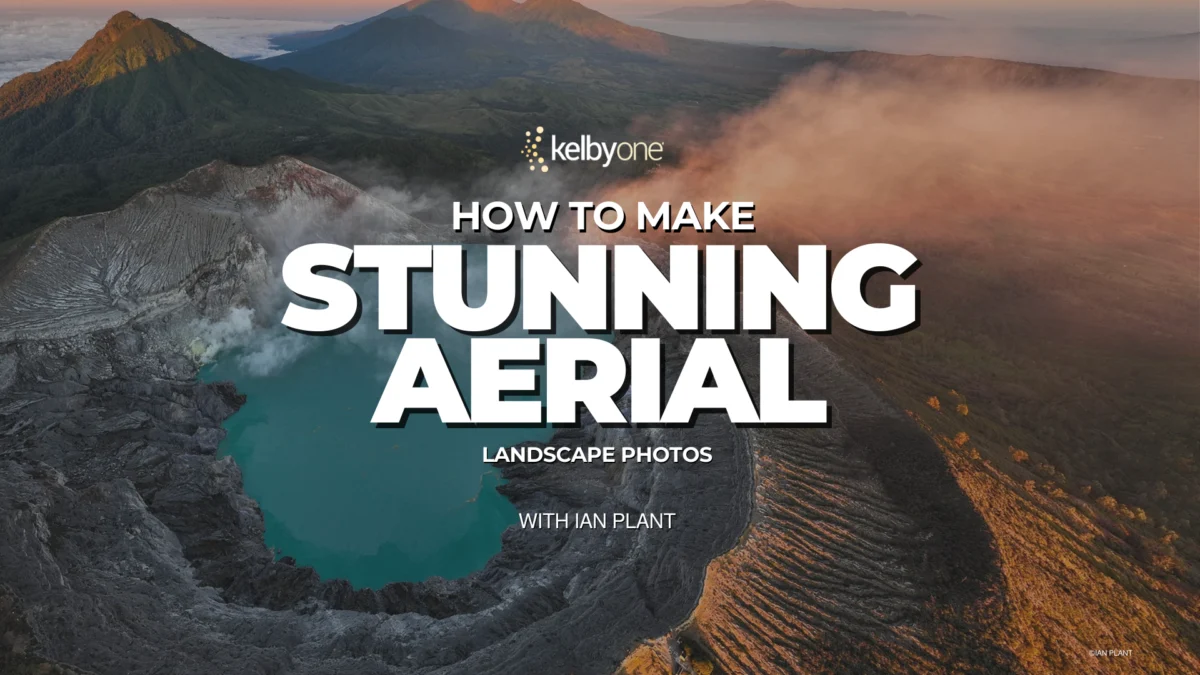
The advent of drone technology has fundamentally reshaped the landscape of visual arts, particularly for photographers seeking to capture breathtaking natural vistas. What was once the exclusive domain of costly helicopter charters or cumbersome light aircraft is now accessible to a broader range of practitioners, achievable with the mere push of a button. This paradigm shift forms the core of a new masterclass by acclaimed photographer Ian Plant, designed to equip landscape enthusiasts with the technical prowess and artistic vision required to transform elevated perspectives into truly remarkable images. The class, available through various platforms, promises to demystify the intricacies of aerial photography, guiding participants from foundational drone operation to advanced compositional strategies.
The Dawn of a New Photographic Era: Drones and Accessibility
For centuries, photographers have striven to capture the grandeur of landscapes, often pushing the boundaries of technology and physical endurance to achieve unique viewpoints. From early hot air balloon photographs in the mid-19th century to the sophisticated aerial mapping missions of the 20th century, the desire to see the world from above has been a constant. However, these methods were largely inaccessible, expensive, and often required significant logistical planning. The late 20th and early 21st centuries saw the gradual development of Unmanned Aerial Vehicles (UAVs), initially for military and industrial applications. It wasn’t until the mid-2010s that consumer-grade drones, equipped with high-definition cameras and user-friendly flight controls, truly democratized aerial imagery.
This technological revolution allowed photographers to scout locations, frame shots, and capture images from elevations ranging from a few feet to several hundred feet above ground level, all while remaining safely on the ground. This unprecedented accessibility has opened up a new world of creative possibilities, revealing patterns, textures, and compositions in landscapes that are often invisible or unappreciated from traditional ground-level viewpoints. The ability to ascend quickly, reposition precisely, and descend with ease has made drones an indispensable tool for modern landscape photographers, enabling them to explore geometric forms, abstract designs, and environmental narratives with newfound freedom.
Ian Plant: A Visionary Guide to the Aerial Realm
Ian Plant is widely recognized as a luminary in the field of landscape photography, celebrated for his dramatic and often abstract compositions that emphasize light, form, and texture. His work frequently transcends mere documentation, delving into the emotional and artistic interpretation of natural scenes. Plant’s extensive portfolio, showcasing powerful and evocative imagery from around the globe, attests to his mastery of both technical execution and creative expression. He is known for his innovative approaches to capturing the natural world, consistently pushing the boundaries of what is possible with a camera.
Given his established reputation for finding unique perspectives and transforming ordinary scenes into extraordinary art, Plant is uniquely positioned to lead this exploration into aerial photography. His philosophy has always centered on "seeing" beyond the obvious and leveraging tools to realize a distinct artistic vision. The drone, in his hands, becomes more than just a flying camera; it is an extension of the photographer’s eye, capable of revealing the intricate tapestry of the Earth’s surface in ways previously unimaginable. Plant’s decision to launch this masterclass underscores the growing importance of aerial techniques in contemporary landscape photography and his commitment to guiding fellow artists through this evolving medium.
Deconstructing the Aerial Perspective: Technical and Creative Mastery
Plant’s new class meticulously explores both the technical and creative dimensions of aerial photography, ensuring that participants gain a comprehensive understanding. The curriculum is structured to address common challenges and unlock advanced potential.
Technical Foundations:
The technical segment of the class begins with practical drone operation. This includes critical aspects such as:
- Drone Selection: Guidance on choosing the right drone model based on photographic needs, budget, and desired features (e.g., sensor size, flight time, portability, obstacle avoidance systems).
- Pre-Flight Planning: Emphasizing the importance of checking weather conditions (wind speed, precipitation), battery levels, GPS signal strength, and propeller integrity.
- Airspace Regulations and Safety: A crucial component, covering local and national drone laws (e.g., FAA regulations in the US, EASA in Europe), no-fly zones, altitude restrictions, and ethical considerations like maintaining visual line of sight. This section also delves into the necessity of drone registration and potential licensing requirements for commercial operations.
- Flight Maneuvers and Positioning: Practical tips for smooth take-offs and landings, precise hovering, controlled movements, and strategic positioning to achieve specific angles and compositions. This includes understanding the nuances of various flight modes and how to leverage them for creative shots.
- In-Flight Camera Settings: Detailed instruction on optimizing camera settings on the drone, including aperture, shutter speed, ISO, white balance, and various shooting modes (e.g., bracketed exposures for High Dynamic Range, panorama modes for sweeping vistas, video settings for cinematic captures).
- Post-Processing for Aerials: Techniques specific to drone imagery, such as stitching multiple exposures for ultra-high-resolution panoramas, correcting lens distortions inherent in drone cameras, enhancing colors and contrast, and managing atmospheric haze often present in aerial shots.
Creative Vision and Storytelling:
Beyond the technical mechanics, Plant places a strong emphasis on the artistic decisions that elevate a simple aerial shot into a compelling photograph. This creative segment covers:
- Composition from Above: Exploring how traditional compositional rules (e.g., rule of thirds, leading lines, symmetry) translate to aerial perspectives, and introducing new considerations unique to overhead views. This includes recognizing abstract patterns, textures, and geometric forms in the landscape (e.g., braided rivers, agricultural fields, coastal erosion patterns).
- Perspective and Scale: Understanding how altitude influences the sense of scale and depth in an image. Utilizing high altitudes for abstract, painterly views and lower altitudes to include more environmental context and recognizable elements.
- Light and Shadow: Analyzing how the angle of light from above can create dramatic shadows, define textures, and sculpt the landscape, often revealing features that are flat and uninteresting from ground level.
- Visual Storytelling: How aerial viewpoints can enhance narrative, providing a broader context for a scene or highlighting the relationship between different elements within a landscape. This could involve showing the impact of human activity on nature, the flow of water through a canyon, or the vastness of a desert.
- Recognizing Unique Opportunities: Training the eye to spot ephemeral moments and unique conditions that are best captured from above, such as fog layers, tidal patterns, or seasonal changes in vegetation.
Supporting Data and Industry Trajectories
The growth of drone photography is not merely anecdotal; it is supported by robust industry data. The global drone market, valued at approximately $26.3 billion in 2022, is projected to reach $55.8 billion by 2028, with the photography and videography segment being a significant driver. Consumer drone sales have surged, with millions of units sold annually worldwide. This proliferation has led to a corresponding increase in demand for educational resources and specialized training, as hobbyists and professionals alike seek to master the technology and art form.
According to industry reports, a significant percentage of professional photographers are now incorporating drones into their workflow for real estate, commercial advertising, travel, and fine art projects. The ability to offer aerial perspectives provides a distinct competitive advantage. Moreover, regulatory bodies like the Federal Aviation Administration (FAA) in the United States and the European Union Aviation Safety Agency (EASA) have continuously refined regulations, creating a more structured, albeit sometimes complex, operational environment that necessitates proper training and adherence to guidelines. Courses like Ian Plant’s are vital in helping photographers navigate this evolving landscape responsibly and effectively.
A Brief Chronology of Drone Photography’s Ascent
The journey of drone photography from niche hobby to mainstream artistic tool can be traced through several key developments:
- Early 2010s: The emergence of rudimentary quadcopters for hobbyists. Cameras were often low-resolution, and flight stability was challenging.
- Mid-2010s (circa 2014-2016): DJI introduces the Phantom series, particularly the Phantom 3 and 4, which integrated high-quality cameras, improved flight stability with GPS, and user-friendly controls. This marked the true democratization of aerial photography.
- Late 2010s (circa 2017-2019): Further advancements in miniaturization (e.g., DJI Mavic series), longer flight times, enhanced camera sensors (capable of 4K video and RAW stills), and sophisticated obstacle avoidance systems make drones more practical and reliable for photographers.
- Early 2020s (circa 2020-Present): Introduction of even more compact, powerful drones (e.g., DJI Mini series staying under 250g for relaxed regulations), higher resolution cameras (up to 5.4K/8K video), improved dynamic range, and intelligent flight modes powered by AI. Specialized drones with interchangeable lenses and larger sensors also begin to emerge for high-end professional use. This continuous evolution has provided photographers with increasingly capable tools, directly fueling the need for advanced instruction like Plant’s masterclass.
Broader Impact and Implications for the Photography Community
The integration of drones into landscape photography carries significant implications for individual artists and the broader industry.
For Individual Photographers:
- Expanded Creative Horizons: Drones offer unparalleled freedom to experiment with new perspectives and unlock artistic expressions previously unattainable. This can lead to a revitalization of an artist’s portfolio and a renewed sense of creative purpose.
- New Revenue Streams: Photographers proficient in aerial imagery can tap into diverse markets, including architectural photography, real estate, environmental documentation, tourism promotion, and even cinematography, supplementing or replacing traditional income sources.
- Competitive Edge: In a crowded photographic market, offering unique aerial perspectives can differentiate a photographer and attract clients seeking cutting-edge visual content.
- Challenges: The learning curve for drone operation, the initial investment in equipment, and the ongoing need to stay abreast of evolving regulations present challenges that require dedication and continuous learning. Ethical considerations, such as privacy and minimizing disturbance to wildlife, also demand careful attention and responsible operation.
For the Photography Industry:
- Evolution of Gear and Software: The demand for aerial photography has spurred innovation in drone technology, camera sensors, and post-processing software tailored for drone imagery. This continuous development benefits the entire photographic ecosystem.
- New Educational Offerings: The rise of drone photography has necessitated a new category of workshops, courses, and certifications, catering to both the technical and artistic aspects of the medium. Ian Plant’s class is a prime example of this trend.
- Shifting Aesthetic Trends: Aerial perspectives are influencing contemporary visual aesthetics, appearing across various media, from fine art prints to advertising campaigns and documentary filmmaking. This contributes to a richer and more diverse visual culture.
Statements and Industry Reception
While specific statements from Ian Plant regarding the class’s immediate reception are pending, the sentiment among photography educators and industry experts aligns with the burgeoning interest in aerial photography. "Drones have truly revolutionized how we perceive and capture the world," remarked a representative from a leading online photography education platform (inferred). "Courses like Ian Plant’s are absolutely vital. They bridge the gap between technological capability and artistic expression, empowering photographers to not just fly a drone, but to create meaningful art with it. We’re seeing an unprecedented demand for high-quality instruction in this area."
Ian Plant himself, through the curriculum’s emphasis, implicitly states his conviction: "Aerial photography is not just about getting a camera in the air; it’s about seeing the world with new eyes, discovering hidden patterns, and telling stories from a fresh, impactful perspective. This class is designed to help photographers unlock that potential, transforming their vision from the ground up – or rather, from the sky down." This underscores the class’s objective to foster a deeper understanding of visual storytelling through the aerial lens, moving beyond mere technical proficiency.
Conclusion
Ian Plant’s new masterclass on aerial landscape photography arrives at a pivotal moment in the evolution of photographic art. As drone technology continues to advance, offering ever-more sophisticated tools to artists, the need for expert guidance in harnessing these tools creatively becomes paramount. By combining rigorous technical instruction with profound insights into artistic composition, perspective, and visual storytelling, Plant’s class offers a comprehensive pathway for photographers to elevate their craft. It promises to open eyes to the incredible possibilities waiting just above the ground, allowing participants to discover new creative angles and redefine their approach to landscape photography. For those looking to transcend traditional boundaries and capture the world from an awe-inspiring vantage point, this class represents a crucial step in mastering the art of the aerial view. The opportunity to learn from a master like Ian Plant, whose dedication to artistic excellence is well-established, positions this class as a significant resource for anyone aspiring to capture the stunning beauty of our planet from above.