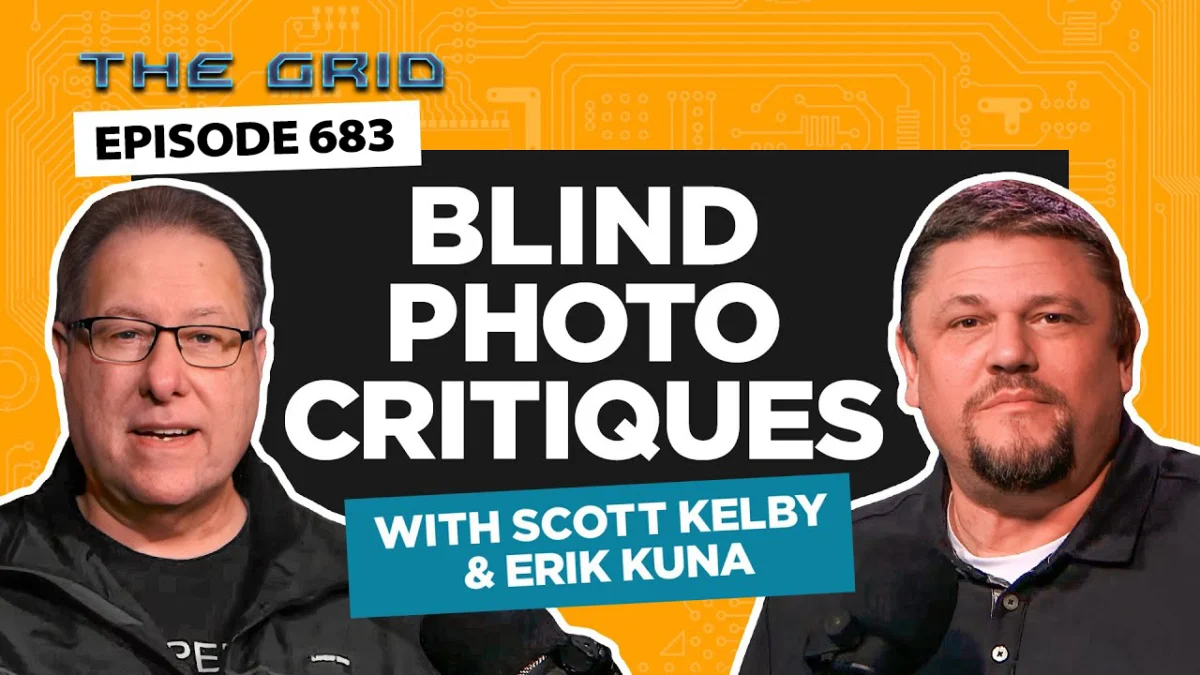
This week, the acclaimed photography webcast The Grid, hosted by industry stalwarts Scott Kelby and Erik Kuna, delivered its 683rd episode, focusing on one of its most anticipated segments: Blind Photo Critiques. The episode captivated a global audience as Kelby and Kuna meticulously reviewed a diverse and compelling collection of viewer-submitted images, offering incisive and constructive feedback designed to elevate photographic skill sets worldwide. This particular installment garnered significant attention for the breadth of genres represented and the depth of analysis provided, reinforcing The Grid‘s position as a cornerstone of online photography education.
The Enduring Appeal of Blind Photo Critiques
The "Blind Photo Critiques" format is a pedagogical cornerstone of The Grid, a show that has consistently aired since its inception, establishing a robust legacy within the digital photography community. The concept is straightforward yet profoundly effective: images submitted by photographers from across the globe are presented to the hosts without any accompanying metadata, photographer names, or contextual information. This anonymity ensures that the critique remains entirely objective, focusing solely on the visual merits and technical execution of the photograph itself, free from any preconceived notions about the creator or their background. Scott Kelby, a best-selling author, editor, and CEO of KelbyOne, and Erik Kuna, a renowned educator and photographer, bring decades of combined experience to these sessions. Their ability to dissect an image, identify its strengths, and pinpoint areas for improvement, often with a blend of technical precision and artistic sensibility, has made these critiques invaluable learning tools. Viewers consistently praise the segment for its transparency and the practical applicability of the advice offered, often citing it as a primary reason for tuning in weekly. The format democratizes learning, providing insights that transcend equipment choices or geographical location, making advanced photographic concepts accessible to a broad audience, from budding enthusiasts to seasoned professionals.
A Global Showcase of Photographic Diversity
Episode 683 exemplified the global reach and artistic diversity of The Grid‘s audience. The submissions spanned an impressive array of photographic genres, each presenting unique challenges and opportunities for visual storytelling. The critical review covered:
- Architecture Photography: This genre demands precision in composition, understanding of light and shadow interplay on structures, and often intricate post-processing to correct lens distortions and enhance structural lines. The critiques often focused on perspective, the choice of lens to minimize distortion, and the interplay between the building and its environment.
- Street Photography: Characterized by candid moments and often raw, unposed scenes of public life, street photography thrives on timing, observation, and an ability to capture the human element amidst urban landscapes. Feedback frequently touched upon the decisive moment, the ability to tell a story within a single frame, and maintaining ethical considerations regarding privacy.
- Wildlife Photography: This challenging genre requires not only technical proficiency with long lenses and fast shutter speeds but also immense patience, an understanding of animal behavior, and often the ability to work in demanding environmental conditions. Discussions often centered on sharpness, animal interaction, background distraction, and the ethical treatment of subjects.
- Portrait Photography: Focused on capturing the essence of individuals, portraiture encompasses lighting techniques, posing, expression, and the ability to connect with the subject. Critiques here frequently delved into facial expressions, eye contact, lighting patterns (such as Rembrandt or butterfly lighting), and the overall mood conveyed by the subject.
- Aviation Photography: A specialized niche that combines technical skill with a passion for aircraft, aviation photography requires knowledge of aircraft types, flight patterns, and often specialized equipment for capturing fast-moving subjects. Discussions included panning techniques, capturing motion blur effectively, and showcasing the power and grace of aircraft.
- Castle Scene Photography: This specific niche, often straddling architectural and landscape photography, requires an eye for historical grandeur, dramatic lighting, and often a sense of scale. Critiques likely focused on compositional elements that convey majesty, the use of natural light to enhance texture, and the inclusion of elements that provide context or scale.
The inclusion of such a wide spectrum of genres underscores the universal applicability of fundamental photographic principles, regardless of the subject matter. It also highlights the varied interests within the Grid‘s global community, demonstrating how photographers worldwide are pushing creative boundaries within their chosen fields.
Unpacking the Fundamentals: White Balance, Cropping, and Post-Processing
The discussion frequently converged on fundamental photographic principles, beginning with the critical aspect of white balance. Experts like Kelby and Kuna routinely underscore that accurate white balance is not merely a technical correction but a foundational element that dictates the mood, realism, and overall emotional resonance of an image. Misaligned white balance can render a scene unnatural, distort skin tones in portraits, or diminish the vibrancy of a landscape. The hosts demonstrated how subtle adjustments can transform an image from merely "good" to "exceptional," often illustrating common pitfalls such as overly warm indoor shots or blue-tinged outdoor scenes. This segment emphasized that proper white balance is the first step towards achieving a professional-looking photograph, influencing all subsequent color grading and aesthetic choices.
This segued into the equally vital subject of cropping decisions. Beyond merely fitting an image into a frame, strategic cropping serves as a powerful compositional tool. It can eliminate distracting elements, reframe the viewer’s focus, and enhance the narrative impact. The hosts offered insights into established compositional guidelines, such as the rule of thirds, leading lines, and the golden ratio, while also advocating for creative deviations when artistic intent warrants it. They frequently highlighted how a seemingly minor crop could dramatically alter the dynamism or serenity of a photograph, often demonstrating how removing peripheral clutter could dramatically strengthen the central subject. The discussion also touched on aspect ratios and their psychological impact, noting how different crops can evoke distinct feelings or direct the viewer’s eye more effectively.
Furthermore, the episode delved into various post-processing techniques, emphasizing that the digital darkroom is an integral part of modern photography. This segment covered everything from basic exposure adjustments and contrast enhancements to more nuanced color grading, sharpening, and noise reduction. The hosts stressed the importance of a balanced approach, advocating for enhancements that elevate the original capture rather than fabricating an entirely new scene. They also shared practical "Photoshop tricks," offering efficient workflows and targeted adjustments that can resolve common photographic challenges, such as correcting lens distortions, selectively brightening shadowed areas, or seamlessly removing unwanted objects. This part of the critique demonstrated that powerful editing tools are accessible to photographers of all skill levels and that mastering them is crucial for bringing a photographic vision to its fullest potential. The overarching message was one of refinement and precision, using technology to serve artistic intent without overwhelming it.
Cultivating a Consistent Visual Style: The Mark of a Master
A significant portion of the critique session was dedicated to the importance of building a consistent visual style. Kelby and Kuna often emphasize that while technical proficiency is crucial, it is a photographer’s unique style that truly helps their images stand out in a crowded visual landscape. Developing a consistent style involves more than just a preferred color palette or editing preset; it encompasses a photographer’s unique perspective, their choice of subjects, their compositional tendencies, and the emotional tone they consistently evoke. The hosts encouraged viewers to critically evaluate their own body of work, looking for recurring themes, visual motifs, or a distinctive approach to light and shadow. They explained that a strong visual style acts as a photographer’s signature, making their work instantly recognizable and building a cohesive portfolio that resonates with clients and audiences. This discussion highlighted that true artistic growth involves introspection and a conscious effort to refine one’s unique photographic voice. It is through this consistency that photographers build a brand, establish authority in their niche, and communicate their artistic vision with clarity and impact.
Beyond the Critiques: Industry Insights and Community Engagement
While the critiques formed the core of the episode, The Grid also served as a platform for broader industry insights and community updates. The conversation seamlessly drifted into highlights from the recent iPhone Photography Conference, an event that underscores the burgeoning importance of mobile photography in the digital age. The conference, a testament to the capabilities of smartphone cameras, showcased how professional-grade images can be captured and edited using devices that are now ubiquitous. This discussion reflected a significant trend in the photography industry: the democratization of high-quality image capture, making photography more accessible than ever before. Kelby and Kuna often highlight the innovation in mobile photography, encouraging photographers to embrace these tools and integrate them into their creative workflows, whether for casual shooting or professional assignments.
The hosts also touched upon upcoming workshops and travel plans, which are integral to KelbyOne’s educational outreach. Scott Kelby is renowned for his hands-on workshops, which provide intensive, in-person learning experiences in various photographic disciplines and locations. These workshops offer participants the opportunity to learn directly from leading experts, receive personalized feedback, and immerse themselves in specific photographic genres or techniques. The mention of these events serves as a valuable resource for photographers seeking to deepen their skills beyond online tutorials, offering practical experience that complements the theoretical knowledge shared on The Grid. Such announcements are consistently met with enthusiasm from the global audience, eager for opportunities to learn from and interact with industry leaders.
As is customary for The Grid, the episode concluded with engaging giveaways, a popular feature that adds an element of excitement and tangible value for loyal viewers. These giveaways typically include photography gear, software licenses, educational subscriptions, or other valuable resources that support photographers in their craft. This tradition fosters a strong sense of community and appreciation among The Grid‘s audience, reinforcing the show’s commitment to supporting photographers at every stage of their journey.
Broader Implications for Photography Education and Community
Episode 683 of The Grid exemplifies the profound impact that online platforms like KelbyOne have on the global photography community. In an era where visual content dominates, the demand for high-quality photography education is higher than ever. The Grid meets this demand by providing accessible, expert-led instruction that transcends geographical boundaries. The "Blind Photo Critiques" format, in particular, offers a unique blend of entertainment and education, transforming abstract photographic theories into concrete, actionable advice through real-world examples.
The program’s consistent focus on fundamental principles, coupled with its exploration of advanced techniques and industry trends, ensures that it remains relevant to a diverse audience. By showcasing the work of everyday photographers and offering constructive criticism, Scott Kelby and Erik Kuna are not only improving individual skills but also fostering a culture of continuous learning and artistic development. The global submission pool for the critiques underscores the universal language of photography and the shared passion that unites enthusiasts worldwide.
Moreover, The Grid‘s integration of discussions about new technologies (like iPhone photography) and traditional educational avenues (like workshops) demonstrates a holistic approach to photographic instruction. It acknowledges the evolving landscape of photography while honoring its foundational principles. In an increasingly digital world, platforms such as The Grid are indispensable for community building, knowledge dissemination, and inspiring the next generation of visual artists. The enduring popularity of this weekly webcast is a testament to its value as a beacon for photographic excellence and a vibrant hub for a passionate, global community. The replay of Episode 683, now available, stands as a practical masterclass for anyone looking to refine their visual storytelling and technical prowess.