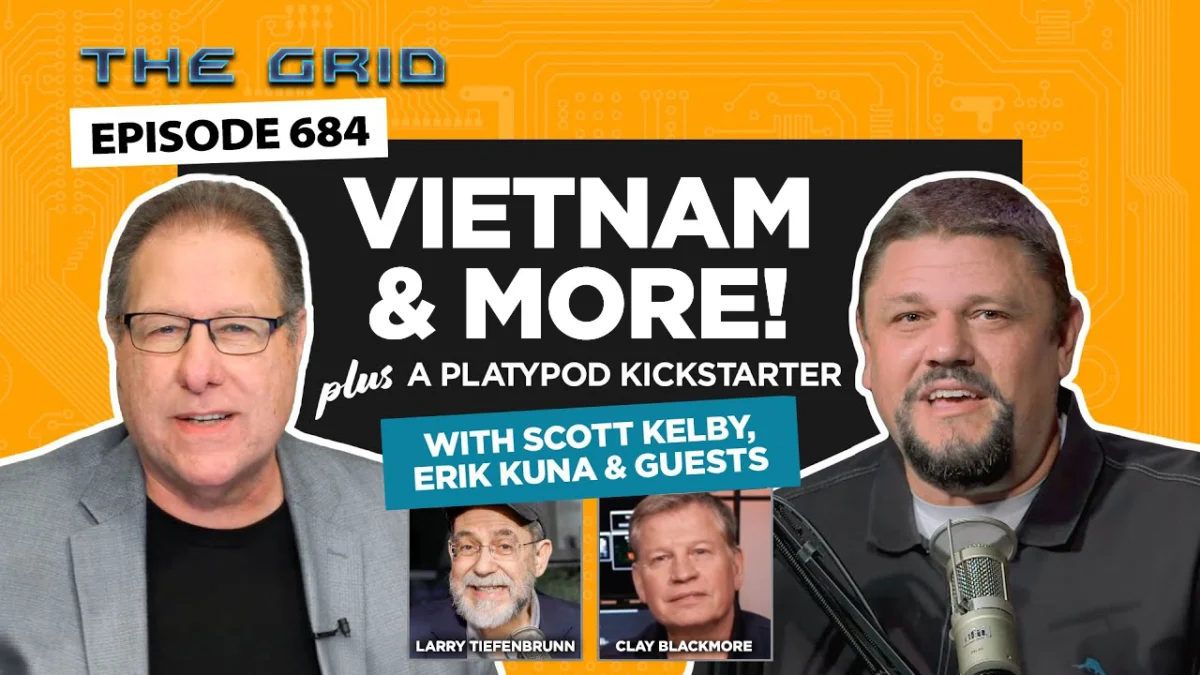
This week’s installment of The Grid, a prominent online broadcast dedicated to photography education and industry insights, provided viewers with an extensive exploration of diverse photographic disciplines. The episode, numbered 684, encompassed everything from immersive travel photography workshops and cutting-edge gear innovation to the timeless art of wedding photography and the unique challenges of documenting space exploration infrastructure. Hosted by industry stalwarts Scott Kelby and Erik Kuna, the program featured expert guests Dr. Larry T. and legendary wedding photographer Clay Blackmore, offering a multifaceted view of the contemporary photographic landscape.
Global Expeditions and Unexpected Encounters: The Vietnam Workshop Experience
The episode commenced with a vivid recounting of a recent photography workshop in Vietnam, led by Scott Kelby and Erik Kuna. Scott Kelby, widely recognized as a leading figure in photography education, author of numerous best-selling books, and CEO of KelbyOne, has cultivated a reputation for delivering hands-on, immersive learning experiences through his global workshops. These events are designed to move beyond theoretical instruction, placing participants directly into culturally rich and visually stimulating environments to hone their skills in real-world scenarios. Erik Kuna, a seasoned photographer and educator known for his technical prowess and engaging teaching style, frequently co-leads these expeditions, bringing his expertise in various photographic genres to the fore.
Vietnam, with its vibrant street life, breathtaking landscapes, ancient traditions, and rapidly evolving urban centers, presents an unparalleled canvas for photographers. Participants in such workshops typically engage in street photography, landscape documentation, portraiture, and architectural photography, all while navigating the unique challenges and rewards of an international travel setting. The workshop structure often includes guided shoots, personalized feedback sessions, and discussions on cultural sensitivity in photography.
A particular highlight shared during the broadcast was a near-miss encounter with a train, an anecdote that underscored the dynamic and often unpredictable nature of shooting in bustling environments. While the specific details of the incident were presented with a touch of dramatic flair, it served as a practical illustration of the importance of situational awareness, rapid compositional decisions, and safety protocols when pursuing compelling imagery in public spaces. Such moments, though potentially startling, often become defining memories for workshop participants, reinforcing lessons on adapting to changing light, movement, and unexpected elements within a scene. The segment underscored the enduring value of experiential learning, demonstrating how practical challenges can significantly accelerate skill development beyond traditional classroom settings.
Celestial Perspectives: Documenting the Artemis Launchpad at Sunrise
Transitioning from the terrestrial to the extraterrestrial, Erik Kuna then delved into his experience conducting a sunrise photography session at NASA’s Artemis launchpad. Erik Kuna, often celebrated for his work in astrophotography and his ability to capture complex technical subjects with artistic vision, brought a unique perspective to this segment. The Artemis program represents NASA’s ambitious initiative to return humans to the Moon, establishing a sustainable presence there, and ultimately preparing for human missions to Mars. The launchpad itself, a monumental structure of engineering and human aspiration, is a site of immense historical and scientific significance.
Photographing such a location at sunrise introduces a unique set of technical and artistic considerations. The rapidly changing light conditions, from the deep blues of predawn to the golden hues of the rising sun, demand precise exposure control and an understanding of dynamic range. Capturing the scale and intricate details of the launchpad requires careful lens selection, often involving wide-angle perspectives to encompass the vastness of the site, alongside telephoto lenses to isolate specific components. Furthermore, the inherent security and operational restrictions of a NASA facility necessitate meticulous planning and adherence to strict guidelines, making access for photography a rare and privileged opportunity.
Erik Kuna’s insights likely covered techniques for managing challenging light, composing compelling narratives within an industrial yet awe-inspiring landscape, and the profound sense of documenting a pivotal moment in human exploration. The segment highlighted the convergence of photography with science, technology, and history, illustrating how visual storytelling can play a crucial role in public understanding and appreciation of monumental endeavors like the Artemis program. This discussion resonated with photographers interested in specialized fields, demonstrating the dedication and technical acumen required to capture such iconic subjects.
Innovation in Lighting: Unveiling the Platypod Bracket & Bounce System
The episode then shifted its focus to photographic gear innovation, spotlighting the launch of the new Platypod Bracket & Bounce system on Kickstarter. Platypod, a company known for its ingenious, compact camera support systems, originally gained traction by offering a robust, low-profile alternative to traditional tripods. Designed for photographers who need stable camera support without the bulk, Platypod products are essentially flat, metal plates with threaded holes for mounting camera heads and legs, allowing for ground-level or elevated placement on various surfaces.
The new Platypod Bracket & Bounce system represents a significant expansion of this philosophy, specifically targeting portable flash and lighting setups. Dr. Larry T., who joined the broadcast to explain the system, is likely an engineer, product designer, or a key figure in the Platypod development team, given his detailed breakdown of its functionality. The core premise of the Bracket & Bounce system is to provide a compact, flexible, and highly portable solution for off-camera flash and accessory mounting. Traditional light stands and flash brackets can be cumbersome, making them impractical for many on-location shoots or travel.
Dr. Larry T. articulated how this modular system is engineered to address these challenges. Its design emphasizes adaptability, allowing photographers to quickly assemble and configure lighting setups that fit into standard camera bags – a significant departure from the often bulky equipment typically required for professional lighting. The "Bracket & Bounce" nomenclature suggests components designed not only to hold flashes securely but also to facilitate various light modification techniques, such as bouncing light off surfaces or using small modifiers. This innovation promises to empower photographers with greater creative control over lighting without the burden of excessive gear.
The decision to launch the system on Kickstarter, a global crowdfunding platform, is strategically significant. Kickstarter allows innovative products to gain funding directly from potential users, fostering a community around the product before its full-scale production. It also provides a robust platform for demonstrating the product’s features, gathering early feedback, and building anticipation. For photographers, this means access to cutting-edge tools that might otherwise take longer to reach the market through traditional distribution channels. The Platypod Bracket & Bounce system caters to a growing demand for lightweight, versatile, and efficient equipment that supports dynamic shooting styles across various genres, from portraiture to product photography.
Mastering the Art: Clay Blackmore’s Timeless Photography Wisdom
The latter part of the episode turned towards artistic inspiration and timeless photographic principles, featuring a segment with wedding photography legend Clay Blackmore. With a career spanning decades, Clay Blackmore has established himself as an icon in the wedding photography industry, celebrated for his elegant portraiture, masterful use of light, and ability to capture the profound emotional narrative of a wedding day. His influence extends beyond technical skill, encompassing a philosophy that emphasizes genuine connection and storytelling from the heart.
Blackmore shared seven powerful tips covering lighting, posing, and the overarching approach of "shooting from the heart." While the specific tips were not detailed in the summary, one can infer their nature based on his renowned expertise. In lighting, Blackmore is known for his ability to harness both natural and artificial light to create flattering and dramatic effects, often advocating for an understanding of light quality, direction, and intensity to shape a subject. His posing techniques are characterized by a focus on natural, authentic expressions and gestures, guiding couples into positions that feel comfortable and reveal their unique relationship, rather than stiff, artificial stances. This often involves a deep understanding of human anatomy and psychology to elicit genuine emotion.
The concept of "shooting from the heart" encapsulates Blackmore’s philosophy: it’s about more than just technical proficiency; it’s about empathy, intuition, and a profound desire to tell a couple’s story truthfully and beautifully. This involves active listening, anticipating moments, and allowing personal passion to infuse every frame. His insights, accompanied by real-world images and personal anecdotes, provided a compelling blend of practical advice and profound artistic motivation. For aspiring and established wedding photographers alike, Blackmore’s segment served as a masterclass, reinforcing that while gear and technique are important, the most impactful photography stems from a place of genuine connection and artistic integrity. His appearance underscored the enduring principles that elevate photography from a mere craft to an art form, emphasizing the human element in capturing life’s most significant moments.
The Grid’s Enduring Appeal and Broader Photographic Dialogue
This episode of The Grid exemplified the program’s consistent commitment to delivering comprehensive and engaging content for the global photography community. As a weekly live show, The Grid has cultivated a dedicated following by offering a dynamic platform for education, industry news, and expert interviews. Its format typically includes discussions, live demonstrations, and interactive Q&A sessions, making it a valuable resource for photographers of all skill levels, from hobbyists seeking inspiration to seasoned professionals looking for new techniques or market insights.
The diverse array of topics covered in Episode 684—from the practicalities of international workshops and the cutting-edge of photographic technology to the artistic nuances of fine art wedding photography and the monumental scale of space exploration documentation—demonstrates the show’s breadth and its ability to connect disparate aspects of the photographic world. By bringing together hosts with varied expertise and guests who are luminaries in their respective fields, The Grid acts as a vital conduit for knowledge transfer and community building.
The episode’s structure, moving seamlessly from travel and gear to lighting and storytelling, reflects the multifaceted nature of modern photography. It underscored that success in this field often requires a blend of technical mastery, artistic vision, business acumen, and an insatiable curiosity for the world around us. For its audience, the replay of this episode serves as a rich archive of tips, stories, and demonstrations, offering actionable advice and profound inspiration. The Grid continues to solidify its position as an essential educational and inspirational hub, reflecting the dynamic evolution and timeless principles that define the art and craft of photography today.